


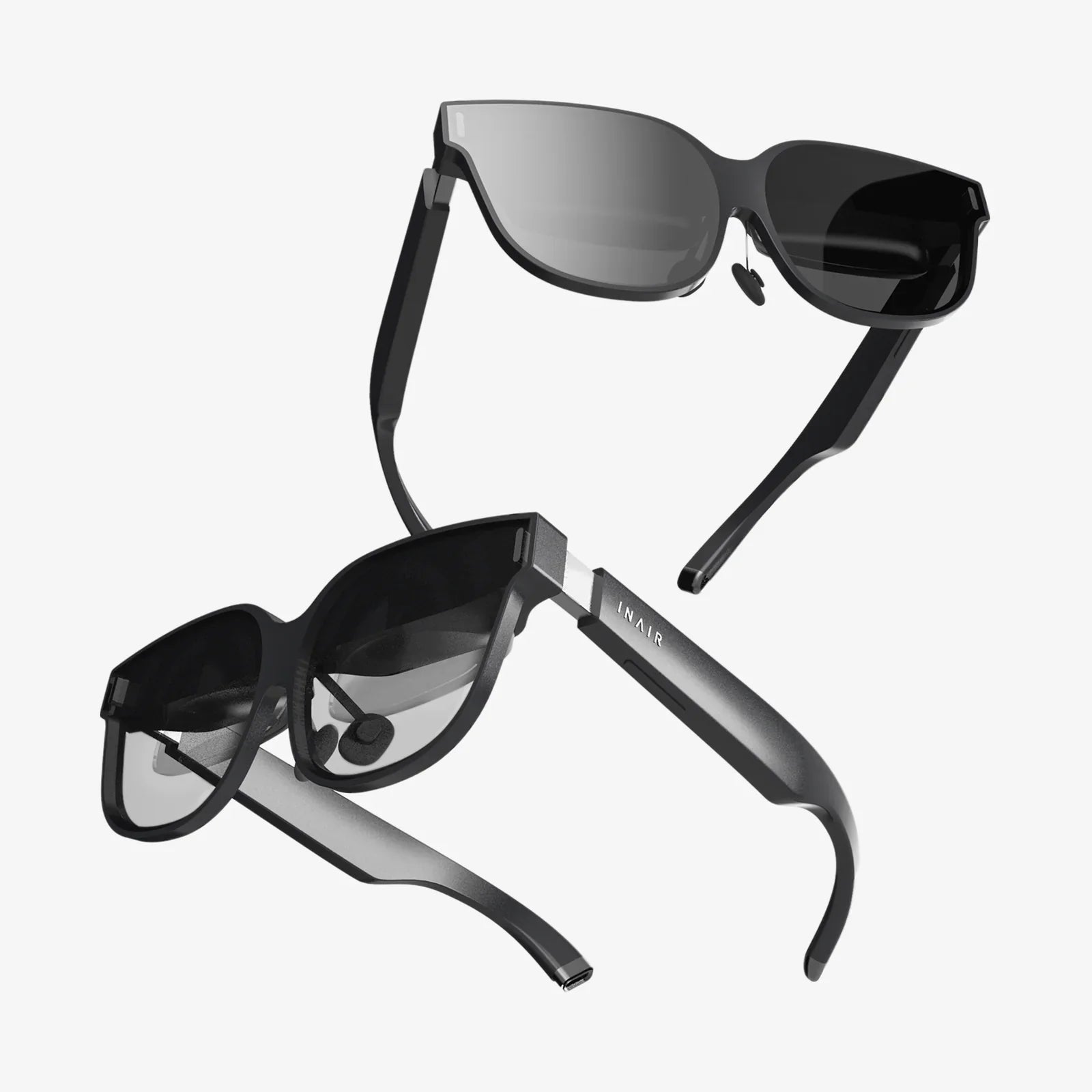
Imagine a world where the line between the digital and the physical dissolves, where you can walk with dinosaurs, perform complex heart surgery from another continent, or see how a new sofa fits in your living room before you buy it. This is no longer the stuff of science fiction novels or blockbuster films; it is the rapidly unfolding reality being built by the relentless advancement of Virtual Reality (VR) and Augmented Reality (AR) technology. These are not just new gadgets for gamers; they are foundational shifts in how we compute, communicate, and experience the very fabric of reality itself. We stand at the precipice of a new era, and the journey into these immersive worlds is already beginning to reshape everything we know.
The Foundational Divide: Defining the Realms of VR and AR
While often mentioned in the same breath, VR and AR represent two distinct approaches to blending the digital with the real. Understanding this fundamental difference is key to appreciating their unique applications and potential.
Virtual Reality (VR) is the technology of complete immersion. By wearing a head-mounted display that occludes the user's view of the physical world, VR transports them to a fully digital, computer-generated environment. These environments can be realistic simulations of real-world locations or fantastical landscapes that defy the laws of physics. The goal of VR is to create a sense of presence—the convincing feeling of being physically located in that virtual space. This is achieved through a combination of high-resolution visuals, precise head-tracking, and immersive spatial audio. Advanced systems incorporate hand-held controllers and even full-body tracking, allowing users to interact with the virtual world using their hands and body, further solidifying the illusion.
Augmented Reality (AR), by contrast, does not seek to replace the real world but to augment it. AR technology superimposes digital information—images, text, 3D models, animations—onto the user's view of their immediate physical surroundings. Unlike VR, AR users remain grounded in their real environment; the digital elements are simply layered on top of it. This is most commonly experienced today through smartphone cameras or, more powerfully, through transparent glasses or lenses that project imagery directly into the user's field of vision. The magic of AR lies in its context-aware nature; the digital content is often anchored to specific objects or locations, creating a seamless blend of data and reality.
A third term, Mixed Reality (MR), is sometimes used to describe a spectrum that encompasses both AR and VR. MR specifically refers to environments where physical and digital objects co-exist and interact in real-time. Imagine a virtual character that can hide behind your real-world couch or a digital control panel that you can physically touch and manipulate. MR represents the most advanced fusion of the two, though the technology to make it seamless is still in its relative infancy.
A Brief Journey Through Time: The Evolution of Immersive Tech
The seeds of VR and AR were sown decades ago, long before the computing power existed to make them viable for consumers. The concept of immersive simulation can be traced back to the Sensorama machine in the 1950s, an arcade-style cabinet that offered multi-sensory experiences. The 1960s saw the creation of the first head-mounted display systems, primitive by today's standards but revolutionary for their time. These early forays were confined to university labs and military training facilities due to their colossal cost and complexity.
The late 1980s and early 1990s witnessed the first major wave of commercial interest, with several companies attempting to bring clunky and expensive VR systems to the market. While they captured the public's imagination, the technology was not yet ready—low-resolution graphics, laggy tracking, and a lack of compelling software led to a period of disillusionment. AR saw similar early experiments, most notably with the US Air Force's groundbreaking virtual fixtures system for controlling remote machinery.
The modern renaissance began in the 2010s. A perfect storm of technological advancement created the conditions for success: smartphones had driven down the cost of high-resolution displays, miniature motion sensors, and powerful, efficient processors. A crowdfunded project for a VR headset demonstrated massive public appetite, leading to a new generation of powerful, accessible, and consumer-friendly headsets entering the market. Simultaneously, the explosion of mobile computing provided the perfect platform for AR experiences via the device in nearly everyone's pocket, popularized by a certain global phenomenon game that had people chasing digital creatures in city parks.
Under the Hood: The Core Technologies Powering the Experience
The magic of VR and AR is woven together from several critical technological threads. Each component must work in perfect harmony to create a convincing and comfortable experience.
- Display and Optics: At the heart of any headset are the displays. For VR, these are high-refresh-rate, high-resolution screens placed mere centimeters from the eyes. Sophisticated lenses then focus and reshape the image to fill the user's field of view, creating the wide-angle perspective necessary for immersion. For AR, the challenge is different. See-through waveguides, micro-LEDs, or other projection systems are used to beam light onto transparent lenses, allowing the user to see both the real world and the digital overlay simultaneously.
- Tracking and Sensors: Accurate tracking is non-negotiable. Inside-out tracking uses integrated cameras and sensors on the headset itself to map the environment and understand the user's position and movement within it. Outside-in tracking uses external sensors placed in a room to precisely monitor the headset and controllers. This data is used to update the visual perspective in real-time; if you turn your head, the world turns with you instantly. Any lag or inaccuracy in this process can break immersion and cause discomfort.
- Processing Power: Generating complex 3D environments at high frame rates (often 90Hz or higher to prevent motion sickness) requires immense computational power. This processing can be handled by a powerful external computer tethered to the headset or, increasingly, by a system-on-a-chip (SoC) integrated directly into wireless, standalone devices, representing a monumental feat of mobile engineering.
- Haptics and Feedback: True immersion engages more than just sight and sound. Haptic feedback technology provides a sense of touch. This can range from simple vibrations in controllers to more advanced vests and gloves that simulate the feeling of impact, pressure, and texture, adding a crucial layer of physicality to the virtual experience.
Transforming Industries: The Practical Applications of Today
Beyond entertainment, VR and AR are proving to be powerful tools with profound practical applications across a vast spectrum of industries.
Revolutionizing Healthcare and Medicine
The medical field is being transformed. Surgeons use AR to project patient data, such as MRI scans, directly onto their field of view during procedures, essentially giving them "X-ray vision" to see inside the body before making an incision. Medical students use VR to practice complex surgeries in a risk-free simulator, honing their skills without ever touching a cadaver. Furthermore, VR is proving to be a powerful therapeutic tool for treating phobias, PTSD, and chronic pain, using controlled exposure therapy in safe, virtual environments.
Redefining Education and Training
Immersive tech offers a paradigm shift from learning about something to experiencing it. History students can walk through ancient Rome. Engineering students can disassemble and reassemble a virtual jet engine. Corporate trainees can practice public speaking in front of a virtual audience or learn to operate dangerous machinery in a completely safe simulation. This experiential learning leads to significantly higher knowledge retention and skill proficiency compared to traditional methods.
Empowering Enterprise and Manufacturing
On factory floors, AR smart glasses can provide workers with hands-free instructions, schematics, and remote expert guidance, drastically reducing errors and improving efficiency. Designers and architects use VR to walk clients through unbuilt buildings, making changes to the virtual model in real-time. Complex machinery can have digital twins—virtual replicas—that can be monitored and tested, allowing for predictive maintenance and minimizing costly downtime.
Enhancing Retail and Remote Collaboration
The retail experience is being reimagined. AR apps allow customers to visualize how furniture will look in their home, how clothes will fit, or how a new shade of paint will transform a room. In the workplace, VR meeting rooms are enabling remote teams to collaborate as if they are in the same physical space, sharing 3D models and data visualizations in ways that are impossible on a flat video call, fostering a new level of connection and productivity.
Navigating the Frontier: Challenges and Ethical Considerations
For all its promise, the path forward for VR and AR is not without significant hurdles and profound ethical questions that society must address.
- Hardware Limitations: Despite rapid progress, headsets can still be bulky, expensive, and power-hungry. Achieving visual fidelity indistinguishable from reality—a concept known as the "resolution of the eye"—remains a distant goal. Similarly, achieving photorealistic AR that can seamlessly integrate digital objects into any lighting condition is a monumental technical challenge.
- User Experience and Safety: Issues like motion sickness, eye strain, and physical disorientation (known as VR fatigue) still affect a portion of users. Furthermore, spending extended time in a virtual world raises questions about physical safety in the real environment and the potential for psychological effects, including dissociation and addiction.
- The Data Privacy Dilemma: Immersive technologies are data collection engines on an unprecedented scale. A VR system doesn't just know what you click; it knows where you look, how you move, your physiological responses, and can map your home in intricate detail. This creates a privacy nightmare if not handled with extreme care and robust regulation. The potential for manipulative advertising and intrusive surveillance is immense.
- The Societal Impact: As these technologies become more pervasive, they could exacerbate digital divides and create new forms of inequality. There is also a risk of reality dilution, where the lines between truth and fiction become dangerously blurred, and individuals may increasingly retreat into personalized virtual realities, potentially eroding shared social experiences and community bonds.
The Next Horizon: The Future of Immersive Experiences
The trajectory of VR and AR points toward a future where the technology becomes increasingly invisible, powerful, and integrated into our daily lives. We are moving toward sleek, lightweight glasses that offer all-day comfort and utility. Advances in brain-computer interfaces (BCIs) could eventually allow us to manipulate virtual worlds with our thoughts alone. The concept of the "metaverse"—a persistent network of interconnected virtual spaces—promises a new frontier for social interaction, work, and play, though its ultimate form remains hotly debated.
The true potential of this technology lies not in replicating reality, but in transcending its limitations. It will allow us to enhance human ability, democratize expertise, and experience the impossible. It will enable new forms of art, storytelling, and human connection that we are only beginning to conceive. The challenge ahead is not just a technical one, but a human one: to guide the development of these powerful tools with wisdom, foresight, and a steadfast commitment to using them to build a better, more connected, and more empathetic world for everyone.
The door to these new realities is now open, and the experiences on the other side promise to be more profound, more useful, and more astonishing than we can possibly imagine. The next time you pick up your phone or consider a new piece of technology, ask yourself: will it simply show you the world, or will it allow you to step through the screen and change it? The age of passive observation is ending; the era of active immersion has just begun.
Share:
Eyeglasses With Speakers: The Invisible Audio Revolution on Your Face
Virtual Meeting Hardware Problems: The Ultimate Guide to Diagnosing and Fixing Your Tech Woes