


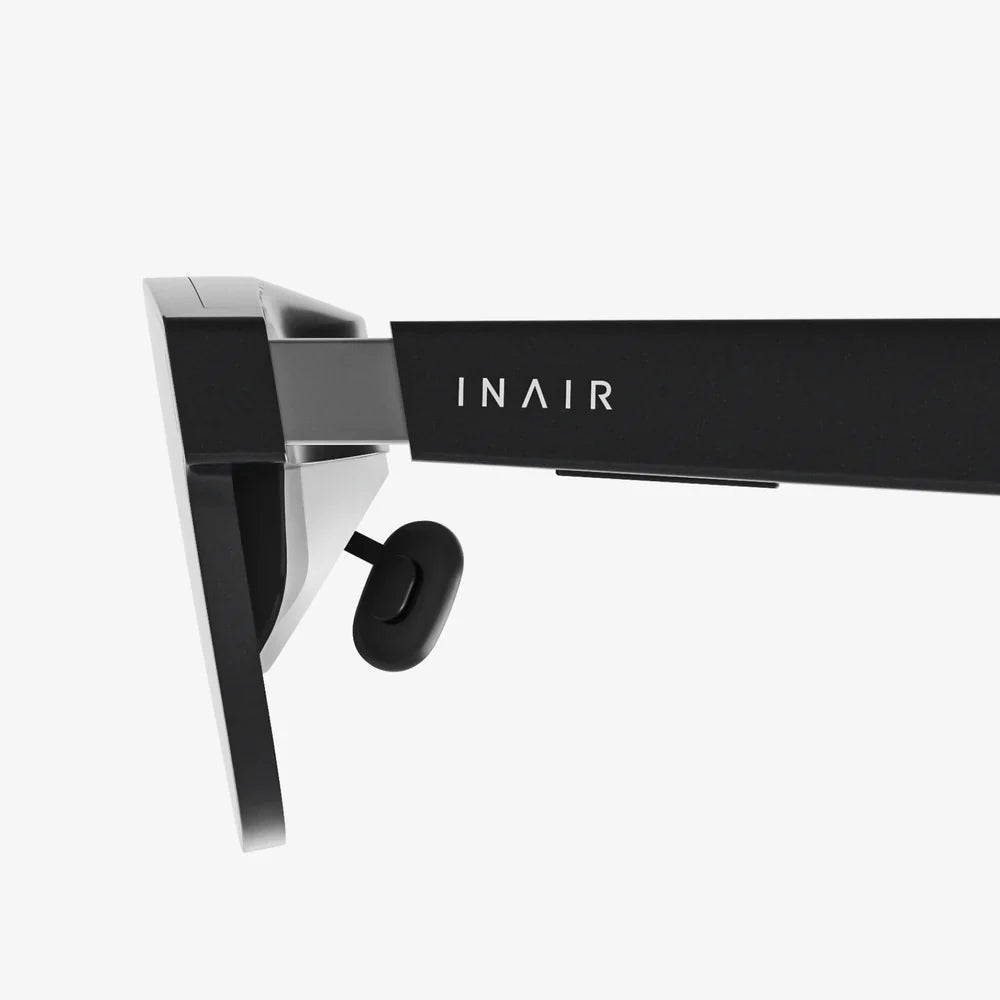
Imagine a world where a surgeon in London can guide a complex procedure in Mumbai, a mechanic can see through the engine block of a faulty machine to diagnose the issue, and an entire global team can collaborate on a 3D prototype as if they were standing in the same room. This is not a distant science fiction fantasy; it is the rapidly emerging reality being built today through the powerful and immersive capabilities of Virtual Reality (VR) and Mixed Reality (MR) services. These technologies are breaking free from their gaming origins to become some of the most potent tools for innovation, training, and connection in the modern enterprise toolkit, promising to redefine how we work, learn, and interact with digital information.
Demystifying the Spectrum: From VR to MR
While often grouped together, VR and MR represent distinct points on a spectrum of immersive experiences, each with unique capabilities and applications. Understanding this distinction is crucial to appreciating their individual and combined potential.
Virtual Reality: Crafting Entirely New Worlds
Virtual Reality is the art and science of complete immersion. By donning a head-mounted display, users are transported into a fully digital, computer-generated environment. This environment can be a photorealistic simulation of a real place, a fantastical game world, or an abstract data visualization. The core principle of VR is the occlusion of the physical world; the user's visual and auditory senses are entirely occupied by the virtual space. Advanced systems incorporate motion tracking, allowing users to navigate these spaces and interact with digital objects using handheld controllers, gloves, or even full-body suits. The primary goal of VR is to create a compelling sense of presence—the undeniable feeling of "being there" in the virtual world.
Mixed Reality: The Best of Both Real and Virtual
Mixed Reality, sometimes used interchangeably with the broader term Extended Reality (XR), is a more advanced evolution. Rather than replacing the real world, MR seamlessly blends digital content with the user's physical environment. This is not merely a superimposition, like the simple overlays of early Augmented Reality (AR). True MR understands and interacts with the geometry of the real world in real-time. Using a combination of advanced sensors, cameras, and spatial mapping, MR devices can anchor holographic objects to a physical table, allow a digital character to hide behind a real sofa, or enable a user to manipulate a complex 3D model with their hands. The digital and physical elements coexist and interact, creating a cohesive hybrid experience. This makes MR exceptionally powerful for tasks that require contextual information overlayed onto the real world, from complex assembly instructions to interactive data dashboards floating in a conference room.
The Engine Room: Core Technologies Powering Immersive Services
The magic of VR and MR doesn't happen by accident. It is powered by a sophisticated stack of converging technologies that work in harmony to create believable and useful experiences.
Hardware: The Gateways to Immersion
The most visible component is the hardware. This ranges from powerful, untethered headsets that offer high-fidelity experiences to more accessible smartphone-based solutions. Key hardware advancements include:
- Inside-Out Tracking: Modern headsets use onboard cameras to map their environment and track their own position within it, eliminating the need for external sensors and making setup effortless.
- High-Resolution Displays: To avoid the "screen door effect" and create realism, displays now feature high pixel density and fast refresh rates to ensure smooth motion.
- Varifocal Lenses and Eye-Tracking: Cutting-edge systems adjust focus based on where the user is looking, mimicking the natural behavior of the eye and solving the vergence-accommodation conflict that can cause discomfort. Eye-tracking also enables foveated rendering, a technique that maximizes processing power by rendering only the center of the user's gaze in high detail.
- Haptic Feedback: Controllers and wearables now provide sophisticated tactile feedback, simulating the feel of textures, the recoil of a tool, or the impact of a virtual object.
Software and Development Platforms
Powerful game engines are the bedrock of most immersive experiences, providing the tools to create stunning 3D worlds and interactions. Furthermore, cloud-based service platforms are emerging that handle the heavy lifting of spatial mapping, multi-user synchronization, and persistent content anchoring, allowing developers to focus on creating application-specific value rather than solving complex underlying technical challenges.
Connectivity: The 5G and Cloud XR Revolution
The computational demands of high-end VR and MR are immense. 5G networks, with their ultra-low latency and high bandwidth, are unlocking a new paradigm: cloud rendering. Instead of requiring a expensive local computer, the complex processing can be done on powerful cloud servers, and the rendered experience is streamed directly to a lighter, more affordable headset. This dramatically lowers the barrier to entry and enables incredibly detailed simulations that would be impossible on standalone hardware.
Transforming Industries: Real-World Applications Beyond the Hype
The true value of VR and MR services is revealed in their practical, problem-solving applications across diverse sectors. They are moving from novelty to necessity, delivering measurable ROI in several key areas.
Enterprise and Manufacturing
This is perhaps the most fertile ground for MR. Field service technicians can use MR glasses to see animated repair instructions overlaid on the equipment they are fixing, drastically reducing errors and training time. Designers and engineers can collaborate on life-size 3D prototypes, making design decisions in context long before a physical prototype is built. Factory floor managers can visualize real-time production data, IoT sensor readings, and logistics information as holographic dashboards, enabling faster and more informed decision-making.
Healthcare and Medicine
In healthcare, these technologies are saving lives and improving outcomes. Medical students can practice complex surgical procedures in risk-free VR simulations, achieving a level of muscle memory and spatial understanding impossible with textbooks. Surgeons use MR to visualize a patient's anatomy—such as CT scans or MRI data—precisely registered onto their body during pre-surgical planning and even in the operating room. VR is also proving highly effective for pain management, physical therapy, and treating phobias and PTSD through controlled exposure therapy.
Education and Training
VR and MR create the ultimate interactive classroom. Instead of reading about ancient Rome, history students can take a guided tour through a meticulously reconstructed virtual city. Apprentice welders can practice their technique in a VR simulator that provides instant feedback, saving on material costs and preventing safety hazards. From dangerous military drills to routine corporate compliance training, immersive services offer a safe, scalable, and highly engaging way to learn and retain complex information.
Remote Collaboration and the Virtual Workspace
The shift to remote work has highlighted the limitations of flat, 2D video calls. VR and MR introduce a new era of spatial collaboration. Teams distributed across the globe can meet in a virtual boardroom, interact with 3D models together, and share body language and spatial cues, fostering a much stronger sense of teamwork and presence. This "virtual office" paradigm promises to redefine the future of work, making distance irrelevant for complex, collaborative tasks.
Retail and Real Estate
Consumers can now try on clothes using their avatar in VR, preview how a new sofa will look and fit in their living room through MR, or take a full walkthrough of a property on another continent without leaving their home. This "try before you buy" experience at an immersive level is reducing return rates and building consumer confidence.
Navigating the Challenges: Barriers to Widespread Adoption
Despite the immense potential, the path to ubiquity for VR and MR services is not without significant hurdles that must be addressed.
Technological and User Experience Hurdles
Issues like user discomfort, motion sickness, and visual fatigue (collectively known as cybersickness) still affect a portion of the population, though hardware and software improvements are steadily mitigating these effects. The form factor of headsets, while improving, still needs to become as comfortable and socially acceptable as a pair of eyeglasses for all-day wear. Battery life remains a constraint for untethered devices.
Content Creation and Interoperability
Creating high-quality, interactive 3D content is complex, time-consuming, and expensive. The industry needs more streamlined tools and templates to democratize content creation. Furthermore, a lack of universal standards can lead to closed ecosystems and interoperability issues, where content created for one platform may not work on another, fragmenting the market.
The Human and Ethical Dimension
As with any powerful technology, ethical questions arise. The collection of detailed spatial data about users' homes and workplaces raises serious privacy and security concerns that must be managed with robust policies. The long-term psychological effects of prolonged immersion are not yet fully understood. There is also a risk of a new "digital divide," where access to these transformative tools is limited to those with significant resources, exacerbating existing inequalities.
The Future is Blended: Where Do We Go From Here?
The trajectory of VR and MR is pointing towards a future where the line between the digital and physical worlds becomes increasingly blurred, and ultimately, irrelevant for many tasks. We are moving towards always-available, context-aware computing interfaces that provide us with the right information at the right time and in the right place. The evolution of the smartphone into a spatial computer worn on our faces is not a matter of "if" but "when." As artificial intelligence converges with these immersive mediums, we will see the emergence of intelligent agents that can understand our environment and our intentions, offering assistance before we even ask for it.
The next decade will be defined by the seamless weaving of digital information into the fabric of our daily lives. The businesses, educators, and creators who begin exploring and integrating VR and MR services today are not just adopting a new technology; they are positioning themselves at the forefront of a fundamental shift in human-computer interaction, building the foundational skills and strategies for a world where our reality is endlessly enhanced, expanded, and empowered by the digital realm. The gateway to this blended future is open, and the first steps inside are more accessible and impactful than ever before.
Share:
I Want a VR Headset - The Ultimate Guide to Entering the Virtual World
VR Goggles for iPhone 11 Pro Max: The Ultimate Guide to Unlocking a Portable Metaverse