


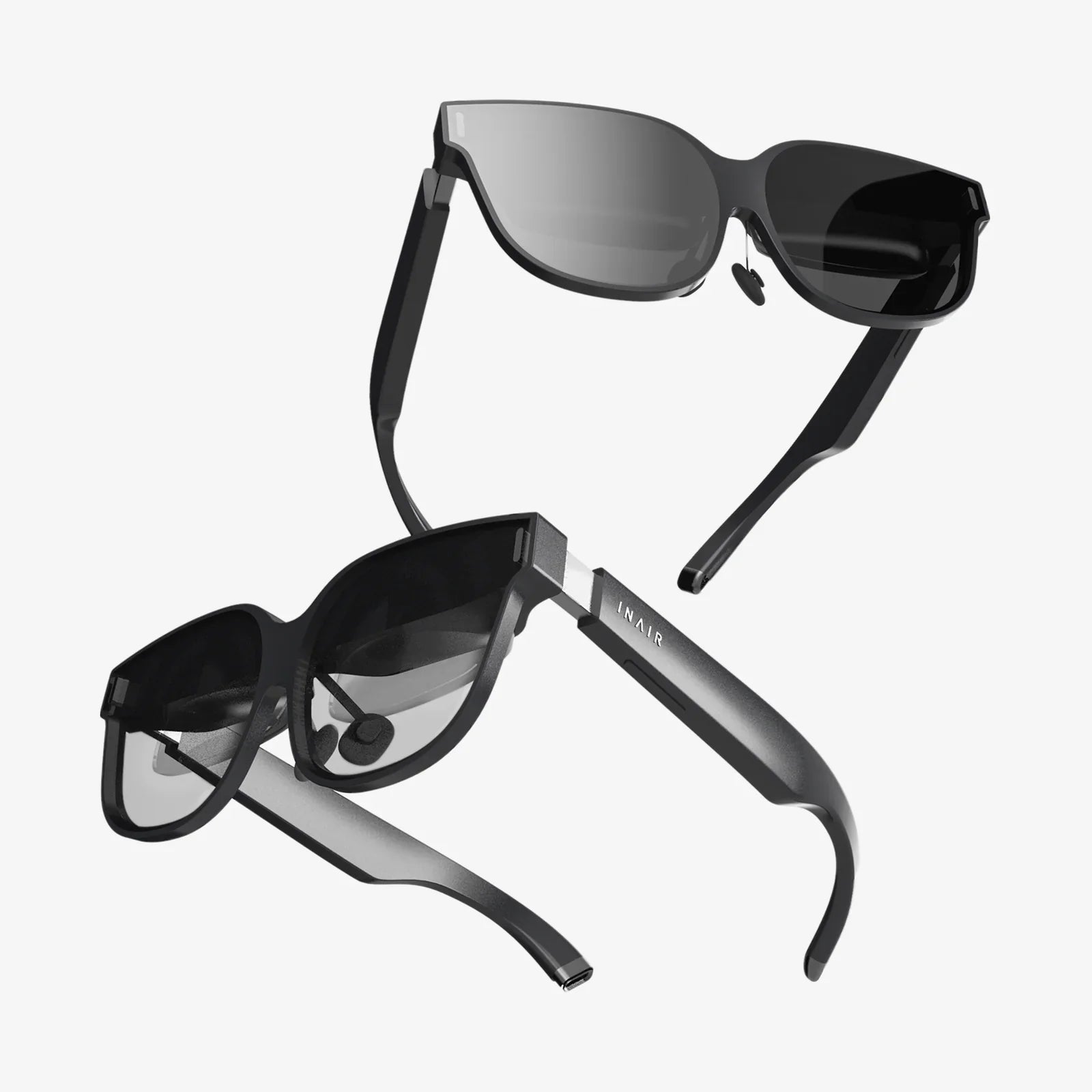
Imagine a world where digital information doesn't live on a screen in your hand, but is seamlessly woven into the very fabric of your reality. Where you can learn, work, play, and connect in ways that were once the stuff of science fiction. This is the promise held within the latest wave of VR AR glasses news, a technological frontier that is accelerating faster than ever before, moving from niche novelty to a paradigm-shifting platform poised to redefine our daily lives. The next evolution of computing isn't on your desk; it's on your face.
The Convergence of Realities: Beyond the Hype
For years, Virtual Reality (VR) and Augmented Reality (AR) have been discussed as adjacent but distinct paths. VR offers a fully immersive, digital escape, transporting the user to a computer-generated world. AR, by contrast, layers digital information—text, graphics, animations—onto the user's view of the physical world. The most exciting VR AR glasses news of late, however, points not to their separation, but to their convergence. The industry is rapidly moving towards a single device, often referred to as Mixed Reality (MR) or XR (Extended Reality) glasses, capable of seamlessly blending both spectrums. This isn't just about better specs; it's about creating a single, versatile window between our world and the digital cosmos.
The technological hurdles that once seemed insurmountable are now being systematically dismantled. Early adopters will remember the clunky headsets, limited field of view, and the dreaded "screen door effect." Today's advancements are rendering those issues obsolete. The chatter in tech circles is dominated by breakthroughs in micro-OLED and Laser Beam Scanning displays, offering resolutions so high the human eye cannot distinguish pixels. Simultaneously, advancements in pancake lenses are making devices dramatically slimmer and lighter, moving away from the ski-goggle aesthetic towards a form factor that resembles everyday eyewear.
From Prototype to Product: The Mainstream Push
The most compelling VR AR glasses news often revolves around the slow but steady march toward a consumer-friendly product. The goal is clear: a pair of glasses that are socially acceptable to wear in public, comfortable for extended use, powerful enough to run complex applications, and affordable for the average consumer. We are not quite there yet, but the trajectory is undeniable.
Key to this push is the development of true all-in-one devices. The era of being tethered to a powerful, and expensive, external computer is fading. On-board processing powered by custom chipsets designed specifically for spatial computing is providing the horsepower needed for high-fidelity experiences without the cable. This wireless freedom is arguably the single most important factor for mass adoption, unlocking true mobility and convenience.
Furthermore, the critical challenge of input is being solved. Controllers are becoming more sophisticated, with advanced haptics and finger tracking. However, the real VR AR glasses news winner is the rapid improvement of inside-out tracking and hand-tracking technology. The ability to use your bare hands as the primary interface—pinching, dragging, and selecting virtual elements with intuitive gestures—makes the technology far more accessible and magical. It removes a barrier to entry, making the experience feel less like operating a machine and more like using a natural extension of your own body.
Revolutionizing the Professional Landscape
While the consumer applications capture the imagination, some of the most impactful VR AR glasses news is emerging from enterprise and professional sectors. Industries are not waiting for the perfect consumer device; they are deploying current-generation technology to solve real-world problems today, and the ROI is becoming increasingly clear.
- Healthcare: Surgeons are using AR overlays during complex procedures to view patient vitals, MRI scans, or surgical guides without ever looking away from the operating table. Medical students are practicing surgeries in risk-free VR simulations, and therapists are using immersive environments to treat PTSD and phobias.
- Engineering & Manufacturing: Designers and engineers can collaborate on 3D holographic models of a new engine or building, making changes in real-time from different parts of the globe. On the factory floor, technicians wear AR glasses that overlay schematic diagrams and step-by-step repair instructions directly onto the machinery they are fixing, drastically reducing errors and training time.
- Remote Work & Collaboration: The concept of the "metaverse" for business is taking shape. Instead of a flat video call, colleagues can don their glasses and join a virtual meeting room as photorealistic avatars. They can brainstorm on a virtual whiteboard, examine a 3D prototype together, or train in a simulated environment, all while feeling a tangible sense of presence that Zoom calls cannot replicate.
This enterprise adoption is crucial. It provides the funding and real-world testing needed to drive innovation forward, ultimately leading to better, cheaper technology for everyone.
The Social and Ethical Frontier
As with any transformative technology, the rise of VR and AR glasses brings a host of profound questions that dominate thoughtful VR AR glasses news analysis. The potential for a more connected world is immense, but so are the risks.
Privacy stands as the paramount concern. These devices, by their very nature, are data collection machines. They have multiple cameras and sensors constantly scanning your environment, tracking your eye movements, and recording your interactions. The question of who owns this data, how it is used, and how it is protected is perhaps the biggest societal challenge this industry will face. The concept of "attention tracking"—where advertisers pay to know exactly what you looked at and for how long—is both a marketer's dream and a privacy advocate's nightmare.
Furthermore, the potential for deeper societal divides is real. Will access to these powerful immersive tools create a new digital divide between those who can afford to augment their reality and those who cannot? There is also the risk of reality dilution—a world where people increasingly retreat into curated digital fantasies, potentially eroding shared experiences and our common connection to the physical world. Navigating these challenges will require careful thought, transparent policies, and robust ethical frameworks from the companies building this future.
What's Next: A Glimpse into the Immediate Future
So, what does the near-term horizon look like according to the latest VR AR glasses news and expert predictions? We are on the cusp of several key developments that will act as major inflection points.
First, the arrival of more advanced passthrough AR. Current devices offer a video feed of the real world, which can feel slightly laggy or unnatural. The next generation aims for "video-see through" that is so high-fidelity and low-latency that it becomes indistinguishable from reality, enabling perfect blending of digital and physical objects.
Second, the development of compelling "killer apps." Hardware is nothing without software. The search for the application that will drive everyone to want a pair of these glasses continues. It could be a revolutionary social platform, a mind-blowing new game, or an indispensable productivity tool that changes how we work. The company or developer that cracks this code will unlock the market.
Finally, and most importantly, is the focus on contextural awareness and AI integration. The ultimate goal is for the glasses to understand your context and provide information without you even asking. Imagine walking through a foreign city, and your glasses automatically translate street signs. Or looking at a complex piece of equipment and having an AI assistant instantly pull up the relevant manual. This shift from a tool you actively use to an intelligent assistant that proactively helps you will be the true revolution.
The stream of VR AR glasses news is no longer just about incremental spec bumps; it's a drumbeat signaling a fundamental shift in human-computer interaction. The devices are becoming more powerful, more intuitive, and more integrated into the professional workflows that power our economy. While challenges around privacy, ethics, and accessibility remain, the momentum is undeniable. We are stepping beyond the screen, and the world will never look the same again. The future is not something we will watch on a display; it is something we will step into, interact with, and experience all around us, one pair of glasses at a time.
Share:
AI and Augmented Reality Regulations: Navigating the New Frontier of Digital Governance
AR Mixed Reality News Today: The Dawn of a Seamless Digital World