


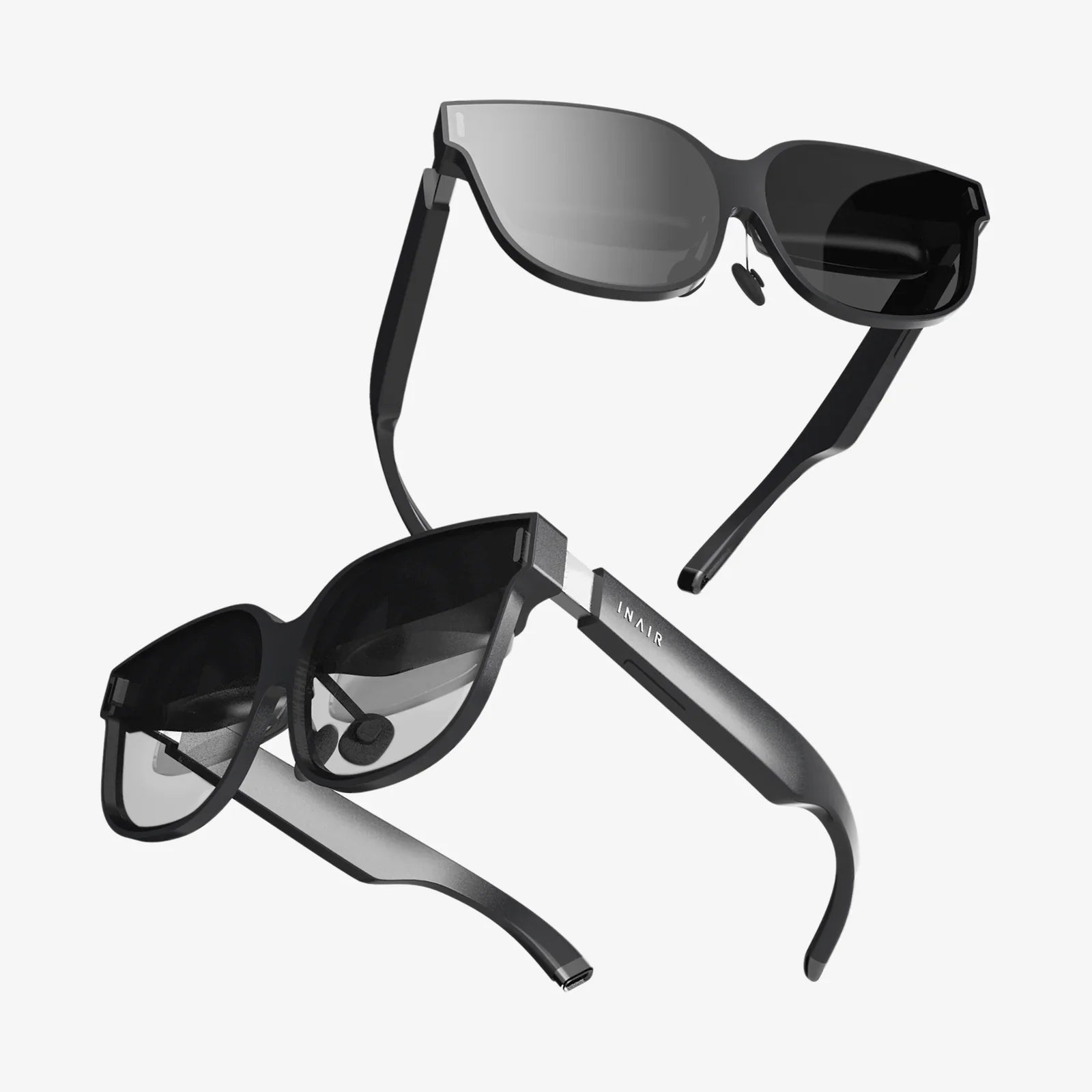
Imagine a world where the boundary between the digital and the physical isn't just blurred—it's gone. Where information, entertainment, and social connection are woven into the very fabric of your perception, accessible with a glance, a gesture, or a spoken word. This is not a distant science fiction fantasy; it is the palpable future being built today, and its primary gateway will be the VR AR headsets of 2025. We are standing on the precipice of a revolution that will redefine human-computer interaction, and the next generation of headsets are the keys to unlocking it.
The Great Convergence: From Separate Realities to a Unified Platform
The historical divide between Virtual Reality (VR) and Augmented Reality (AR) is rapidly collapsing. For years, VR headsets offered fully immersive, closed-off digital experiences, ideal for gaming and simulation but isolating users from their physical environment. AR, through simpler glasses or smartphone screens, overlayed digital information onto the real world but often felt gimmicky and limited. The paradigm shift happening now, and reaching maturity by 2025, is the move towards a single device capable of seamlessly transitioning between full VR, passthrough AR, and true optical AR. This is the era of the mixed reality (MR) headset as the ultimate spatial computer.
The core technology enabling this is high-fidelity color video passthrough. Early VR headsets used low-resolution, monochrome cameras to avoid nausea, offering a ghostly glimpse of the outside world. The headsets of 2025 will feature ultra-low-latency, high-dynamic-range (HDR) cameras that provide a crystal-clear, real-time video feed of your surroundings. This allows the headset to function as a VR device when you want full immersion, but instantly transform into a powerful AR device by blending digital objects into the live video feed of your room. The ultimate goal remains optical see-through AR—where light from the real world passes through advanced waveguides directly to your eyes—but high-quality video passthrough is the crucial bridge technology that makes all-day wearable MR a practical reality today.
Beyond the Screen: The Pillars of 2025's Headset Revolution
The advancements in VR AR headsets for 2025 are not incremental; they are foundational. Several key technological pillars will work in concert to create experiences that are not only stunning but also intuitive, comfortable, and socially acceptable.
1. The Visual Fidelity Leap: Resolving the Screen Door
Resolution and pixel density will see dramatic improvements. The much-maligned "screen door effect"—the visible gaps between pixels—will be a relic of the past. Micro-OLED and advanced LCD displays will push resolutions well beyond 4K per eye, achieving retinal-level clarity that makes text sharp and digital objects indistinguishable from their physical counterparts. This is critical for moving beyond entertainment into professional applications like detailed CAD design and medical imaging. Furthermore, advancements in varifocal and light field technology will solve the vergence-accommodation conflict, a primary source of eye strain and visual discomfort in current headsets. These systems will dynamically adjust focal planes, allowing your eyes to naturally focus on digital objects at different distances, just as they do in the real world.
2. The Intelligence Core: On-Device AI and Neural Interfaces
The most significant leap will come from the integration of dedicated neural processing units (NPUs) and sophisticated machine learning algorithms directly onto the headset's chipset. This on-device AI will power a multitude of features:
- Avatar and Expression Tracking: Advanced inward-facing cameras will track your eye movements, facial expressions, and even lip movements with stunning accuracy. This emotional intelligence will be transmitted to your digital avatar, enabling nuanced, non-verbal communication in virtual meetings and social spaces that feels genuinely human.
- Gesture and Context Recognition: AI will understand not just your hand gestures, but their intent. It will know the difference between scrolling through a menu and waving at a friend. It will recognize real-world objects; your headset could highlight your keys on the table or provide a recipe overlay as you look at ingredients in your kitchen.
- Environmental Understanding: Simultaneous Localization and Mapping (SLAM) will evolve from simple room-scale tracking to a deep, semantic understanding of your environment. The headset won't just know where a wall is; it will know it's a wall, that there's a window in it, and that the object in front of it is a sofa. This allows for persistent digital content that interacts intelligently with your physical space.
3. The Form Factor Revolution: From Face Computer to Everyday Eyewear
For mass adoption, headsets must become smaller, lighter, and more socially acceptable. The bulky, front-heavy designs of yesterday are giving way to sleek, balanced form factors. By 2025, we will see a clear stratification in the market:
- All-in-One (AIO) Powerhouses: These will be the flagship devices, offering the full spectrum of VR and high-fidelity MR experiences. They will be significantly lighter and more comfortable than current models, often employing rigid headbands with counter-weights and advanced materials to distribute weight evenly.
- The Rise of True AR Glasses: Powered by breakthroughs in waveguide technology and micro-projectors, the first generation of truly consumer-friendly AR glasses will emerge. These will not be full VR replacements but will focus on delivering notifications, navigation, basic information overlays, and hands-free calls in a form factor nearly indistinguishable from regular eyeglasses. They will likely work in tandem with a smartphone or a dedicated processing puck.
4. The Untethered Experience: Power and Performance Unleashed
The dream of a high-fidelity, completely wireless experience will be fully realized. Next-generation Wi-Fi standards and proprietary wireless links will ensure a stable, high-bandwidth connection to a nearby PC or console for the most demanding users. For true freedom, standalone processors, built on mobile architectures but with performance rivaling last-generation consoles, will provide incredible graphical power without any wires. Battery life, a perennial challenge, will be addressed through more efficient displays, smarter AI-driven power management, and the potential for hot-swappable external battery packs, enabling all-day use.
The Ecosystem Awakens: Software and Content for a New World
Hardware is nothing without software. The VR AR headsets of 2025 will be successful because of the rich, interconnected ecosystems they enable.
The Spatial Computing Workspace
The concept of the office will be fundamentally transformed. Instead of multiple physical monitors, professionals will inhabit infinite, virtual workspaces. You could have a sprawling multi-monitor setup for coding, a virtual whiteboard for brainstorming with remote colleagues whose avatars sit across from you, and a 3D model of a new product design floating in the center of your physical room—all within the same headset. This isn't just about screen replication; it's about context and focus, eliminating physical constraints and revolutionizing remote collaboration.
Social and Telepresence: The Death of Distance
Social interaction will be the killer app. Platforms will evolve from cartoonish avatars in generic lobbies to detailed, personalized digital spaces—virtual living rooms, concert halls, and classrooms. With accurate eye and expression tracking, a conversation in these spaces will carry the emotional weight and subtlety of a face-to-face meeting. The feeling of "telepresence"—the genuine sense of being with another person—will become a reality, making long-distance relationships, family connections, and remote work profoundly more meaningful.
Gaming and Narrative: Living Inside the Story
Gaming will evolve from something you play to something you inhabit. MR games will use your entire home as a playground, with gameplay dynamics that interact with your real-world furniture. VR narratives will leverage full body tracking and haptic feedback to create unparalleled empathy and immersion, placing you not just as a spectator but as an active participant in the story.
Navigating the New Frontier: Challenges and Considerations
This exciting future is not without its hurdles and ethical dilemmas.
- Privacy and Data Security: A headset that sees everything you see and hears everything you hear is a privacy nightmare if not handled correctly. The collection of biometric data—eye tracking, facial expressions—is incredibly sensitive. Manufacturers must adopt a privacy-first design, with clear user controls and robust on-device data processing to ensure this intimate data never becomes a commodity.
- The Digital Divide: There is a real risk that these powerful tools could exacerbate social and economic inequalities. Ensuring access to this transformative technology beyond a wealthy elite will be a significant challenge for educators, policymakers, and developers.
- Health and Safety: While eye strain and motion sickness are being mitigated, long-term studies on the effects of prolonged headset use, especially on developing brains, are still needed. Furthermore, the ability to create hyper-realistic digital forgeries in AR poses new challenges for misinformation and personal safety.
- The Nature of Reality and Human Connection: As these digital layers become more compelling, society will need to grapple with new questions. Will we risk further retreating into personalized digital bubbles? How do we ensure that augmenting our reality enhances our physical lives rather than replaces them? These are not technical questions but human ones that we must answer together.
The year 2025 is not an end point, but a spectacular beginning. The VR AR headsets launched then will be the first to truly deliver on the decades-old promise of mixed reality. They will be powerful, intelligent, and increasingly woven into the fabric of our daily routines. They will change how we work, learn, play, and connect, dissolving the final barriers between our minds and the digital universe. The device on your face will cease to be a headset and will simply become your window, your canvas, and your gateway to a world of possibilities limited only by your imagination. The future is not something we will watch on a screen; it is something we will step into.
Share:
Augmented Reality Mobile Development: A Comprehensive Guide to Building the Future
Wireless Charging Smartglasses: The Invisible Revolution on Your Face