


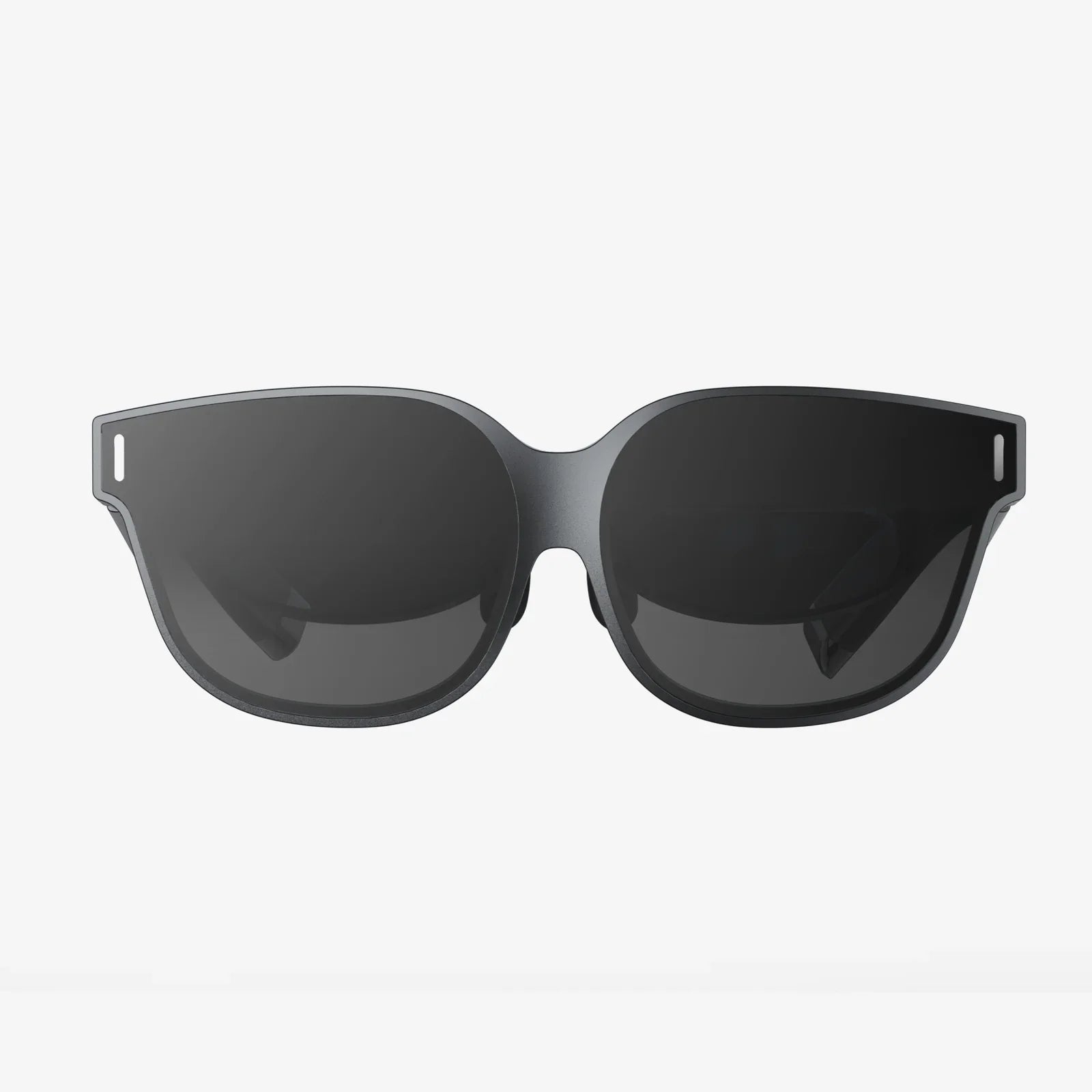
Imagine a world where the boundaries between the digital and the physical not only blur but dissolve entirely, where you can sculpt a virtual statue with your bare hands while standing in your living room, or where a historical figure can step out of a textbook to guide you through their era. This is no longer the stuff of science fiction; it is the imminent reality being forged at the fiery intersection of Virtual Reality, Augmented Reality, and mixed media—a convergence so potent it promises to fundamentally alter the fabric of human interaction, creativity, and understanding.
The Lexicon of a New Dimension: Defining the Spectrum
To appreciate the depth of this fusion, we must first disentangle the acronyms that define it. While often used interchangeably, VR (Virtual Reality) and AR (Augmented Reality) represent distinct points on a continuum known as the reality-virtuality continuum.
Virtual Reality is an immersive, fully digital experience. By donning a headset, the user is transported into a computer-generated environment, completely occluding the physical world. It is a reality substitution, a total escape into a crafted universe where the only limits are the imagination of the creators and the processing power of the hardware.
Augmented Reality, by contrast, is a reality enhancement. It superimposes digital information—images, data, 3D models—onto the user's view of their real-world environment through a device like a smartphone, tablet, or transparent glasses. The physical world remains the primary stage, but it is adorned with a digital layer that provides context, information, or entertainment.
Mixed Reality (MR or XR for extended reality) is the crucial bridge between these two states. It doesn't just overlay digital content; it anchors it to and allows it to interact with the real world in real-time. A virtual character that hides behind your real sofa, or a digital control panel that appears fixed to your wall, are examples of mixed reality. It understands the geometry of your space, enabling a believable coexistence of atoms and bits.
The term "mix media" in this context expands this concept further. It refers to the integration of these immersive technologies with traditional and digital media forms—video, audio, photography, text, animation, and interactive web elements. It’s the philosophy that the most powerful experiences are not built from a single technology but are symphonies composed from every tool available.
The Architectural Pillars: How the Fusion Works
The seamless magic of VR AR mix media is underpinned by a complex architecture of hardware and software, each component pushing the boundaries of what's possible.
Sensory Hardware: Gateways to New Realities
The journey begins with the hardware. Modern headsets are marvels of engineering, packing high-resolution displays, precise positional tracking, and sophisticated sensor arrays. Inside-out tracking uses onboard cameras to map the environment, freeing users from external sensors. For AR, advancements in waveguide optics and micro-displays are making sleek, consumer-friendly glasses a tangible future. Furthermore, haptic feedback devices—from gloves that simulate touch to full-body suits—are adding the crucial sense of physical interaction, closing the loop between seeing a virtual object and "feeling" it.
The Software Engine: Where Reality is Rendered
This hardware is brought to life by powerful game engines and development platforms. These environments provide the tools to build worlds, create physics, and write the logic that governs how digital and physical objects interact. They handle the monumental task of spatial mapping, where the device scans and creates a 3D mesh of the real world, allowing virtual objects to occlude correctly, bounce off surfaces, and appear truly present.
The Cloud and Connectivity: The Infinite Backbone
5G connectivity and cloud computing are the unsung heroes. Rendering photorealistic graphics in real-time is computationally intensive. Edge computing and cloud streaming allow for these heavy processes to be handled off-device, streaming the experience seamlessly to lighter, more mobile hardware. This enables persistent, shared experiences where a digital sculpture you leave in a public park remains there for others to discover, all thanks to a universal, cloud-based spatial canvas.
Revolutionizing Industries: Beyond Novelty
The application of VR AR mix media extends far beyond entertainment, infiltrating and optimizing core sectors of the global economy.
Transforming Education and Training
This is perhaps the most profound application. Imagine medical students performing intricate virtual surgeries on accurate anatomical models, making mistakes without consequence. Mechanics can see interactive repair instructions overlaid on the engine they are fixing. History students can walk through a digitally reconstructed ancient Rome, witnessing events unfold around them. This is experiential learning at its most potent, boosting knowledge retention and engagement to unprecedented levels.
Redefining Enterprise and Design
In architecture and manufacturing, professionals are using MR to visualize full-scale building models on the empty construction site, allowing for design changes before a single brick is laid. Car designers can sculpt 1:1 clay models and instantly switch them to digital to test aerodynamics. Remote experts can beam into a field technician's view, seeing what they see and annotating the real world with arrows and instructions to guide complex repairs, drastically reducing downtime and travel costs.
The Future of Retail and Commerce
E-commerce is on the cusp of a revolution. Instead of guessing if a new sofa will fit your living room, you can place a perfect 3D replica of it in your space through your phone's camera. You can "try on" clothes, glasses, or makeup virtually. This混合媒体approach drastically reduces purchase anxiety and product returns, creating a confident and engaging shopping experience from the comfort of home.
Expressing the Inexpressible: Art and Storytelling
Artists are embracing these tools to create entirely new forms of expression. They are painting in 3D space, creating immersive narratives where the viewer is not a passive observer but an active participant within the story. Museums are offering AR tours where exhibits come to life, and musicians are performing in virtual venues to global audiences. This is a new Renaissance, with a digital palette.
The Human Factor: Challenges and Ethical Considerations
This brave new world is not without its significant challenges. The issue of data privacy is monumental. These technologies require constant scanning of our most intimate spaces—our homes and workplaces. Who owns this spatial data? How is it stored and used? The potential for intrusive advertising or surveillance is a serious concern that requires robust ethical frameworks and regulation.
Furthermore, the digital divide could evolve into a reality divide. If these technologies become essential for work, education, and social connection, a society split between those who can afford access and those who cannot risks creating profound new inequalities. There are also physiological considerations, from eye strain and simulator sickness to the long-term psychological effects of increasingly blurred realities.
The Horizon: What Lies Beyond the Blend
The trajectory points towards even greater integration. The concept of the "metaverse"—a persistent network of shared, interconnected virtual spaces—is the ultimate expression of this blend. Brain-computer interfaces are in early development, aiming to bypass controllers and screens entirely, allowing us to manipulate digital worlds with thought alone. As artificial intelligence evolves, it will power intelligent digital agents that can understand our environment and context to provide assistance and companionship in genuinely meaningful ways.
The fusion of VR, AR, and mixed media is not merely another technological trend; it is a foundational shift in the human-computer interface. It represents a move away from screens we look at towards environments we inhabit. It is a tool for unlocking empathy through immersive storytelling, a catalyst for efficiency in enterprise, and a canvas for the next generation of artists. The confluence is here, and it is quietly, relentlessly, building a new layer of reality all around us, waiting for us to put on the lens and see it.
We stand at the precipice of a sensory revolution, where our digital and physical lives will not just connect but coalesce into a single, seamless experience—your next masterpiece, lesson, or adventure is no longer confined to a screen but is waiting to be unlocked in the space all around you.
Share:
Augmented Technology Glasses Are Redefining Reality and Reshaping Our World
Secure Wearable Tech: Navigating the Future of Personal Data and Privacy