


- by wangfred
VR AR Smart Glasses News: The Next Digital Revolution Is on Your Face
- by wangfred
Imagine a world where information doesn't live on a screen in your hand but is woven seamlessly into the fabric of your reality. This is the promise held by the latest wave of VR AR smart glasses news, a sector buzzing with more innovation and potential than ever before. We are standing on the precipice of a fundamental shift in how we interact with technology, and it’s all happening right before our eyes. The headlines are no longer just about niche gaming peripherals; they are about the next major computing platform, a device that could eventually replace your smartphone, your monitor, and your television, integrating the digital and physical worlds in ways once confined to science fiction.
For years, Virtual Reality (VR) and Augmented Reality (AR) have been discussed as parallel but distinct paths. VR offers a fully immersive, digital experience, transporting the user to another place entirely. AR, on the other hand, overlays digital information onto the user's view of the real world. The most exciting VR AR smart glasses news today revolves around the convergence of these two technologies into a single, powerful device. The next generation of head-worn computers aims to be what industry experts call "MR" or Mixed Reality, capable of blending the real and the virtual dynamically. This isn't just a semantic difference; it's a technological leap. These devices use advanced sensors, cameras, and LiDAR scanners to understand the geometry of the space around you, allowing virtual objects to be pinned to real-world surfaces, occluded by physical obstacles, and interacted with naturally.
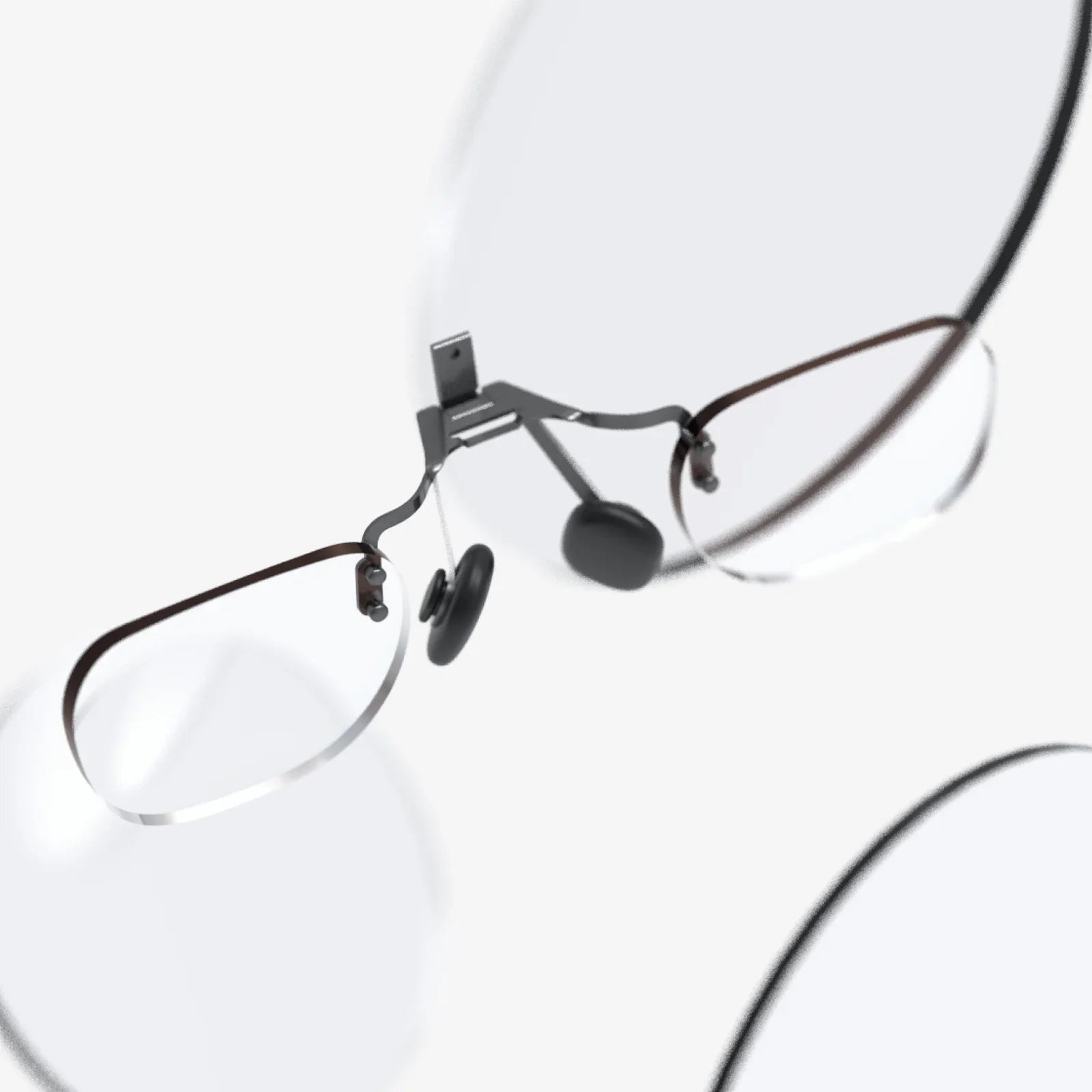
A critical barrier to widespread adoption has always been form factor. Early VR systems were bulky, tethered, and required powerful external computers. The most positive trend in recent VR AR smart glasses news is the relentless drive toward miniaturization and wearability. The goal is to create glasses that are socially acceptable, comfortable to wear for extended periods, and, ultimately, something people might choose to wear even without a specific digital task in mind. Advances in micro-OLED displays, waveguide optics, and battery technology are making this possible. We are seeing prototypes that look remarkably close to a slightly bulkier pair of premium sunglasses, a far cry from the sci-fi helmets of yesteryear. This shift is crucial because it moves the technology from a "task-based" device you use for an hour to an "always-on" platform that becomes an integral part of your daily life.
The engine driving this revolution is a suite of sophisticated hardware components. Understanding them is key to parsing the latest VR AR smart glasses news. At the heart of any device are the displays. Micro-OLED panels offer incredibly high resolution and pixel density in a tiny package, ensuring text is sharp and images are clear. In front of these displays are the optical systems, typically based on waveguide or birdbath optics. These intricate pieces of glass or plastic pipe light directly into the user's eyes, creating the illusion that digital images are out in the real world at a comfortable focal distance, reducing eye strain. On the outside, an array of sensors acts as the device's eyes. High-resolution cameras track the user's hand movements and gestures, enabling intuitive control without controllers. Depth sensors and Simultaneous Localization and Mapping (SLAM) algorithms work together to create a real-time 3D map of the environment, which is the foundational layer for any convincing AR or MR experience. Finally, all this is powered by custom silicon—system-on-chips (SoCs) designed specifically for the immense processing demands of spatial computing, handling everything from complex computer vision tasks to rendering high-fidelity graphics.
Powerful hardware is meaningless without a robust software ecosystem. The real battle revealed in VR AR smart glasses news is not just about who builds the best glasses, but who builds the best platform. This involves the operating system, the development tools, and the app ecosystem. The dominant players are investing billions into creating spatial operating systems that feel natural and magical. These interfaces abandon traditional files and folders for a three-dimensional workspace where apps live around you. For developers, new software development kits (SDKs) and game engines are being optimized to build 3D, interactive experiences that understand the physical world. The companies that succeed will be the ones that attract the most creative developers, who will in turn build the "killer apps" that drive consumer and enterprise adoption. This could be a revolutionary social experience, a must-have productivity tool, or a new form of immersive storytelling that hasn't been invented yet.
While consumer applications grab headlines, some of the most impactful VR AR smart glasses news comes from enterprise and professional sectors. Here, the value proposition is clear and immediate, often with a strong return on investment. In manufacturing and field service, technicians can wear glasses that overlay schematic diagrams, instruction manuals, or animated guides directly onto the machinery they are repairing, freeing their hands and drastically reducing errors. In healthcare, surgeons can access vital patient statistics, MRI scans, or monitoring data in their field of view during procedures. Medical students can practice complex surgeries on virtual patients. Architects and engineers can walk clients through full-scale, interactive 3D models of buildings before a single brick is laid. In logistics and warehousing, workers can see optimized picking routes and inventory information overlaid on shelves, supercharging efficiency. These professional use cases are proving the technology's worth today, funding further innovation that will eventually trickle down to consumer products.
As with any transformative technology, the rise of always-on, see-through smart glasses brings a host of social and ethical questions that are increasingly part of the VR AR smart glasses news cycle. Privacy is perhaps the most significant concern. Devices with always-on cameras and microphones that can record everything the user sees and hears present a profound privacy challenge, both for the wearer and for anyone who enters their field of view. The concept of "consent to be recorded" becomes murky in public spaces. Furthermore, the potential for constant digital distraction is real. Will we be able to be truly present in a conversation if a stream of notifications and information is competing for our visual attention? There are also concerns about digital addiction, the creation of even more immersive filter bubbles, and the societal divide between those who can afford this new technology and those who cannot. Addressing these concerns proactively through thoughtful design and clear regulations will be just as important as the technological breakthroughs themselves.
Analyzing the current VR AR smart glasses news, the path forward is both exciting and challenging. In the immediate future, we can expect continued incremental improvements: lighter designs, longer battery life, higher-resolution displays, and more intuitive user interfaces. The focus will be on refining the experience and expanding the library of compelling applications. Further out, the holy grail remains true photorealistic AR—virtual objects that are indistinguishable from real ones—and more natural input methods, moving beyond hand tracking to perhaps even brain-computer interfaces for certain commands. The ultimate goal is a device that is always with you, contextually aware, and adds value to your life without being intrusive. It will be a quiet assistant, a creative canvas, and a window to other worlds, all contained in a form factor as ordinary as a pair of eyeglasses.
The stream of VR AR smart glasses news is more than just tech industry gossip; it's a live broadcast of the future being built. The technology is rapidly maturing, shedding its clunky prototype phase and evolving into something poised to redefine our relationship with the digital universe. The questions it raises are profound, challenging our concepts of privacy, presence, and reality itself. One thing is certain: the race to put a powerful computer on your face is accelerating, and the winner won't just sell you a new device—they will sell you a new way to see the world. The next time you look up from your phone, the screen might already be gone, replaced by a limitless, layered reality waiting to be explored.
Share:
Is AI to Its Glasses What the Brain Is to the Human Eye?
AR VR Headset Could Like: The Future of Human Connection and Experience