


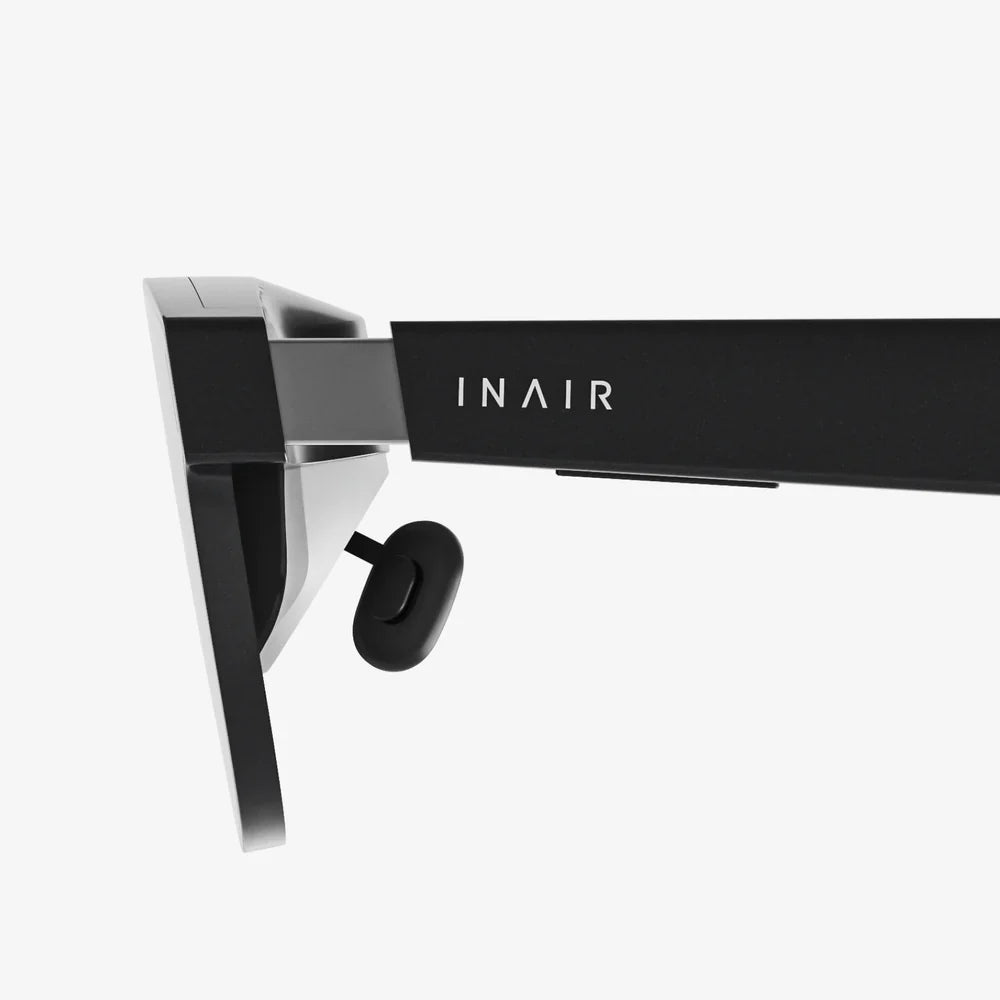
- by wangfred
Is AI to Its Glasses What the Brain Is to the Human Eye?
- by wangfred
Imagine a world where your most intuitive thoughts are understood before you even speak them, where information about your surroundings flows into your perception as naturally as sight itself, and where a digital intelligence seamlessly integrates with your physical experience. This is not a distant sci-fi fantasy; it is the imminent future being built today at the intersection of artificial intelligence and advanced wearable technology. The most profound and personal expression of this convergence is found not on your wrist or in your pocket, but on your face. The question is no longer about what smart glasses can do, but what they can become when powered by a sophisticated, ever-present artificial mind. To truly grasp this revolution, we must understand that the relationship between the hardware and the software is not one of simple addition, but of fundamental symbiosis. The AI is to the glasses what the human brain is to the eyes—it is the source of cognition, context, and true comprehension.
At first glance, a pair of modern smart glasses might appear deceptively simple—a familiar frame housing a few discreet technological components. But this minimalist aesthetic belies a complex array of sensors and systems designed to act as the peripheral nervous system for its digital brain. These devices are equipped with high-resolution cameras, not for recording video in the traditional sense, but for continuous, nuanced visual capture. They contain microphones arrayed to hear not just voice commands, but to understand ambient sound, filtering noise from signal with astonishing precision. Inertial measurement units (IMUs) track head movement and orientation, while in more advanced models, LiDAR scanners or time-of-flight sensors map the environment in three dimensions, creating a real-time depth map of the world.
This suite of sensors generates a torrent of raw, unstructured data—a chaotic stream of pixels, sound waves, and spatial points. On its own, this data is largely meaningless. It is the equivalent of the signals sent from the retina to the visual cortex; rich in information but poor in understanding. The hardware provides the sensation, the ability to collect photons and sound waves, but it is utterly incapable of deriving meaning from them. Without a processing layer to interpret this deluge, the glasses would be little more than a sophisticated, and arguably creepy, recording device. They can see, but they cannot perceive. They can hear, but they cannot listen. This is precisely where the artificial intelligence steps in, transforming inert hardware into a perceptive partner.
Artificial intelligence serves as the central nervous system and cognitive engine for smart glasses. It is the critical layer that imbues the hardware with purpose and utility. Through a combination of on-device processing and seamless cloud integration, the AI performs a series of monumental tasks in real-time, tasks that are so complex they dwarf the capabilities of the hardware itself.
Computer Vision: This is perhaps the most demanding and impactful function. The AI employs sophisticated neural networks for object recognition, instantly identifying everything from faces and text to specific products, landmarks, and even subtle gestures. It can read a menu in a foreign language and overlay a translation directly onto your field of view. It can look at a complex mechanical assembly and highlight the next step in a repair manual. This is not simple pattern matching; it is a deep, contextual understanding of visual data.
Natural Language Processing (NLP): The microphones feed audio data to NLP models that do far more than transcribe speech. They discern intent, extract meaning, and understand context. This allows for interactions that feel conversational and intuitive, not based on rigid, predefined commands. You can ask, "What's the best way to this building?" and the AI will understand that "this building" refers to the structure you are currently looking at, providing directions without you ever needing to specify an address.
Contextual Awareness and Predictive Assistance: The true magic happens when these capabilities fuse. The AI synthesizes the visual scene, the audio input, your location, and your personal data (calendar, preferences, past behavior) to form a holistic understanding of your situation. It's the difference between a tool and a assistant. If you are standing in a grocery store, looking at avocados, the AI can infer you are shopping for ingredients. It might then check a recipe you saved earlier and gently remind you that you'll need lime and cilantro as well, overlaying a subtle indicator on the relevant items on the shelf. This is proactive, predictive assistance that anticipates need without explicit instruction.
Augmented Reality Integration: The AI is the maestro conducting the symphony of digital overlay onto the physical world. It calculates precise positioning and anchoring, ensuring that a virtual object appears to sit convincingly on a real table or that navigation arrows are painted onto the sidewalk ahead of you. This requires a constant, real-time dialogue between the sensors mapping the environment and the AI interpreting that map to place digital content convincingly within it.
Describing AI as merely "powering" smart glasses is a significant understatement. It is more accurate to say the two entities form a symbiotic whole, each enabling the other to achieve its ultimate potential. The glasses provide the AI with a continuous, rich, and multimodal stream of data about the user's world—data it could never access from a smartphone in a pocket. In return, the AI gives the glasses a form of cognition, turning them from passive observers into active participants in the user's life.
This relationship creates a new paradigm of human-computer interaction, often referred to as ambient computing. The technology fades into the background of the user's awareness. There is no screen to stare at, no app to open. Interaction becomes glance-based, gesture-based, and voice-based. Information is presented contextually and minimally, integrated directly into the user's perception of reality. The goal is to augment human capability, not to distract from it. The AI handles the cognitive load of searching, translating, reminding, and identifying, freeing the user to be more present and effective in their task. It is a shift from a tool we use to an intelligence we work with.
For this vision to be fully realized and achieve mass adoption, significant challenges must be overcome, and nearly all of them are tied directly to the capabilities and implementation of the AI.
Privacy and the Ethical Imperative: A device that sees and hears what you do, continuously, raises profound privacy concerns. The AI must be designed with privacy-first principles. This means maximizing on-device processing so that raw visual and audio data never needs to leave the glasses. Only abstracted, processed information—the "what" not the "raw feed"—should be transmitted to the cloud when necessary. Users must have transparent control over their data. The AI must be an ethical partner, and its design must earn and keep the user's trust, which is the single most important currency for this technology.
Battery Life and Computational Efficiency: Running powerful AI models in real-time is computationally intensive and a notorious drain on battery life. Breakthroughs in specialized processing chips, known as NPUs (Neural Processing Units), are essential. These chips are designed specifically to run neural network computations with extreme efficiency, enabling complex AI tasks without requiring a large, heavy battery. The evolution of AI is inextricably linked to the evolution of the hardware that supports it.
Social Acceptance and Design: For smart glasses to be worn all day, every day, they must be indistinguishable from fashionable traditional eyewear. They must be lightweight, comfortable, and desirable. The technology must be invisible, both in its operation and its appearance. Bulky, obtrusive designs that mark the wearer as a "cyborg" will never achieve the ubiquity required for this platform to truly flourish. The hardware must recede physically, just as the AI must operate seamlessly in the background.
Looking forward, the trajectory of AI-powered eyewear points toward capabilities that today seem like pure magic. We are moving toward systems that understand not just what you are looking at, but why you are looking at it. Predictive models will become so refined that assistance will feel telepathic. The line between your memory and the device's recall will blur; it will act as a perfect, searchable extension of your own mind.
In professional fields, this will revolutionize everything from surgery and engineering to maintenance and logistics. A technician will see complex diagnostic data overlaid on the machinery they are repairing. A surgeon will have vital signs and 3D anatomical guides projected into their field of view, their hands remaining sterile and free. For the general consumer, the world will become instantly translatable, navigable, and explainable. The anxiety of being in an unfamiliar place or facing an unfamiliar task will melt away, replaced by a quiet confidence afforded by a constant, intelligent companion.
The ultimate evolution will be a move from augmentation to true mediation. The AI will not just add a layer to reality but will have the capacity to subtly alter perception, filtering visual clutter for someone with ADHD, enhancing contrast for someone with low vision, or providing auditory transcriptions for someone who is hard of hearing. The glasses, guided by AI, will become a adaptive filter for reality, personalized to the cognitive and perceptual needs of each individual wearer.
The fusion of artificial intelligence and wearable optics is poised to unlock a dimension of human experience we are only beginning to comprehend. This isn't about adding features to a pair of glasses; it's about weaving a fabric of intelligence into the very way we perceive and navigate our lives. The hardware gives the AI a window into our world, and in return, the AI gives us a new lens through which to see it—a lens of instant knowledge, effortless assistance, and boundless possibility. The age of staring down at a screen is ending, and the age of looking up and out, with intelligence enhancing our every glance, is dawning.
Share:
What Is Augmented Reality & VR: A Deep Dive Into Digital Dimensions
VR AR Smart Glasses News: The Next Digital Revolution Is on Your Face