


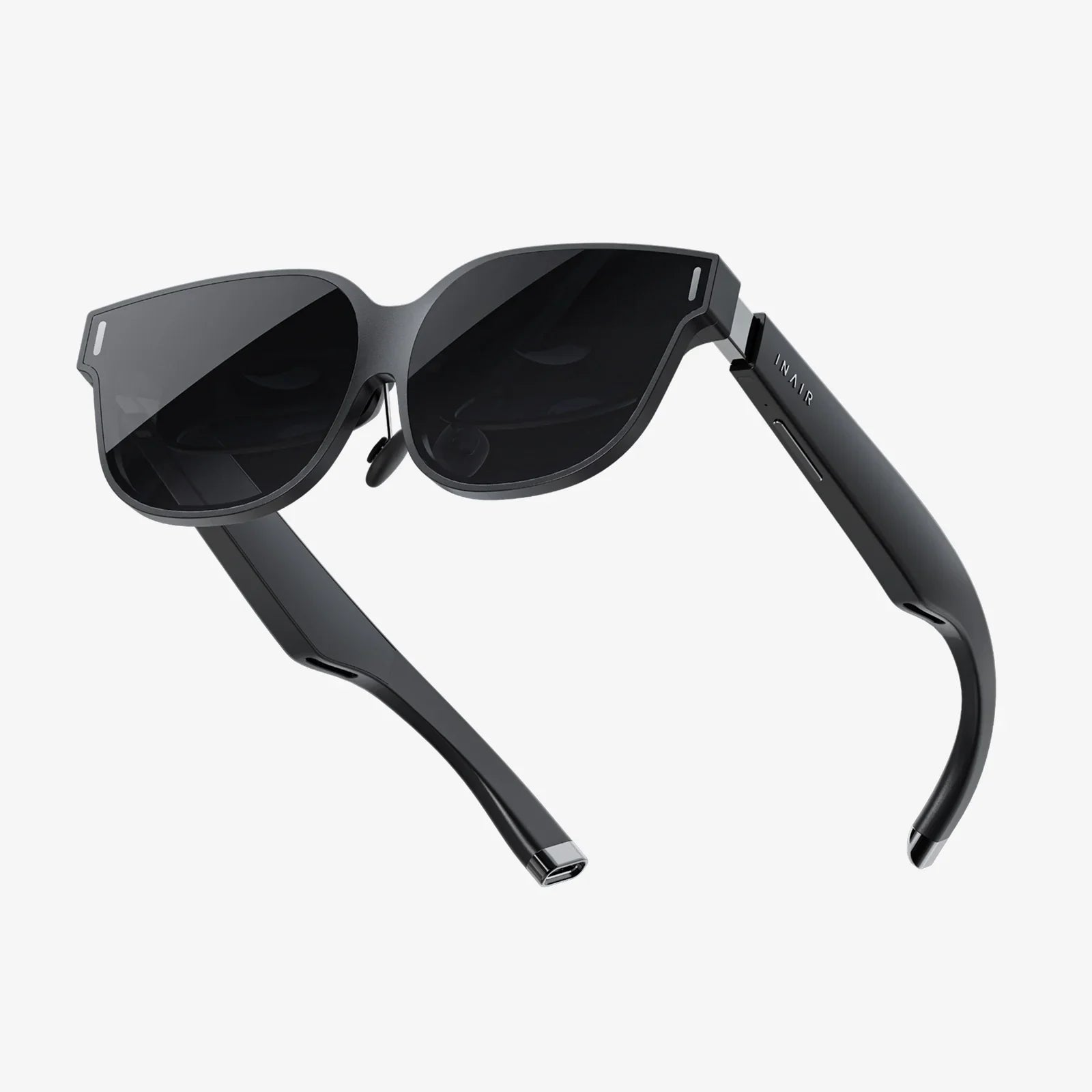
You've seen the future, and it's wearing a headset. The promise of virtual reality—of stepping into entirely new worlds, of experiencing the impossible—is no longer science fiction but a tangible, thrilling reality. Yet, with a rapidly expanding market, the path to finding your perfect portal to the metaverse is fraught with more questions than answers. How do you possibly choose? This definitive VR comparison is your essential guide, cutting through the hype and technical jargon to lay bare the strengths, weaknesses, and soul of modern virtual reality. We're not just comparing specs; we're comparing dreams and the hardware that delivers them. Prepare to have every question answered as we embark on a journey to find the headset that doesn't just sit on your head, but transforms your world.
The Three Pillars of VR: Understanding the Core Categories
Before diving into specific features, any meaningful VR comparison must start with a fundamental understanding of the three distinct categories of headsets available today. Your choice between them will fundamentally shape your experience, budget, and setup.
Tethered (PC/Console-Powered) VR
These are the powerhouses of the virtual reality world. Tethered headsets connect via a high-speed cable to an external computer or gaming console, which acts as the engine rendering the complex visuals. This external processing power is their greatest strength and their most significant constraint.
Pros:
- Unmatched Performance: Access to powerful external GPUs allows for the highest resolutions, the most detailed textures, the most complex physics, and the smoothest frame rates. This results in the most immersive and visually stunning experiences available.
- Top-Tier Experiences: The vast majority of deep, narrative-driven AAA VR titles are built for this platform, offering experiences that are richer and more detailed.
- Advanced Tracking: Often utilizing external sensors or base stations, these systems provide ultra-precise, millimetre-accurate tracking of your head and controllers, crucial for competitive gaming and professional applications.
Cons:
- High Cost of Entry: The requirement for a high-end gaming PC or a specific console significantly raises the total cost of ownership.
- Lack of Portability: You are physically tethered to your machine, limiting your play area and making it impossible to take your VR system to a friend's house.
- Complex Setup: The process of connecting sensors, managing cables, and ensuring software compatibility can be daunting for less technically inclined users.
Standalone (All-in-One) VR
Standalone headsets represent the most popular and accessible segment of the market. These are completely self-contained units with all the necessary computing power, sensors, and batteries built directly into the headset. They represent a perfect balance of convenience and capability for most users.
Pros:
- Ultimate Convenience and Freedom: No wires, no PC, no external sensors. You can power it on and be in VR within seconds, anywhere you have enough space to move safely.
- Lower Overall Cost: While the headset itself has a cost, it eliminates the need for a expensive gaming rig, making it a more affordable option overall.
- Mass Market Appeal: This accessibility has fostered a huge and vibrant ecosystem of games, social apps, and media content designed for a broad audience.
Cons:
- Performance Trade-offs: Mobile processors, while impressive, cannot compete with a desktop-grade GPU. Visuals are often less complex, with simpler environments and lower resolution textures.
- Battery Life: Sessions are limited by the internal battery, typically offering two to three hours of use before needing a recharge.
- Limited Processing for the Most Demanding Tasks: Highly complex simulations or graphically intensive professional software may not run effectively on standalone hardware.
Mobile VR (Smartphone-Powered)
Once a prominent entry point, mobile VR has largely been supplanted by more capable standalone systems. These platforms use a smartphone slotted into a head-mounted holder as both the display and the computer.
Pros:
- Extremely Low Cost: For those who already own a compatible smartphone, the cost of entry is just the price of the headset holder, which can be very inexpensive.
- Easy Introduction to VR: Serves as a simple, no-commitment way to experience basic 360-degree videos and simple games.
Cons:
- Severely Limited Experience: Lack of positional tracking (the ability to move your head in physical space) and basic controllers result in a poor and often nauseating experience compared to other categories.
- Obsolete Technology: This category has seen little to no development in recent years and is not recommended for anyone seeking a true VR experience.
Key Metrics for Your VR Comparison
Once you've chosen a category, you need to compare the specific features that define the quality of the experience. Here’s what to look for.
Display and Visual Fidelity
The window into virtual worlds is defined by its screens. Key terms here include:
- Resolution and PPD (Pixels Per Degree): Higher numbers mean a sharper, clearer image with less visible "screen door effect" (the visible lines between pixels).
- Refresh Rate (Hz): A higher refresh rate (90Hz, 120Hz, and now even 144Hz+) leads to smoother motion, which is critical for comfort and reducing simulation sickness.
- Lens Technology: Pancake lenses are a newer innovation that allow for much slimmer and lighter headsets compared to traditional Fresnel lenses, often with a larger "sweet spot" of clarity.
- Field of View (FoV): Measured diagonally, a wider FoV (110+ degrees is excellent) increases the feeling of immersion by filling more of your peripheral vision.
Tracking and Controllers
How the system translates your real-world movements into the virtual space is paramount.
- Inside-Out vs. Outside-In: Modern standalone and tethered headsets almost universally use inside-out tracking, where cameras on the headset itself track the environment and controllers. This eliminates the need for external sensors. Outside-in tracking uses external base stations for ultra-high precision, typically found in high-end tethered systems.
- Controller Design and Haptics: Ergonomic controllers with intuitive button layouts, finger tracking, and advanced haptic feedback (beyond simple rumble) significantly enhance presence and interaction.
Comfort and Design
A headset you can't wear for more than 30 minutes is a failed purchase, no matter how powerful.
- Weight and Balance: Lighter isn't always better; a well-balanced headset that doesn't put pressure on your cheeks is more important than absolute weight.
- Head Strap and Facial Interface: A rigid, halo-style strap or elite strap with a counterweight is almost always more comfortable than a simple elastic strap. Replaceable, breathable foam or silicone facial gaskets are essential for hygiene and comfort.
- IPD (Interpupillary Distance) Adjustment: Mechanical adjustment of the lens spacing to match your eyes is crucial for visual clarity and comfort. Software-only adjustment is inferior.
Software and Ecosystem
The hardware is useless without compelling software. This is a critical, often overlooked part of the VR comparison.
- Content Library: Is the system backed by a robust and curated store with a steady stream of high-quality exclusive titles?
- Social and Productivity Apps: Beyond games, consider the availability of social platforms, fitness apps, and productivity tools for remote work.
- Backward Compatibility and Upgrades: Does the ecosystem respect your previous software purchases, allowing you to carry your library forward to new hardware?
Matching a Headset to Your Virtual Life
With the categories and features in mind, your choice ultimately comes down to your primary use case.
For the Hardcore Gamer
Your priority is unparalleled visual fidelity and access to the most demanding, immersive game titles. You likely already own or are willing to invest in a powerful gaming PC.
Verdict: A high-end tethered headset is your only choice. Focus your VR comparison on resolution, refresh rate, FoV, and comfort for long play sessions.
For the Fitness Enthusiast
You want to break a sweat, box, dance, and use VR as a tool for health and wellness. Freedom of movement and convenience are key.
Verdict: A standalone headset is ideal. Prioritize a comfortable, secure fit with good ventilation, strong library of fitness apps, and perhaps accessory support for better hygiene during intense workouts.
For the Social Butterfly and Explorer
You're drawn to VR for its social connections, live events, concerts, and casual experiences. You want to hang out with friends in virtual spaces and explore user-generated worlds.
Verdict: A mainstream standalone headset is perfect. Your VR comparison should focus on the strength of the social ecosystem, the quality of the built-in speakers/microphone, and the ease of use for jumping in and out of social apps.
For the Professional and Creator
You need VR for 3D design, architecture, training, simulation, or data visualization. Precision, clarity, and reliability are non-negotiable.
Verdict: Your needs could push you towards either spectrum. For raw power, a tethered headset is best. For demonstrations and portability, a high-resolution standalone headset might be suitable. Focus on resolution, comfort for long periods, and professional software support.
The Future on the Horizon
The world of VR is not static. Even as you conduct your VR comparison today, new technologies are poised to redefine the landscape tomorrow. Keep an eye on developments in varifocal lenses for more natural depth perception, eye-tracking for foveated rendering (dramatically boosting performance) and intuitive interfaces, and haptic gloves that will eventually replace controllers, allowing us to truly feel virtual objects. The journey into virtual reality is one of constant evolution, and the perfect headset is the one that unlocks your next great adventure today, while hinting at the wonders still to come.
Your journey into the virtual realm is intensely personal, a quest for the device that will become your gateway to other dimensions. This VR comparison has armed you with the knowledge to see beyond the marketing slogans and understand the real trade-offs between power, freedom, and cost. The ideal headset isn't necessarily the one with the highest specs; it's the one that disappears on your head, whose controllers feel like an extension of your hands, and whose library contains worlds you can't wait to explore. The market is rich with option, each a key to a different door. Now, equipped with clarity and confidence, you hold the power to choose your reality. The next world you step into is waiting.
Share:
Types of AR Devices: A Comprehensive Guide to the Augmented Reality Landscape
Adjustable Focus Eyeglasses: The Revolutionary Future of Personalized Vision Correction