


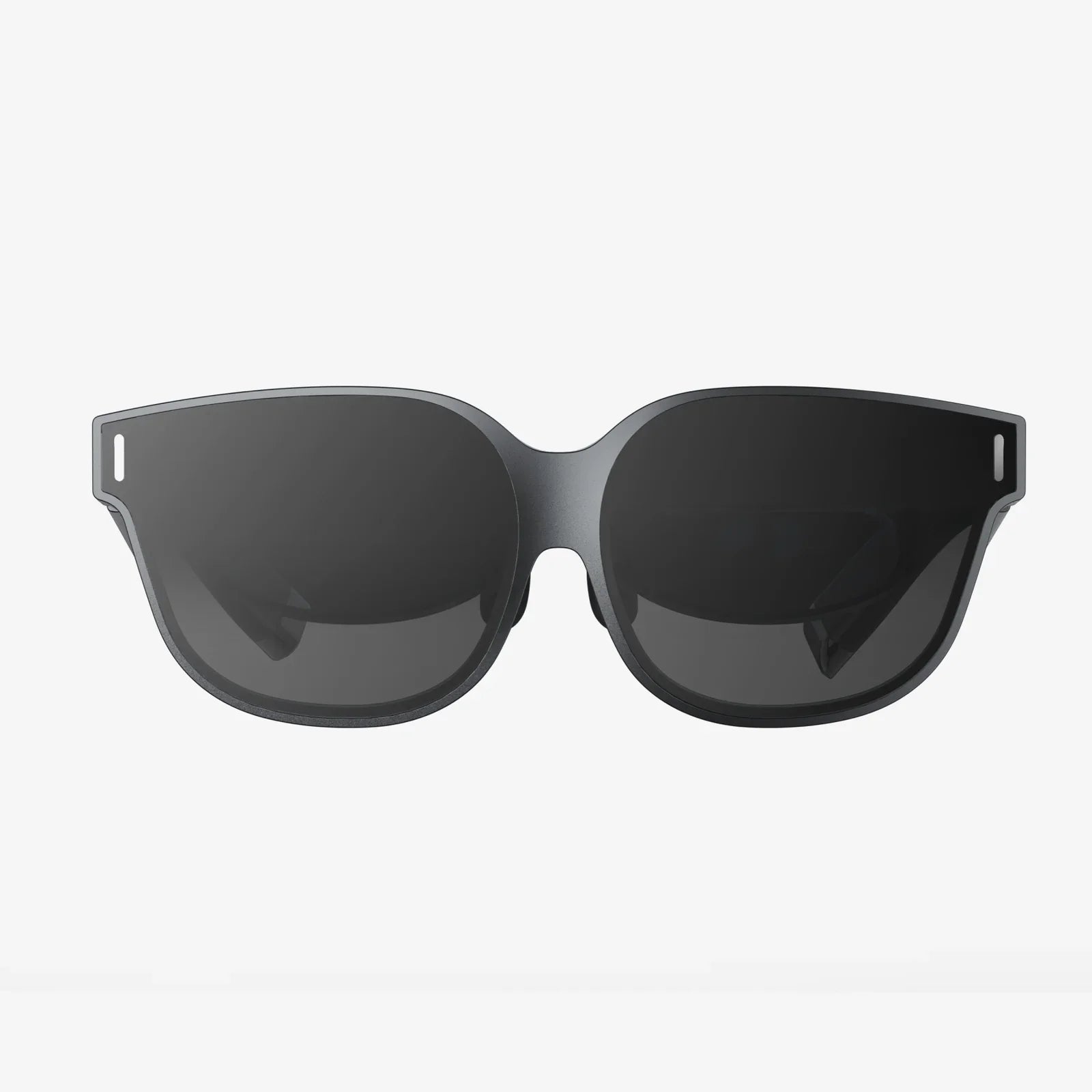
Imagine a world where digital information seamlessly blends with your physical reality, where instructions float over machinery, historical figures materialize in your living room, and navigation arrows are painted directly onto the street before you. This is the promise of Augmented Reality (AR), a technology rapidly transitioning from science fiction to tangible tool. But to step into this world, you need a gateway—a device capable of weaving the digital with the physical. The landscape of AR hardware is surprisingly diverse, with each type of device offering a unique key to unlock these experiences, tailored to different needs, budgets, and visions of the future. Understanding these categories is the first step to navigating the augmented world to come.
The Foundation: Marker-Based vs. Markerless AR
Before diving into the hardware itself, it's crucial to understand the underlying technology that powers the AR experience on these devices. Fundamentally, AR systems are categorized by how they anchor digital content to the real world.
Marker-Based AR
This is one of the earliest forms of AR. It relies on a specific physical visual cue, often called a "fiducial marker"—think a QR code or a specialized image. The device's camera scans this marker, which acts as a digital anchor point. The AR software recognizes the marker's unique pattern, orientation, and size, and uses this data to precisely superimpose a digital object onto it. This method is highly reliable and accurate for its intended use, making it excellent for targeted applications like interactive product manuals (where you point your device at a part number) or immersive board games. However, its major limitation is its dependence on pre-prepared markers.
Markerless AR
This is the more advanced and flexible approach that modern AR devices strive for. Instead of needing a predefined marker, markerless AR uses a suite of technologies like simultaneous localization and mapping (SLAM), depth tracking, and environmental understanding to place digital objects persistently in the real world. Your device understands the geometry of your room—the flatness of the table, the verticality of a wall—and uses these surfaces as anchors. This allows you to place a virtual lamp in the corner of your room and have it stay there even if you walk away and come back. Markerless AR is essential for more immersive and widespread applications, from furniture placement apps to complex industrial design visualizations.
1. Smartphone and Tablet AR: The Gateway Drug
The most accessible and widespread type of AR device is the one you likely already own: a smartphone or tablet. These devices act as a viewport into the augmented world through their cameras, screens, and motion sensors.
How It Works
The experience is screen-based. You hold up your device, and the live camera feed is displayed on the screen. The AR software then overlays digital graphics onto this video feed in real-time, using the device's accelerometer, gyroscope, and GPS to understand its position and orientation in space.
Key Characteristics
- Accessibility: Billions of people already have a capable device in their pocket.
- Ease of Use: No learning curve; users are already familiar with the interface.
- Cost-Effective: No additional hardware purchase is required for basic AR.
- Limitations: The experience is confined to the screen, requiring you to hold the device up, which can be fatiguing. It also offers a limited field of view and lacks the immersiveness of see-through displays.
Primary Use Cases
This category exploded in popularity with applications like social media filters and games. It's perfectly suited for marketing campaigns (try on sunglasses virtually), simple gaming (catching virtual creatures in your park), and practical utilities like translation apps that overlay translated text onto foreign street signs.
2. Smart Glasses: The Next Evolutionary Step
Smart glasses represent a significant leap forward, aiming to free AR from the confines of a handheld screen and integrate it directly into your field of vision. The goal is to make information contextually relevant and always available, hands-free.
How They Work
These are wearable glasses that project digital imagery onto their lenses. There are two main optical display methods:
- Optical See-Through (OST): The user looks directly at the real world through transparent lenses or waveguides. A miniature projector, usually in the arm of the glasses, beams light onto this lens, which then reflects it into the user's eye, overlaying the image onto their natural view.
- Video See-Through (VST): Cameras on the outside of the glasses capture the real world. This video feed is then combined with digital graphics on an internal, non-transparent display (like a micro-LED screen) and shown to the user. This allows for more vivid and opaque digital objects but can sometimes create a slight latency between real-world movement and the video feed.
Key Characteristics
- Hands-Free Operation: The ultimate utility for field workers, surgeons, or mechanics.
- Contextual Information: Data appears where it's most needed—instructions over a machine, a patient's vitals during surgery.
- Social Acceptability: Designs are increasingly focused on looking like regular eyewear.
- Limitations: Often limited by battery life, processing power (sometimes tethered to a phone or computer), field of view, and brightness in outdoor environments.
Primary Use Cases
This category is dominant in enterprise and industrial settings. Technicians use them to access schematics while repairing equipment, warehouse workers use them for hands-free order picking, and medical students use them to visualize anatomy during study. Consumer applications are growing for navigation, fitness data, and immersive storytelling.
3. Augmented Reality Headsets: Power and Immersion
When smart glasses aren't enough—when the application demands more processing power, a wider field of view, or more advanced sensors—the industry turns to dedicated AR headsets. These are more robust, helmet-like devices that often fully enclose the user's eyes.
How They Work
They typically use a Video See-Through (VST) system. High-resolution cameras provide a live feed of the surroundings, and powerful onboard processors render complex 3D models and environments, compositing them seamlessly into the display. They are packed with sensors, including depth sensors, LiDAR, and multiple cameras for inside-out tracking (understanding their position without external sensors).
Key Characteristics
- High Performance: Capable of rendering incredibly detailed and complex models.
- Advanced Tracking: Superior environmental understanding and persistence, allowing digital objects to stay locked in place with high accuracy.
- Wide Field of View (FOV): Offers a more immersive experience where digital elements can fill more of your vision.
- Limitations: Generally bulkier, heavier, and more expensive than smart glasses. Often less socially acceptable for all-day wear and have shorter battery life due to higher power consumption.
Primary Use Cases
These are the power tools of AR, found in design studios, engineering firms, and military applications. Architects and engineers use them for full-scale, 1:1 visualization of buildings and prototypes before they are built. They are also used for advanced training simulations for everything from surgery to aircraft maintenance.
4. Spatial Computing Systems: The Pinnacle of Convergence
This emerging category represents the bleeding edge, blurring the lines between AR, VR, and personal computing. These are not just displays; they are comprehensive computing platforms designed for interaction within 3D space.
How They Work
They combine the high-fidelity VST of advanced headsets with incredibly powerful onboard processors, often rivaling laptops. Their key differentiator is the sophisticated input system. They use a combination of hand-tracking, eye-tracking, and voice control to allow users to manipulate digital objects as if they were physical, creating a direct and intuitive interface with the digital world.
Key Characteristics
- All-in-One System: A self-contained computer and display unit.
- 3D User Interface (UI): Replaces the traditional 2D desktop with windows and apps that exist in your physical space.
- Natural Interaction: Manipulating digital content with your hands and eyes feels instinctive.
- Limitations: This is currently the most expensive and cutting-edge category, placing it out of reach for most consumers and many businesses. It is still very much in its early adopter phase.
Primary Use Cases
The use cases are expansive and foundational. These devices are being positioned as replacements for traditional desktops, allowing for a multi-monitor setup anywhere. They are also the premier platform for developing the next generation of 3D apps and experiences, from immersive design and data visualization to social connection and entertainment.
5. Specialized and Niche AR Devices
Beyond the mainstream categories, AR technology is being integrated into specialized forms to serve very specific purposes.
AR HUDs (Heads-Up Displays)
Primarily used in aviation and increasingly in automotive applications, these systems project critical information like speed, navigation, and warnings directly onto the windshield or a combiner glass in the pilot's or driver's line of sight. This allows them to access information without looking away from their path.
AR Contact Lenses
Still deep in the research and development phase, this represents the ultimate form factor for AR—complete invisibility. The goal is to embed microscopic components, including displays and sensors, into a comfortable contact lens. The technical challenges around power, miniaturization, and eye safety are immense, but the potential for a truly seamless interface is unparalleled.
Choosing the Right Device: A Matter of Purpose
With this array of options, selecting the right type of AR device hinges entirely on the intended application. A consumer wanting to play games or use social filters needs only their smartphone. A warehouse manager equipping a team for logistics would choose enterprise-grade smart glasses for hands-free efficiency. An automotive designer visualizing a full-scale car model would require the power and fidelity of an advanced AR headset. And a developer building the future of spatial computing would target the most advanced systems available. The spectrum of AR devices ensures that as the technology matures, there is a tool for every task, from the mundane to the extraordinary.
The journey through the types of AR devices reveals a technology in rapid, purposeful evolution. From the simple screen in your hand to the immersive visor on your face, each form factor is a testament to a different approach to blending realities. This isn't a race with a single winner, but the emergence of a rich ecosystem where each device has its role to play. As these gateways become more powerful, affordable, and invisible, the line between our world and the digital one will not just blur—it will fundamentally disappear, reshaping how we work, learn, connect, and see everything around us. The device you choose will be your lens on this new world.
Share:
AR Core Compatible Devices: Your Ultimate Guide to Unlocking Augmented Reality
VR Comparison: A Deep Dive into Choosing the Perfect Virtual Reality Experience