


- by wangfred
VR Glasses 2025: The Year Reality Gets a Spectacular Upgrade
- by wangfred
Imagine slipping on a pair of sleek, unassuming glasses and instantly being transported to a boardroom where holographic colleagues sit across from you, to a front-row seat at a concert on another continent, or to a virtual workshop where your digital creations have tangible weight. This is not a distant sci-fi fantasy; it is the imminent reality promised by VR glasses in 2025. We stand on the precipice of a fundamental shift, not just in how we play games, but in how we connect, work, learn, and perceive the very fabric of our digital and physical worlds. The coming year is poised to be the pivotal moment where virtual reality sheds its novelty skin and emerges as a mature, indispensable platform, and it all starts with the hardware on your face.
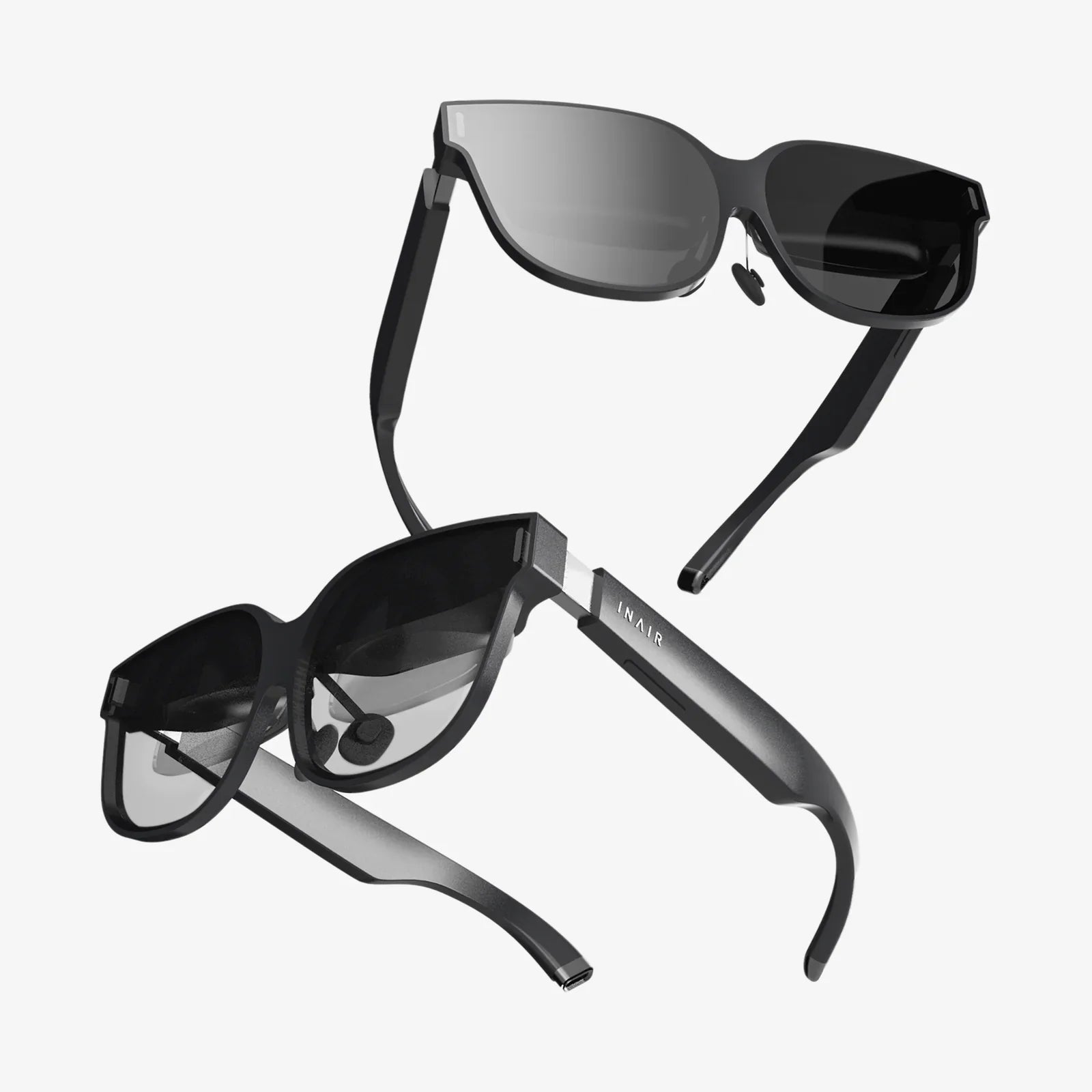
The journey of VR hardware has been a relentless pursuit of miniaturization and comfort, and 2025 represents a quantum leap in this evolution. The bulky, face-encompassing headsets of the past are giving way to a new generation of devices that more closely resemble standard eyewear.
The defining characteristic of VR glasses 2025 is their significantly reduced size and weight. Advances in micro-OLED and pancake lens technology have collapsed the required distance between the display and the eye, eliminating the need for large, protruding housings. These devices are no longer isolating helmets but are becoming lightweight frames that users can wear for extended periods without fatigue, a critical factor for adoption beyond short-burst entertainment.
Furthermore, the paradigm is shifting from all-in-one to right-in-one. While standalone units with impressive onboard processing will thrive, many 2025-era glasses will embrace a hybrid approach. They will act as high-resolution displays and sensor hubs, wirelessly tethered to a powerful computing source—be it a compact pocketable computer, a smartphone, or even cloud-based rendering. This bifurcation allows users to choose between ultimate convenience and maximum performance, making high-fidelity VR accessible to a broader audience.
If form factor is the body of the 2025 VR experience, then the display is its soul. This is where the magic happens, and the advancements are nothing short of breathtaking. The goal is simple yet astronomically difficult: to achieve visual fidelity indistinguishable from real life.
Micro-OLED displays will be the gold standard, offering per-eye resolutions soaring beyond 4K. This massive pixel density, combined with incredibly high pixel-per-degree (PPD) figures, will finally vanquish the "screen door effect," that faint grid of lines between pixels that has long reminded users they were looking at a screen. The virtual world will appear seamless, sharp, and crystal clear from edge to edge.
But resolution is only part of the story. High Dynamic Range (HDR) capabilities will bring a new depth of contrast and color to virtual environments. Imagine the blinding glare of the sun on a virtual ocean or the deep, inky shadows of a dimly lit castle corridor with subtle details still visible. This contrast, coupled with a color gamut that exceeds current standards, creates a visceral sense of presence that earlier generations could not muster. Additionally, varifocal displays, which dynamically adjust focus based on where the user is looking, will begin to solve the vergence-accommodation conflict—a primary source of eye strain and a barrier to natural-feeling depth perception. In 2025, your eyes will be able to focus naturally on objects near and far within the virtual space.
Perhaps the most profound shift in VR glasses 2025 is how we interact with them. The era of clunky hand controllers, while not disappearing entirely, will be augmented and often replaced by more intuitive, seamless input methods. The interface is becoming invisible.
Advanced eye-tracking will be a standard, foundational technology. It will drive foveated rendering, a technique where the system renders only the specific area where the user's fovea (the center of the eye with the sharpest vision) is looking in full resolution, while subtly reducing the detail in the peripheral vision. This massively reduces the computational load, allowing for stunning graphics without requiring impossibly powerful processors. Beyond performance, eye-tracking enables nuanced social interactions in shared virtual spaces—avatars will know where you are looking, allowing for realistic eye contact and non-verbal cues. It also creates a new UI paradigm: simply looking
This is complemented by sophisticated inside-out tracking using a suite of miniature cameras and sensors. These sensors will map the physical environment in real-time with stunning accuracy, allowing for perfect occlusion (where a virtual object can be hidden behind a real-world couch) and persistent digital content that stays locked in place in your room. The biggest leap will be in hand-tracking. Ultra-low latency, high-fidelity tracking of all ten fingers will allow users to manipulate virtual objects with the same natural dexterity they use in the real world: pointing, pinching, grabbing, and gesturing. This will be supercharged by emerging neural input technology. While not reading full thoughts, sensors will detect faint neuromuscular signals from the forearm and wrist, interpreting intended finger and hand movements before they even fully happen, reducing latency to imperceptible levels and creating a truly magical sense of direct mental control.
Immersion is a multi-sensory experience, and audio is half the equation. Spatial audio technology in 2025 will be so advanced that it becomes a powerful tool for believability. Using Head-Related Transfer Function (HRTF) models personalized to the user's own anatomy, sound in VR will originate from precise points in 3D space. You will hear the faint buzz of a virtual fly circling your head and know exactly where it is without looking. This audio precision is critical for productivity and social applications, allowing you to distinguish who in a virtual meeting is speaking based on the spatial location of their voice.
Haptic feedback is also evolving beyond rumbling controllers. We will see the integration of ultrasonic haptics and wearable devices that can simulate the feel of texture, resistance, and even a light breeze on the skin. This multi-modal sensory feedback—combining what you see, what you hear, and what you "feel"—completes the illusion, forging a powerful and undeniable connection to the digital realm.
While gaming will continue to be a massive driver, the true explosion of VR glasses 2025 will occur in enterprise and what is now termed "spatial computing." The lightweight form factor and stunning clarity make these devices perfect for all-day work.
Architects and engineers will walk clients through full-scale, photorealistic holograms of unbuilt structures. Surgeons will practice complex procedures on detailed anatomical models. Remote field technicians will receive real-time visual guidance from experts thousands of miles away, with digital arrows and instructions overlaid directly onto malfunctioning equipment. The concept of the "infinite office" will become a reality, with users able to summon vast, multi-monitor setups in any environment, from a coffee shop to a park bench.
This is the essence of spatial computing: the fusion of the digital and physical worlds, where information is not trapped on a 2D screen but is contextualized and embedded in the environment around you. Your VR glasses 2025 become your primary portal to this merged reality, replacing laptops, tablets, and phones for a vast array of tasks.
This exciting future is not without its hurdles. As these devices become more integrated into our daily lives, questions of data privacy, security, and digital ethics will move to the forefront. The amount of biometric data collected—eye gaze, hand movements, even neural signals—is incredibly personal. Robust frameworks and transparent policies on data usage are non-negotiable for widespread trust and adoption.
Furthermore, the industry must guard against creating new digital divides. The cost of this cutting-edge technology, while falling, must become accessible to avoid creating a chasm between those who can afford to access these new realities and those who cannot. Finally, the challenge of creating compelling, meaningful content and applications that justify the hardware's capabilities will be immense. The technology is a canvas; we need artists, developers, and visionaries to paint its masterpiece.
The stage is set, the technology is converging, and the potential is limitless. The VR glasses of 2025 are not merely an incremental update; they are the key that will unlock the next chapter of human-computer interaction. They promise a world where our digital and physical lives are not separate realms but a continuous, enhanced spectrum of experience. This is the year we stop looking at screens and start living in them.
Share:
South Korea Augmented Reality Market: A Blueprint for a Digitally Enhanced Future
Double Screen TV With Glasses: The Ultimate Guide to Private and Shared Viewing