


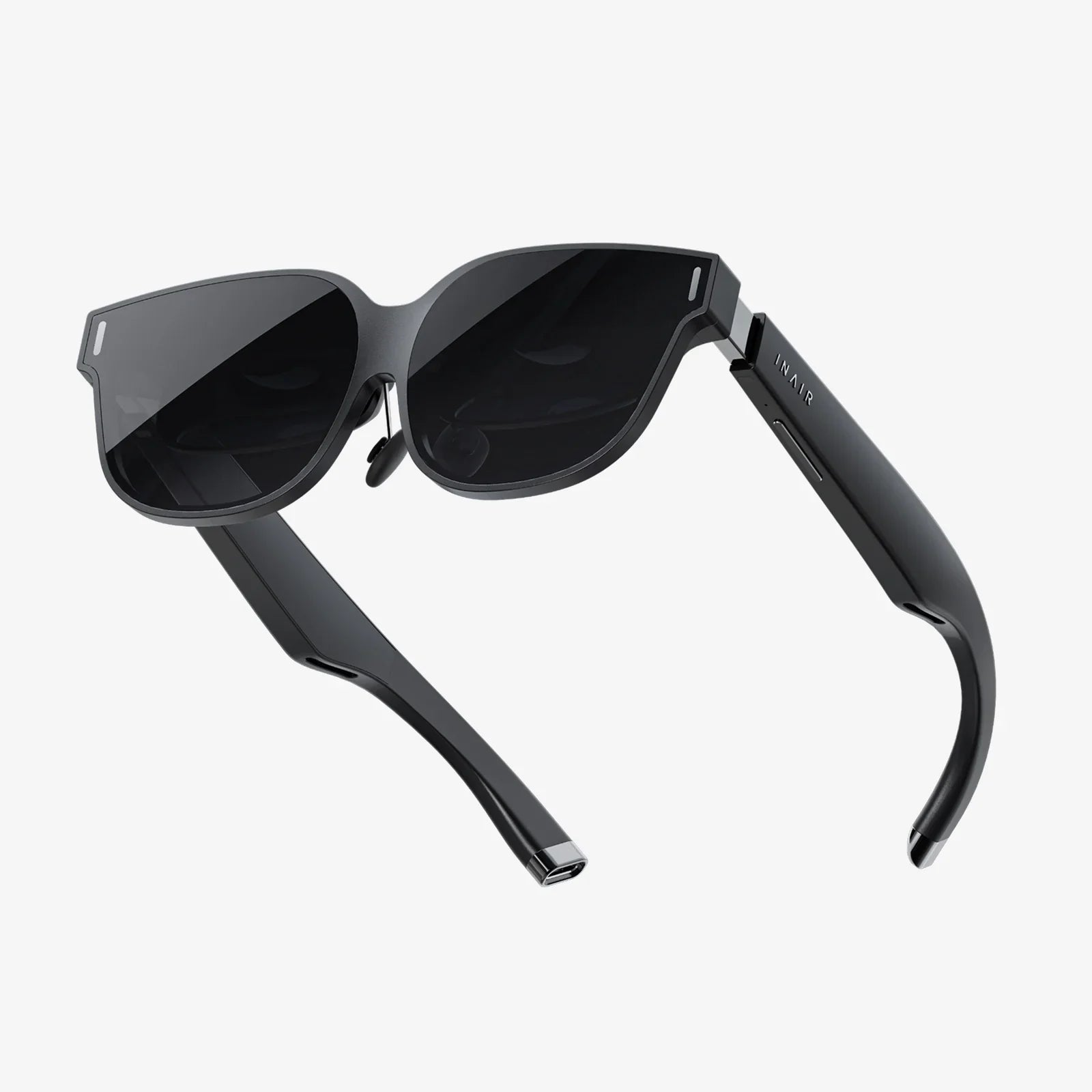
You've seen the future, and it's virtual. The promise of stepping into another world, from the depths of the ocean to the far reaches of space, is no longer science fiction but a reality sitting on store shelves and in online shopping carts. But with a rapidly expanding market, how do you possibly choose? The decision is fraught with technical jargon, competing specs, and a fundamental question: what do you truly need for your own immersive journey? This definitive VR glasses comparison is your beacon, designed to demystify the landscape and guide you to the perfect headset without the overwhelm. Forget marketing fluff; we're diving deep into the core of what makes each category tick.
Deconstructing the Virtual Reality Landscape
Not all VR glasses are created equal. The first and most critical step in our VR glasses comparison is understanding the three distinct archetypes that dominate the market. Your choice here will fundamentally shape your experience, budget, and how you interact with the virtual world.
Standalone VR Headsets: The Freedom of Untethered Exploration
Imagine slipping on a headset and being in your virtual playground within seconds, with no wires to trip over or external devices to configure. This is the core promise of standalone VR. These all-in-one devices have the computer, display, and tracking systems built directly into the headset itself.
The Pros: The convenience factor is unparalleled. They are typically the most affordable entry point into high-quality VR and offer incredible portability—perfect for sharing experiences with friends or playing in different rooms. Setup is minimal, often just requiring a Wi-Fi connection for initial configuration and game downloads.
The Cons: To achieve this miniaturization and power efficiency, standalone headsets run on mobile-grade processors. This means graphical fidelity, while impressive for the form factor, cannot compete with the raw power of a tethered PC-based system. Complex simulations and hyper-realistic games may be simplified or unavailable.
PC-Connected VR Headsets: The Pinnacle of Performance
For those who seek the absolute highest fidelity, the most immersive environments, and the most complex simulations, PC-connected (or tethered) headsets are the undisputed king. These devices act as ultra-high-resolution monitors and motion-tracking portals, while a powerful external gaming computer does the heavy lifting.
The Pros: This category delivers breathtaking visuals, with higher resolutions, faster refresh rates, and vastly more detailed textures and lighting effects. It is the domain of hardcore gamers, professional designers, and architects who require the utmost precision and visual quality. The library of available experiences is often the most extensive.
The Cons: The cost of entry is significantly higher, as you must own or purchase a high-end gaming PC capable of running the software. You are physically tethered to the computer by a cable, which can limit movement and require clever cable management to avoid immersion-breaking tangles.
Console-Based VR Systems: The Plug-and-Play Powerhouse
Sitting in a unique niche, console-based VR offers a compelling middle ground. Designed to work exclusively with a specific video game console, these systems provide a curated, high-performance experience without the need for a bespoke gaming PC.
The Pros: If you already own the compatible console, the barrier to entry is relatively low. You benefit from a streamlined, plug-and-play experience that is optimized and guaranteed to work. The performance is consistently excellent, leveraging the closed ecosystem of the hardware.
The Cons: Your options are limited to the ecosystem of that single console. You cannot upgrade individual components for better performance. The available software library, while high-quality, is smaller than what's available on PC.
The Anatomy of a VR Headset: Key Specifications Explained
Beyond the broad categories, a meaningful VR glasses comparison requires a deep dive into the specs sheet. Understanding these terms will empower you to make an informed decision.
Display Resolution and Lens Quality: The Window to Your Soul
Often quoted as a single number like “4K,” the most important metric is the pixels-per-degree (PPD). A higher PPD means a sharper, clearer image with less visible “screen door effect” (the fine grid lines between pixels). Look for headsets with high-resolution displays (e.g., 1832x1920 per eye or higher).
Equally important are the lenses. Fresnel lenses are common but can cause god rays and glare in high-contrast scenes. Newer pancake lenses are a leap forward, allowing for a much thinner headset profile and providing a clearer, more uniform picture with a larger “sweet spot.”
Field of View (FoV): Expanding Your Horizon
FoV is the extent of the observable world seen at any given moment, measured diagonally in degrees. A wider FoV (110° or more) is more immersive, making you feel truly “inside” the world. A narrower FoV can feel like looking through binoculars or a scuba mask. Most consumer headsets range from 90° to 120°.
Refresh Rate: The Key to Smoothness and Comfort
Measured in Hertz (Hz), the refresh rate is how many times per second the image on the screen is updated. A higher refresh rate (90Hz, 120Hz, or even 144Hz) results in smoother motion, which is critical for fast-paced games and significantly reduces the potential for motion sickness and eye strain.
Tracking Systems: How Your World Follows You
This is how the headset understands your position in space. Inside-Out Tracking uses cameras on the headset itself to map the room and track controller movement. It's convenient and requires no external sensors. Outside-In Tracking uses external base stations or sensors placed around the room for extremely precise, millimetre-accurate tracking, preferred by competitive players and professional applications.
Controllers and Haptics: Your Hands in the Virtual World
Controllers are your primary interface. Ergonomics are paramount—they should feel like a natural extension of your hands. Advanced haptic feedback goes beyond simple vibration, simulating the feeling of touching virtual objects, drawing a bowstring, or feeling the rumble of a virtual engine, adding a profound layer of immersion.
Beyond the Specs: The Human Factor in Your VR Choice
A spec sheet can't tell the whole story. The best VR glasses comparison must account for your physical comfort and real-world environment.
Comfort and Ergonomics: The Marathon Sessions
A headset can have the best specs in the world, but if it's uncomfortable, you won't use it. Consider weight distribution—does it press heavily on your cheeks or forehead? Is the headstrap adjustable and supportive? Can you wear it over eyeglasses? Look for models with multiple foam interfaces and adjustable straps for a personalized, secure fit.
Content Library: What Will You Actually Do?
The hardware is useless without software. Research the ecosystem. Is there a robust store with a wide variety of games, creative tools, fitness apps, and social experiences? Are the exclusives that you're desperate to play available on that platform? Your desired experiences should heavily influence your hardware choice.
The Space You Inhabit: Room-Scale vs. Stationary
Do you have a dedicated, clear empty space to walk around in? Then you can enjoy “room-scale” VR experiences. If you're primarily sitting at a desk or playing in a cramped space, you'll want a headset that excels at “stationary” or “seated” experiences, like flight simulators, racing games, or cinematic viewing.
Making Your Decision: A Framework for Choice
Now that you're armed with knowledge, let's apply it. Ask yourself these questions:
- What is my budget? (Include the potential cost of a new PC or console).
- What is my primary use case? (Gaming, fitness, social, creative work, media consumption?).
- How much space do I have available?
- How important is absolute graphical fidelity versus convenience and ease of use?
- Am I susceptible to motion sickness? (A higher refresh rate and better tracking can help mitigate this).
Your answers will naturally point you toward one of the three categories. From there, compare the latest models within that category based on the specific specs and comfort features that matter most to you.
The world of VR is more exciting and accessible than ever before. This VR glasses comparison has stripped away the complexity, giving you the tools to see through the hype. You're no longer just comparing prices and brands; you're evaluating portals to new realities based on how you want to feel, play, and create. The perfect headset isn't the one with the highest numbers on a page—it's the one that will seamlessly disappear on your head, leaving you utterly captivated by the worlds within.
Share:
HD Virtual Glasses: The Next Frontier in Personal Computing and Immersive Experience
What Is Augmented Reality in Business: The Ultimate Guide to Transforming Operations and Customer Experience