


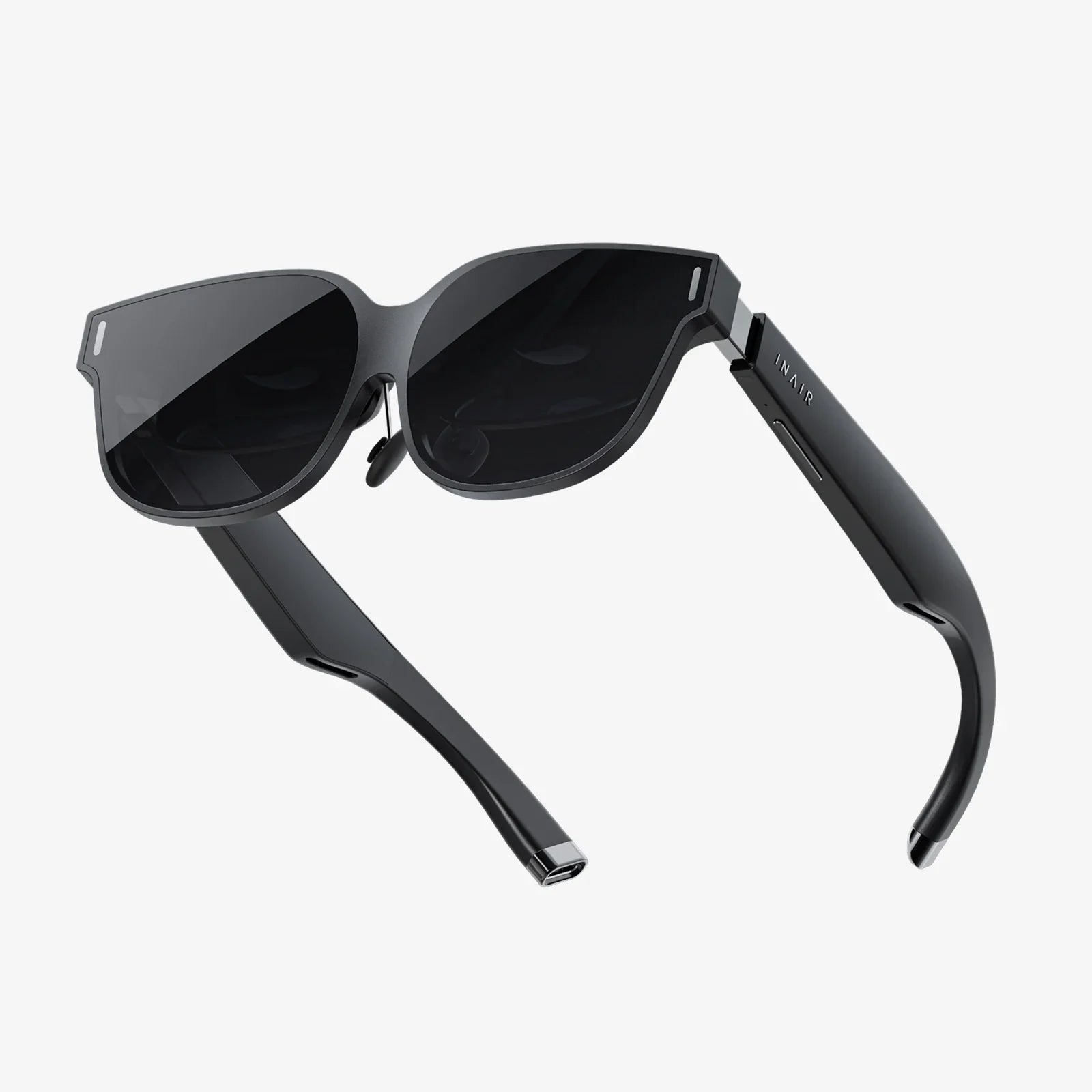
Imagine a world where your entire digital life—your workspace, your entertainment, your social connections—floats seamlessly in the space around you, accessible with a glance and a gesture, without the isolating barrier of a screen. This is not a distant science fiction fantasy; it is the imminent reality being crafted by the rapid evolution of HD virtual glasses. This technology represents a fundamental shift in our relationship with computing, promising to untether us from desks and handheld devices, weaving the digital and physical into a single, high-definition tapestry of experience. The journey from clunky prototypes to sleek, powerful wearables is accelerating, and it promises to change everything.
Beyond the Screen: Defining the HD Virtual Glasses Experience
At its core, the concept of HD virtual glasses is about transcending the limitations of the traditional screen. Instead of looking at a world of information on a flat, rectangular surface, these devices project digital content directly into the user's field of view, overlaying it onto the physical environment or replacing it entirely with a high-resolution virtual world. The "HD" qualifier is critical; it signifies a leap in visual fidelity where pixels become indistinguishable, text is razor-sharp, and virtual objects possess a tangible, believable presence. This leap is what transforms a novel gadget into a viable replacement for monitors, televisions, and mobile devices.
The magic behind this experience hinges on a sophisticated fusion of technologies. Miniaturized, high-resolution micro-displays, often utilizing advanced display technologies, project the image. Complex optical systems, including waveguides and pancake lenses, then bend and shape this light directly onto the retinas, creating a large, immersive virtual screen that appears to float in space. This is augmented by a suite of sensors—cameras, accelerometers, gyroscopes, and depth sensors—that constantly map the physical environment and track the user's head and eye movements. This allows the digital overlay to remain locked in place in the real world or enables the user to navigate a virtual space intuitively.
The Engine Room: Key Technologies Powering the Revolution
The breathtaking potential of HD virtual glasses is built upon several technological pillars that have only recently matured to the necessary level.
Visual Fidelity and Display Systems
The quest for perfect visual clarity is the central challenge. Early devices suffered from the "screen door effect," where users could see the gaps between pixels, and a narrow field of view that felt like looking through binoculars. Modern HD virtual glasses have largely overcome this. Breakthroughs in micro-OLED and other display technologies deliver incredibly high pixel densities, ensuring text is readable and images are crisp. Furthermore, advancements in optics have widened the field of view to more closely mimic human vision, enhancing the sense of immersion and making the digital content feel like a natural part of the environment.
Spatial Computing and Environmental Understanding
For digital objects to interact convincingly with the real world, the device must understand that world. This is the domain of spatial computing. Using simultaneous localization and mapping (SLAM) algorithms, the glasses' sensors create a real-time 3D map of the room. They can identify surfaces like tables, walls, and floors, understand depth, and occlude digital objects appropriately (e.g., a virtual character walking behind a real sofa). This environmental understanding is what enables persistent placement of apps and holograms, allowing you to leave a virtual sticky note on your real refrigerator that will still be there when you put the glasses on tomorrow.
Intuitive Interaction Paradigms
Keyboards and mice have no place in this new paradigm. Interaction with the digital overlay is achieved through a combination of voice commands, hand tracking, and eye tracking. Sophisticated computer vision algorithms allow the glasses to precisely model the user's hands, recognizing fine gestures like pinching, dragging, and selecting. Eye tracking not only enables foveated rendering—a technique that maximizes performance by rendering only the area you're directly looking at in full detail—but also serves as a powerful input method, allowing for intuitive menu navigation and control.
A World Remade: Transformative Applications Across Industries
The implications of widespread HD virtual glasses adoption extend far beyond consumer entertainment. They are poised to become a transformative tool across numerous sectors.
The Future of Work and Productivity
The traditional office setup is ripe for disruption. Imagine wearing your glasses and instantly being surrounded by multiple large, virtual monitors for coding, design, or data analysis, all without the physical clutter. Colleagues from across the globe could appear as life-like avatars in your living room for a collaborative design session, manipulating 3D models together in real-time as if they were physically present. Field technicians could have schematics, instructions, and remote expert guidance overlaid directly onto the machinery they are repairing, freeing them from cumbersome manuals and tablets.
Revolutionizing Education and Training
Education can shift from passive learning to active experience. Medical students could practice complex surgical procedures on hyper-realistic virtual cadavers. History students could walk through ancient Rome, witnessing historical events unfold around them. Mechanics could learn to dismantle and reassemble a complex engine, with each part labeled and animated instructions guiding their every move. This hands-on, immersive learning has the potential to dramatically improve comprehension and retention.
New Frontiers in Healthcare
The healthcare industry stands to benefit immensely. Surgeons could use overlays of patient scan data—seeing a tumor highlighted beneath the surface of the organ they are operating on—for unprecedented precision. Therapists are already using immersive environments to treat phobias and PTSD, gradually exposing patients to triggering scenarios in a safe, controlled setting. These glasses could also assist individuals with low vision by enhancing contrast, highlighting obstacles, and reading text aloud from the environment.
Redefining Social Connection and Entertainment
This is the application most often envisioned. Social interaction could evolve into shared virtual experiences, attending concerts, watching movies, or simply hanging out in customizable virtual spaces with friends represented by expressive avatars. Gaming will become truly immersive, transforming the player's room into a dungeon, a spaceship, or a racetrack. The very concept of a television could vanish, replaced by a virtual cinema screen of any size, anywhere.
Navigating the Hurdles: Challenges on the Path to Adoption
Despite the exciting potential, significant challenges remain before HD virtual glasses can achieve mainstream ubiquity.
For all the progress, the form factor is still a barrier. The ideal device must be as lightweight, comfortable, and socially acceptable as a standard pair of eyeglasses. Current technology often requires trade-offs between performance, battery life, size, and cost. Processing the immense data required for high-resolution passthrough video and complex environmental mapping demands significant computational power, which typically generates heat and drains batteries quickly. Solving these ergonomic and engineering puzzles is the next great hurdle.
Perhaps the most profound challenges are not technical, but social and ethical. The constant recording of one's environment raises monumental questions about privacy and data security. How is the video and spatial data collected by these devices used and stored? The potential for distraction in the real world—aided reality turning into obstructed reality—is a genuine concern. Furthermore, the digital divide could widen into a experiential chasm, and the long-term psychological effects of blending reality with digital fiction are still unknown. Establishing clear ethical guidelines and robust regulatory frameworks will be just as important as refining the technology itself.
The Road Ahead: A Blended Reality Awaits
The development of HD virtual glasses is following an accelerating trajectory. We are moving from the first wave of early adopters and niche industrial applications toward a future of more powerful, affordable, and stylish devices. The eventual convergence with their close cousin, augmented reality smart glasses, seems inevitable, creating a single device capable of switching between full virtual immersion and subtle contextual information overlay. The ultimate goal is a pair of glasses that you forget you're wearing, which seamlessly enhances your life without getting in the way.
This technology is not about rejecting the physical world in favor of a digital one. It is about augmentation and enhancement. It’s about having the information you need, the people you care about, and the tools you use presented in the most natural and intuitive way possible, integrated into the world you actually inhabit. The promise of HD virtual glasses is a more connected, efficient, and imaginative way of living. The screen that has dominated human-computer interaction for half a century is beginning to fade, and through the lenses of these remarkable devices, we are catching our first glimpse of what comes next.
The doorway to a world where your imagination is the only limit to your workspace, your classroom is the entire universe, and your entertainment envelops you is now open. HD virtual glasses are not just another piece of tech; they are a passport to a new layer of reality, waiting for you to put them on and step through. The future is not just something we will watch on a screen—it is something we will live inside.
Share:
AI Glasses Female Styles: The Ultimate Fusion of High Fashion and Cutting-Edge Technology
VR Glasses Comparison: The Ultimate Guide to Choosing Your Perfect Headset