


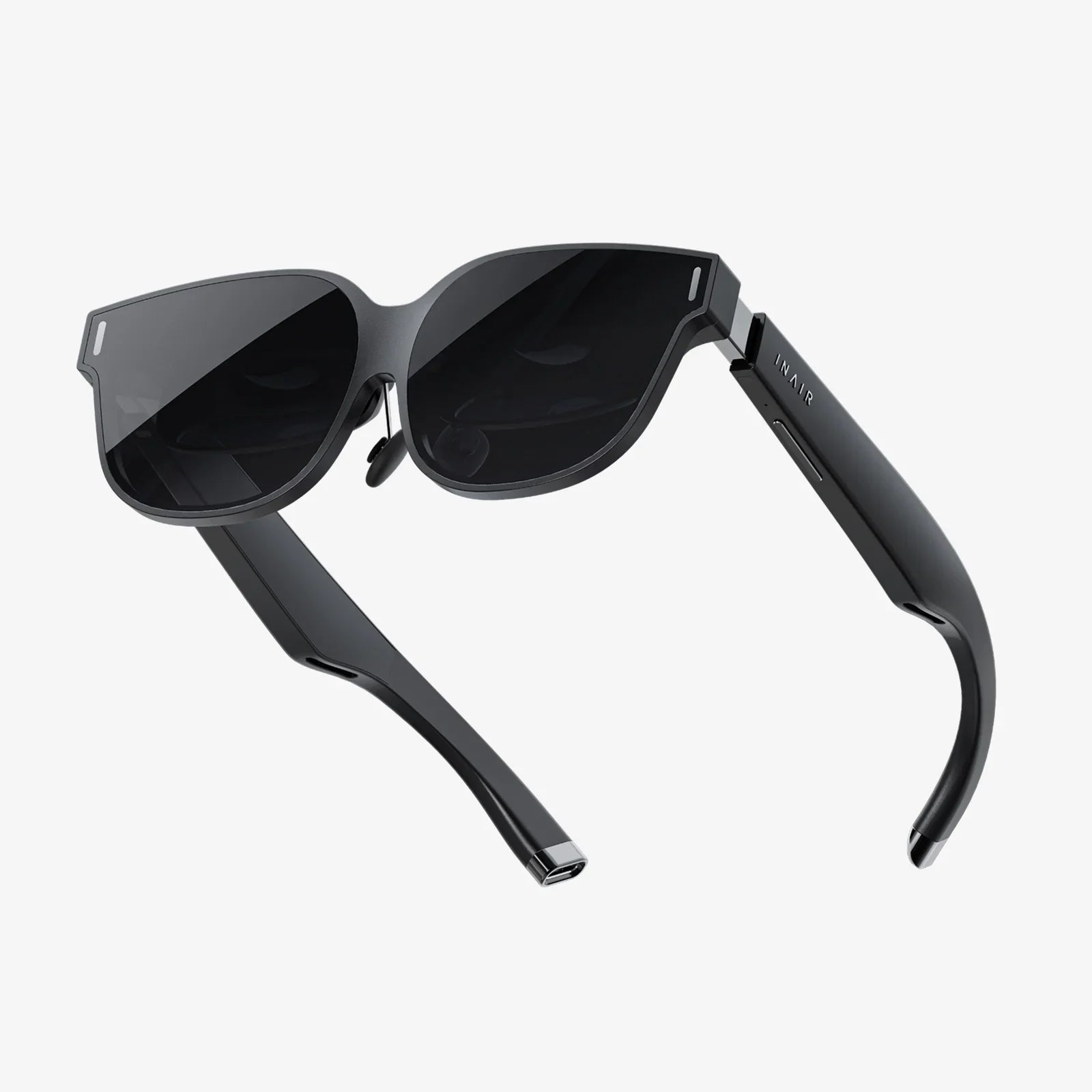
Imagine settling into your favorite chair, the lights dim, and with a simple gesture, your entire living room vanishes. You’re no longer just watching a screen; you’re inside the movie, standing on the bridge of a starship, sitting courtside at the big game, or front row at a concert. This isn’t a glimpse into a distant future; it’s the reality available today with VR glasses for TV. This technology is poised to shatter the traditional boundaries of home entertainment, offering an unparalleled level of immersion that makes conventional televisions feel like a peephole into another world. The era of passive viewing is over; welcome to the age of experiential entertainment.
The Fundamental Shift: From Watching to Experiencing
The core appeal of using VR glasses for television content lies in a fundamental paradigm shift. A standard TV, no matter how large or how high its resolution, remains a flat, rectangular window placed within your environment. Your awareness of the room around you, the distractions, the limitations of the physical screen—they all remain. VR glasses eliminate this barrier entirely.
By placing high-resolution displays mere centimeters from your eyes and using sophisticated lenses to create a stereoscopic 3D effect, these devices create a powerful sensation known as presence. Your brain is tricked into believing you are somewhere else. The television screen is replaced by a virtual cinema screen that can be scaled to feel immeasurably vast, or the narrative environment itself can become your entire field of view in 360-degree videos. This is the difference between looking at a photograph of the Alps and actually standing on the mountain peak.
How It Works: The Magic Behind the Lenses
Transforming your TV experience through VR involves a fascinating interplay of hardware and software. Understanding the components demystifies the magic and highlights the engineering marvel they represent.
The Hardware Ecosystem
At its simplest, the setup requires a headset and a source device. The headset, or the VR glasses themselves, contain several key components:
- High-Resolution Displays: Modern headsets feature two high-PPI (Pixels Per Inch) OLED or LCD screens, one for each eye. This is crucial for creating a sharp image that minimizes the "screen door effect" (seeing the gaps between pixels).
- Lenses: Precision engineered lenses sit between the displays and your eyes. They focus and reshape the image, creating a wide field of view (typically 100-120 degrees) and the stereoscopic 3D depth that is foundational to immersion.
- Head Tracking Sensors: A suite of sensors, including gyroscopes, accelerometers, and sometimes external cameras or lasers, constantly tracks the orientation of your head. This allows the virtual screen to remain locked in place in your virtual space. If you turn your head left, the screen stays ahead of you; it doesn’t follow your gaze like a helmet.
- Audio Integration: Spatial audio is half the experience. Many headsets feature built-in headphones or audio jacks that deliver 3D spatial sound. This means if a spaceship flies overhead in the movie, you’ll hear it move from behind you, to above you, to in front of you, further cementing the illusion of reality.
- Connectivity: Headsets connect to a source—often a gaming console, a high-end PC, or a standalone processing unit—via a high-speed HDMI or USB-C cable, or wirelessly through technologies like Wi-Fi 6E for a untethered experience.
The Software and Content
The hardware is useless without the software to drive it. Dedicated media player applications are the gateway to your virtual cinema. These apps allow you to:
- Choose your virtual environment (a modern home theater, a classic cinema, a moonbase lounge, etc.).
- Resize the virtual screen dynamically, from a comfortable 100-inch feel to a staggering IMAX-like scale.
- Access content from various streaming services directly within the VR environment.
- Play traditional 2D films, 3D Blu-ray content, and immersive 180-degree or 360-degree videos.
Beyond the Silver Screen: Expansive Content Possibilities
While watching traditional movies and shows is a primary use case, the potential of VR for television extends far beyond it. The medium unlocks new forms of content that are simply impossible to experience on a flat panel.
Live Events and Social Viewing
Imagine watching the championship game not from your couch, but from the best virtual seat in the stadium. Broadcasters are experimenting with VR streams for sports and concerts, offering perspectives that TV cameras can't provide. Furthermore, social VR platforms allow you to meet friends in a virtual cinema room. You can see their avatars, hear their reactions, and chat as if you were sitting next to each other, even if you're continents apart. This transforms a solitary activity into a shared social event, combating the isolation that can sometimes be associated with VR.
Gaming and Interactive Media
For those with a compatible gaming console or PC, VR glasses unlock the most immersive gaming experiences available. This isn't just playing a game; it's being inside the game world. While this is a more active form of entertainment, it highlights the versatility of the device. The same headset used for a quiet night watching a film can be used to explore fantastical worlds, drive Formula 1 cars, or solve intricate puzzles with your own hands.
Educational and Documentary Experiences
Documentary filmmakers are embracing VR to create profoundly impactful works. Instead of watching a documentary about the coral reefs, you can put on a headset and find yourself floating amongst them. You can explore ancient ruins, travel to the International Space Station, or witness historical events recreated in a visceral, first-person perspective. This has immense potential for education, creating engaging and memorable lessons that transcend textbooks and traditional videos.
Weighing the Experience: The Pros and Cons
Adopting any new technology requires a clear-eyed view of its current advantages and limitations.
The Compelling Advantages
- Unmatched Immersion: This is the undeniable killer feature. The sense of scale and presence is lightyears ahead of any television.
- A Giant Screen for the Price of a Headset: For the cost of a mid-range TV, you get a simulated screen that feels hundreds of inches wide, a fantastic value proposition for those with limited space or budget.
- Personalized and Private Cinema: Enjoy your content at maximum volume and scale without disturbing others. It’s the perfect solution for night owls, apartment dwellers, or families with conflicting viewing schedules.
- 3D Content Revival: 3D televisions are dead, but 3D Blu-rays and digital 3D movies live on in VR. The experience is superior, with brighter images and no crosstalk or ghosting.
The Current Challenges
- Comfort and Form Factor: Headsets have become lighter and more balanced, but wearing a device on your face for a three-hour epic is still more taxing than looking at a wall-mounted screen. Heat buildup and pressure on the face can be factors for some users.
- Visual Fidelity: While display technology is rapidly improving, some users with very high visual acuity may still perceive a slight softness or "fringe" on text compared to a pristine 4K OLED television. The experience is cinematic, but it is a simulated reality.
- The Isolation Factor: It is an inherently solo experience. You cannot easily share a moment of eye contact with a loved one during a scary scene or comment on something without pausing the movie and lifting the headset.
- Setup and Technical Hurdles: It requires more setup than just turning on a TV. Ensuring a good wireless connection, managing cables if tethered, and navigating VR menus can present a slight barrier to entry for the less technically inclined.
The Future is Clearer Than Ever
The trajectory of VR glasses for television is incredibly exciting. We are moving towards devices that are indistinguishable from a pair of stylish sunglasses, with resolutions so high the human eye cannot discern pixels, and advanced features like augmented reality (AR) passthrough. Imagine a device that can, with a toggle, either immerse you completely in a virtual world or project a crisp, transparent screen onto your real-world environment, allowing you to watch a game while still seeing your living room and talking to your family. This convergence of VR and AR, often called Mixed Reality (MR), is the true endgame, seamlessly blending digital entertainment with physical reality.
The living room television isn't going away, but its role is evolving. It will remain the center for casual viewing, group gatherings, and background entertainment. But for those moments when you truly want to escape, to be transported, and to experience a story rather than just see it, VR glasses offer a portal. They represent the most significant leap in home viewing since the transition from black-and-white to color. This isn't just a new way to watch TV; it's the beginning of a new era of storytelling and experiential media, and it’s inviting you to take a front-row seat.
Share:
Smart Color Changing Sunglasses: The Ultimate Fusion of Technology and Optical Innovation
Are There VR Glasses? A Deep Dive into the Virtual Reality Hardware Landscape