


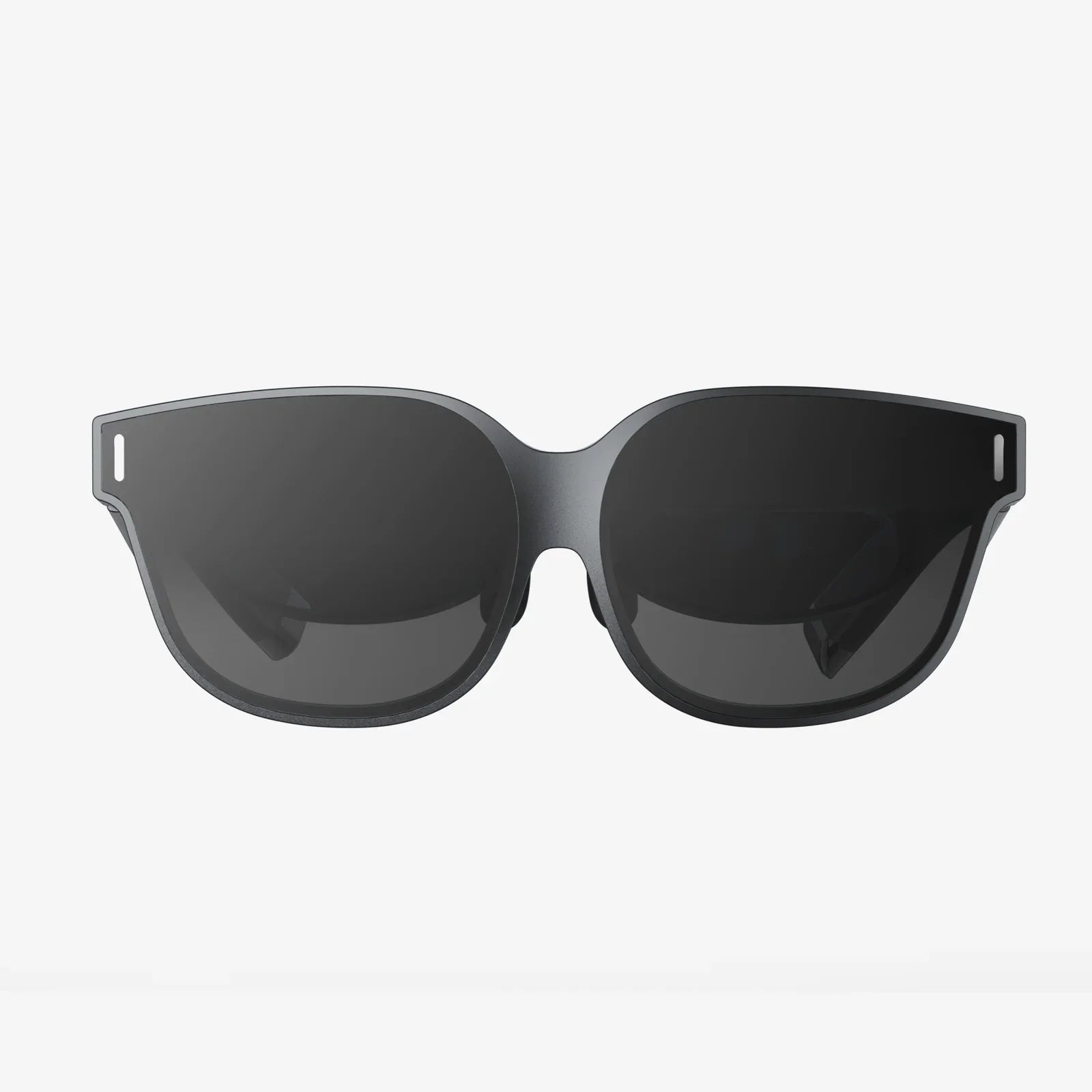
Imagine walking down the street, your world subtly enhanced with digital information, directions floating effortlessly before you, or switching from a video call to a full immersive experience with a simple voice command, all while looking no different from anyone else wearing a stylish pair of spectacles. This isn't a scene from a distant sci-fi future; it's the imminent reality promised by a new generation of wearable technology. The race to create truly mainstream virtual and augmented reality has found its holy grail: VR glasses that look like regular glasses. This technological leap, moving away from bulky, isolating headsets towards sleek, socially acceptable form factors, is poised to dismantle the final barrier to widespread adoption and usher in a revolution as significant as the smartphone.
The journey to this point has been one of relentless miniaturization and innovation. Traditional VR and AR headsets, while powerful, have been hampered by their size, weight, and cost. They are often described as “face computers,” and for good reason. They require powerful processors, high-resolution displays, intricate lens systems, and a suite of sensors for tracking movement and understanding the environment. Packing all of this computational and optical prowess into a frame that weighs less than 100 grams and is only a few millimeters thick represents one of the most formidable engineering challenges of the last decade.
The Core Technologies Powering the Discreet Revolution
So, how are manufacturers achieving this seemingly impossible feat? The magic lies in several key technological advancements working in concert.
Advanced Waveguide Displays
At the heart of any AR system is the method by which digital images are projected into the user’s field of view. Traditional headsets use displays placed directly in front of the eyes. The breakthrough for glasses-like devices comes from waveguide technology. Think of a waveguide as a incredibly thin piece of glass or plastic that acts like a highway for light. Light from a micro-display, often a mini-LED or a LCoS (Liquid Crystal on Silicon) panel no larger than a fingernail, is injected into the edge of the waveguide. This light is then “piped” through the material using a combination of diffraction or reflection gratings—essentially, microscopic structures that bend and shape the light—until it is finally directed out towards the user’s retina. This allows for a bright, high-resolution image to be overlaid onto the real world without the need for large, heavy optics directly in the line of sight.
Micro-LED and Miniaturized Optics
The light source itself has had to shrink dramatically. Micro-LED technology provides incredibly bright, efficient, and pixel-dense displays in an extremely small package, solving the twin problems of power consumption and size. Furthermore, the complex systems of lenses that traditionally magnify the tiny display image have been redesigned from the ground up using novel materials and computational optics, allowing them to be flattened and integrated almost invisibly into the lenses of the glasses.
On-Device AI and Spatial Computing
A powerful visual experience is useless without an intelligent brain to power it. These devices are not just dumb displays; they are sophisticated spatial computers. They are equipped with a constant stream of data from inward-facing cameras that track eye movement, outward-facing cameras that map the environment in 3D, accelerometers, gyroscopes, and microphones. Processing this immense amount of data in real-time to understand surfaces, recognize objects, and track the user’s position and gaze requires immense processing power. The solution has been the development of ultra-low-power, specialized AI chips that can handle these complex spatial computing tasks without draining the battery or generating excessive heat. This on-device processing is also crucial for user privacy, as sensitive data about a user’s environment and gaze can be processed locally rather than being sent to the cloud.
Battery Innovation and Power Management
Perhaps the most pragmatic challenge has been power. Delivering several hours of use from a device the size of regular glasses is a monumental task. Innovations here are twofold. First, the efficiency of every component—from the displays and waveguides to the AI processor—has been maximized to draw minimal power. Second, the battery systems often employ a hybrid approach. A small, sleek battery is integrated into the temple of the glasses themselves, providing enough power for short, lightweight tasks. For longer, more intensive sessions, a companion battery pack, often housed in a user’pocket or worn on a necklace, can be connected via a discreet cable, providing several additional hours of power. Wireless charging is, of course, a standard feature.
From Niche to Normal: The Social and Practical Implications
The impact of shifting from a “headset” to “glasses” cannot be overstated. This is a transition from a dedicated, intentional device to an all-day, everyday companion.
The Death of Social Awkwardness
The most immediate benefit is social acceptance. Bulky headsets create a physical barrier between the user and those around them, signaling, “I am in another world and unavailable.” Glasses, however, are a normalized, even fashionable, accessory. Being able to see the wearer’s eyes and full facial expressions is a critical component of natural human interaction. This discreteness removes the self-consciousness that prevents many people from using current-generation devices in public spaces, finally allowing AR and VR to weave seamlessly into the fabric of daily life—on the morning commute, in the office, or at a café.
The Always-Available Interface
When the barrier to entry is putting on a pair of glasses you were already going to wear, the technology becomes always available. This transforms it from an entertainment console into a fundamental utility. Imagine:
- Navigation: Directional arrows and street names appear on the pavement in front of you, seamlessly guiding you to your destination without ever needing to look down at your phone.
- Productivity: Multiple virtual screens and documents are pinned around your home or office workspace, accessible from any chair or desk. A colleague on the other side of the world can appear as a photorealistic hologram sitting across the table from you.
- Language Translation: Look at a foreign menu, and the text instantly translates and overlays the original script. Listen to a conversation, and real-time subtitles appear in your field of view.
- Contextual Information: Look at a landmark to get its history, or at a product on a store shelf to see reviews and price comparisons.
Redefining Accessibility
This technology holds profound promise for accessibility. For those with visual impairments, the glasses could enhance contrast, highlight obstacles, or read text aloud based on eye gaze. For individuals who are hard of hearing, real-time speech-to-text transcription could be displayed during conversations, making interactions smoother and less exhausting.
Navigating the New Frontier: Challenges and Considerations
Despite the exciting potential, the path forward is not without its hurdles and serious questions.
The Privacy Paradox
A device that is always on, always seeing what you see, and always listening raises monumental privacy concerns. The ethical collection, storage, and use of environmental data will be a primary battleground. Clear, transparent policies and robust on-device data processing will be non-negotiable for consumer trust. The potential for unauthorized recording and facial recognition in public spaces is a societal issue that must be addressed with new norms and potentially new regulations.
The Digital Divide and Economic Access
As with any transformative technology, early adoption will come with a high price tag, potentially exacerbating the digital divide. Ensuring that the benefits of this spatial computing revolution are accessible beyond a wealthy tech-elite will be crucial for its healthy and equitable integration into society.
Health and Safety
Long-term effects of having displays so close to the eyes are still being studied. Furthermore, while passthrough AR allows users to remain aware of their surroundings, there is a risk of digital distraction. A user engrossed in a virtual screen while crossing a street still presents a danger to themselves and others. Designing intuitive and non-intrusive safety features will be paramount.
A Glimpse Into the Glasses-First Future
We are standing at the precipice of a shift as significant as the move from the desktop to the mobile phone. The smartphone taught us to look down at a slab of glass in our hands; the next computing platform will bring that information back up into our world, contextualizing it within our environment. VR glasses that look like regular glasses are the key that unlocks this future. They will cease to be a “device” we “use” and will instead become an integral, invisible part of our perception—a permanent layer of intelligence and connection draped over reality.
The true potential of this technology lies not in isolating us in digital worlds, but in enriching our physical one. It promises a future where technology fades into the background, empowering us to be more connected, more knowledgeable, and more capable without ever demanding our attention or compromising our appearance. The age of staring at a screen is ending; the age of living within an enhanced reality is about to begin. The revolution won't be televised; it'll be right before your eyes, looking for all the world like a simple pair of glasses.
Share:
AI Glasses Pro: The Invisible Revolution Reshaping Our Daily Lives
Augmented Reality Experiences for Marketing: The Ultimate Guide to Immersive Engagement