


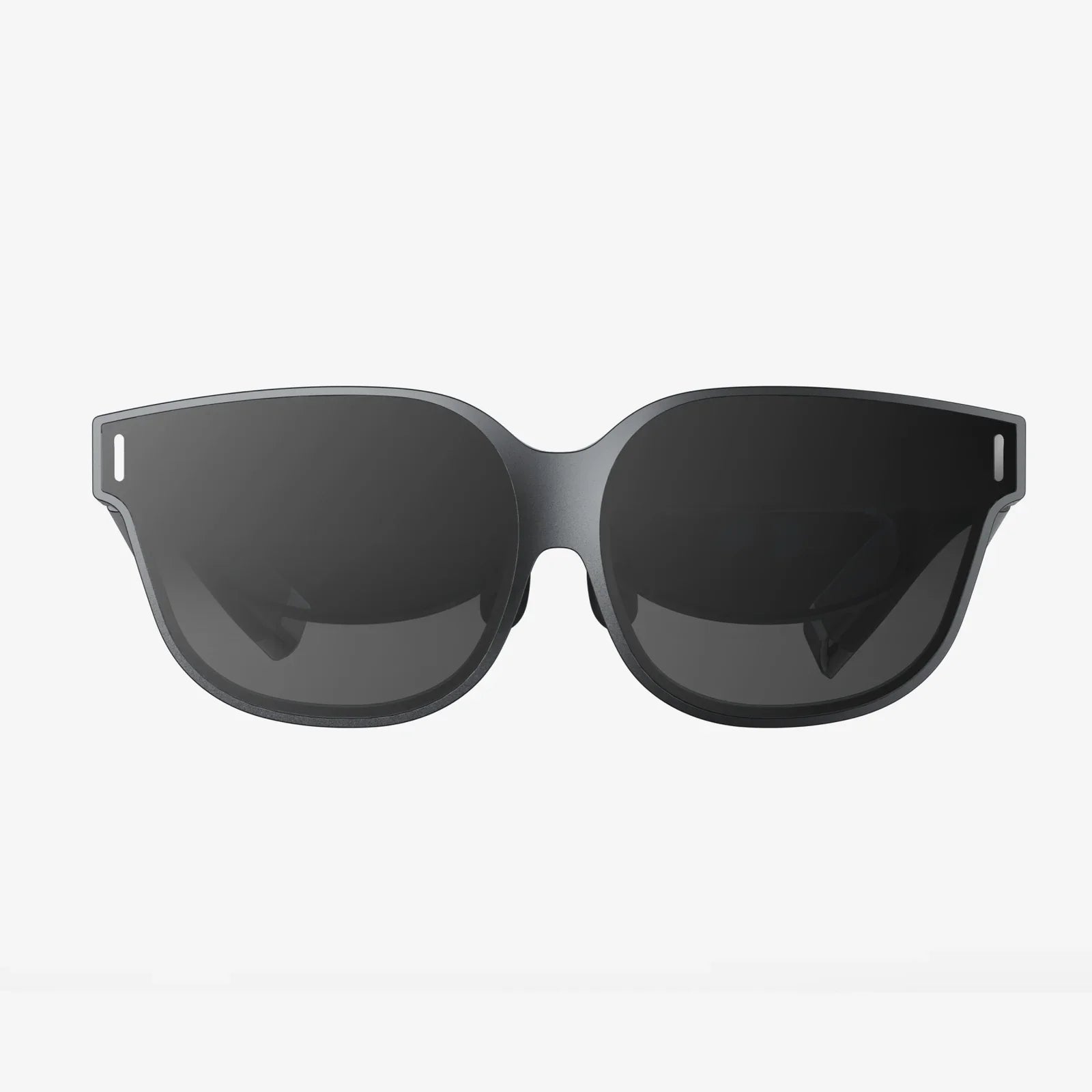
You’re on the precipice of a new world, your controller gripped tightly, ready to scale a mythical mountain or command a starship. Just as the narrative reaches its climax, a dreaded low-battery icon flickers into your view, severing the connection and yanking you back to reality. This immersion-shattering moment is a frustration known to many virtual adventurers, making the quest for the perfect VR headset battery life comparison more than just a technical spec hunt—it's a search for uninterrupted freedom. The endurance of your headset's power source is the invisible tether that can either liberate you or hold you back, making it one of the most critical, yet often overlooked, factors in choosing your portal to virtual worlds.
The Core of the Experience: Understanding Battery Types and Integration
Not all VR headset batteries are created equal, and their fundamental design philosophy dramatically impacts the user experience. The primary division in the market lies between integrated, non-removable batteries and external, user-replaceable power packs.
Headsets with integrated batteries are designed for sleek, all-in-one convenience. The cell is sealed within the unit's body, creating a seamless and often more comfortable form factor as it doesn't require a bulky external pack. Charging is straightforward—simply plug in a cable. However, this design comes with a significant caveat: the battery is a consumable component with a finite lifespan. After hundreds of charge cycles, its capacity will inevitably degrade, slowly chipping away at your available playtime. Once the battery can no longer hold a sufficient charge, it often requires professional, and potentially costly, replacement.
Conversely, some standalone and PC-tethered headsets utilize external battery packs. These are often housed in a rear counterweight on the headstrap or in a pocket. This approach offers several compelling advantages. The most obvious is the potential for hot-swapping: when one pack depletes, you can unplug it and connect a fully charged spare to continue your session indefinitely, completely eliminating downtime. It also future-proofs your investment; as battery technology improves, you can purchase newer, higher-capacity packs without modifying the headset itself. Furthermore, by moving the weight from the front to the back, these systems can improve overall comfort and weight distribution.
The Great Drain: What Really Consumes Your VR Power?
To understand VR headset battery life comparison, one must look beyond the milliampere-hour (mAh) rating. A larger number doesn't always guarantee longer playtime, as the actual drain is governed by a complex symphony of hardware and software components. The single biggest power draw in any modern headset is the display. High-resolution screens, especially those aiming for 4K+ clarity, require immense energy to illuminate millions of pixels. Furthermore, the quest to eliminate the screen-door effect and achieve smoother motion through higher refresh rates (90Hz, 120Hz, and even 144Hz) places an exponentially higher load on the processor and, by extension, the battery.
Speaking of the processor, the System-on-a-Chip (SoC) is the brain of a standalone headset and a notorious power hog. It's responsible for everything: rendering complex 3D environments, tracking your movement and controllers, processing audio, and managing heat. A graphically intense game will push the SoC to its limits, generating heat and draining the battery much faster than a passive experience like watching a movie in a virtual cinema. This is why manufacturers often provide two battery life estimates: one for gaming and one for media consumption.
Other significant contributors include:
- Tracking Systems: Inside-out tracking, which uses multiple cameras to map your environment and track controllers, consumes considerable power. More cameras mean better tracking but also faster battery depletion.
- Connectivity: Maintaining a constant Wi-Fi connection for cloud gaming, multiplayer, or streaming, along with Bluetooth for controllers, is a steady drain.
- Audio: Powerful built-in speakers use more power than lower-fidelity ones or headphones.
- Haptic Feedback: Advanced rumble and haptic effects in the headset and controllers, while immersive, draw additional power.
Decoding the Numbers: A Real-World Usage Comparison
While manufacturers provide official estimates, real-world usage often tells a different story. A VR headset battery life comparison must account for variable factors like brightness, refresh rate, and application type. Here’s a general breakdown of what users can typically expect from modern standalone devices under mixed usage.
Most mainstream standalone headsets tend to converge on 2 to 3 hours of active gameplay. This is the sweet spot that balances performance, weight, and cost. For many users, this is sufficient for daily sessions. Pushing the hardware with graphically demanding games, maximum brightness, and high refresh rates can see this number drop toward 90 minutes. Conversely, low-impact activities like socializing in virtual spaces or watching 2D/3D movies can extend usage to 3 hours or more.
Headsets designed primarily for media consumption and productivity often prioritize battery life, sometimes offering up to 4-5 hours by using less powerful processors and optimizing software for efficiency rather than peak graphical performance. It's a clear trade-off: longevity over raw processing power.
It is crucial to remember that a headset's battery life is not a static number but a range. It is a dynamic value that responds directly to how you use the device.
Beyond the Standalone: The PC-VR and Console Equation
The VR headset battery life comparison takes a different turn when examining headsets that connect to external sources like gaming PCs or consoles. These devices can be categorized into three types:
- Tethered Headsets (Wired): These units, often called “dumb” headsets, receive both video data and power directly from the source PC via a single cable. Their internal electronics are minimal, focusing primarily on the displays and tracking sensors. Consequently, they either have a very small battery for basic functions or draw all power from the PC, effectively offering “unlimited” playtime as long as the computer is on. Their “battery life” is a non-issue, but users trade this for the physical constraint of a cable.
- Tethered Headsets (Wireless Adapter): This setup uses a wireless adapter that connects to a PC, transmitting data over a high-frequency signal (like Wi-Fi 6E). The headset itself must now be powered, meaning it contains a battery pack. These packs are typically larger and designed to last for a full workday (often 4-8 hours) because they are targeted at enterprise users and enthusiasts who value wireless freedom above all else.
- Console-Based Headsets: Headsets built for a specific console represent a hybrid approach. They are tethered to the console, which handles all the processing, but the headset may still require its own power for advanced features like onboard cameras and haptics, leading to a finite battery life that must be managed.
Mastering Your Power: Pro Tips for Maximizing VR Headset Battery Life
Regardless of your headset's rated capacity, you can take proactive steps to extend your virtual sessions. Implementing a few simple strategies can often add 30-60 minutes of precious playtime.
- Manage Screen Brightness: This is the single most effective adjustment. Reducing brightness by even 20-30% can yield a significant boost in longevity with a minimal impact on visual quality in all but the darkest games.
- Choose Refresh Rate Wisely: If your headset and application support variable refresh rates, don't default to the highest setting. Use 72Hz or 90Hz for less intense games and save 120Hz for experiences that truly benefit from the smoother motion.
- Close Background Applications: Ensure no unnecessary apps are running in the background on standalone headsets. These can silently drain resources and battery.
- Disable Unnecessary Features: Turn off features like continuous boundary tracking when you are stationary or eye-tracking if the application doesn't require it.
- Control the Climate: Lithium-ion batteries degrade faster when used in very hot or cold environments. Try to use your headset in a cool, temperate room for optimal performance and long-term health.
- Invest in a External Power Bank: For headsets with a USB-C port, a high-quality external battery pack is a game-changer. You can slip it into a pocket and connect it with a short cable, effectively doubling or tripling your available playtime for a relatively low cost.
The Future is Unplugged: Innovations on the Horizon
The current state of VR headset battery life is a compromise, but the future promises breakthroughs that will make power anxiety a relic of the past. Research is ongoing into new battery chemistries like solid-state batteries, which offer dramatically higher energy density. This means a battery of the same size and weight could hold a charge two or three times larger than today's best lithium-polymer cells.
Beyond better batteries, the entire ecosystem is becoming more efficient. New processor architectures are being designed from the ground up for spatial computing, delivering more performance per watt. Advanced software features like foveated rendering—which uses eye-tracking to render only the area you are directly looking at in full detail while reducing the quality in your peripheral vision—can drastically reduce the GPU workload, cutting power consumption by up to 50% without any perceptible loss in visual fidelity.
These innovations, combined with smarter power management at the OS level, point toward a future where standalone headsets can reliably offer 4-8 hours of intensive use, finally matching the endurance of a typical laptop and truly enabling all-day productivity and play.
Imagine a not-too-distant future where your headset is as easy to power as your smartphone, charging quickly and lasting through even your longest, most ambitious virtual expeditions. The relentless pace of innovation ensures that the next generation of hardware will not only transport us to new worlds but will also grant us the freedom to stay there as long as we desire, untethered by the constraints of today's technology. The ultimate VR headset battery life comparison will soon be a measure of which device lets you forget about power entirely, unlocking truly limitless exploration.
Share:
AR Says Headset Next Year Power: The Unseen Revolution in Processing and Perception
Woman Using VR Headset: The Unseen Revolution Reshaping Reality