


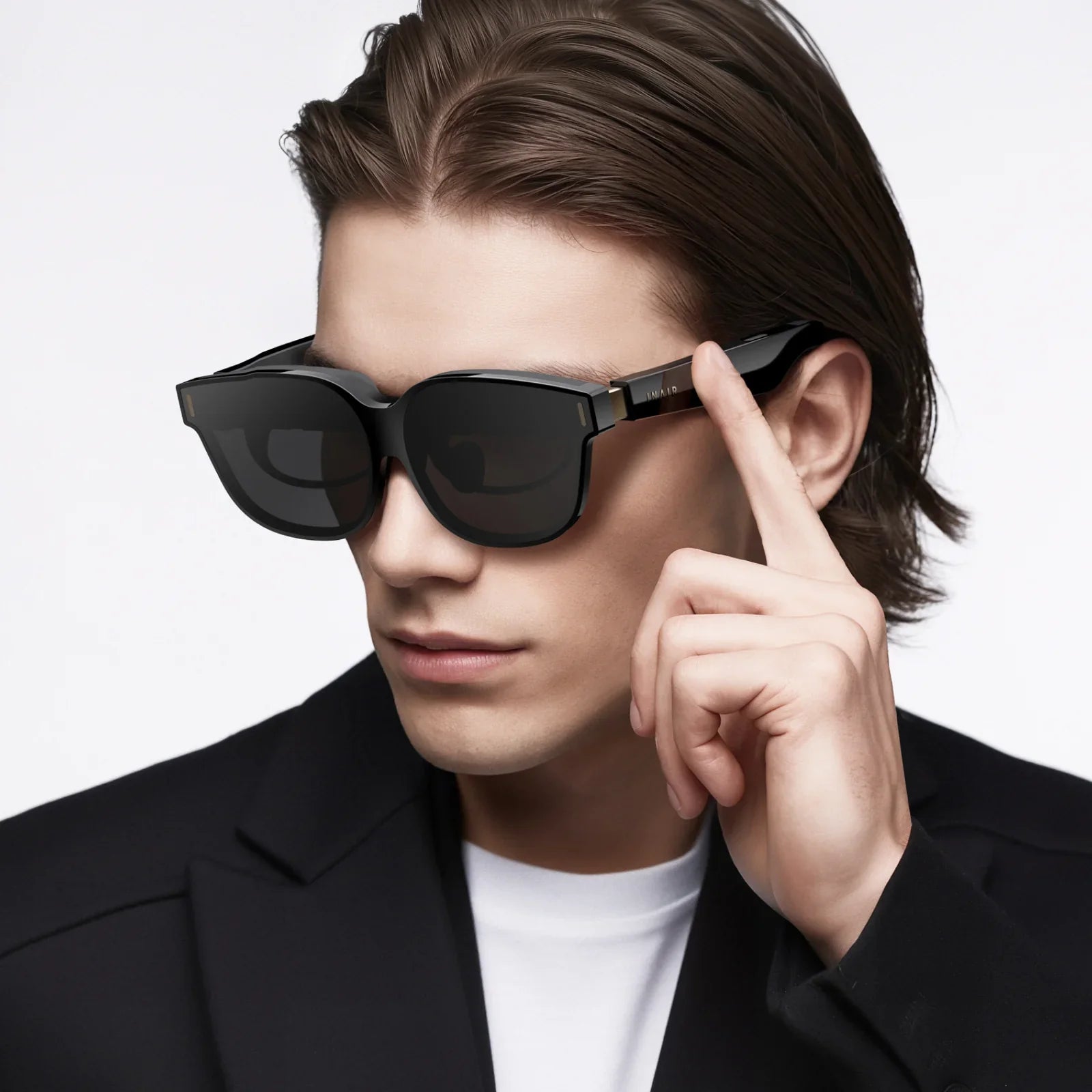
Imagine a device so intuitive, so seamlessly integrated into your perception, that the boundary between the digital and the physical world doesn't just blur—it vanishes. This is the ultimate promise of the VR headset concept, a technological vision that is rapidly accelerating from science fiction into tangible reality. It’s no longer just about what you see; it’s about where you can go, what you can feel, and how you can connect. The journey beyond the screen is here, and it’s rewriting the rules of human experience.
The Foundational Pillars of Immersion
At its core, the modern VR headset concept is built upon several interdependent pillars that work in concert to create a convincing illusion of presence—the feeling of actually being in a virtual environment.
Visual Fidelity: The Window to Another World
The primary gateway to any virtual reality is the visual display. Early iterations suffered from low resolution, causing a distracting "screen door effect," and slow refresh rates that led to motion discomfort. The contemporary pursuit is for photorealistic clarity. This involves advancements in:
- Micro-OLED and Mini-LED Displays: Offering incredibly high pixel densities, deep blacks, and vibrant colors, these displays are crucial for eliminating the screen door effect and creating a more lifelike image.
- Varifocal and Light Field Technology: A significant challenge in VR is the vergence-accommodation conflict, where your eyes focus on a fixed screen plane but must converge at different distances for virtual objects. Varifocal systems dynamically adjust the focus based on where you are looking, while light field displays aim to replicate how light behaves in the real world, allowing for natural eye accommodation and a profound reduction in eye strain.
- High Dynamic Range (HDR): Incorporating HDR expands the range of contrast and color, mirroring the luminosity of the real world, from the deep shadows of a forest to the brilliant glare of a virtual sun.
Precision Tracking: Knowing Where You Are
For the virtual world to feel solid and responsive, the headset must know its position and orientation in space with millimetric precision and millisecond latency. This is achieved through a combination of:
- Inside-Out Tracking: Cameras and sensors mounted on the headset itself scan the environment, tracking natural features and controller lights to map its position without the need for external base stations. This makes setup easier and increases portability.
- Inertial Measurement Units (IMUs): These internal sensors, including gyroscopes and accelerometers, provide high-frequency data on movement and rotation, filling in the gaps between camera updates for buttery-smooth motion.
- Eye-Tracking: This is a game-changer. By precisely monitoring where your pupils are pointing, the system enables foveated rendering. This technique renders the area of your direct gaze in high detail while subtly reducing the detail in your peripheral vision—a natural trait of human sight. This dramatically reduces the computational power required without any perceived loss in quality.
Audio-Visual Harmony: Sound as a Directional Guide
Immersion is shattered if a sound to your left feels like it's coming from everywhere. 3D spatial audio is therefore non-negotiable. By using Head-Related Transfer Functions (HRTF), sound is processed to mimic how it would naturally interact with your head and ears, allowing you to pinpoint the location, distance, and even the environment a sound is coming from. The subtle echo in a virtual cave or the muffled acoustics of a closed helmet are all part of selling the illusion.
Beyond Vision: The Haptic Frontier
The next great leap in the VR headset concept is engaging the sense of touch. Visual and auditory immersion is powerful, but the ability to feel the virtual world completes the sensory loop.
- Advanced Haptic Controllers: Moving beyond simple rumble, new controllers offer nuanced feedback—the recoil of a virtual weapon, the tension of drawing a bowstring, or the simulated texture of a rough surface.
- Haptic Gloves and Suits: The true horizon lies in wearable haptics. Gloves can provide resistance to simulate grasping an object, while full-body suits can convey impact, pressure, and even temperature changes, allowing users to feel virtual rain or a hand on their shoulder.
- Ultrasonic and Force Feedback: Experimental systems use arrays of ultrasonic speakers to project tactile sensations onto the user's skin, creating the feeling of touch without any physical contact. Others explore exoskeleton-like devices that provide physical resistance to movement, making virtual walls feel solid.
The Invisible Engine: Artificial Intelligence
AI is the silent orchestrator of the next-generation VR headset concept, making experiences smarter, more responsive, and more personalized.
- Intelligent Environments: AI can be used to generate dynamic, responsive worlds. Non-player characters (NPCs) can behave with greater realism, environments can adapt to the user's actions, and entire worlds can be procedurally generated on the fly.
- Avatar Animation and Expression: Through eye-tracking and internal cameras, AI can translate your real-world facial expressions and lip movements onto your digital avatar in real-time, enabling unparalleled emotional fidelity in social interactions.
- Performance Optimization: Machine learning algorithms constantly optimize rendering, predict user movement to reduce latency, and manage system resources to ensure a stable and comfortable experience.
From Isolation to Integration: Social and Collaborative VR
The stereotype of VR as an isolating technology is being overturned. The concept is increasingly focused on connection.
- Shared Virtual Spaces: Platforms are emerging that allow colleagues from across the globe to collaborate on 3D models as if they were in the same room, or friends to watch a movie together in a virtual cinema, complete with avatars that reflect their real-time reactions.
- Embodied Communication: With advanced avatar technology, communication transcends voice chat. A nod, a wave, a shrug—the full spectrum of non-verbal cues becomes part of the interaction, making digital communication feel profoundly human.
The Future Vision: From Headsets to Everyday Life
The ultimate evolution of the VR headset concept may be its eventual disappearance. The trajectory points towards devices that are:
- Lighter and Wireless: Advances in battery technology, processing efficiency, and cloud streaming will untether users completely, allowing for true freedom of movement.
- More Ergonomic and Accessible: Form factors will shift from bulky goggles to sleek, glasses-like designs, lowering the barrier to entry and enabling all-day use.
- Blended with Augmented Reality (AR): The line between VR (fully digital) and AR (digital overlays on the real world) will dissolve. Future devices will likely be mixed reality (MR) capable, allowing users to switch seamlessly between a fully immersive virtual workspace and an augmented reality view of their physical desk, all with the same device.
We are standing at the precipice of a new era of computing, one defined by spatial experiences rather than flat screens. The VR headset concept is the key that unlocks this door, offering not just a new way to play games, but a new paradigm for work, education, healthcare, and human connection. The headset is merely the vessel; the true destination is a future where our digital and physical lives are woven together into a richer, more expansive tapestry of human experience. The next world is waiting, and it’s closer than you think.
Share:
Best Selling VR Headset 2025: The Unseen Revolution Reshaping Reality
iPhone 14 VR Headset: The Ultimate Portal to a New Digital Reality