


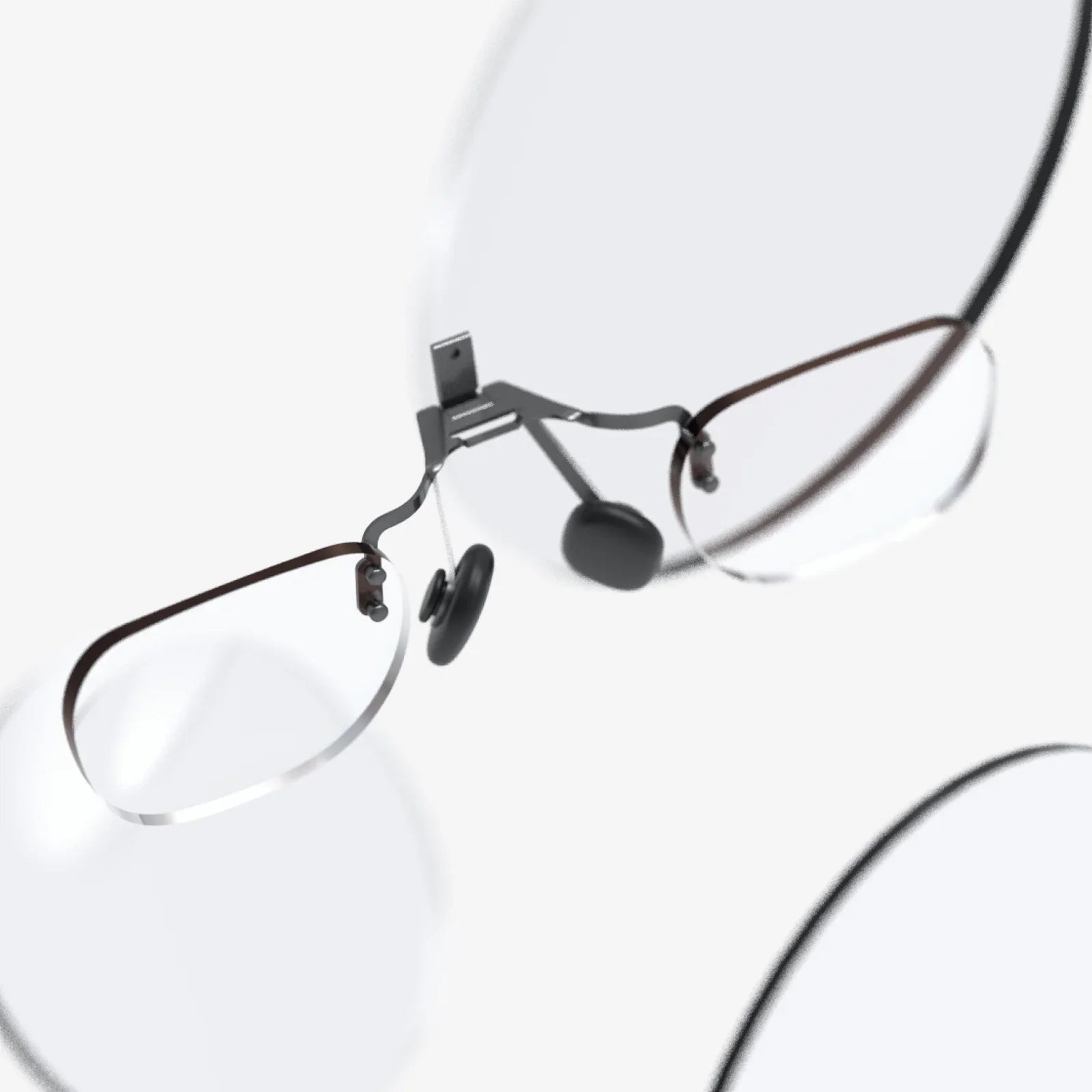
Imagine slipping a sleek, futuristic visor over your eyes and instantly being transported from your living room to the edge of a volcano, the front row of a concert, or the cockpit of a starship. This isn't science fiction; it's the reality unfolding today, powered not by a bulky, expensive desktop computer, but by the incredibly powerful smartphone already in your pocket. The latest generation of mobile technology has unlocked a new frontier in accessibility and immersion, and for those seeking the ultimate portable gateway to virtual worlds, the combination is nothing short of revolutionary. The promise of high-fidelity, untethered virtual reality is finally here, and it’s more compelling than ever.
The Engine Room: Unleashing the iPhone 15 Pro's Power
At the heart of this mobile VR revolution lies a technological marvel: the A17 Pro chip. This isn't just an incremental update; it's a paradigm shift for mobile graphics processing. With hardware-accelerated ray tracing and mesh shading, the A17 Pro brings desktop-class rendering techniques to a mobile form factor for the first time. For the user, this translates to virtual environments with stunningly realistic lighting, shadows, and reflections. Materials like metal, glass, and water behave and look as they do in the real world, dramatically increasing the sense of "presence"—that elusive feeling of truly being inside the virtual space.
Furthermore, the Pro's stunning Super Retina XDR display, with its exceptional brightness, contrast, and pixel density, becomes the very canvas for these virtual worlds. When viewed through high-quality optics within a headset, the sharpness and vibrancy eliminate the "screen door effect" that plagued earlier mobile VR attempts, where users could see the gaps between pixels. The ProMotion technology, with its adaptive 120Hz refresh rate, is the final piece of the puzzle. This ensures buttery-smooth motion, which is critical for maintaining comfort and preventing the nausea that can occur when the virtual world doesn't perfectly track with your head movements. This trifecta of processing power, display brilliance, and fluid motion creates a foundation that developers can truly build upon.
Beyond the Phone: Anatomy of a Modern Mobile Headset
While the smartphone provides the brains and the eyes, the headset itself is the crucial interface between you and the digital realm. Modern headsets designed for premium smartphones are a far cry from the cardboard viewers of yesteryear. They are sophisticated pieces of hardware engineered for comfort, immersion, and functionality.
Ergonomics are paramount. A well-designed headset will distribute weight evenly across your head and face, often using adjustable straps, padded cushions, and counterweights to prevent pressure points during extended use. This is essential, as comfort is directly tied to your ability to lose yourself in the experience. The optics are equally critical. High-quality, precision-engineered lenses are placed between your eyes and the phone's screen. These lenses, often featuring Fresnel or pancake designs, focus your vision and widen the field of view (FOV), pulling you into the experience. A wider FOV means less of a "binoculars" effect and more of a natural, encompassing view.
Most premium headsets also include their own integrated hardware to augment the phone's capabilities. This typically includes:
- Integrated Controllers: These are not just simple remotes. They are motion-tracked, multi-button controllers with haptic feedback, allowing for intuitive and precise interaction within the virtual world—whether you're wielding a lightsaber, painting a 3D sculpture, or manipulating a complex interface.
- Additional Tracking Sensors: Some headsets feature their own external cameras or internal inertial measurement units (IMUs) to provide more robust positional tracking, supplementing the phone's own sensors for greater accuracy.
- Comfort Features: This includes adjustable pupilary distance (IPD) dials to match the lens alignment to your specific eyes, and ventilation systems to mitigate lens fogging.
A Universe of Experiences: What Can You Actually Do?
The power of this platform is meaningless without compelling software, and the ecosystem is vast and diverse. The graphical prowess of the iPhone 15 Pro allows for experiences that were previously confined to tethered, PC-driven headsets.
Gaming Reimagined
Mobile VR gaming has evolved from simple tech demos to full-fledged, immersive adventures. You can find yourself in the post-apocalyptic wasteland of a narrative-driven shooter, solve intricate puzzles in mysterious environments, or experience the thrill of piloting a mech in a fast-paced combat simulator. The A17 Pro's power means richer textures, more complex environments, and larger, more dynamic worlds. Social VR platforms also offer a new dimension of interaction, allowing you to meet friends in virtual spaces, play games together, watch movies, or simply hang out as customizable avatars, all through the convenience of your mobile device.
Productivity and Creation
Virtual reality isn't just for play. Imagine having three, four, or even five virtual monitors floating in your field of view, replacing your physical desktop setup. You can work on a document, browse the web, and monitor code—all in a massive, private screen space that you can take anywhere. For creators, apps offer powerful tools for 3D modeling, sculpting, and painting. You can literally step inside your creation and manipulate it with your hands, offering an intuitive and powerful new way to bring ideas to life.
Travel and Exploration
One of the most magical applications of mobile VR is virtual travel. Through immersive 360-degree videos and photos, you can stand on the surface of Mars, swim with whales in the deep ocean, or walk the streets of ancient Rome. Museums and cultural institutions offer virtual tours of their exhibits, allowing you to examine priceless artifacts from every angle. The high-resolution display ensures these experiences are vivid and realistic, making them a fantastic tool for education and armchair exploration.
The Seamless Connection: How It All Works Together
The beauty of this system lies in its simplicity and lack of wires. Setting up a session is typically a straightforward process. You secure your iPhone 15 Pro into the headset's dedicated compartment, ensuring it is aligned correctly with the lenses. You launch a compatible VR app on the phone, and then place the headset on your head. The phone's high-resolution display is split into two images—one for each eye—which the lenses then warp and focus to create a stereoscopic 3D effect with depth and scale.
The phone's advanced suite of sensors does the heavy lifting for tracking. The gyroscope, accelerometer, and LiDAR scanner work in concert to precisely track the orientation and movement of your head in real-time. As you look up, down, left, or right, or even lean your body, the virtual world responds instantly and accurately. For positional tracking beyond rotation (allowing you to walk around in a small space), the phone's cameras track your position relative to your real-world environment. This entire process is handled with incredible efficiency by the A17 Pro chip, ensuring a seamless and lag-free experience that is vital for maintaining immersion and comfort.
Weighing the Reality: Considerations and the Road Ahead
While the potential is enormous, it's important to understand the current landscape. The primary advantage is accessibility and convenience. The cost of entry is significantly lower than a PC-based setup, as you're leveraging a device you already own. The completely wireless nature offers unparalleled freedom of movement. However, there are trade-offs. Even with the A17 Pro's immense power, it cannot yet match the raw graphical output of a high-end desktop GPU running a dedicated headset. The most graphically intensive AAA VR titles will still be the domain of tethered systems for the foreseeable future.
Battery life is another consideration. Running high-fidelity VR experiences is incredibly demanding and will drain the phone's battery much faster than typical use. For long sessions, a connected power bank may be a necessary accessory. Finally, the success of this platform hinges on developer support. As the installed base of capable devices grows, developers will be increasingly incentivized to create and port deeper, more complex experiences to take full advantage of the hardware.
The future, however, is blindingly bright. We are moving towards a paradigm of mixed reality (MR), where digital objects are convincingly anchored and interactive within your physical space. The advanced computational photography and LiDAR capabilities of modern smartphones are the perfect foundation for this. Imagine seeing a virtual pet running around your actual living room, or having a weather forecast hover over your kitchen table. This blend of the real and virtual is the next logical step, and the device in your pocket is poised to be the key that unlocks it for millions.
This isn't just about a new accessory; it's about redefining what your smartphone can be. It transforms from a rectangle of glass and metal into a window, a paintbrush, a game controller, and a teleportation device. The barrier between you and vast digital worlds is now thinner than ever, limited only by the content developers can dream up and the headset you choose to wear. The era of truly personal, powerful, and portable virtual reality isn't coming—it's already here, waiting for you to take a look.
Share:
Which VR Headset Is Right For You? The Ultimate 2024 Buyer's Guide
VR Headset Market: Navigating the Next Frontier of Digital Interaction