


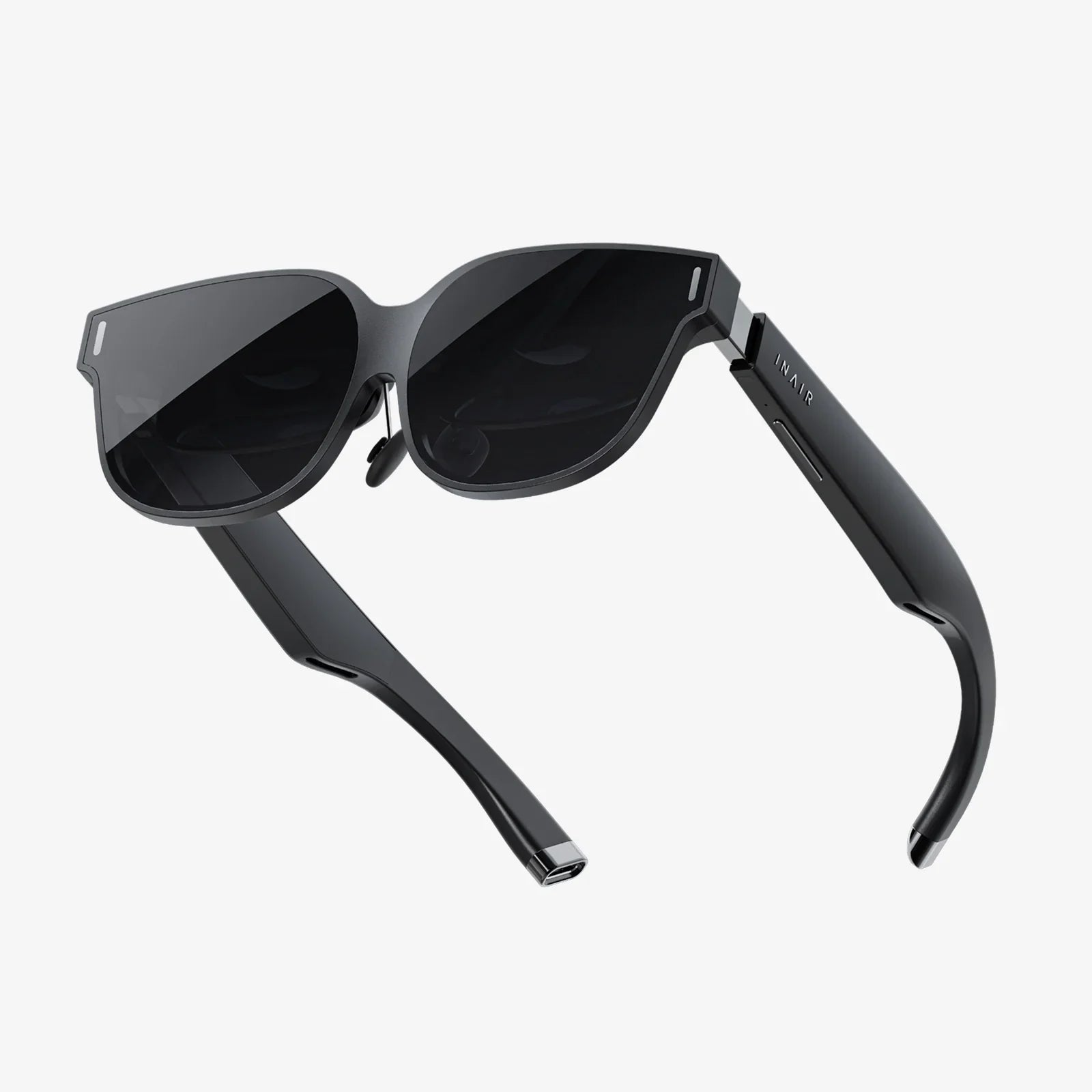
Stepping into a breathtaking virtual world only to be met with the nagging discomfort of your eyewear pressing against your temples, or the blurry frustration of a headset that refuses to accommodate your prescription, is a jarring reality for many potential VR enthusiasts. The quest for perfect visual clarity is the holy grail of immersive technology, and it hinges on one critical, often overlooked factor: VR headset glasses compatibility. This isn't just a minor convenience; it's the fundamental bridge between a user and a digital universe, determining comfort, visual acuity, and ultimately, whether the experience is magical or migraine-inducing. Understanding this intricate relationship is the first and most important step toward unlocking the true potential of virtual reality, ensuring your adventures are defined by wonder, not by compromise.
The Fundamental Challenge: Why Glasses and Headsets Clash
At first glance, slipping a pair of glasses into a VR headset seems simple. In practice, it's a complex dance of physics, ergonomics, and optical engineering. The primary conflict arises from the basic design of most VR headsets, which are engineered as closed, immersive systems.
The core issue is the lack of physical space, often referred to as the eye relief or lens-to-eye distance. This is the crucial gap between the headset's built-in Fresnel or pancake lenses and your eyes. This space is meticulously calculated to provide the widest possible field of view (FOV) and the sharpest image through the headset's lenses. When you introduce a pair of glasses, you are effectively pushing your eyes further away from these lenses. This can cause several immediate problems:
- Reduced Field of View (FOV): The perceived edges of the virtual world are dramatically narrowed, creating a distracting "binocular" or "looking through a tunnel" effect that shatters immersion.
- Loss of Visual Fidelity: Moving your eyes away from the headset's optical "sweet spot" can introduce blurriness, chromatic aberration (color fringing), and god rays (scattered light artifacts), even if your prescription is correct.
- Physical Discomfort and Pressure: Glasses frames are forced against the padding of the headset, which in turn presses them into the bridge of your nose and your temples. This pressure can become painful within minutes, making extended sessions unbearable.
- Scratches and Damage: The potential for your glasses' lenses to make physical contact with the headset's delicate lenses is high. This can lead to permanent scratches on both sets of optics, degrading your experience and costing you money.
Furthermore, the design of the glasses themselves plays a significant role. Large, wide frames common in modern fashion are often completely incompatible with the tight confines of a headset's facial interface. The arms of the glasses can interfere with the headset's side straps and padding, preventing a secure and comfortable fit.
Key Factors Determining Compatibility
Not all headsets and not all glasses are created equal. Compatibility is a spectrum, influenced by several key design elements of the VR hardware.
1. The Facial Interface and Eye Box
The facial interface, or the foam/gasket that surrounds the lenses and rests against your face, is your first point of contact. Headsets designed with glasses-wearers in mind often feature one of two things:
- Deeply Recessed Lenses: Some headsets have a deep "well" around the lenses, creating more inherent space for frames.
- Glasses Spacer or Extra-depth Gasket: Many headsets include a removable rubber or plastic spacer that you can insert between the main housing and the facial interface. This simple accessory pushes the entire headset assembly a few precious millimeters away from your face, creating the necessary room without sacrificing the structural integrity of the fit.
The "eye box" is the three-dimensional space within which your eyes must be positioned to see a clear image. A larger, more forgiving eye box is inherently more compatible with glasses, as it allows for a greater variance in the lens-to-eye distance.
2. Interpupillary Distance (IPD) Adjustment
While IPD adjustment is crucial for everyone, it is especially critical for glasses-wearers. IPD is the distance between the centers of your pupils. VR headsets must align their lenses with your pupils to prevent eye strain and blur.
There are three types of IPD adjustment:
- Software IPD Adjustment: The least effective method. The physical lenses are fixed, and software attempts to digitally shift the image to match your IPD. This can help with scale and strain but does not solve the underlying optical misalignment, which is exacerbated by wearing glasses.
- Mechanical IPD Adjustment (Continuous): The gold standard. A physical slider or knob moves the lenses themselves closer together or further apart. This provides a perfect optical alignment for a wide range of users, ensuring the image you see through your glasses is as optically correct as possible.
- Discrete IPD Settings: The headset may have two or three pre-set lens positions (e.g., narrow, medium, wide). This is better than software but less precise than a continuous mechanical slider.
A headset with a robust mechanical IPD adjustment allows a glasses-wearer to perfectly center the headset's optics with their own eyes, compensating for the added distance and complexity introduced by their prescription lenses.
3. Headset Form Factor: The Rise of Mixed Reality
The emerging class of mixed reality (MR) and ultra-slim VR headsets represents a potential paradigm shift for compatibility. By utilizing advanced pancake lenses and more compact display technology, these devices are significantly slimmer and lighter than their predecessors.
This sleek design often results in a much smaller internal volume. Ironically, while this makes the headset more comfortable to wear generally, it can sometimes leave even less room for glasses than bulkier models, as the lenses are positioned extremely close to the face to achieve the slim profile. The compatibility of these devices is highly variable and must be evaluated on a case-by-case basis, though many are actively promoting bespoke prescription lens solutions as a primary accessory.
Solutions for a Perfect Fit: Beyond the Spacer
Thankfully, enduring discomfort is no longer a requirement for enjoying VR. There are several effective solutions, ranging from simple accessories to custom-made hardware.
Solution 1: Prescription Lens Inserts (The Premium Choice)
This is widely considered the best possible solution for anyone who uses VR regularly. Prescription lens inserts are custom magnetic or clip-in adapters that slot directly over the headset's built-in lenses.
How they work: You order a set of lenses ground to your exact prescription from a specialized vendor. These lenses are mounted into a custom-designed frame that perfectly fits the contours of your specific VR headset model. This frame then attaches securely over the headset's native lenses.
Benefits:
- Unmatched Comfort: Your glasses remain off. All pressure on your nose and temples is eliminated.
- Optimal Visual Performance: The inserts position your prescription at the ideal distance from the headset's optics, maximizing the field of view and ensuring you are always in the optical sweet spot.
- Protection: They act as a permanent protective barrier, preventing dust and scratches from ever reaching the headset's expensive native lenses.
- Convenience: Slip the headset on and off with zero friction. It becomes as easy to use as for someone with perfect vision.
This solution turns a headset into a personally calibrated visual instrument, transforming the experience entirely.
Solution 2: Contact Lenses
For those who already wear and tolerate contact lenses, this is the simplest zero-cost solution. Wearing contacts inside a VR headset effectively makes you someone who doesn't need glasses, bypassing the compatibility issue entirely. You get the full field of view, perfect comfort, and no risk of scratches. The only considerations are eye dryness, which can be exacerbated by the focused nature of VR use, and the need to maintain your contact lens routine.
Solution 3: Choosing the Right Glasses
If you are determined to wear your glasses inside the headset, choosing a dedicated pair can make a significant difference. Look for these characteristics:
- Small, Round Frames: Avoid wide, square, or oversized frames. Small, round glasses (often called "VR glasses") minimize the surface area that can contact the headset.
- Thin Arms (Temples): Arms that are thin and flexible will exert less pressure on your head and are less likely to be bent or damaged by the head strap.
- Low Profile Nose Bridge: A design that sits close to your face will help maximize the precious lens-to-eye distance.
Some users even opt to have an old pair of glasses fitted with new lenses specifically for VR use.
The Future of VR Headset Glasses Compatibility
The industry is acutely aware that the glasses compatibility problem is a significant barrier to mass adoption. Research and development are pushing towards more elegant and integrated solutions that will make adapters and spacers obsolete.
- Automatic Diopter Adjustment: Prototype headsets have been demonstrated with lenses that can electronically adjust their optical power (similar to autofocus on a camera). A simple calibration could allow the headset to perfectly correct for myopia, hyperopia, and even astigmatism without any physical inserts, seamlessly adapting to the user's eyes.
- Biometric User Profiles: Future headsets could automatically recall a user's visual and IPD settings, instantly configuring the headset the moment it is put on, creating a personalized experience for every member of a household.
- Waveguide and Holographic Optics: The next generation of display technology, crucial for true AR glasses, uses waveguides that are inherently much thinner than traditional lenses. This technology could lead to headsets that are no thicker than a pair of sunglasses, inherently leaving vast amounts of room for any prescription frames or building correction directly into the optical path.
The goal is clear: a future where visual correction is not an afterthought or an accessory, but a seamless, integrated, and automatic feature of the hardware itself.
Ultimately, the journey into virtual reality should be defined by awe-inspiring landscapes, heart-pounding action, and profound social connections, not by a frustrating struggle with hardware. The challenge of VR headset glasses compatibility, while significant, is entirely surmountable. By understanding the core issues, evaluating your hardware, and investing in the right solution—be it a simple spacer, a dedicated pair of frames, or the transformative magic of custom prescription inserts—you can shatter the physical barrier between you and the virtual world. The clarity you gain is more than just visual; it's the clarity of pure, uncompromised immersion, waiting for you to log in and experience it. Your perfect view of a new reality is within reach.
Share:
Augmented Reality Design Examples That Are Reshaping Our World
AR VR Technology Developments This Week: A Glimpse Into The Immersive Future