


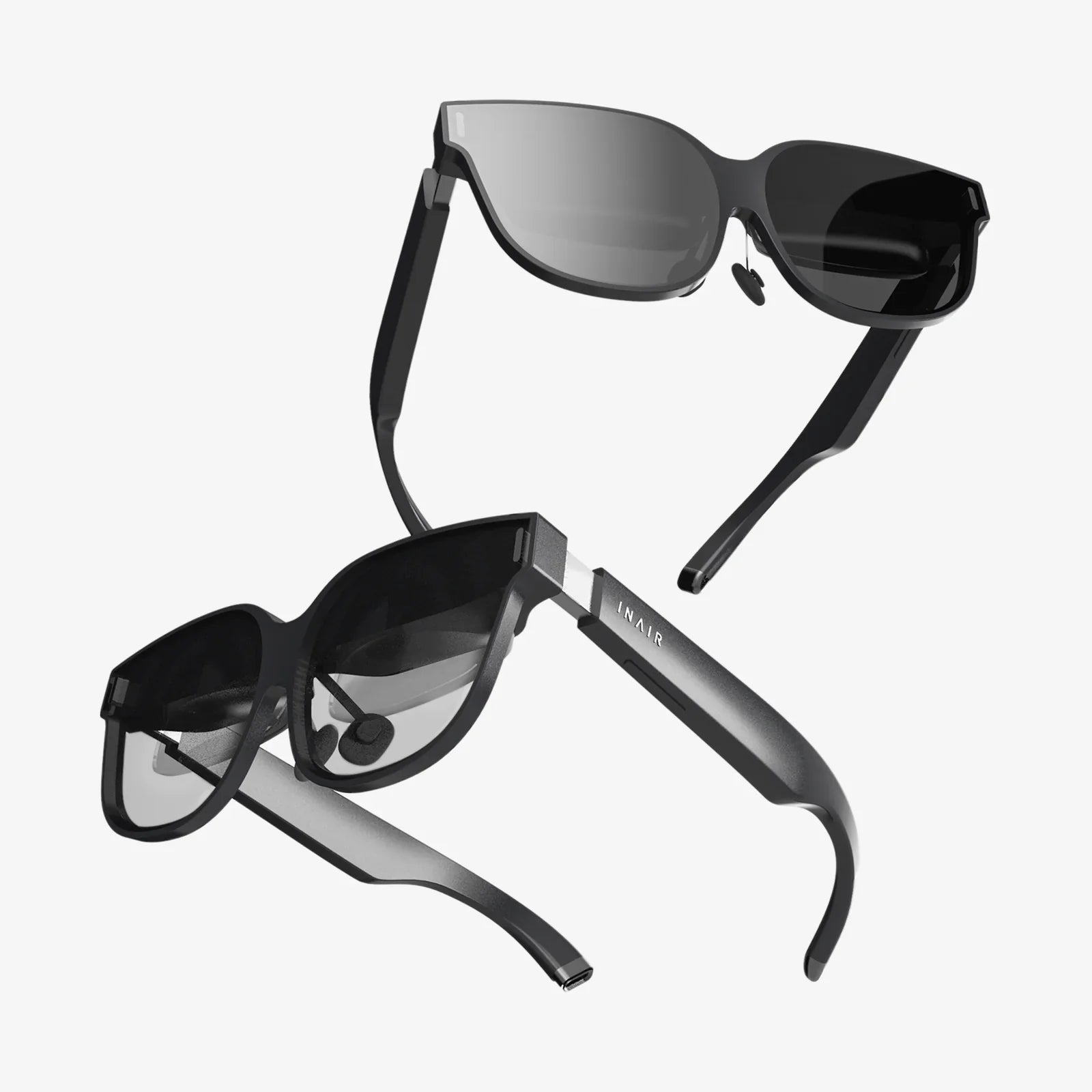
Imagine a world where the line between the digital and the physical isn't just blurred—it's obsolete. A world where you attend a business meeting from your living room, feeling the palpable presence of colleagues from across the globe, or step into a virtual classroom to dissect a digital frog with lifelike precision. This isn't a distant science fiction fantasy; it's the palpable future being built today, and its primary gateway is the virtual reality headset. The trajectory of the VR headset market, hurtling towards 2025, promises not just incremental improvements but a fundamental redefinition of how we work, learn, play, and connect. The next few years will be the crucible in which this technology moves from a niche enthusiast pursuit to a mainstream pillar of our digital lives, and understanding its path is to understand a significant piece of our collective future.
The Current Landscape: A Foundation for Exponential Growth
To appreciate the future, one must first understand the present. The VR headset market has already undergone several distinct phases. The initial wave of consumer-grade hardware, while groundbreaking, was often characterized by high costs, limited content libraries, and technical barriers like the tethered cables. The market was primarily driven by early adopters and gamers willing to overlook these friction points for the novelty of immersion.
However, the landscape began to shift dramatically with the advent of more accessible and powerful standalone devices. These all-in-one headsets removed the need for a connection to a high-end computer, significantly lowering the entry barrier for the average consumer. This shift catalyzed a new wave of user adoption, expanding the market beyond hardcore gaming circles. Simultaneously, the enterprise sector quietly began its own revolution, deploying VR for training, design visualization, and remote collaboration with remarkable results in efficiency and cost savings. This established a solid, dual-track foundation of consumer interest and proven business utility upon which the market will build explosively towards 2025.
Key Drivers Propelling the Market Forward
The growth towards 2025 is not happening in a vacuum. It is being fueled by a powerful confluence of technological advancements, economic imperatives, and evolving consumer behaviors.
Technological Convergence and Breakthroughs
The core hardware itself is undergoing a radical transformation. Several key areas of innovation are converging to create a vastly superior user experience:
- Visual Fidelity: Displays are moving towards 4K+ resolution per eye, with high pixel density (PPI) and rapid refresh rates. This combination will finally eliminate the "screen door effect" and deliver visuals that are crisp, fluid, and comfortable for extended periods. The integration of Mini-LED and eventually Micro-OLED panels will provide superior contrast, deeper blacks, and more vibrant colors.
- Advanced Optics: Pancake lenses are replacing traditional Fresnel lenses, enabling headsets to become significantly thinner, lighter, and more comfortable. These lenses also provide a larger "sweet spot" and better edge-to-edge clarity, reducing eye strain.
- Performance and Connectivity: The adoption of more powerful, purpose-built chipsets will handle complex rendering and tracking workloads on-device. Furthermore, the rollout of Wi-Fi 6E and 7 will enable high-fidelity wireless streaming from PCs and cloud servers, offering a premium untethered experience without compromise.
- Haptics and Feedback: The next frontier of immersion lies beyond sight and sound. Advanced haptic feedback in controllers, and eventually in gloves and suits, will allow users to feel the texture of a virtual object or the recoil of a virtual tool. Eye-tracking and facial expression tracking will become standard, enabling more intuitive interfaces and avatars that convey real emotion, deepening social presence.
The Enterprise Sector: The Silent Powerhouse
While consumer applications grab headlines, the enterprise sector is arguably the most robust and financially stable driver of the VR market. Companies are realizing substantial ROI through VR implementations:
- Training and Simulation: From training surgeons on complex procedures to preparing emergency responders for crisis scenarios, VR provides a safe, repeatable, and cost-effective environment. The ability to simulate dangerous or expensive real-world situations is invaluable for industries like aviation, manufacturing, and healthcare.
- Design and Prototyping: Automotive, aerospace, and architecture firms use VR to create and interact with full-scale 3D models of their designs long before a physical prototype is built. This accelerates iteration, improves collaboration, and identifies potential flaws early in the design process.
- Remote Collaboration and Telepresence: The concept of the "virtual office" is evolving. Instead of a grid of faces on a video call, teams can meet in a persistent virtual workspace where they can interact with 3D models, whiteboard ideas, and feel as if they are in the same room, regardless of their physical location. This has profound implications for the future of remote work.
The Metaverse: The Grand Unifying Vision
No discussion of the VR market's future is complete without addressing the metaverse. While the term is often overhyped and misunderstood, it represents a powerful vision: a network of persistent, interconnected virtual spaces. The high-end VR headset is positioned as the primary, most immersive portal into these environments. While accessible via other devices like computers and phones, VR offers the sense of "presence"—the feeling of actually being inside the digital world—that is central to the metaverse promise. This long-term vision is driving massive investment in content, platform development, and hardware R&D, all of which will come to fruition in the 2025 timeframe.
Market Segmentation and Evolving Use Cases
By 2025, the market will stratify into clear segments, each with distinct hardware and software needs.
- Standalone VR (Mobile): This will remain the volume leader for consumer adoption. These devices will become more affordable and powerful, targeting social experiences, casual gaming, fitness applications, and media consumption. They will be the "everyday" VR device for millions.
- PC/Console-Connected VR (Tethered/Wireless): This segment will cater to the enthusiast and professional user demanding the highest possible fidelity. It will be the domain of cutting-edge games, professional creative applications, and complex simulations. Wireless technology will make this segment more appealing by removing the last major point of friction.
- Enterprise-Grade VR: This will be a distinct category featuring specialized hardware with enhanced security, manageability, durability, and often integrated features like eye-tracking and varifocal displays by default. These headsets will be sold as part of comprehensive software and service solutions.
The use cases will expand far beyond gaming. We will see the rise of:
- VR Fitness: Already a growing trend, this will become a mainstream fitness category, with dedicated applications and hardware accessories.
- Social VR and Live Events: Attending a concert, a comedy show, or a sporting event from the best seat in the house, virtually, will become a common form of entertainment.
- Education and Virtual Tourism: Students will take field trips to ancient Rome or the bottom of the ocean. Individuals will explore world heritage sites from their homes.
- Retail and E-commerce: Trying on clothes, previewing furniture in your home, or test-driving a car will all be possible through immersive VR experiences.
Challenges and Hurdles on the Road to 2025
Despite the optimistic forecast, the path to 2025 is not without significant obstacles that the industry must overcome.
- Content Gap: Hardware is useless without compelling software. There remains a need for more high-quality, long-form, and broadly appealing content that justifies the investment for the average user. The "killer app" for the mass market beyond gaming is still evolving.
- User Comfort and Form Factor: While improving, headsets still need to become lighter, more comfortable for all-day use, and less isolating. The ideal form factor—perhaps resembling sleek sunglasses—is still a few years away. Issues like simulator sickness for some users also need to be further mitigated through better technology.
- Privacy, Security, and Ethical Concerns: VR headsets collect unprecedented amounts of biometric and behavioral data, including eye movement, hand gestures, and even emotional responses. Establishing clear, transparent, and robust frameworks for data ownership, privacy, and security is paramount to earning public trust.
- Interoperability and Open Standards: For the metaverse vision to truly work, walled gardens must fall. There must be open standards that allow avatars, assets, and experiences to move seamlessly between different platforms and virtual worlds. The industry is currently fragmented, and overcoming this will be a major challenge.
The Societal Impact: Reshaping Human Interaction
The implications of widespread VR adoption extend far beyond market metrics; they touch the very fabric of society. It will change how we perceive distance, enabling deeper connections across continents but potentially altering the nature of local community. It will create new economies and professions, from virtual architects to experience designers, while potentially disrupting others. It offers incredible potential for empathy-building experiences and therapeutic applications but also raises concerns about further escapism and digital addiction. Navigating this impact responsibly will be one of the great challenges and opportunities of the decade.
The VR headset market of 2025 won't be about a single device; it will be about an ecosystem. It will be a landscape defined by choice—between standalone simplicity and tethered power, between gaming-focused fun and productivity-driven professional tools. The headsets will be the elegant, sophisticated gateways, but the real revolution will be happening in the virtual spaces they unlock. The companies, developers, and creators who are building those spaces today are quietly constructing the next chapter of the internet. The question is no longer if this future will arrive, but how quickly you will choose to step into it and what you will do once you're there. The portal is opening; what will you create on the other side?
Share:
VR Headset What Is It: A Deep Dive Into Virtual Reality's Gateway
What Does XR Stand For VR? The Ultimate Guide to Extended Reality