


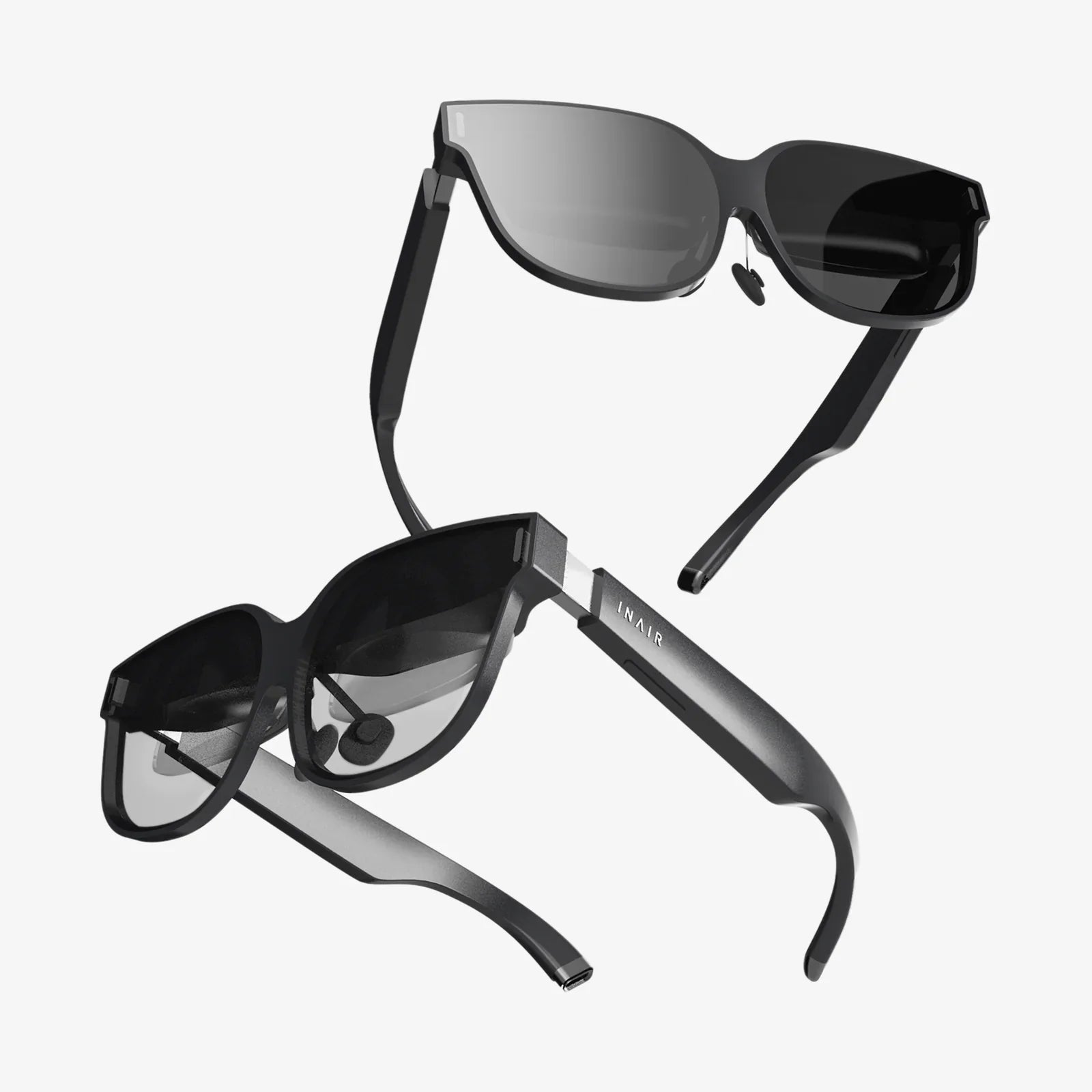
Imagine stepping through your living room and onto the surface of Mars, feeling the crunch of red soil beneath your boots as you gaze at a dusty, alien horizon. Picture yourself standing center court at a championship game, with the roar of the crowd washing over you, or dissecting a human heart in intricate, three-dimensional detail without ever touching a scalpel. This is not science fiction; this is the world made possible by a single, transformative device: the virtual reality headset. It’s a portal, a gateway, and an experience all rolled into one, promising to redefine not just how we play games, but how we work, learn, and connect. But to truly grasp its potential, we must first answer the fundamental question: VR headset, what is it?
The Core Principle: Crafting a Believable Digital World
At its most basic, a VR headset is a head-mounted display (HMD) that completely取代s your field of vision with a digital, computer-generated environment. Unlike traditional screens that you look at from a distance, a VR headset places you inside the experience. The core objective is to create a convincing illusion of presence—the powerful and visceral sensation that you are actually "there" in the virtual space. This is achieved through a sophisticated combination of hardware and software working in perfect harmony to trick your brain.
The Pillars of Immersion: How a Headset Creates Presence
The magic of VR doesn't come from a single component but from the seamless integration of several key technologies.
1. Stereoscopic Displays and Lenses
Inside the headset, you will find one or two high-resolution screens, often with a very high refresh rate (90Hz and above). These screens display two slightly different images—one for your left eye and one for your right. Specialized lenses, positioned between your eyes and the screens, then focus and reshape these two 2D images into a single, coherent 3D world with depth and scale. This stereoscopic vision is the first and most crucial step in creating a three-dimensional environment.
2. Precise Head Tracking
For the virtual world to feel solid and real, it must remain perfectly aligned with your movements. This is the role of head tracking. Using a combination of internal sensors—including gyroscopes, accelerometers, and magnetometers—the headset constantly measures the rotation of your head (yaw, pitch, and roll) in real-time. More advanced systems, known as six degrees of freedom (6DoF), also track the physical position of your head in space (moving forward/backward, up/down, left/right). This allows you to lean in to examine an object, duck under a virtual barrier, or peer around a corner, making the experience incredibly natural and intuitive.
3. Spatial Audio
Visuals are only half the battle for immersion. Sound plays an equally critical role. VR headsets employ 3D or spatial audio technology. This means sounds in the virtual environment have a location. A whisper will seem to come from your left ear, while an explosion will roar from in front of you. If you turn your head, the soundscape dynamically adjusts, just as it would in the real world. This auditory feedback is a powerful cue that reinforces the visual illusion and makes the virtual space feel tangible.
4. Controllers and Haptic Feedback
To interact with this new digital reality, you need your hands. VR controllers are sophisticated input devices, often tracked in 3D space just like the headset. They allow you to grab, push, throw, and manipulate virtual objects. More importantly, they provide haptic feedback—small, precise vibrations and force sensations that simulate touch. Feeling the subtle buzz of a virtual object in your palm or the recoil of a virtual tool completes the feedback loop, bridging the gap between seeing an action and feeling it.
Beyond the Hardware: The Software That Breathes Life into VR
A headset is merely a window; the software provides the world to look at. This ecosystem is vast and varied.
- Engines and Development: Most VR experiences are built on powerful 3D game engines, which provide the tools to create realistic physics, lighting, and interactive environments.
- Platforms and Stores: Just like on a smartphone, dedicated platforms act as hubs for users to discover, purchase, and launch VR applications and games.
- Social VR: A rapidly growing segment, social VR platforms allow users to meet, interact, and share experiences using personalized avatars, from attending virtual concerts to holding business meetings in digital boardrooms.
A Spectrum of Experiences: The Many Faces of Virtual Reality
The application of VR technology extends far beyond the realm of entertainment, permeating numerous aspects of professional and daily life.
Gaming and Entertainment: The Obvious Frontier
This is where VR found its first mass-market appeal. VR gaming is fundamentally different from traditional gaming. Instead of pressing a button to make a character swing a sword, you physically swing your arm. It’s an active, embodied experience that transforms players from spectators into participants. Beyond gaming, VR offers immersive 360-degree films and documentaries, allowing viewers to be placed directly in the story.
Education and Training: Learning by Doing
VR is revolutionizing pedagogy. Medical students can practice complex surgical procedures on virtual patients without risk. History students can take a guided tour of ancient Rome. Mechanics can learn to repair a jet engine by taking apart a perfect digital replica. This "learning by doing" in a safe, repeatable, and cost-effective virtual environment dramatically improves knowledge retention and skill acquisition.
Enterprise and Design: Prototyping and Collaboration
Architects and engineers use VR to walk clients through unbuilt designs, spotting potential issues long before construction begins. Car manufacturers design and prototype new vehicles in VR, saving millions on physical models. Corporations use VR for employee training, from public speaking to handling difficult workplace scenarios. Furthermore, remote teams can collaborate in shared virtual spaces as if they were in the same physical room, manipulating 3D models and data visualizations together.
Healthcare and Therapy: Healing the Mind and Body
The therapeutic potential of VR is immense. It is used for exposure therapy to help patients overcome phobias like fear of heights or flying in a controlled setting. It aids in physical rehabilitation by turning exercises into engaging games, motivating patients to complete their routines. VR is also being explored for pain management, using immersive distraction to help patients cope with acute or chronic pain.
Challenges and Considerations on the Road Ahead
Despite its incredible potential, VR technology is not without its hurdles and points of discussion.
- Technical Limitations: Achieving "perfect" VR requires overcoming challenges like screen-door effect (seeing fine lines between pixels), latency (lag between movement and screen update which can cause discomfort), and the need for ever-higher resolutions and field of view.
- User Comfort: A significant portion of users experience simulator sickness, a form of motion sickness caused by a disconnect between visual motion and the body's vestibular sense. Ergonomic design, higher refresh rates, and better software are mitigating this, but it remains a barrier for some.
- Social and Ethical Questions: As we spend more time in virtual spaces, questions arise about data privacy, psychological effects, and the nature of reality and human interaction. Establishing ethical guidelines for this new medium is an ongoing and critical conversation.
- Accessibility and Cost: While prices have fallen, high-end VR systems still represent a significant investment, both in terms of the headset and the powerful computing hardware required to run it.
The Future is Immersive: Where Do We Go From Here?
The evolution of VR is moving at a breakneck pace. The future points towards headsets that are wireless, lighter, more comfortable, and with dramatically higher resolution—approaching and even surpassing human visual acuity. We are moving towards varifocal displays that can naturally adjust focus to different depths, eliminating eye strain. Haptic technology will evolve from simple vibration to full-force feedback gloves and suits, allowing users to truly feel the texture and weight of virtual objects. The ultimate goal is a pair of sunglasses-like device that can seamlessly blend the digital and physical worlds, a concept known as augmented reality (AR) or mixed reality (MR).
The journey from a clunky novelty to a transformative tool has been remarkable. A VR headset is no longer just a gaming peripheral; it is a computational platform, a creative canvas, a therapeutic instrument, and a collaborative workspace. It represents a fundamental shift in our relationship with technology, from something we look at to a space we inhabit. It is the key to unlocking experiences that were once confined to our imagination, offering a new lens through which to see, and indeed, to be. The door to these boundless worlds is now open, waiting for you to take that first step through and see for yourself what lies on the other side.
Share:
How Much Dollars Is a VR Headset? The Ultimate Price & Value Guide
VR Headset Market 2025: A Deep Dive into the Future of Immersive Technology