


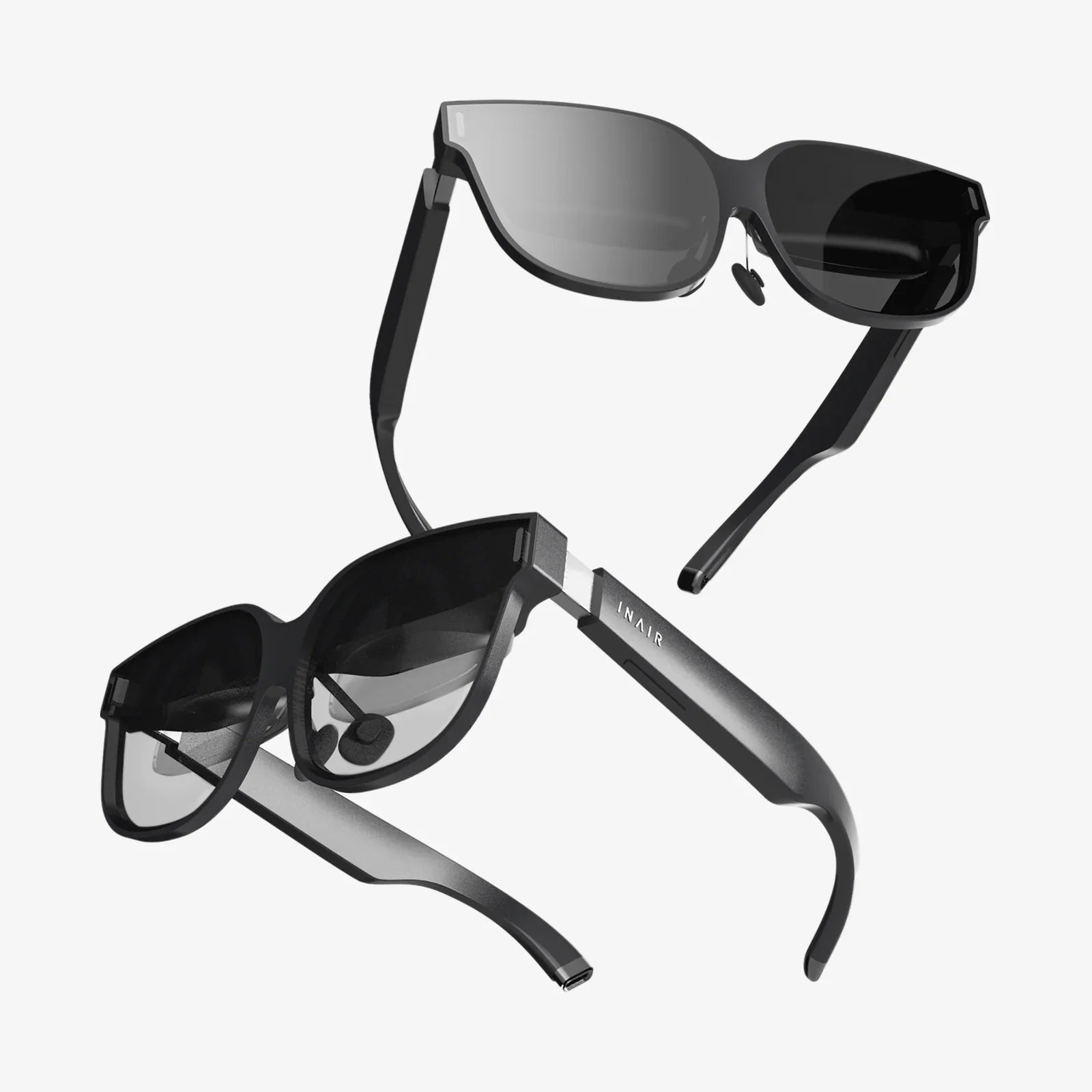
You put on the headset, the world fades away, and you're transported. But instead of a crisp, believable reality, you're greeted by a shimmering, pixelated mess that shatters the illusion instantly. This is the jarring experience of low resolution in virtual reality, a primary barrier to true immersion that every VR enthusiast seeks to overcome. The quest for visual fidelity is paramount, and it all begins with understanding the numbers, the technology, and the human factors behind VR headset resolution. This isn't just about bigger numbers on a spec sheet; it's about the pursuit of the perfect digital window, a display so clear that your brain forgets it's looking at a screen altogether. The journey from recognizable pixels to seamless reality is the central story of modern VR, and it's a story defined by relentless technological advancement and clever optical engineering.
Decoding the Spec Sheet: PPI, PPD, and the Numbers That Matter
When comparing VR headset resolutions, the most prominent figure is the combined panel resolution, often expressed as something like "1832 x 1920 pixels per eye." This number, while important, is only the starting point. It tells you the raw number of pixels available but not how densely they are packed or how they are presented to your eyes. Two headsets can have identical panel resolutions but offer wildly different visual clarity based on other factors.
This is where understanding Pixels Per Inch (PPI) and, more critically, Pixels Per Degree (PPD) becomes essential.
- Pixels Per Inch (PPI): A familiar term from smartphone screens, PPI measures how many pixels are packed into a single linear inch of the physical display panel. A higher PPI generally means a sharper image, but it's an incomplete metric for VR. A headset could have an incredibly high-PPI screen, but if it's magnified significantly by the lenses, the effective clarity perceived by the user can be low.
- Pixels Per Degree (PPD): This is the golden metric for VR clarity. PPD measures how many pixels occupy one degree of your field of view. The human eye, with 20/20 vision, is estimated to resolve roughly 60 PPD. Therefore, the closer a VR headset can get to this number, the more "retina" or seemingly screen-door-free the image becomes. Calculating PPD depends on the panel's resolution, the lens's field of view (FOV), and the optical design. A headset with a higher resolution but also a very wide FOV might have a similar or even lower PPD than a headset with a lower resolution but a narrower FOV.
For a true VR headset resolution comparison, PPD is the figure to seek out, though it is not always advertised by manufacturers, requiring deeper research from reviews and user testimonials.
The Evolution of Resolution: From Prototype to Present Day
The history of consumer VR is a rapid march toward higher resolution. Early consumer devices, groundbreaking for their time, featured resolutions that by today's standards would be considered the bare minimum. These first-generation headsets made the "screen door effect"—the visible grid lines between pixels—a common talking point and a major immersion breaker.
The jump to the second generation of hardware marked a significant leap. Resolution increases of nearly 50% or more became standard, dramatically reducing the screen door effect and making text more legible and distant objects more defined. This shift was crucial for moving VR beyond a novel gaming peripheral into a viable platform for productivity and social interaction.
Today, we are in an era often referred to as the "high-resolution" generation. Current flagship devices push resolutions that were once thought to be years away, offering stunning clarity that finally makes reading small text and appreciating fine details a comfortable experience. This progress shows no signs of slowing, with next-generation prototypes already demonstrating resolutions aimed at meeting or exceeding the 60 PPD benchmark of human visual acuity.
Beyond the Panels: The Role of Lenses, Rendering, and Foveation
Focusing solely on the display panels is a mistake. The path from the microdisplay to your retina is complex and involves several other technologies that dramatically impact perceived resolution.
Optical Stack and Lens Clarity
The lenses in a VR headset are responsible for focusing the image from the small screens to fill your field of view. The quality of these lenses is paramount. Fresnel lenses, common in earlier headsets, are lightweight but can introduce artifacts like god rays and glare, which can detract from the crispness of the image. newer aspherical and pancake lens designs offer superior clarity, better edge-to-edge sharpness, and reduced artifacts, meaning the high resolution of the panel is delivered more faithfully to your eyes.
Render Resolution and Supersampling
The resolution of the display panel is a hard ceiling, but the rendered resolution is the quality of the image sent to that panel. To achieve a clear image, the software must render the virtual world at a resolution higher than the panel's native resolution. This process, called supersampling, accounts for the distortion applied by the lenses. If an application is rendered at a resolution lower than the display's native spec, the image will appear blurry and upscaled, nullifying the benefits of high-resolution hardware. Performance is, therefore, inextricably linked to visual clarity.
Fixed Foveated Rendering (FFR) and Eye-Tracked Foveated Rendering (ETFR)
Rendering these high-resolution images is incredibly demanding on computing hardware. This is where foveated rendering comes in—a revolutionary technique that leverages how human vision works. Our central vision (the fovea) is extremely high resolution, while our peripheral vision is much lower resolution.
- Fixed Foveated Rendering (FFR): A software technique that lowers the rendering resolution in the peripheral areas of the display where the user is less likely to notice. This saves significant processing power with a minimal perceived drop in quality.
- Eye-Tracked Foveated Rendering (ETFR): The holy grail of VR performance optimization. ETFR uses internal cameras to track the user's gaze in real-time. It then renders only the precise point you are looking at in full, native resolution. The surrounding area is rendered at a progressively lower resolution. This can lead to performance savings of 50% or more, allowing for dramatically higher effective resolutions and graphical fidelity without requiring impossibly powerful hardware. Its impact on a true VR headset resolution comparison cannot be overstated; it is the key to unlocking the next level of visual fidelity.
The Human Factor: Visual Acuity, the "Sweet Spot," and IPD
Technology is only one half of the equation. The human visual system introduces its own variables that affect the perception of resolution.
Every individual has a different level of natural visual acuity. Someone with 20/15 vision will be more sensitive to low resolution and screen door effects than someone with 20/40 vision. This subjective element means that resolution comparisons can vary from person to person.
Furthermore, every VR headset has a "sweet spot"—a small area in the center of the lenses where the image is perfectly sharp. Finding and maintaining this sweet spot is crucial for experiencing the headset's full resolution. Poor fit, improper strap adjustment, or even facial structure can make it difficult to stay in the sweet spot, causing a blurry image regardless of the panel's specs.
Finally, Interpupillary Distance (IPD)—the distance between the centers of your pupils—is critical. Most headsets have either a software or physical IPD adjustment. An incorrectly set IPD will cause the image to be inherently blurry and can lead to eye strain, as the in-headset world's perspective does not align with your own. A headset with a high-resolution display but a limited IPD adjustment range will not provide a sharp image for users outside that range.
The Trade-Offs: Performance, Comfort, and Cost
The pursuit of higher resolution is not without its significant costs and engineering challenges.
Performance Demands: The computational power required to run a VR headset scales exponentially with resolution. Doubling the resolution requires roughly four times the GPU power. This creates a massive barrier to entry, as the highest-resolution headsets demand top-tier, expensive computer hardware to run effectively, often limiting their market to enthusiasts.
Form Factor and Comfort: Higher-resolution displays often consume more power and generate more heat. Managing this thermal load requires larger heatsinks and active cooling systems (fans), which can add weight and bulk to a headset, impacting comfort during extended use. Newer micro-displays, like Mini-LED and OLEDoS (OLED on Silicon), are helping to overcome this by providing high PPI in an extremely small form factor.
Financial Cost: Research, development, and manufacturing of cutting-edge high-PPI displays and the complex optics to support them are expensive. This cost is inevitably passed on to the consumer, placing the highest-resolution headsets at a premium price point. A VR headset resolution comparison must always be contextualized with the price of the unit and the required PC hardware.
The Future is Clear: What's Next for VR Resolution?
The trajectory is unmistakable: resolutions will continue to climb. The next major milestones will be headsets that achieve "retina" level clarity at a wide field of view, effectively eliminating any visible pixels or screen door effect for users with 20/20 vision. This will be enabled by a combination of factors:
- Advanced Microdisplays: Continued development in display technology will yield even higher PPI panels with better brightness, contrast, and power efficiency.
- Ubiquitous Eye-Tracking: ETFR will become a standard feature, not a premium luxury. This will be the essential tool for making these ultra-high resolutions feasible without requiring a supercomputer.
- Varifocal and Light Field Displays: Future generations may move beyond static displays to systems that can dynamically adjust focus (varifocal) or mimic the way light behaves in the real world (light fields). This would solve the vergence-accommodation conflict—a major source of eye strain in current VR—and could further enhance the perception of realism and resolution.
The dream of a perfect visual simulation, indistinguishable from reality, is getting closer with each generational leap in resolution and supporting technology.
Imagine strapping on a headset and being unable to distinguish the digital from the real, where text is razor-sharp, distant horizons are perfectly defined, and the very concept of a "pixel" disappears from your perception. This is the destination on the roadmap of VR headset resolution. The journey from the grainy, first-generation displays to today's stunning clarity has been dramatic, but the most breathtaking views are still ahead. The relentless pursuit of pixel perfection is not just about technical bragging rights; it's about removing the final barriers to true presence, building worlds that feel authentic to the smallest detail, and finally fooling the most critical judge of all: your own eyes.
Share:
Best Consumer VR Headset 2025: The Ultimate Guide to Immersive Realities
VR Headset to Watch TV: The Ultimate Guide to Your Personal IMAX Cinema