


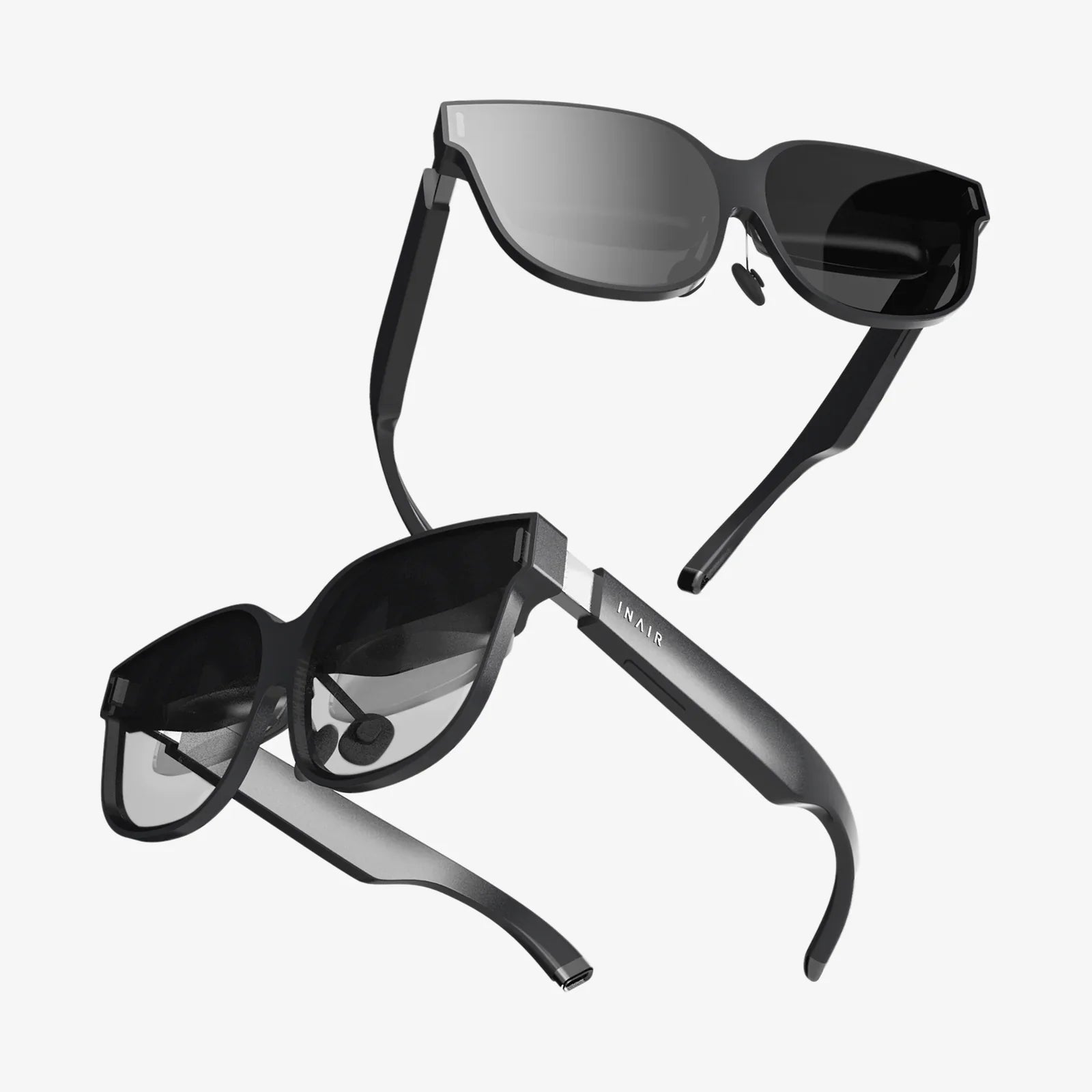
Imagine slipping on a device and being instantly transported to another world—a world so vivid, so crisp, and so breathtakingly real that the line between the digital and the physical begins to blur. This is the promise of virtual reality, a promise that hinges entirely on a single, critical component: the VR headset screen. It is the window to these new realities, the canvas upon which entire universes are painted. The quest for perfect immersion is, at its core, a quest for a better screen. Every pixel, every refresh, and every flicker of light is a step toward or away from true presence. This deep dive explores the heart of the VR experience, peeling back the layers to understand the technology that makes it all possible and where it's destined to go next.
The Portal to Presence: More Than Just a Display
Unlike a television or a monitor, a VR headset screen is not something you simply watch; it is an environment you inhabit. Its primary function transcends displaying images—it must convince your brain that the rendered digital world is your new physical reality. This concept is known as "presence," and achieving it is the holy grail of VR design. The screen is the fundamental gateway to this state. If the visual presentation fails—if it's low resolution, laggy, or inconsistent—the illusion shatters instantly, reminding you that you're merely looking at a screen strapped to your face. Therefore, every specification of a VR display is engineered with the singular goal of fostering and maintaining this fragile sense of being somewhere else.
Deconstructing the Visuals: Key Specifications Explained
The performance and quality of a VR headset screen are defined by a trio of interconnected specifications: resolution, refresh rate, and field of view. Together, they form the foundation of the visual experience.
Resolution and Pixels Per Degree (PPD)
When discussing screens, most people instinctively look at the total resolution, such as 1920x2160 per eye. However, in VR, this number alone is misleading. Because the screens are magnified by lenses and sit mere centimeters from your eyes, the more critical metric is Pixels Per Degree (PPD). PPD measures how many pixels are packed into a single degree of your field of view. A low PPD results in the dreaded "screen door effect," where you can see the faint black lines between individual pixels, breaking immersion. Modern high-end headsets have made tremendous strides here, offering such high PPD that the screen door effect is all but eliminated, creating a smooth, continuous image.
Refresh Rate: The Engine of Smoothness
Measured in Hertz (Hz), the refresh rate is how many times per second the image on the screen is updated. For VR, this is not just about smoothness; it is about comfort and preventing cybersickness. A low refresh rate (below 90Hz) can cause a disconnect between what your eyes see and what your inner ear feels, leading to nausea and headaches. High refresh rates of 90Hz, 120Hz, and even 144Hz ensure that motion is fluid and lifelike, drastically reducing the potential for discomfort and allowing for faster, more intense virtual experiences.
Field of View (FoV): Expanding the Horizon
Field of View is the extent of the observable world seen at any given moment, measured as an angle. Human binocular FoV is approximately 220 degrees. Most VR headsets offer a FoV between 90 and 110 degrees. While this is sufficient for immersion, a narrower FoV can feel like looking through binoculars or a scuba mask, creating a so-called "binocular effect." Expanding the FoV is a significant technical challenge, as it requires not just wider screens but more complex optics to avoid distortion at the edges. The pursuit of a wider, more natural FoV is a key battleground for next-generation headsets.
The Core Technologies: LCD vs. OLED and Beyond
The type of screen technology used defines the very character of the visual output. The two primary contenders have been LCD and OLED, each with distinct advantages and trade-offs.
LCD (Liquid Crystal Display)
LCD panels have become the workhorse for many popular VR headsets. Their primary advantage is their ability to achieve very high resolutions and fast refresh rates at a lower manufacturing cost. They use a backlight to illuminate their pixels, which allows for bright and crisp images. However, the downside of this technology is its comparatively lower contrast ratio. Because the backlight is always on, achieving true black is impossible; instead, blacks appear as dark grays. This can slightly diminish the depth and richness of dark scenes. Furthermore, LCDs typically have slower pixel response times than OLEDs, which can contribute to a small amount of motion blur.
OLED (Organic Light-Emitting Diode)
OLED technology is often hailed for its superior image quality in key areas. Each pixel in an OLED display is self-emissive, meaning it produces its own light. This allows for perfect blacks because individual pixels can turn off completely. The result is an infinite contrast ratio, providing incredible depth and vibrancy, especially in dark or space-themed environments. OLEDs also boast exceptionally fast pixel response times, virtually eliminating ghosting and motion blur. The historical drawbacks have been a higher cost and the risk of "mura" effects (slight imperfections in luminance) and screen burn-in over very long periods. However, new advancements like OLEDoS (OLED on Silicon) are helping to overcome these challenges.
The New Frontier: Micro-OLED and Mini-LED
The future lies in technologies that combine the best of both worlds. Micro-OLED displays are incredibly small, high-density panels built directly onto a silicon wafer. They offer the perfect blacks and fast response of OLED but with drastically higher resolutions and PPD, all while being very compact and power-efficient. They are poised to become the standard for high-end, compact headsets. On the other hand, Mini-LED backlighting is a significant upgrade for LCDs. By using thousands of tiny LEDs for backlighting with local dimming zones, Mini-LED LCDs can achieve contrast ratios that rival OLED, while maintaining the high peak brightness and resolution advantages of traditional LCDs.
The Invisible Partner: Optical Lens Systems
A discussion about the screen is incomplete without mentioning the lenses placed directly in front of it. These lenses are responsible for focusing the image from the tiny, close-up screens to fill your entire field of view. The quality of these lenses is paramount. Early Fresnel lenses were prone to glare and god rays—unwanted visual artifacts caused by concentric ridges, especially in high-contrast scenes. The latest generation of headsets is moving to pancake lenses, a compact design that uses a series of polarization folds to focus light. This allows for a much thinner headset profile and significantly reduces optical artifacts, providing a clearer, more uniform image across the entire lens.
Pushing Pixels: The Immense Demand on Processing Power
Driving two high-resolution screens at a high refresh rate is one of the most demanding tasks for modern computing hardware. Rendering a complex 3D scene at a resolution of 2,500 x 2,500 per eye at 90Hz requires rendering over one billion pixels per second. This immense demand is why powerful graphics processors are non-negotiable for high-fidelity PC VR. To mitigate this, manufacturers employ clever software techniques like foveated rendering. This technology uses eye-tracking to determine where the user is looking and renders only the center of their vision (the fovea) at full resolution. The peripheral vision, where our eyes discern far less detail, is rendered at a lower resolution. This can dramatically reduce the GPU workload without the user perceiving any drop in quality.
Gazing into the Crystal Ball: The Future of VR Screens
The evolution of the VR headset screen is moving at a breakneck pace. Several emerging technologies promise to redefine what's possible. Varifocal displays aim to solve the vergence-accommodation conflict—a current issue where your eyes focus on a virtual object but your lenses must focus on the fixed focal plane of the screen, causing eye strain. These systems dynamically adjust the focal plane to match the depth of the object you're looking at. Furthermore, the integration of HDR (High Dynamic Range) support will bring a much wider range of brightness and color, making virtual worlds feel more lifelike than ever before. Finally, the ultimate goal for many is the development of true holographic and light field displays, which would accurately simulate the way light behaves in the real world, potentially eliminating the need for lenses altogether and providing a perfectly natural visual experience that is gentle on the eyes.
The journey into virtual reality is a visual one, and every advancement in screen technology brings us closer to worlds indistinguishable from our own. From the stark contrast of deep space to the subtle textures of a sunlit forest, the VR headset screen is the brush that paints these experiences. It’s a relentless pursuit of visual perfection, where every pixel is a building block for reality itself. The next time you step into a virtual world, take a moment to appreciate the marvel of engineering right before your eyes—a marvel that is only getting sharper, faster, and more real with every passing day.
Share:
VR Goggles for iPhone: Unlocking a Pocket-Sized Universe of Immersive Experiences
Extended Reality Software: The Invisible Engine Powering Our Future