


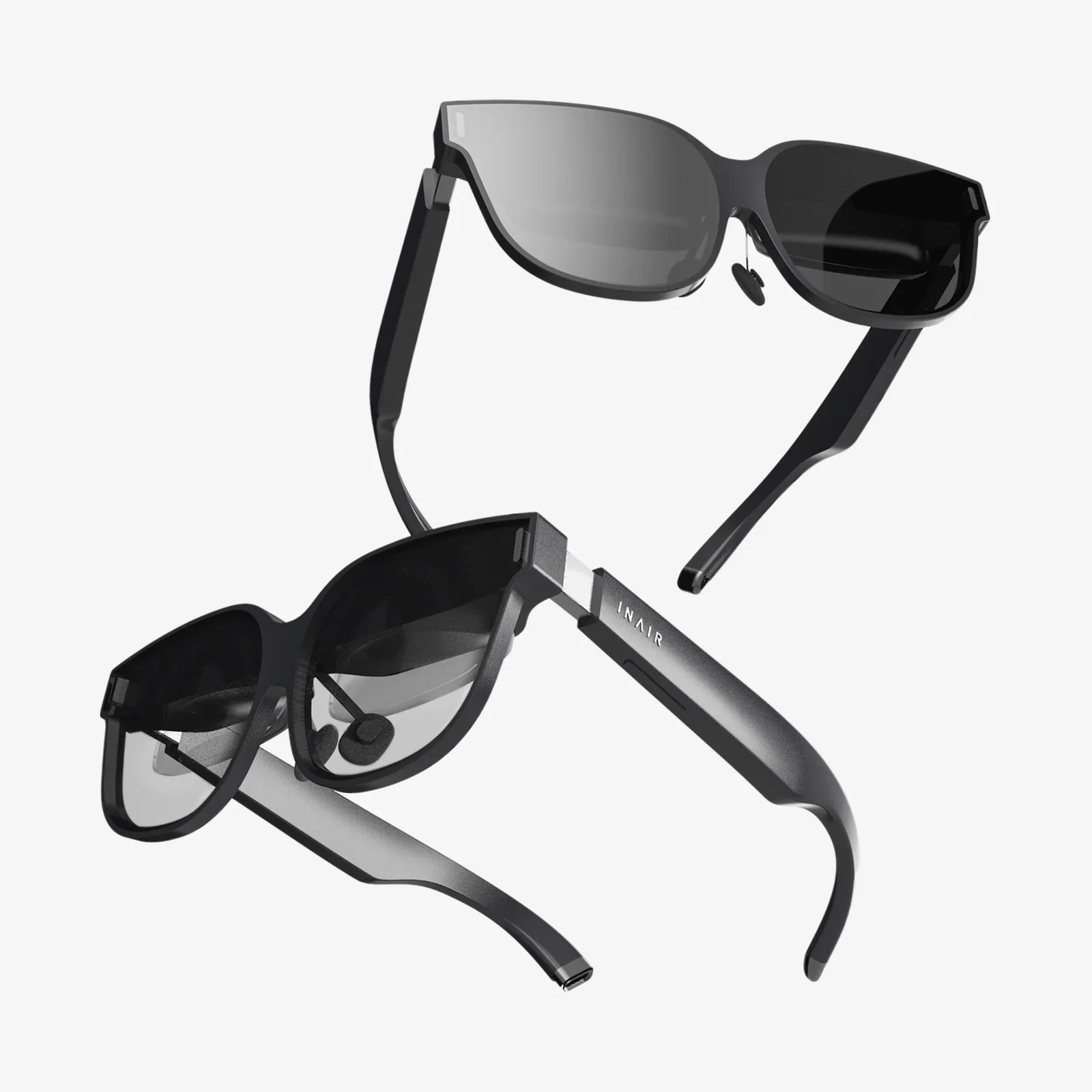
Imagine slipping a portal to another universe into your pocket. A device that can transport you from your living room to the edge of a volcano, the depths of the ocean, or a front-row seat at a concert across the globe. This isn't science fiction; it's the reality unlocked by pairing your iPhone with a simple yet powerful accessory: VR goggles. This combination represents one of the most accessible and revolutionary entry points into the world of virtual reality, democratizing immersive experiences for millions. It turns the powerful computer you already own into a window to limitless possibilities, blending the familiar with the fantastical in a way that is both intuitive and awe-inspiring.
The Magic Behind the Lens: How iPhone VR Goggles Work
The core principle of VR goggles designed for a smartphone is elegantly simple. Your iPhone provides the brains and the eyes, while the headset provides the body and the perspective. It's a symbiotic relationship that leverages existing technology to create something entirely new.
At the heart of the experience is the iPhone's stunning high-resolution display. When you slot your phone into the headset, the screen is divided into two identical images, one for each eye. The lenses in the headset, positioned between your eyes and the screen, perform a critical function. They magnify and focus these images, bending the light to create a stereoscopic 3D effect. This tricks your brain into perceiving a single, vast, and immersive environment instead of a small screen just inches from your face. The wider the field of view provided by the headset, the more convincing and enveloping the virtual world becomes.
But vision is only part of the story. For true immersion, you need to be able to look around. This is where the iPhone's built-in gyroscope and accelerometer come into play. These sophisticated motion sensors detect the slightest tilt, turn, or rotation of your head. This data is fed to the VR application in real-time, which adjusts the on-screen viewpoint accordingly. When you look up, the virtual sky comes into view; when you glance over your shoulder, the world behind you is rendered instantly. This creates the fundamental and magical illusion of being present within a digital space.
Beyond the Cardboard: The Evolution of Mobile VR Headsets
The journey of smartphone-based VR began with humble origins, most notably with simple, affordable viewers made from cardboard and plastic. These basic holders proved the concept was viable and sparked widespread curiosity. However, the market has evolved significantly to address the limitations of these early models.
Modern VR goggles for iPhone are sophisticated pieces of hardware designed for comfort and functionality. They typically feature:
- Adjustable Head Straps: Unlike holders you must hold up to your face, most dedicated headsets use adjustable elastic or padded straps to distribute weight evenly around your head, allowing for longer, more comfortable sessions.
- Precision Lenses: High-quality optical lenses with adjustable IPD (Interpupillary Distance) and focus dials ensure a clear, sharp image tailored to the user's unique vision, reducing eye strain.
- Ventilation and Comfort Padding: Plush foam padding around the eyes and nose bridge creates a light-seal to block out the real world, while strategic ventilation prevents the lenses from fogging up during use.
- Integrated Controls: Some higher-end models include additional features like Bluetooth controllers for input, external buttons to interact with the phone, or even built-in headphones for spatial audio.
This evolution has moved mobile VR from a novel gimmick into a legitimate platform for entertainment and education, offering a user experience that rivals dedicated systems in many ways, albeit with different core strengths.
A Universe in Your App Store: The VR Experience on iOS
The true potential of any VR system is unlocked by its software, and the iOS ecosystem is brimming with applications designed to showcase the power of your iPhone-headset combo. The App Store hosts a vast library of VR content spanning numerous categories.
Gaming and Interactive Adventures
Gaming is a natural fit for VR. Titles range from simple roller coaster simulators that provide thrilling drops and turns to full-fledged adventure games where you solve puzzles, wield virtual weapons, and explore expansive environments. The immersion factor makes every action feel more intense and every environment more believable. Horror games, in particular, gain a terrifying new dimension when you feel truly inside the haunted space.
Travel and Exploration
One of the most powerful uses of VR is virtual travel. Applications allow you to stand on the surface of Mars, walk through the streets of ancient Rome, dive with sharks on the Great Barrier Reef, or take a guided tour of the world's most famous museums—all from your home. These experiences are not just videos; they are often photorealistic 360-degree environments that you can actively explore by turning your head and body, giving you a genuine sense of place.
Education and Training
Educators and trainers are increasingly leveraging VR's power. Medical students can take part in virtual dissections or observe complex surgeries from the surgeon's perspective. History students can experience pivotal historical events. Architecture students can walk through their building designs at a 1:1 scale. This form of experiential learning enhances retention and understanding far beyond what textbooks can offer.
Media Consumption and Social Connection
Imagine watching a movie on a screen that feels 100 feet wide in your own private theater. VR media players can simulate this exact experience. Furthermore, 360-degree videos and photos put you right in the center of the action, whether it's a music festival, a sporting event, or a documentary. Social VR platforms also allow you to meet with friends or strangers in virtual spaces, interacting through avatars and sharing experiences as if you were physically together.
Weighing the Reality: Advantages and Limitations
Like any technology, VR goggles for iPhone come with a distinct set of pros and cons when compared to standalone or PC-tethered VR systems.
The Advantages: Accessibility and Affordability
- Low Barrier to Entry: The biggest advantage is cost. Since the primary processing power comes from the iPhone you already own, the headset itself can be very affordable, making VR accessible to a massive audience.
- Simplicity and Portability: There are no wires to a PC and no internal battery to charge (on most models). The setup is often as simple as inserting your phone, putting on the headset, and launching an app. The entire system is also highly portable.
- Always Updated: As you upgrade your iPhone, your VR system gets upgraded too, benefiting from better processors, sharper screens, and improved sensors with each new model.
The Limitations: Power and Fidelity
- Hardware Constraints: An iPhone, while powerful, cannot match the raw graphical processing power of a high-end gaming PC or a purpose-built standalone headset with dedicated chips. This can result in less complex graphics and simpler environments.
- Potential for Overheating: Running high-fidelity VR experiences is demanding and can cause some iPhone models to become warm and, in rare cases, throttle performance to cool down.
- Lack of Positional Tracking: Most mobile headsets rely solely on the phone's sensors for rotational tracking (looking around). They typically lack external cameras or sensors for "6 degrees of freedom" (6DoF) tracking, meaning you can't physically walk around in the virtual space or lean in to examine an object. Your position is fixed.
Gazing into the Future: The Road Ahead for Mobile VR
The future of iPhone-based VR is intrinsically linked to the future of the iPhone itself. As Apple continues to push the boundaries of mobile technology with more powerful chips like the A-series and M-series, the graphical and computational capabilities available to VR developers will grow exponentially. We can expect richer, more detailed, and more interactive virtual worlds.
The lines are also beginning to blur with the advent of augmented reality (AR). Future headsets might seamlessly blend VR and AR, allowing digital objects to interact convincingly with your real-world environment. Furthermore, as connectivity improves with technologies like 5G, cloud-based VR rendering could become a reality, offloading the intense processing to remote servers and streaming the experience directly to the headset, bypassing the phone's hardware limitations entirely.
The potential for social and professional applications is vast. Virtual meetings where participants feel like they are in the same room, remote collaboration on 3D designs, and new forms of live entertainment are all on the horizon. The iPhone, as the most ubiquitous high-end camera system in the world, could also be used to easily scan and create realistic 3D models of our own environments, further blending the real and the virtual.
The humble combination of a headset and a smartphone is not the endpoint for VR; it is a crucial and powerful stepping stone. It has introduced millions to the magic of immersion and proven that you don't need a supercomputer to explore new realities. As technology marches forward, this accessible portal will only become more vivid, more interactive, and more integral to how we play, learn, work, and connect. The device in your pocket is already a key to countless worlds—all you need to do is look through the right window.
Share:
Strongest VR Headset: The Unmatched Power Reshaping Digital Realities
VR Headset Screen: The Gateway to Immersive Digital Realities