


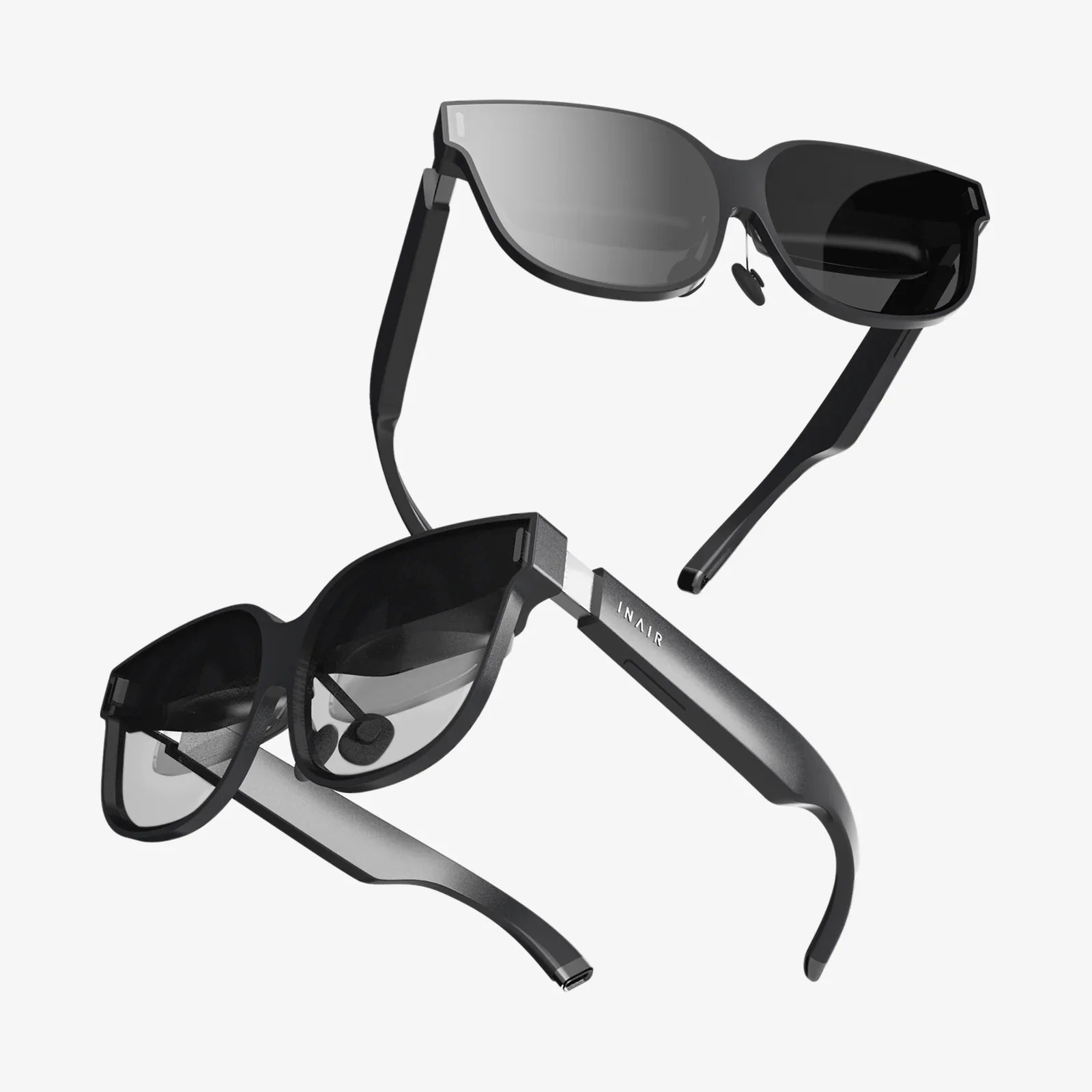
Imagine stepping through a portal into another reality, where the only limit is the imagination. This is the promise held within a single, sleek box: the VR headset set. More than just a piece of hardware, it's a key, a ticket, and a passport to experiences that were once the sole domain of science fiction. The journey from curious novelty to a mainstream technological revolution has been rapid, and for anyone standing on the precipice of taking the plunge, the world of virtual reality is now more accessible and breathtaking than ever before. This is your guide to understanding not just what you're buying, but the new dimension of life you're unlocking.
The Core Components: What's Actually in the Box?
When you purchase a VR headset set, you are acquiring a complete ecosystem designed to facilitate digital immersion. Understanding the role of each component is crucial to appreciating how the magic happens.
The centerpiece is, of course, the head-mounted display (HMD). This is the wearable unit that houses the most critical technology: the high-resolution displays positioned mere centimeters from your eyes. Through a complex arrangement of lenses, these screens fill your entire field of view, creating the stereoscopic 3D effect that sells the illusion of depth and space. Modern HMDs are also packed with a suite of sensors—gyroscopes, accelerometers, and magnetometers—that work in concert to track the precise orientation of your head. This is known as rotational tracking, allowing you to look up, down, and around the virtual environment naturally.
However, for true immersion, the system must also understand your position in physical space. This is where positional tracking comes into play. Different sets achieve this through various methods. Some utilize external sensors or base stations placed in the room to create a laser grid that precisely maps your movement. Others, a more modern and convenient approach, use outward-facing cameras on the HMD itself for inside-out tracking, scanning your surroundings to anchor you in the virtual world and, crucially, to define your safe play area.
No virtual experience is complete without interaction, which is the domain of the motion controllers. These are not traditional gamepads; they are ergonomic devices designed to be held in each hand, representing your virtual hands. They are equipped with their own sensors, buttons, triggers, and haptic feedback motors. This allows for intuitive and nuanced control—pointing, grabbing, throwing, painting, or swinging a sword—with physical vibrations that sell the tactile sensation of the action.
A Spectrum of Experience: From Tethered Power to Untethered Freedom
The VR landscape is not monolithic. It is broadly divided into three categories, each offering a different balance of performance, convenience, and cost. Choosing the right type is the first and most important step in your journey.
1. Tethered/PC-Connected VR Sets
These systems represent the high-end of the market, the pinnacle of what is currently possible in consumer virtual reality. A tethered set, as the name implies, connects via a high-speed cable to a powerful external computer. This machine acts as the engine room, doing the heavy graphical lifting to render incredibly complex, detailed, and immersive worlds with high fidelity, fast frame rates, and advanced physics.
The advantages are clear: unmatched performance and visual fidelity. These sets are capable of delivering the most deeply immersive experiences, from hyper-realistic simulations to vast, graphically intensive games. They often feature the most advanced tracking systems and controllers, enabling full-body awareness and precise interaction.
The trade-offs are cost and complexity. The requirement for a high-end computer represents a significant additional investment. The physical tether, while often managed with clever cable systems, can still be a reminder of the real world and poses a minor risk of entanglement during active experiences.
2. Standalone/All-in-One VR Sets
This category has been the driving force behind VR's mass adoption. A standalone VR headset set has all the necessary computing power, battery, and sensors built directly into the headset. There are no wires to a PC and no external sensors to set up. You simply put it on, power it up, and you're inside VR within seconds.
The primary advantage is accessibility and convenience. It's a completely self-contained system, making it easy to use in any room with enough space, or even to take to a friend's house. The lack of a cable provides unparalleled freedom of movement, making it ideal for active games and experiences.
The compromise is in raw processing power. While the technology inside these headsets is advancing at a staggering rate, they cannot match the graphical output of a top-tier gaming PC. Experiences are often less complex and visually simpler, though still highly impressive and engaging. Battery life is also a consideration, typically offering two to three hours of use per charge.
3. Smartphone-Powered VR (The Gateway)
While now less prominent, this category served as the initial gateway to VR for millions. These headsets are essentially sophisticated holders for a smartphone, which acts as both the display and the processor. The lenses inside the headset transform the phone's screen into a stereoscopic view.
Their main draw was extremely low cost and ease of use. However, they offered limited tracking (usually rotational only), lacked dedicated motion controllers, and provided a significantly less immersive experience due to lower performance and higher latency. While they played a historical role, the market has largely moved towards more capable standalone and tethered systems.
Beyond Gaming: The Expansive Universe of VR Applications
While gaming is the most famous and commercially successful application, the utility of a VR headset set extends far beyond entertainment. It is becoming a transformative tool across numerous industries.
- Education and Training: Medical students can practice complex surgeries on virtual patients without risk. Mechanics can learn to repair engines by taking apart virtual models. History students can take guided tours of ancient Rome. VR offers safe, repeatable, and cost-effective training scenarios that are impossible to replicate in the real world.
- Social Connection: Social VR platforms allow people to meet, interact, and share experiences as personalized avatars. You can attend a virtual concert with friends from across the globe, watch a movie together in a digital cinema, or simply hang out and chat in a custom virtual space, fostering a sense of presence that video calls cannot match.
- Design and Architecture: Architects and designers can walk clients through unbuilt homes and spaces long before ground is broken. This allows for changes to be made in the design phase, saving immense time and resources. Artists can sculpt and paint in 3D space, creating masterpieces that exist only in the digital realm.
- Fitness and Health: A new genre of VR software has turned exercise into an engaging game. From rhythm-based workouts to boxing simulators, these applications provide a full-body cardio workout that is fun and motivating, making it easier to stick to a fitness regimen. VR is also being used for therapeutic purposes, such as exposure therapy for phobias or meditation and mindfulness exercises in serene, computer-generated environments.
- Remote Work and Collaboration: The concept of the "virtual office" is becoming a reality. Teams can collaborate on 3D models, brainstorm on virtual whiteboards, and conduct meetings with a sense of shared presence that flat screens cannot provide, potentially redefining the future of remote work.
Choosing Your Gateway: A Buyer's Considerations
Selecting the right VR headset set is a personal decision based on your individual needs, budget, and existing technology.
- Define Your Primary Use Case: Are you a hardcore gamer seeking the most visually stunning experiences? A tethered set is your destination. Looking for a convenient, all-in-one system for fitness, socializing, and casual gaming? A standalone headset is likely your best bet.
- Assess Your Hardware (For Tethered VR): Before buying a PC-connected set, verify that your computer meets or exceeds the system requirements. The graphics card is the most critical component.
- Consider Your Space: Most VR experiences require a cleared area for safe movement. Measure your available space. Some systems are better suited for smaller, seated or standing experiences, while others excel in larger, room-scale environments.
- Comfort is King: If possible, try before you buy. Weight distribution, padding, and strap design vary greatly. A headset that is uncomfortable after 30 minutes will gather dust, no matter how powerful it is.
- Look to the Software Library: Explore the available apps and games for the platform you're considering. Ensure there is compelling content that interests you, both at launch and on the horizon.
- Budget for the Entire Ecosystem: Remember to factor in the cost of the software itself. While many experiences are free or low-cost, premium games and applications are an additional expense.
The Future is Immersive: Where Do We Go From Here?
The technology behind VR headset sets is in a constant state of hyper-evolution. The road ahead is filled with innovations that will further blur the line between the real and the virtual. We are moving towards headsets with dramatically higher resolution displays ("retina" level), wider fields of view, and significantly smaller, lighter form factors, perhaps even resembling ordinary eyeglasses. Haptic feedback will evolve from simple vibrations in the controllers to full-body suits that can simulate touch, pressure, and temperature. Advancements in inside-out tracking and eye-tracking will enable more intuitive interfaces and foveated rendering, a technique that drastically boosts performance by rendering only the spot you're directly looking at in full detail. The ultimate goal is achieving true photorealism and presence—the undeniable feeling of actually being in another place.
The journey into virtual reality is one of the most exciting technological adventures of our time. It's a field that is evolving not in years, but in months, with each breakthrough making the experience more profound, more accessible, and more integrated into our daily lives. Whether for play, work, learning, or connection, a VR headset set is no longer a fringe gadget for enthusiasts; it is a powerful window into the next great computing platform. The question is no longer if you will step through, but when, and which world you will choose to explore first.
Share:
VR Headset News Today: The Most Significant Developments Shaping Our Virtual Future
Why Is My VR Headset Not Working: The Ultimate Troubleshooting Guide