


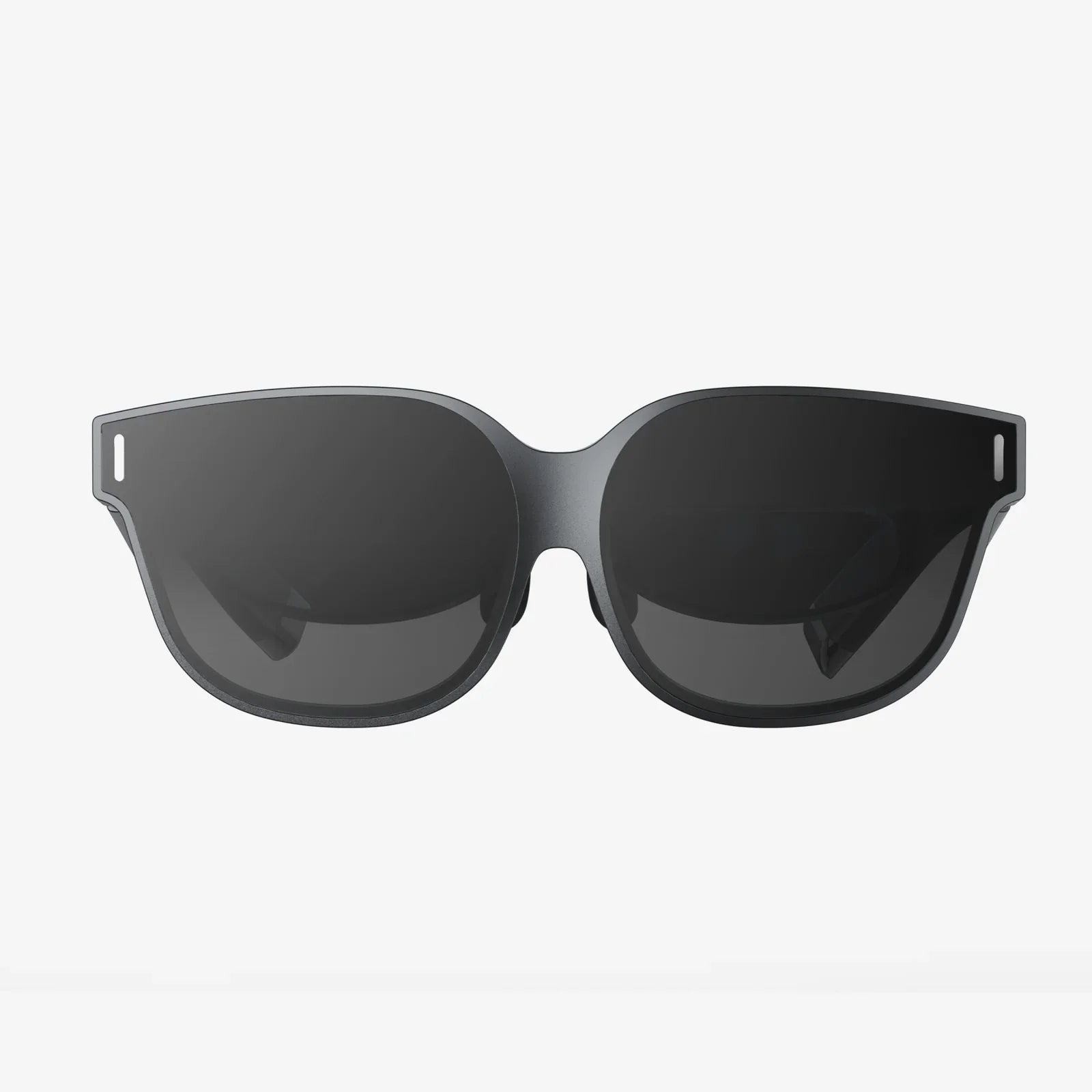
- by wangfred
VR Headset with Headphones and Controller: The Ultimate Immersive Experience Unpacked
- by wangfred
Imagine slipping on a single device and being instantly transported. The familiar walls of your room dissolve, replaced by a breathtaking alien landscape, the hallowed halls of a virtual museum, or a frantic battlefield light-years from Earth. This isn't just about what you see; it's about what you hear and what you can do. The subtle crunch of gravel underfoot, the distant whisper of the wind, the heart-pounding approach of an unseen foe—all these elements converge to create a reality so convincing, your brain willingly suspends its disbelief. This is the promise and the power of the modern virtual reality system, a seamless fusion of visual, auditory, and interactive technology designed not just to show you a new world, but to let you truly live within it. The journey into this digital realm begins not with a screen, but with an experience.
At its core, a virtual reality setup is an exercise in sensory deception. Its primary goal is to convince your brain that the simulated environment it is perceiving is authentic. While the visual display is the most obvious component, it is only one part of a much larger puzzle. True immersion is a delicate balance, a symphony where the visual, auditory, and haptic elements must play in perfect harmony. A stunning visual scene can be instantly shattered by flat, tinny audio coming from a room's speakers. A compelling narrative can be broken by fumbling with separate peripherals that remind you of the real world. This is why the integrated system—a headset with built-in headphones and dedicated controllers—represents the gold standard for consumer virtual reality. It is a holistic approach to design, where every component is engineered to work in concert, eliminating friction and preserving the fragile state of presence—that magical feeling of actually being somewhere else.
To understand why this combination is so effective, we must examine each piece of the puzzle individually and then see how they unite to create an experience greater than the sum of its parts.
The headset itself is the cornerstone of the experience. It is your window into the virtual world. Modern headsets utilize high-resolution displays, often one for each eye, to create a stereoscopic 3D effect. Advanced lenses focus and reshape the image to fill your field of view, while a high refresh rate ensures smooth, fluid motion that is crucial for preventing discomfort and simulator sickness. Inside-out tracking technology, now common, uses integrated cameras to map your physical space and track the headset's position within it, freeing you from external sensors and allowing for easy room-scale experiences. The headset's design prioritizes a secure and comfortable fit, often with adjustable straps and foam interfaces, as even the slightest discomfort can pull a user out of immersion. It is the vessel that carries the core technology, but without its companions, the journey is incomplete.
If the headset is the eyes into the virtual world, the headphones are its ears. Audio in virtual reality is not merely an accompaniment; it is a fundamental navigational and emotional tool. Unlike traditional stereo sound, spatial audio is a game-changing technology that mimics how sound waves interact with the human head and ears. It allows developers to place sounds in a 3D space around you. A bird chirping will sound like it's above and to your left. An enemy's voice will seem to emanate from directly behind you. The creak of a floorboard will feel like it's right at your feet. This is not a subtle effect; it is a profound contributor to situational awareness and immersion. Built-in headphones, typically of the on-ear or near-ear variety, are specifically tuned for this purpose and are perfectly positioned to deliver this spatialized audio directly to your ears. They eliminate the hassle of separate headphones and ensure that the audio cues are always perfectly synced with the visual action, making the world feel cohesive and real. The whisper of a secret becomes a private moment, and the roar of a dragon becomes a visceral, directional threat.
Controllers are your hands in the virtual world. They are the primary means of interaction, transforming you from a passive observer into an active participant. These are not traditional gamepads; they are sophisticated pieces of hardware equipped with inertial measurement units (IMUs), buttons, triggers, and haptic feedback motors. They are tracked by the headset's cameras, allowing their position and rotation in 3D space to be perfectly mirrored by your virtual hands. This 1:1 mapping is what enables you to reach out and grab an object, carefully aim a weapon, or paint in three dimensions. Haptic feedback provides a tactile response—a subtle vibration when you touch a virtual surface, a sharp pulse when you fire a gun, or a rumble when an explosion goes off nearby. This physical sensation bridges the gap between the digital and the physical, providing crucial feedback that makes interactions feel weighty and authentic. The design of these controllers is often ergonomic and intuitive, shaped to feel like a natural extension of your own body, further solidifying the connection between you and the digital avatar you inhabit.
The true genius of a system that combines these three elements from the ground up lies in its seamless integration. This is not a collection of disparate gadgets cobbled together; it is a unified platform. The software, firmware, and hardware are all designed to work together flawlessly. This synergy manifests in several key advantages:
The hardware is merely a conduit for software. The value of this integrated system is fully realized in the vast and growing library of experiences available. These span far beyond gaming, touching numerous aspects of life and industry.
This is the most well-known application. Integrated controllers allow you to swing a lightsaber, scale a cliff face, solve a intricate puzzle by physically manipulating objects, or conduct a virtual orchestra. The headphones make you jump at a horror game's scare and allow you to pinpoint an opponent's location in a competitive shooter based solely on the sound of their footsteps. It is a level of engagement that traditional gaming cannot match.
Platforms exist that allow people to gather as customizable avatars in virtual spaces. Here, spatial audio is perhaps the most transformative feature. In a virtual meeting room, a colleague's voice will naturally sound like it's coming from across the table. In a social lobby, you can have a side conversation with one person while hearing the murmur of the larger crowd around you, just like in real life. This fosters a powerful sense of shared space and natural interaction that video calls simply cannot replicate.
From medical students practicing complex surgical procedures to mechanics learning the intricacies of a new engine, VR provides a safe, repeatable, and cost-effective training environment. The ability to physically practice a skill, guided by spatial audio instructions and using motion-tracked tools, dramatically improves knowledge retention and muscle memory compared to watching a video or reading a manual.
You can take a guided tour of ancient Roman ruins, walk the surface of Mars using real NASA data, or explore the depths of the ocean. The immersive nature of the technology makes these experiences feel visceral and memorable, offering a compelling alternative or supplement to physical travel.
While the technology is incredible, it is not without its considerations. Potential users should be aware of the required physical space for room-scale experiences, the cost of entry for a high-quality system, and the potential for motion sickness in some individuals (though modern advancements have significantly reduced this issue). Furthermore, the choice between a wired headset for maximum performance and a wireless one for ultimate freedom is a key decision for many.
The evolution of this technology has been remarkable. We have moved from clunky, low-resolution prototypes requiring a warehouse of equipment to sleek, self-contained units that offer astonishing fidelity and ease of use. The integration of audio and controllers was a pivotal step in this journey, moving virtual reality from a novel tech demo to a compelling platform for human experience. As we look to the future, with advancements in haptic gloves, eye-tracking, and even higher-resolution displays, the foundation laid by this core triad will continue to be the bedrock upon which even more immersive and unimaginable experiences are built. The line between the real and the virtual is blurring, and it's happening through a headset, a pair of headphones, and the controllers in your hands.
Ready to answer the call of another world? The barrier between realities has never been thinner. This isn't about watching a story unfold on a screen; it's about stepping through it and becoming the protagonist. With every glance, every sound, and every movement perfectly mirrored in a digital space, you're not just playing a game or watching a video—you're claiming a new frontier of experience. The controllers are waiting. The headphones are ready to transport you. All that's left is to take the leap and see what happens on the other side.
Share:
What Is The Cost Of A VR Headset - A Complete Price Breakdown
VR Headset Open Now: The Dawn of Spatial Computing and an Unfettered Digital Reality