


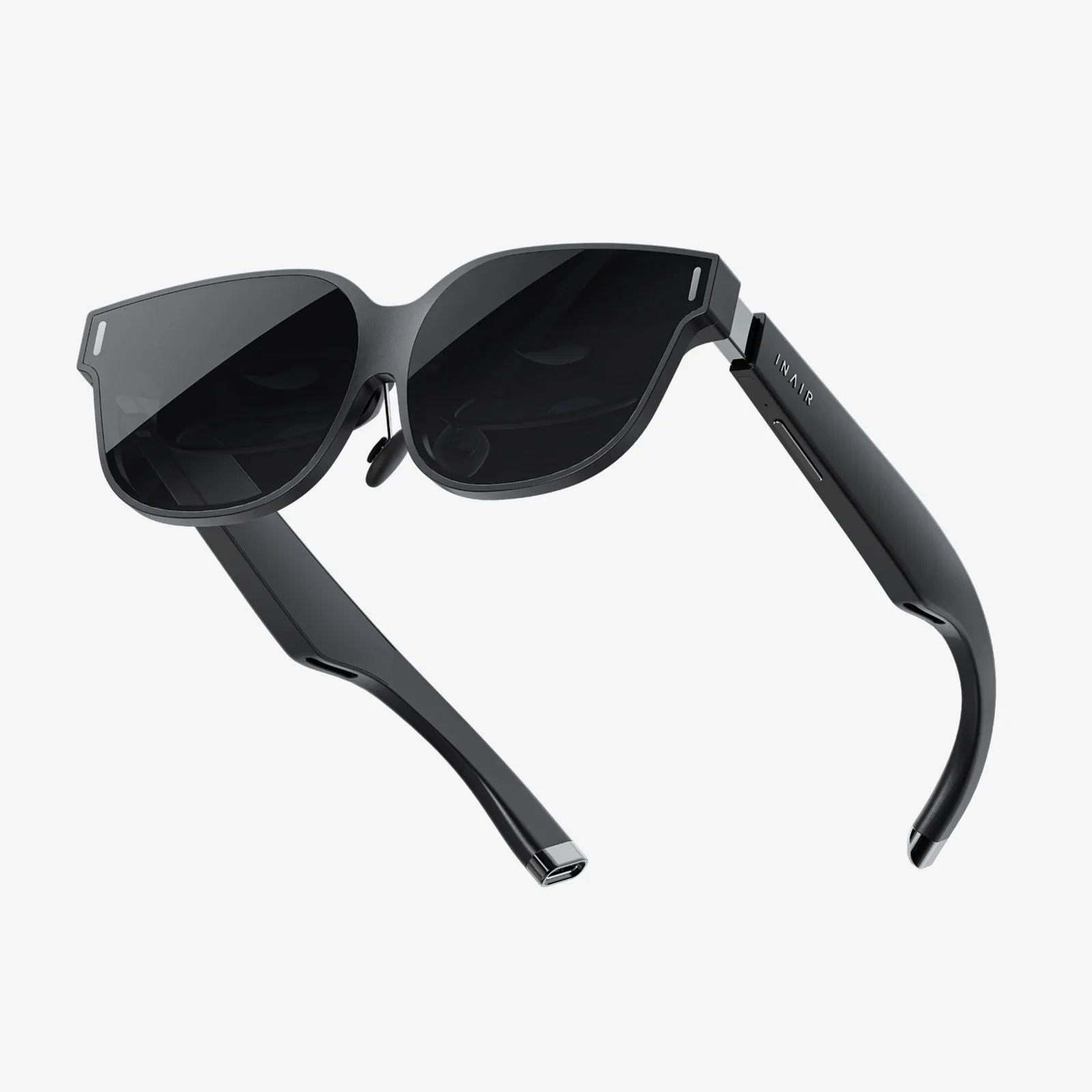
- by wangfred
VR Headset Open Now: The Dawn of Spatial Computing and an Unfettered Digital Reality
- by wangfred
Imagine a world where the digital and the physical are not competing realities, but a seamless, integrated continuum. A world where your workspace is a sun-drenched virtual balcony overlooking a mountain range, your creative studio has infinite canvases, and your social gatherings transcend continents with a palpable sense of presence. This is no longer the stuff of science fiction; it is the imminent future knocking on our door, and the key is a simple, yet revolutionary act: putting on a VR headset open now. This isn't about entering a walled garden of curated experiences; it's about unlocking a door to an entire universe of possibility, where the boundaries of reality are yours to define.
For years, the landscape of immersive technology was dominated by a closed ecosystem model. Much like the early days of gaming consoles, headsets were often designed as proprietary platforms. The hardware, software, and digital storefront were a tightly controlled loop, creating a curated but ultimately limited experience for the user. You bought into a specific brand's universe, and your access to applications, environments, and even social networks was contingent upon staying within those digital walls. This model served a purpose in the technology's infancy, providing a stable, controlled environment for developers and a simple, if restricted, experience for early adopters.
However, a profound shift is underway. The concept of a VR headset open now signifies a move away from this restrictive paradigm towards an open-platform future. This shift is multifaceted, encompassing hardware interoperability, software freedom, and user agency. It means a headset is no longer just a viewing device for a single company's content library, but a generalized window into the broader metaverse—a term rapidly evolving to describe the next iteration of the internet, a collective, persistent, and interoperable space.
An open VR ecosystem is not defined by a single feature but is built upon several foundational pillars that work in concert to empower users and developers alike.
At its core, an open platform embraces hardware agnosticism. This means the software and experiences are not locked to a single manufacturer's device. Imagine purchasing a digital application or asset and knowing it will function whether you're using a high-end tethered headset, a standalone mobile unit, or a device released five years from now. This requires robust and universal standards for tracking, controller inputs, and rendering, ensuring a consistent baseline experience across different hardware. It fosters healthy competition, driving innovation in headset design, display technology, and comfort, as companies compete on the quality of the hardware itself rather than the exclusivity of its content.
An open system champions software freedom. This involves support for open-source development tools and engines, making it easier and more affordable for creators of all sizes to build for the platform. Crucially, it means supporting cross-platform applications and social spaces. Your avatar, your identity, and your digital possessions should be portable. You should be able to attend a virtual concert with friends regardless of whether they are using a headset from Company A, B, or C. This breaks down the digital silos that currently fragment the user base and stifle the growth of a truly unified online world.
Perhaps the most critical pillar is user agency. In an open ecosystem, the user has ultimate control over their data, their privacy settings, and their digital footprint. The principle of data portability is key—your friend lists, your created content, and your purchased items should be yours to take wherever you go in the digital landscape. This stands in stark contrast to closed models where your digital life is owned and controlled by the platform holder. An open system treats the user not as a product, but as a citizen of the digital realm with inherent rights and freedoms.
Delivering on the promise of openness requires significant technical underpinnings. It's a complex symphony of hardware and software working in perfect harmony.
The magic of VR begins with tracking. A modern headset is a marvel of miniaturized technology, packed with an array of cameras, inertial measurement units (IMUs), gyroscopes, and accelerometers. Inside-out tracking, where cameras on the headset itself map the physical environment and track the controllers, has become the standard for open platforms as it doesn't require external external sensors, making setup easier and the system more universally compatible. These sensors create a real-time, three-dimensional map of your room, allowing the digital world to respect your physical boundaries—a crucial element for safety and immersion.
The visual fidelity is delivered through high-resolution, fast-switching displays viewed through precision-engineered Fresnel or pancake lenses. These lenses focus your eyes on the screen mere centimeters away, creating a stereoscopic 3D effect that gives depth and scale to the virtual environment. Key to the open experience is the adoption of standard rendering pipelines and display protocols, ensuring that the visual output of any application can be correctly interpreted and displayed by any compliant headset.
Standalone headsets contain a mobile systems-on-a-chip (SoCs)—essentially smartphone-level processors optimized for the immense task of rendering two high-resolution displays at a smooth 90 frames per second or higher. For open platforms, this processing must be efficient and standardized to allow developers to target a known performance profile. Furthermore, connectivity options like Wi-Fi 6/6E for wireless streaming from a powerful computer, and USB-C for both data transfer and power, are essential for ensuring the headset can interface with a wide range of external systems, reinforcing its role as a versatile gateway rather than a closed loop.
While immersive gaming remains a powerful driver, an open VR platform truly shines when its applications expand into nearly every facet of professional and personal life.
The traditional video call grid is a poor imitation of a meeting. Open VR platforms enable truly spatial collaboration. Teams scattered across the globe can gather in a virtual boardroom, around a 3D model of a new product design, or on a schematic for a new building. They can manipulate digital objects with their hands, write on virtual whiteboards that feel permanent, and communicate with body language and spatial audio that conveys nuance and intention. This isn't just a meeting; it's a shared experience that can boost creativity, understanding, and productivity in ways flat screens never could.
Imagine medical students performing dissections on hyper-realistic virtual cadavers, mechanics practicing repairs on complex engine models, or history students walking through a faithfully reconstructed ancient Rome. Open VR provides a scalable, safe, and incredibly effective platform for experiential learning. Trainees can make mistakes without real-world consequences, and educators can create lessons that are truly unforgettable. The openness ensures that these valuable educational tools can be developed by universities and institutions and deployed on any standard headset, democratizing access to high-quality training.
Artists are no longer confined to a two-dimensional canvas or a screen. With VR, they can step inside their creations. Sculptors can mold digital clay with intuitive hand motions, painters can create vast, enveloping murals that surround the viewer, and filmmakers can tell stories where the audience is not a passive observer but an occupant within the scene. An open platform empowers creators by giving them a direct channel to their audience and the freedom to distribute their work without gatekeepers, fostering a new renaissance of digital art and narrative.
The path to an open metaverse is not without its obstacles. These challenges must be acknowledged and addressed thoughtfully.
An open system, by its nature, presents a larger attack surface for malicious actors. When a headset with multiple cameras and microphones is constantly mapping your home environment, the potential for data breaches and privacy violations is a serious concern. Robust encryption, transparent data policies, and user-centric privacy controls are not optional features; they are the absolute bedrock upon which trust is built. Users must have unequivocal control over what data is collected, how it is used, and who it is shared with.
For widespread adoption, VR must be accessible to everyone. This means addressing physical comfort—reducing motion sickness through better hardware and software techniques, designing headsets for a wider range of head shapes and those who wear glasses, and ensuring interfaces are navigable for people with different abilities. Furthermore, the human factor of spending extended time in virtual environments is not yet fully understood. The industry must prioritize user well-being, encouraging breaks and designing experiences that enhance our physical lives rather than replace them.
The grand vision of a connected metaverse hinges on universal interoperability standards. Think of the early days of email or the web; it was the adoption of common protocols (SMTP, HTTP, HTML) that allowed disparate systems to communicate and a global network to flourish. The immersive web needs its own set of standards for avatars, identity, assets, and world persistence. Industry-wide consortiums and collaborations are essential to avoid a future of continued fragmentation where the term "metaverse" simply refers to a dozen disconnected virtual platforms.
As the technology matures, the line between the virtual and the physical will continue to blur in astonishing ways. We are moving towards a paradigm of spatial computing, where digital information is overlaid onto our real world through advanced augmented reality (AR) functionalities, a feature increasingly being integrated into modern headsets. This mixed reality future will see virtual monitors placed on your physical desk, digital artwork hanging on your real walls, and interactive instructions floating over the appliance you're trying to fix.
The ultimate expression of an open platform is the emergence of a true digital economy—a place where users can create, buy, and sell virtual goods and services, with true ownership guaranteed by technologies like blockchain, and where the value generated can flow seamlessly across different applications and worlds. This empowers creators and entrepreneurs, giving rise to new professions and forms of expression we can scarcely imagine today.
The simple act of placing a headset on your head is becoming the equivalent of booting up a personal computer in the 1980s or connecting to the internet in the 1990s. It is the foundational gesture of a new era. It is an invitation to explore, to create, to connect, and to build. The platform is opening, the tools are being distributed, and the only limit is our collective imagination. The door is not just ajar; it is wide open, waiting for you to step through and help shape what comes next.
Share:
VR Headset with Headphones and Controller: The Ultimate Immersive Experience Unpacked
iPhone XS Max VR Headset: The Ultimate Guide to Unleashing a Portable Cinema