


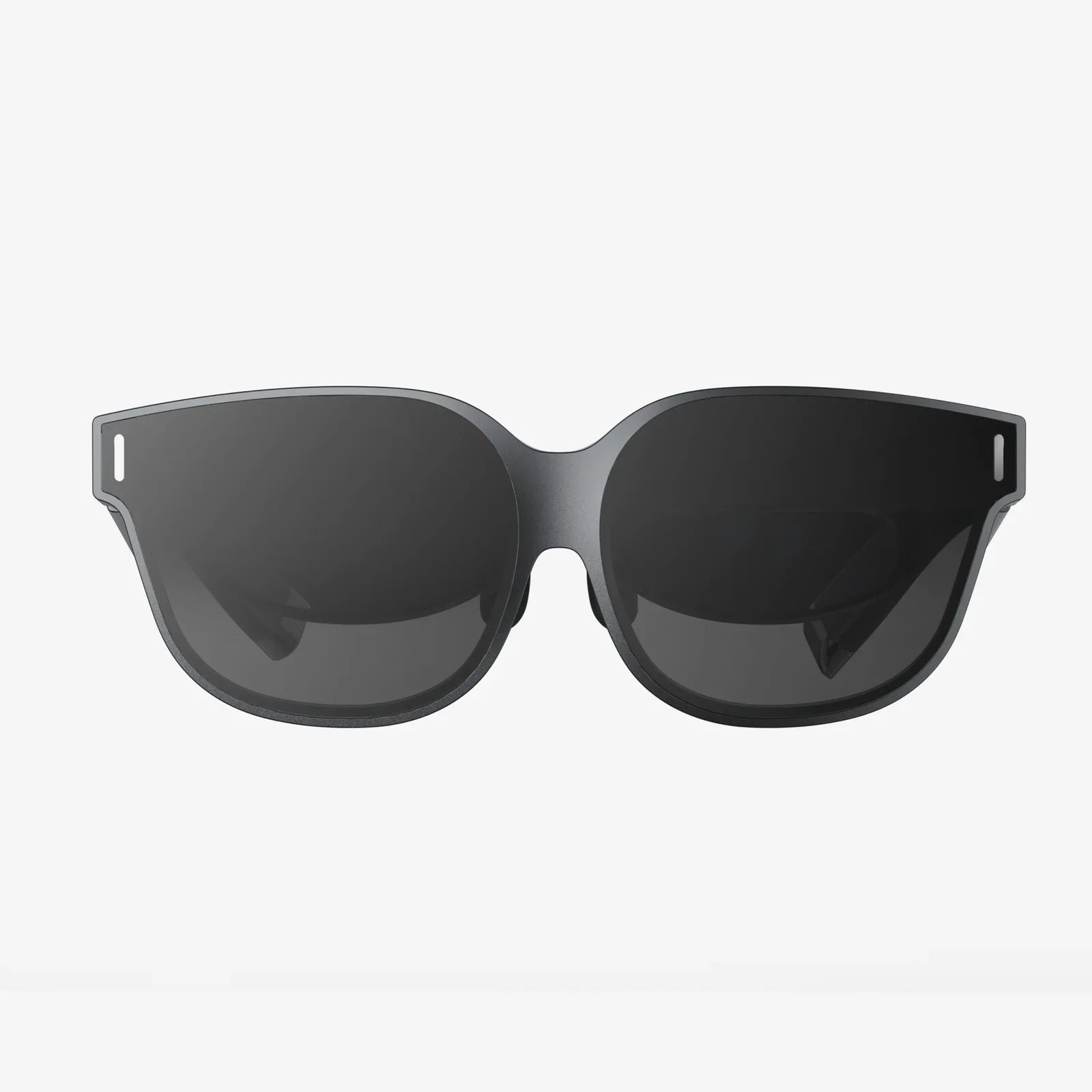
You've seen the breathtaking trailers and the mind-bending possibilities; you've imagined yourself stepping into other worlds, learning complex skills through muscle memory, or attending meetings as a photorealistic avatar from the comfort of your home. This is the promise of Virtual Reality, a technological paradigm shift that feels both imminent and, at times, frustratingly out of reach. But what does it truly take to cross that threshold? The journey from a compelling concept to a seamless, convincing digital reality is paved with specific, non-negotiable demands. To understand the future of this medium is to understand precisely what VR require to cease being a novel gadget and become an indispensable window to new dimensions of human experience.
The Foundational Trinity: Processing Power, Visual Fidelity, and Precision Tracking
At its core, a virtual reality system is a relentless taskmaster, making immense computational demands that far exceed those of traditional flat-screen media. The primary challenge, and the first thing VR require, is the generation of two separate, high-resolution, high-frame-rate images simultaneously—one for each eye. This stereoscopic rendering is just the beginning.
The human brain is exceptionally adept at detecting visual lag or inconsistency, a phenomenon that directly leads to simulator sickness, a type of nausea and disorientation that has plagued VR since its inception. To overcome this, VR require an exceptionally high and stable frame rate, typically 90 frames per second (FPS) or higher. Dropping below this threshold, even for a moment, can instantly shatter the illusion of presence and cause user discomfort. This relentless demand for flawless performance is why VR require top-tier graphics processing units (GPUs) capable of rendering complex 3D environments at speeds once reserved for competitive gaming.
Furthermore, VR require more than just speed; it require visual clarity. Early headsets suffered from the "screen door effect," where users could perceive the gaps between pixels, making the virtual world feel like it was viewed through a mesh. Modern systems demand high-resolution displays with fast pixel response times and advanced lenses to create a wide field of view that feels natural. The goal is to eliminate all visual artifacts that remind the user they are looking at a screen, instead allowing them to accept the digital world as their reality.
Finally, this visual spectacle is meaningless if the virtual world doesn't track your movements with perfect precision. This is where positional tracking comes in. VR require a sophisticated system—whether external sensors or inside-out cameras—to constantly monitor the position and orientation of the headset and controllers in real-world space. Every tilt of the head, every step forward, and every gesture of the hand must be reflected instantly and accurately within the virtual environment. Any latency or jitter in this tracking is immediately perceptible and breaks immersion completely. This flawless translation of real-world motion into digital action is non-negotiable.
The Human Factor: Ergonomic Design and Physiological Considerations
The hardware specifications are only one side of the coin. For VR to be adopted widely, it must become physically comfortable and accessible for extended use. This means VR require a keen focus on ergonomics. Headsets must be lightweight, properly balanced to avoid pressure on the face, and adjustable to fit a wide range of head shapes and sizes. They must accommodate users who wear glasses and provide mechanisms for adjusting the interpupillary distance (IPD)—the space between the eyes—to ensure a clear and comfortable image for everyone. A device that is physically uncomfortable or causes eye strain will be abandoned, no matter how impressive its technical capabilities.
Beyond comfort, VR require a deep understanding of human physiology to mitigate simulator sickness. This involves more than just maintaining a high frame rate. Developers must carefully design locomotion systems—how a user moves through a virtual space—to avoid conflicts between the visual motion perceived by the eyes and the lack of physical motion sensed by the inner ear. Techniques like "teleportation" movement or providing a stable virtual point of reference (like a cockpit) have emerged as solutions. The technology must adapt to the human body's limitations, not the other way around.
The Bridge to the Virtual: Intuitive Controllers and Haptic Feedback
Our hands are our primary tools for interacting with the physical world, and for VR to feel genuine, it require a seamless method of digital interaction. This has evolved from simple gamepads to sophisticated motion-tracked controllers that act as stand-ins for our hands. These controllers are equipped with buttons, triggers, joysticks, and, crucially, precise inertial measurement units (IMUs) that track their movement and rotation.
The next frontier in this tactile interaction is haptic feedback. While basic rumble motors provide a start, true immersion VR require advanced haptics that can simulate the texture of a surface, the resistance of pulling a trigger, or the impact of a virtual object. This sensory feedback is a critical component in selling the illusion that the digital world is tangible. Emerging technologies like fingertip haptics and force-feedback gloves aim to deepen this connection, moving beyond simple vibration to convey shape, weight, and texture.
The Silent Partner: Software, Optimization, and the User Interface
The most powerful hardware is useless without software designed specifically for its strengths and limitations. VR require a unique approach to software development. Game engines and applications must be meticulously optimized to hit those critical frame rate targets. This often involves implementing specialized rendering techniques like foveated rendering (which prioritizes high detail only where the user is directly looking) and fixed foveated rendering to reduce the GPU load without perceptible loss in quality.
Furthermore, the entire concept of a user interface (UI) must be rethought for a 360-degree, 3D space. Traditional menus overlaid on a screen are immersion-breaking. VR require diegetic interfaces—UI elements that exist naturally within the world, like a holographic watch on your wrist or a control panel built into a virtual spaceship. Interacting with these elements must feel natural, using motion controllers or even hand-tracking instead of a mouse cursor.
The Networked Future: Social Presence and Connectivity
While a solitary VR experience can be powerful, the technology's ultimate potential lies in connecting people across vast distances. This social dimension introduces a new set of demands. Social VR require robust and low-latency network connectivity. Any lag in audio or movement of another user's avatar can make conversation feel unnatural and frustrating.
It also require the creation of believable avatars. Early cartoonish representations are a start, but true social presence VR require avatars that can convey nuanced human emotion through eye contact, facial expressions, and body language. Advanced tracking systems that capture eye movement and facial expressions are beginning to make this possible, aiming to create a sense that you are truly in a room with another person, not just a digital puppet.
Beyond Entertainment: The Demands of Enterprise and Education
The requirements shift when VR moves from the living room to the boardroom, factory floor, or classroom. Enterprise-grade VR applications require even higher levels of reliability, security, and integration with existing business systems. For surgical training, the simulation require life-like accuracy and precision. For architectural walkthroughs, it require the ability to import and render complex CAD models in real-time. In education, VR require curriculum-aligned content that is proven to enhance learning outcomes, not just provide a novel experience. The stakes are higher, and so are the demands on fidelity, accuracy, and robustness.
The Invisible Infrastructure: Space and Setup
Finally, VR require physical space. While many systems now cater to seated or standing experiences, room-scale VR—where a user can physically walk around a virtual environment—is one of the most immersive forms available. This necessitates a clear, safe area free of obstacles. For wider adoption, especially in consumer homes, the technology must continue to minimize its physical footprint, moving towards all-in-one systems with simplified setup processes that don't require external sensors or a complex web of cables. The ideal is a device that is as easy to use as putting on a pair of sunglasses, a goal the industry is steadily working towards.
The path to a truly ubiquitous virtual reality is not merely about making the headsets smaller or the graphics prettier. It is a holistic engineering challenge that demands synchronous perfection across multiple disciplines: raw computing power, human-centered design, intuitive interaction, and network infrastructure. Each component, from the nanosecond timing of a pixel's refresh to the ergonomic curve of a headstrap, plays a critical role in constructing a convincing illusion. When these demands are met, the hardware itself vanishes, leaving only the experience—a new reality with its own rules, possibilities, and sensations. This is the high bar that VR require, and meeting it will unlock a revolution in how we work, connect, learn, and play, forever blurring the line between the digital and the physical.
Share:
Best Budget Virtual Reality: Your Ultimate Guide to Affordable Immersion
Wearable AR Devices: The Invisible Revolution Reshaping Our Reality