


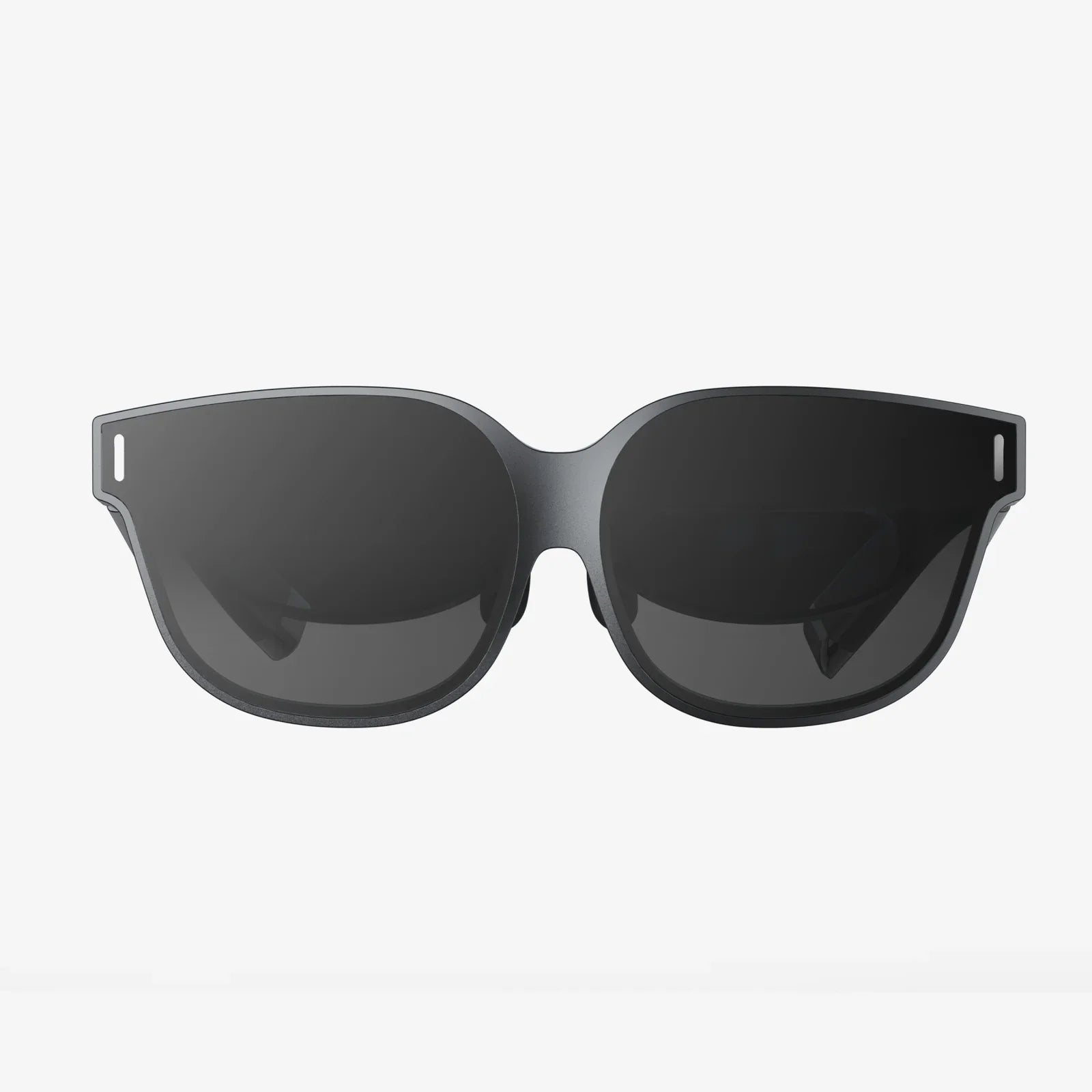
Imagine a world where the digital and physical realms are no longer separate, where information flows around you like a sixth sense, and the very fabric of your reality can be tailored, enhanced, and reimagined at will. This is not a distant dream; it is the imminent future being built today, and it’s being delivered through a new class of technology poised to become as ubiquitous as the smartphone: wearable augmented reality devices.
Beyond the Screen: Defining the Wearable AR Experience
At its core, augmented reality is the art and science of superimposing computer-generated perceptual information onto the real world. Unlike virtual reality, which seeks to replace your environment entirely, AR aims to complement and enrich it. Wearable AR devices are the physical conduits for this experience—sophisticated, self-contained systems worn on the user's body, typically in the form of glasses or headsets. These are not merely screens placed in front of the eyes; they are complex sensor suites, spatial computers, and interactive portals that understand and respond to the environment in real-time.
The magic lies in their components. Advanced micro-displays project images directly onto specialized waveguides or lenses, making digital objects appear to coexist with physical ones. A constellation of outward-facing cameras, LiDAR scanners, and depth sensors continuously maps the room, understanding surfaces, distances, and objects. Inward-facing cameras track eye movement and pupil dilation, gauging focus and intent. All this data is processed by onboard chipsets specifically designed for spatial computing, performing billions of calculations per second to anchor digital content firmly in your world, whether it's a virtual pet sleeping on your actual sofa or a schematic hovering over a malfunctioning engine.
The Engine Room: Core Technologies Powering the Vision
The leap from clunky prototypes to sleek, functional wearables has been driven by breakthroughs across multiple technological domains.
Spatial Mapping and Computer Vision
This is the foundational layer. For a digital object to sit convincingly on a physical table, the device must understand the table's precise location, dimensions, and texture. Simultaneous Localization and Mapping (SLAM) algorithms allow the device to construct a 3D map of an unknown space while simultaneously tracking its own location within it. This real-time environmental understanding is what prevents a virtual chessboard from sliding off the edge or a navigation arrow from floating aimlessly in space.
Display and Optics
The challenge is to create bright, high-resolution, and wide field-of-view visuals that don't require a bulky helmet. Different approaches are being perfected. Waveguide technology uses microscopic gratings on a clear lens to bend light from a projector into the user's eye, allowing for a relatively normal-looking pair of glasses. Other systems use holographic optical elements or even retinal projection to achieve similar goals. The holy grail is a combination of high visual fidelity, all-day comfort, and situational awareness—ensuring users can still see the real world clearly alongside the digital enhancements.
Interaction Paradigms
How do you interact with a world you can see but not touch? Wearable AR is moving beyond simple hand controllers to more intuitive methods. Voice commands offer a hands-free way to summon information or control apps. Hand-tracking cameras interpret gestures, allowing users to pinch, drag, and resize virtual objects as if they were physically present. Perhaps the most futuristic is gaze-based interaction, where the device uses eye-tracking to select items simply by looking at them, confirmed with a subtle gesture or voice command. This creates a deeply personal and efficient user interface.
Transforming the Workspace: The Industrial and Enterprise Metamorphosis
While consumer applications capture the imagination, it is in enterprise and industrial settings that wearable AR is already delivering profound, tangible value.
Revolutionizing Field Service and Maintenance
A technician arrives to repair a complex, unfamiliar piece of machinery. Instead of juggling a laptop, a physical manual, and a toolbox, they don a pair of AR glasses. Instantly, animated step-by-step instructions are overlaid directly onto the components they need to address. They can see internal parts rendered through the casing, receive real-time torque values for specific bolts, and even video-call a remote expert who can draw annotations directly into their field of view. The result is a dramatic reduction in errors, a significant increase in first-time fix rates, and a massive cut in downtime.
Supercharging Design and Prototyping
Architects, engineers, and designers are using AR to escape the confines of 2D screens. They can walk through a full-scale, holographic model of a building before a single brick is laid, assessing sightlines, airflow, and structural integrity. Automotive designers can place a life-size virtual model of a new car in a real showroom, tweaking its curves and colors on the fly. This immersive prototyping saves millions in physical model costs and accelerates the entire design iteration process.
Enhancing Logistics and Warehousing
In vast distribution centers, workers equipped with AR wearables are seeing a revolution in efficiency. The fastest route through the warehouse is dynamically displayed on the floor in front of them. When they arrive at a picking location, the exact item and quantity needed are highlighted with digital markers, drastically reducing human error. Instructions for special packaging or handling procedures appear contextually, streamlining complex tasks and slashing training times for new employees.
The Social and Consumer Horizon: Augmenting Everyday Life
The eventual migration of this technology into the consumer mainstream promises to redefine daily life, though the path is more complex and nuanced.
Contextual Computing and the Invisible Interface
The ultimate promise of consumer AR is the end of the "downward gaze" at a phone screen. Information will become contextual. Walk past a restaurant, and its ratings and today's specials might subtly appear. Glance at a foreign language sign, and see the translation in real-time. During a conversation, you might discreetly see relevant notes about the person you're speaking with. The device becomes an intelligent companion, surfacing what you need to know, precisely when you need to know it, without you ever having to ask.
Reimagining Entertainment and Storytelling
Entertainment will explode beyond the rectangle. Imagine watching a basketball game from your living room couch, but with a virtual court laid out on your floor and live stats hovering beside each player. A horror movie could see its monster hiding in the dark corners of your own home. Narrative games could turn your local park into an epic fantasy landscape, encouraging physical exploration and social play. This spatial, shared entertainment will create deeply memorable and personal experiences.
The New Social Fabric: Presence and Connection
Social media will evolve from timelines and feeds to shared spaces. Friends and family living miles apart could appear as realistic holograms in your living room, able to watch a movie together on your virtual screen or collaborate on a virtual art project that sits on your coffee table. This sense of "telepresence"—feeling like you are truly with someone—has the potential to combat loneliness and redefine long-distance relationships in ways video calls never could.
Navigating the Invisible Minefield: Challenges and Ethical Imperatives
For all its potential, the path to an augmented world is fraught with significant challenges that society must address proactively.
The Privacy Paradox
A device that sees everything you see and hears everything you hear is a privacy advocate's nightmare. The continuous collection of environmental and biometric data—from the layout of your home to your emotional reactions—raises monumental questions. Who owns this data? How is it stored and used? Could it be used for targeted advertising based on your real-world conversations or even by insurance companies to assess risk? Robust, transparent, and user-centric data governance frameworks are not optional; they are a prerequisite for public trust.
The Digital Divide and Accessibility
There is a very real risk that AR technology could exacerbate existing social and economic inequalities. If critical information, education, and social connection begin to flow primarily through these devices, those who cannot afford them could be left further behind. Furthermore, designers must prioritize accessibility from the outset, ensuring experiences are usable for people with a wide range of visual, auditory, and motor abilities to avoid creating a new digital barrier.
Societal and Psychological Impact
What happens to our shared reality when everyone can customize their own? Could we see a further erosion of common facts and experiences? The potential for distraction is also immense—walking down a street flooded with digital information could be hazardous. There are also deep psychological questions about how blending realities might affect human cognition, memory, and our fundamental connection to the un-augmented world. Continuous research and thoughtful public discourse are essential.
The Road Ahead: From Novelty to Necessity
The evolution of wearable AR will not be a single event but a gradual progression. Early devices will be limited by battery life, field of view, and computational power. The next generation will focus on miniaturization, aiming for a form factor indistinguishable from standard eyewear. Ultimately, the technology may move beyond wearables entirely, towards more integrated solutions like smart contact lenses or even direct neural interfaces, though these remain on the distant horizon.
Success will depend on the creation of a vibrant ecosystem. Developers need powerful and accessible tools to build compelling spatial experiences. Seamless connectivity, perhaps through advanced 5G and 6G networks, will be crucial for delivering cloud-based processing and multi-user experiences. And most importantly, the technology must solve real human problems and bring genuine joy, not just technological wonder.
The age of staring into a small, handheld rectangle is reaching its twilight. The next great platform for human connection, creativity, and productivity is being built not on your desk or in your pocket, but directly within your line of sight. Wearable AR devices are the key to unlocking a world where the boundary between what is real and what is possible becomes beautifully, brilliantly blurred. The revolution won't be televised; it will be layered right on top of the world you thought you knew.
Share:
VR Require: The Essential Components for a True Virtual Reality Experience
Meta Glasses Alternative: The Future of AR is Open and Accessible