


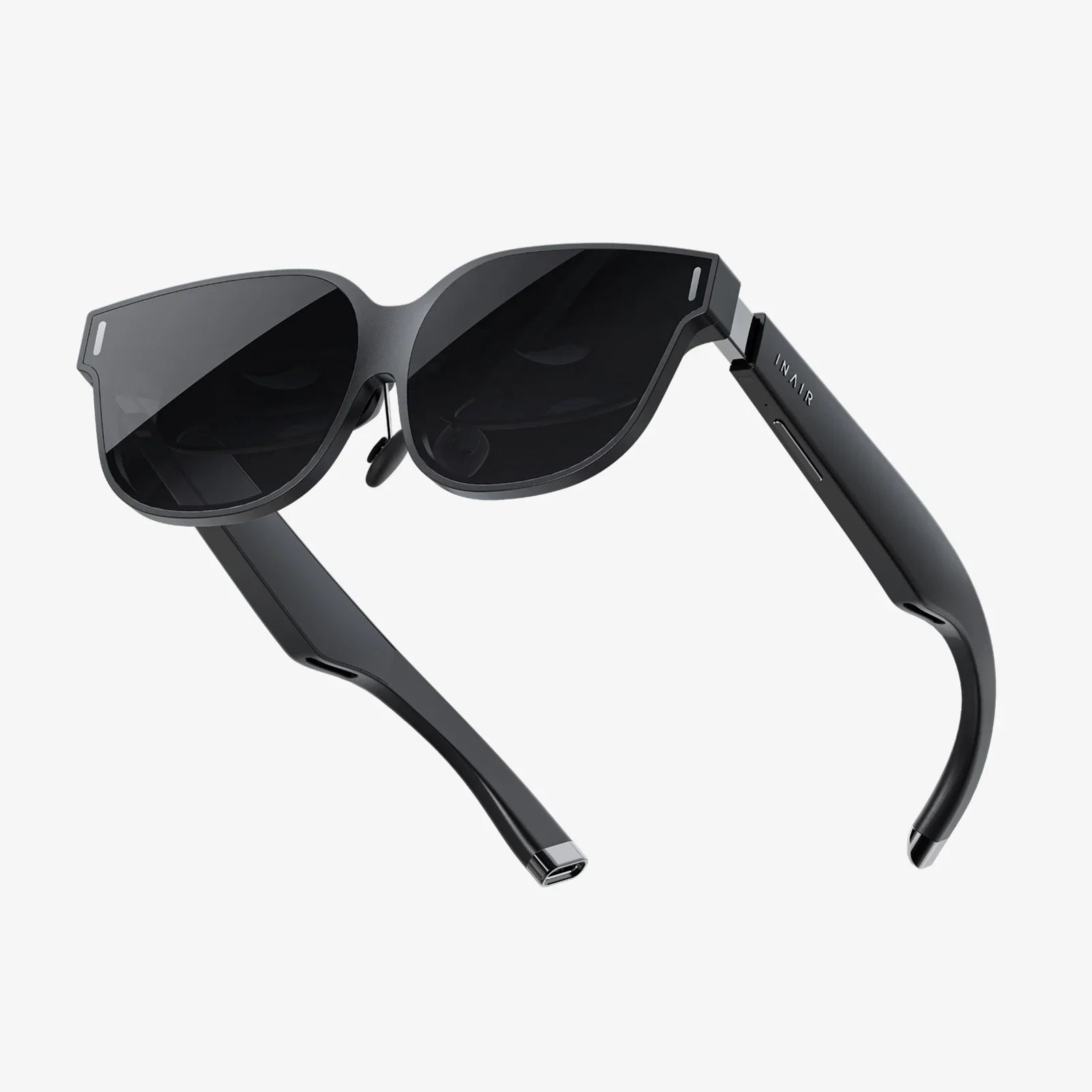
Imagine slipping on a headset and instantly being transported to a front-row concert seat, a distant mountaintop, or the surface of Mars, all powered by the device already in your pocket. This is the revolutionary promise of a VR set for mobile, a gateway to immersive experiences that requires no wires, no powerful computer, and no hefty investment. The world of virtual reality is no longer locked away in high-end gaming dens; it has been democratized, miniaturized, and made astonishingly accessible. This guide will be your definitive portal into understanding everything about these portable portals to other worlds, from the simple science behind them to selecting the perfect one for your next adventure.
The Magic Behind the Lens: How Mobile VR Works
At its core, a VR set for mobile is a brilliantly simple concept. It leverages the sophisticated technology already embedded in modern smartphones to create a stereoscopic, immersive visual and auditory experience. The headset itself is primarily a housing unit, but its design is critical.
The process begins when you place your smartphone into the headset's compartment. The VR software on your phone splits the screen into two distinct images, one for each eye. The headset's lenses, positioned between your eyes and the screen, then warp and focus these images. This optical trickery, known as barrel distortion, counteracts the pincushion effect created by the lenses, making the two 2D images merge into a single, coherent, and depth-perceived 3D environment that fills your entire field of view.
But vision is only part of the immersion. How does it know when you move your head? This is where your smartphone's built-in Inertial Measurement Unit (IMU) comes into play. The IMU, which includes a gyroscope and accelerometer, tracks the precise orientation and movement of your phone. As you turn your head left or right, look up or down, or tilt, the IMU feeds this data to the VR application at lightning speed, which in turn adjusts the perspective of the virtual world in real-time. This creates the fundamental and magical illusion that you are physically present within the digital space.
A Spectrum of Experience: Types of Mobile VR Headsets
Not all mobile VR solutions are created equal. They generally fall into two distinct categories, each offering a different level of immersion and convenience.
1. The Affordable Gateway: Smartphone Holders
These are the most common and accessible entry points into mobile VR. Often constructed from lightweight plastic or even cardboard, these headsets have a simple, singular purpose: to hold your smartphone and provide you with the necessary lenses. They lack any integrated electronics, sensors, or controllers. Navigation within VR experiences is typically handled by a magnetic dial or a simple touch button on the side of the headset that interacts with the screen, or through a Bluetooth-connected gamepad.
Pros:
- Extremely Low Cost: They are incredibly inexpensive, making VR available to almost everyone.
- Lightweight and Portable: Their simple design makes them easy to carry around and store.
- Universal Compatibility: They often work with a wide range of smartphone sizes and models.
Cons:
- Basic Experience: The lack of advanced tracking can lead to a less immersive experience.
- Potential for Discomfort: Lower-quality lenses and padding can cause eye strain or discomfort during longer sessions.
2. The Enhanced Middle Ground: Advanced Mobile VR
This category represents a significant step up in quality and immersion. These headsets still use a smartphone as their processing power and display, but they incorporate their own additional sensors and electronics to vastly improve the experience. This often includes:
- Improved Positional Tracking: Some feature external cameras or sensors that map your physical environment, allowing for limited movement within a space (like leaning in or ducking), not just rotational head tracking.
- Integrated Controllers: They often come with dedicated wireless motion controllers that are tracked in 3D space, enabling intuitive hand presence and interaction within the virtual world.
- Higher Quality Build: They feature superior lenses with better clarity and reduced screen-door effect, better weight distribution, and more comfortable foam padding for extended use.
Pros:
- Deeper Immersion: Enhanced tracking and controllers make the experience far more engaging and interactive.
- Higher Comfort: Designed for longer VR sessions with better materials and ergonomics.
- Richer Content Library: Unlocks access to more advanced games and applications that require precise inputs.
Cons:
- Higher Price Point: They are more expensive than basic holders, though still far cheaper than PC-powered systems.
- Potential Compatibility Issues: They may have more specific smartphone size and model requirements.
Why Choose a Mobile VR Set? The Compelling Advantages
While high-end VR systems boast unparalleled power, mobile VR holds its own with a unique set of advantages that make it an ideal choice for millions.
- Unbeatable Accessibility and Cost: The biggest barrier to VR has always been cost. A mobile VR setup eliminates the need for a expensive gaming computer. For many, the only required investment is the headset itself, as the smartphone is already owned.
- True Wireless Freedom: There are no cables tethering you to a spot. You can spin around 360 degrees, use it in different rooms, or even take it to a friend's house without any cumbersome setup. This freedom is central to the experience.
- Simplicity and Convenience: The setup process is often as simple as inserting your phone, putting on the headset, and launching an app. There are no drivers to install, no software conflicts to resolve, and no graphics settings to tweak. It's plug-and-play at its finest.
- A Vast Ocean of Content: The app stores are filled with a massive variety of VR content. This includes breathtaking 360-degree videos and travel experiences, interactive educational apps, casual games, social VR platforms, and innovative storytelling mediums.
- The Perfect Social VR Tool: Its portable and affordable nature makes it the perfect device for social gatherings. Sharing a cool VR experience with a group of friends is easy and doesn't require everyone to have their own powerful hardware.
Understanding the Limits: Considerations and Challenges
To have realistic expectations, it's important to understand the inherent limitations of technology that relies on a smartphone.
- Performance is Tied to Your Phone: The quality of your experience is directly dependent on the processing power, screen resolution, and sensor quality of your smartphone. An older or lower-end phone will struggle with more demanding apps, leading to lag, low frame rates, and a higher chance of motion sickness.
- Limited Processing Power: Smartphones, while powerful, cannot compete with dedicated gaming PCs or consoles. This means mobile VR experiences are generally less graphically complex. You won't find photorealistic, high-polygon-count games here; the focus is on stylized graphics, 360 video, and simpler environments.
- Battery Drain: VR applications are incredibly demanding on your phone's battery. Extended sessions will require a break to recharge or the use of an external battery pack.
- Potential for Overheating: The intense processing can cause smartphones to heat up significantly, which may trigger thermal throttling (reducing performance to cool down) or even force the app to close.
- Basic Tracking (in most cases): Most mobile VR systems only offer 3-Degrees-of-Freedom (3DoF) tracking, meaning they track rotational movement (pitch, yaw, roll) but not translational movement (leaning, walking around). This can break immersion for some users.
Choosing Your Portal: Key Factors to Consider
Ready to take the plunge? Here’s what to look for when selecting your VR set for mobile.
- Smartphone Compatibility: This is the first and most critical check. Ensure the headset is explicitly compatible with your phone's model and screen size. A poor fit can lead to image cropping, blurriness, or even damage to your device.
- Field of View (FoV): A wider FoV means a more immersive experience where the virtual world fills more of your vision. Look for headsets with a FoV of at least 90 degrees or higher.
- Lens Quality: High-quality, adjustable lenses are non-negotiable for a clear image. Look for features like adjustable IPD (Interpupillary Distance) to match the distance between your eyes, and focus dials if you wear glasses.
- Comfort and Ergonomics: If you plan on using it for more than a few minutes, comfort is key. Look for ample padding, adjustable head straps (a three-strap design is often best), and good weight distribution to avoid pressure on your face.
- Input Methods: Decide if you're happy with a simple head-tap interface or if you want the enhanced experience that comes with dedicated motion controllers.
- Ventilation: A design that allows for air circulation can help reduce lens fogging and keep your phone cooler during use.
Beyond Gaming: The Expansive World of Mobile VR Content
While games are a major draw, the applications for mobile VR extend far beyond entertainment.
- Education and Training: Students can take virtual field trips to historical sites, explore the human body in 3D, or conduct virtual chemistry experiments. It provides an unparalleled tool for immersive learning.
- Virtual Travel and Tourism: You can stand atop the Himalayas, swim with sharks on the Great Barrier Reef, or walk the streets of ancient Rome from your living room. Travel agencies and documentaries are increasingly using VR to offer stunning previews of destinations.
- 360-Degree Videos and Films: Be at the center of the action in live-action films, music videos, and documentaries. This emerging medium places you inside the story.
- Social Connection: Social VR platforms allow you to meet friends, family, or strangers in virtual spaces as customizable avatars. You can watch movies together, play games, or just chat as if you were in the same room.
- Meditation and Wellness: VR can be a powerful tool for mindfulness. Apps can transport you to serene, beautiful environments for guided meditation, helping to block out external distractions and reduce stress.
The journey into virtual reality no longer requires a map to a specialized electronics store or a second mortgage. That powerful portal is sitting dormant in your pocket, waiting for a simple headset to unlock its potential. From the awe-inspiring first moment you look around a virtual world to the shared laughter of a social VR experience, a VR set for mobile represents the most accessible, personal, and surprisingly profound technology of our time. The next frontier isn't miles away; it's simply a download and a click into your headset away.
Share:
What XR Is and How It's Redefining Our Digital and Physical Worlds
High Tech AR Glasses Are Redefining Reality and Reshaping Our Future