


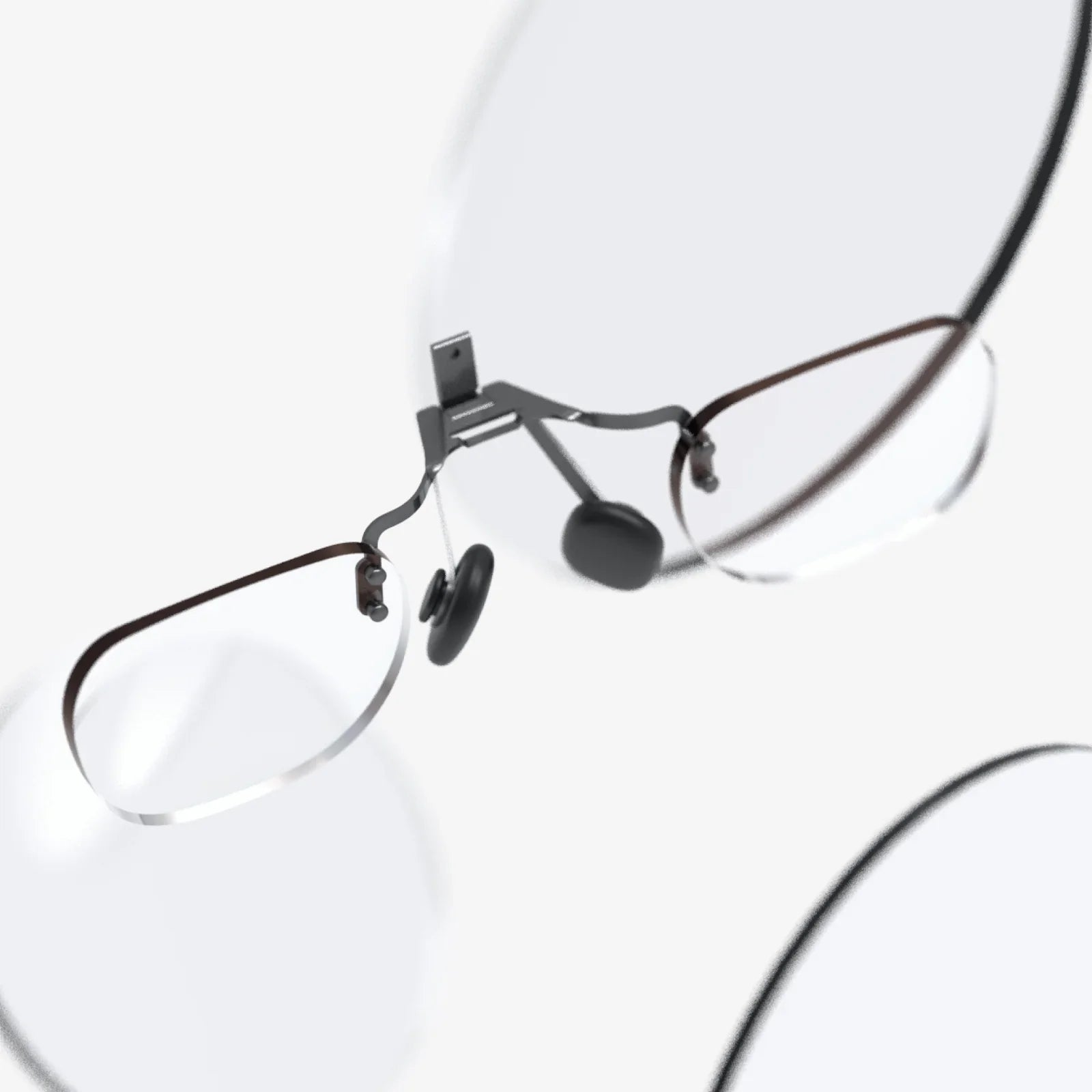
Imagine a world where the digital and the physical are no longer separate realms but a single, intertwined experience. Where you can learn complex surgery by practicing on a holographic heart, design a new car in your living room, or walk with dinosaurs in a prehistoric landscape that overlays your local park. This is not a distant science fiction fantasy; it is the burgeoning reality being built today through the power of Extended Reality, or XR. This technological revolution promises to fundamentally alter how we work, learn, connect, and perceive the world around us, and understanding its scope is the first step into a future already unfolding before our eyes.
The XR Spectrum: A Tapestry of Realities
Extended Reality is not a single, monolithic technology. Rather, it is an umbrella term that encompasses a spectrum of immersive technologies, each blending the digital and physical worlds to varying degrees. Think of it as a continuum from complete reality to complete virtuality.
Augmented Reality (AR): The Digital Overlay
Augmented Reality enhances your real-world environment by superimposing digital information—images, text, 3D models—onto your view of the physical world. The key characteristic of AR is that it allows you to remain present in your actual surroundings while interacting with digital content. This is often experienced through the camera on a smartphone or tablet, or through specialized glasses. A simple example is using a furniture app to see how a new sofa would look in your actual living room before you buy it. The world remains, but it is augmented with a layer of useful data.
Virtual Reality (VR): The Total Immersion
At the opposite end of the spectrum lies Virtual Reality. VR is a fully digital, computer-generated simulation of an environment. By wearing a headset that covers your field of vision, you are transported into a completely virtual world, effectively blocking out your physical surroundings. This total immersion is what makes VR so powerful for experiences like exploring the surface of Mars, piloting a fighter jet in a training simulator, or attending a live concert from the comfort of your home. You are not just viewing the digital; you are inside it.
Mixed Reality (MR): The Seamless Blend
Occupying the crucial middle ground between AR and VR is Mixed Reality. MR is more advanced than simple AR because it doesn't just overlay digital content; it anchors that content to the real world and allows for real-time interaction between the physical and the digital. In a true MR experience, a digital character could sit on your real couch, and you could walk around it to see it from all angles. Your real-world environment is understood by the device, which can map surfaces, recognize objects, and enable the digital elements to behave as if they have physical presence. This creates a seamless, believable fusion of realities.
The Engine Room: How XR Technology Works
The magic of XR is powered by a sophisticated symphony of hardware and software components working in perfect harmony to trick our senses and create a convincing illusion.
Sensing and Mapping the World
For XR to interact with the real world, it first needs to understand it. This is achieved through a suite of sensors, including cameras, LiDAR (Light Detection and Ranging), depth sensors, and inertial measurement units (IMUs). These sensors work together to perform a process called simultaneous localization and mapping (SLAM). SLAM allows the device to scan its environment, create a 3D digital map of the space, and precisely track its own position and orientation within that map in real-time. This is the foundational step that enables digital objects to stay locked in place on your real desk or for virtual walls to align with your physical ones.
Rendering and Display: Painting a New Reality
Once the environment is mapped, the device must generate the digital content and display it to the user. This requires immense graphical processing power to render high-fidelity 3D models and environments at high frame rates to avoid latency, which is a primary cause of motion sickness. For VR and MR headsets, this is displayed on high-resolution screens mere centimeters from the user's eyes, often using lenses to create a wide field of view. Advanced display technologies like varifocal lenses are being developed to mimic the way our eyes naturally focus on objects at different distances, further enhancing the realism.
Interaction and Control: Beyond the Controller
Interacting with this new reality is evolving beyond traditional game controllers. The most intuitive interfaces are our own bodies. Inside-out tracking uses the device's onboard cameras to track hand gestures, allowing you to push virtual buttons or grab digital objects with your bare hands. Eye-tracking technology understands where you are looking, enabling more efficient rendering (a technique called foveated rendering) and creating new forms of UI navigation. Voice commands and haptic feedback devices complete the suite, providing auditory and tactile sensations to make interactions feel tangible and real.
Transforming Industries: The Practical Power of XR
While entertainment and gaming are the most visible applications, the true transformative potential of XR lies in its capacity to revolutionize professional fields and solve complex problems.
Revolutionizing Education and Training
XR is turning abstract concepts into tangible, experiential learning. Medical students can dissect a virtual cadaver or practice intricate surgical procedures countless times without risk. History classes can become virtual field trips to ancient Rome or Egypt. Mechanics can train on the internal components of a jet engine, seeing parts animate and interact in ways a textbook could never illustrate. This learning-by-doing in a safe, repeatable, and cost-effective simulated environment dramatically improves knowledge retention and skill acquisition.
Supercharging Enterprise and Design
In the enterprise world, XR is breaking down geographical and physical barriers. Architects and engineers can walk clients through full-scale 3D models of unbuilt structures, making changes in real-time. Factory floor managers can overlay performance data and assembly instructions directly onto machinery, streamlining complex processes and reducing errors. Remote collaboration is being redefined through shared virtual workspaces where teams from across the globe can interact with 3D models and data visualizations as if they were in the same room, a concept far more powerful than a simple video call.
Expanding Healthcare and Therapy
The healthcare sector is embracing XR for both treatment and therapy. Surgeons use AR overlays during operations to display vital signs or see-through guided imagery, improving precision. VR is proving highly effective in exposure therapy, helping patients with phobias or PTSD confront and manage their triggers in a controlled, safe environment. It is also used for pain management, distracting burn victims during painful wound care with immersive, calming experiences that significantly reduce perceived pain levels.
Navigating the New Frontier: Challenges and Ethical Considerations
As with any powerful technology, the ascent of XR is not without its significant challenges and profound ethical questions that society must address.
The Hardware Hurdles
For XR to achieve mass adoption, the hardware must become more comfortable, socially acceptable, and accessible. Current-generation headsets can be bulky, have limited battery life, and require significant processing power, often tethering them to a powerful computer or demanding a high price point. The quest for the perfect blend of high-resolution visuals, all-day comfort, and standalone processing in a sleek form factor is the industry's holy grail.
The Data Privacy Imperative
XR devices are, by their nature, data collection machines. They have cameras and microphones that are constantly scanning your environment. They track your eye movements, hand gestures, and physical location with extreme precision. This data is incredibly valuable and incredibly sensitive. It reveals not just what you are looking at, but how you look at it, for how long, and even how you emotionally respond. Robust frameworks for data ownership, consent, and security are paramount to prevent a dystopian future of perpetual surveillance and manipulation.
The Societal Impact: Blurring the Lines
As these immersive worlds become more compelling, we must consider the psychological and societal effects. How will our sense of reality and truth be affected when digital forgeries become indistinguishable from real events? Could persistent escapism into virtual worlds exacerbate social isolation and mental health issues? The potential for addiction is a real concern. Furthermore, ensuring equitable access to these new digital frontiers is crucial to prevent a new "reality divide" between those who can afford to experience XR and those who cannot.
The Future is Extended: What Lies Ahead
The trajectory of XR points towards a future of even deeper integration into our daily lives. We are moving towards always-available, context-aware AR glasses that will replace smartphones as our primary interface with digital information. The development of the metaverse—a persistent network of shared, interoperable virtual spaces—promises a new paradigm for the internet, one we will not just browse but inhabit. Breakthroughs in brain-computer interfaces could eventually allow us to experience virtual sensations directly through our nervous system, making the line between the real and the virtual truly imperceptible.
The journey into Extended Reality is one of the most exciting technological narratives of our time. It is a canvas for human creativity and a tool for unprecedented human advancement. It holds the promise of overcoming physical limitations, democratizing expertise, and deepening our understanding of both the universe and ourselves. The door to this blended world is now open, inviting us to step through and actively participate in shaping what comes next—a future where our reality is only the beginning.
Share:
Prescription Smart Glasses The Future of Vision is Intelligent and Connected
VR Set for Mobile: Your Ultimate Guide to Portable Virtual Reality