


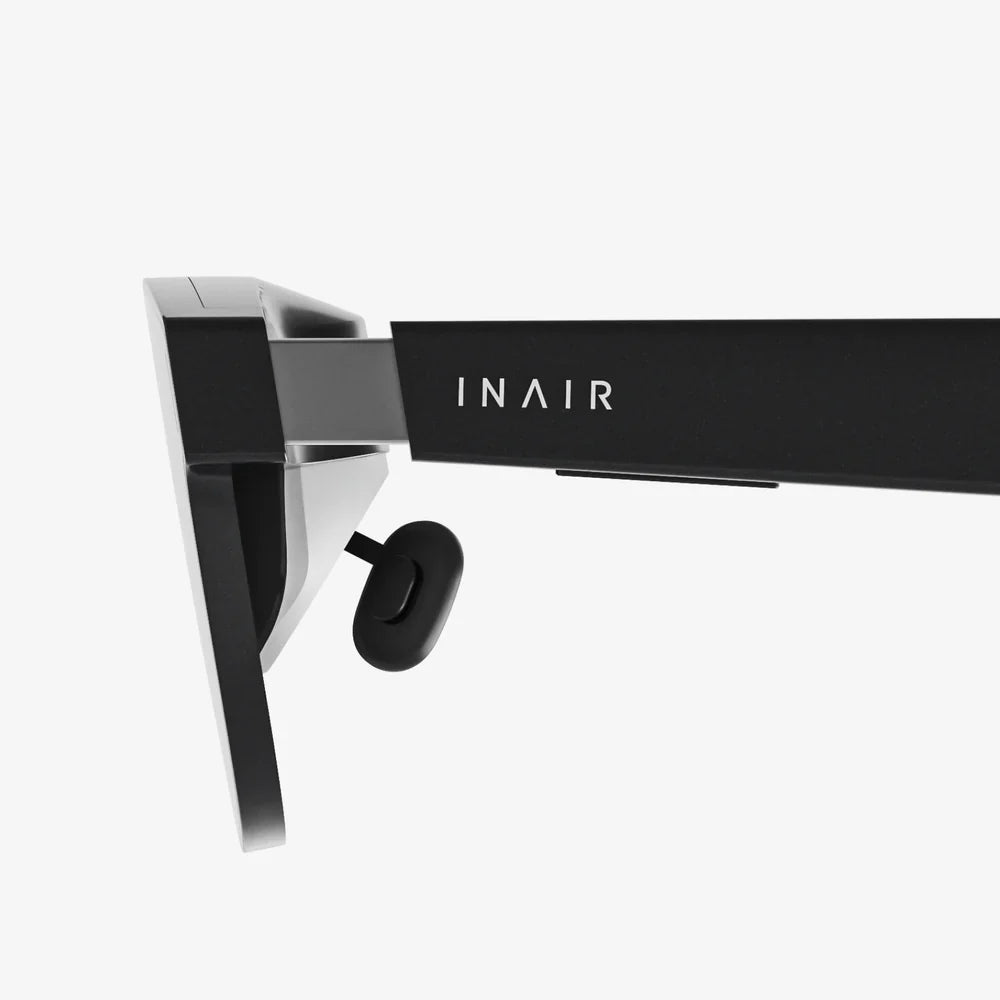
Imagine a world where the digital and physical seamlessly intertwine, where information floats before your eyes, virtual colleagues sit across your real desk, and fantastical adventures unfold in your living room. This isn't a distant sci-fi fantasy; it’s the imminent future being unlocked by a new generation of wearable technology. The gateway to this mixed reality is becoming smaller, lighter, and more powerful, moving beyond cumbersome headsets into a form we already understand and wear: glasses. This is the promise of VR smartglasses, and it’s a revolution that will touch every aspect of our lives.
From Prototype to Product: The Evolution of Wearable Tech
The journey to sleek VR smartglasses has been one of relentless miniaturization and innovation. Early iterations of virtual reality technology were often characterized by bulky helmets, a tangled mess of wires, and limited processing power that tethered users to a stationary computer. They were impressive feats of engineering for their time but were largely confined to research labs and hardcore gaming enthusiasts. The focus was on pure immersion, often at the expense of practicality, social acceptance, and comfort.
The pivotal shift came with the development of more advanced micro-displays, using technologies like OLED and Micro-OLED. These panels pack an incredibly high density of pixels into a minuscule space, delivering stunningly sharp and vibrant images right before the user's eyes. Concurrently, breakthroughs in sensor fusion—combining data from high-speed cameras, gyroscopes, accelerometers, and magnetometers—enabled precise inside-out tracking. This eliminated the need for external sensors placed around a room, allowing the device itself to understand its position and orientation in space with remarkable accuracy.
Perhaps the most significant hurdle was computational. Rendering complex, photorealistic 3D environments in real-time requires immense processing power, which traditionally generates heat and consumes battery life rapidly. The solution emerged through a combination of more efficient, purpose-built chipsets and a concept known as cloud streaming. By offloading the heavy computational lifting to powerful remote servers, the wearable device itself can become lighter and more energy-efficient, streaming the rendered environment with minimal latency. This convergence of display, sensor, and compute technology is what finally made the dream of all-day wearable VR smartglasses a tangible reality.
Peering Under the Lens: The Core Technologies at Work
To understand the magic of VR smartglasses, one must appreciate the symphony of technologies working in concert. At the heart of the visual experience are the optical systems. Many modern devices employ a technique called pancake optics, which uses a series of polarized lenses to fold the light path. This allows for a much shorter distance between the display and the eye, dramatically reducing the overall thickness and weight of the glasses. Another promising approach is holographic optics, which aims to manipulate light waves to create even more compact and efficient visual systems.
For blending the digital and real worlds, passthrough cameras are essential. These are high-resolution, low-latency cameras mounted on the front of the glasses that continuously capture the user's physical environment. This video feed is then processed and displayed on the internal screens in real-time. Advanced algorithms correct for distortion and align the digital overlay perfectly with the physical world, creating a convincing mixed reality. The quality of this passthrough is paramount; it must be high-resolution, have a wide field of view, and operate with near-zero latency to avoid user discomfort or nausea.
User interaction is another critical domain. While handheld controllers still have their place, the future lies in natural input methods. Advanced computer vision algorithms enable hand-tracking, allowing users to reach out and manipulate virtual objects with their bare hands. Eye-tracking technology not only enables foveated rendering—a technique that maximizes processing efficiency by rendering only the area the user is directly looking at in full detail—but also provides a powerful new input modality. A simple glance can select a menu item. Voice commands, powered by sophisticated AI assistants, offer a hands-free way to search, create, and control the experience. Together, these technologies create an intuitive and immersive interface that feels like a natural extension of the user.
Beyond Gaming: Transformative Applications Across Industries
While immersive entertainment is a flagship application, the true potential of VR smartglasses lies in their ability to transform professional fields and everyday tasks.
Revolutionizing the Workplace
The concept of the office is being redefined. With VR smartglasses, remote workers can join a meeting as a photorealistic holographic avatar, sharing a virtual whiteboard and 3D models as if they were in the same room. Architects and engineers can walk clients through full-scale, interactive models of unbuilt structures, making changes in real-time. For field technicians, complex repair instructions can be overlaid directly onto the machinery they are fixing, guided by an expert thousands of miles away who can see their point of view and draw annotations into their vision.
A New Era for Education and Training
Learning becomes an experiential journey. Medical students can practice intricate surgical procedures on virtual patients, making mistakes without consequence. History classes can transport students to ancient Rome, walking through the Forum as it stood millennia ago. Mechanics can learn to dismantle and reassemble a complex engine, with each part and tool identified and explained within their field of view. This hands-on, visual learning paradigm has the potential to dramatically improve comprehension and retention.
Redefining Social Connection and Entertainment
Social media will evolve from a flat screen to a shared 3D space. Instead of scrolling through a feed, you could meet friends in a virtual cinema, attend a live concert with a front-row view, or simply hang out in a digital living room, watching your physical expressions and gestures reflected by your avatar. The film and gaming industries will create entirely new narrative formats built for this blended reality, where stories unfold around you in your own home.
Navigating the Uncharted: Ethical and Social Considerations
As with any transformative technology, the rise of VR smartglasses brings a host of complex challenges that society must proactively address. Data privacy is perhaps the most pressing concern. These devices, by their very nature, are data collection powerhouses. They have the potential to see what you see, hear what you hear, and track your every movement and interaction. The question of who owns this data, how it is stored, and how it might be used (or misused) by corporations or governments is paramount. Robust regulatory frameworks and transparent data policies will be essential to build public trust.
The digital divide is another critical issue. If these devices become essential tools for work, education, and social participation, there is a real risk of creating a new class of haves and have-nots. Ensuring equitable access to this technology will be crucial to prevent exacerbating existing social and economic inequalities.
On a human level, we must consider the psychological impact of increasingly blended realities. Will constant access to digital overlays and escapist fantasies enhance our lives or lead to a disengagement from the physical world and the people in it? Establishing healthy usage norms and digital etiquette—such as indicating when you are immersed in a digital layer—will be key to integrating this technology into society in a positive way.
The Road Ahead: A Glimpse into the Next Decade
The current generation of devices is merely the first step. The trajectory points toward glasses that are indistinguishable from standard fashion eyewear—lighter, with all-day battery life, and eventually, even integrating corrective lenses. The key to this will be continued advancements in battery technology, perhaps leveraging new chemistries or even ambient charging. Display and optics will continue to improve, moving toward retinal projection or even direct neural interfaces in the far future, eliminating screens altogether.
The true magic, however, will be powered by artificial intelligence. AI will act as the invisible orchestrator, intelligently managing what information is displayed and when, anticipating user needs, and understanding context on a deep level. Your glasses could automatically translate a street sign in a foreign language, identify a plant species on a hike, or remind you of a person's name at a party just as you glance their way. The device will evolve from a passive display into an active, intelligent assistant that perceives the world alongside you.
We are standing at the precipice of a fundamental shift in human-computer interaction. The smartphone revolutionized our lives by putting a computer in our pockets. VR smartglasses will take the next logical step by dissolving that computer into our environment and layering it onto our perception of reality. It’s a future filled with breathtaking potential to augment human capability, redefine creativity, and connect us in ways we are only beginning to imagine. The next great platform for human experience is putting on its glasses and preparing to change everything.
Share:
XR Gaming Glasses: The Ultimate Portal to a New Reality
Augmented Reality Navigation: Transforming the Way We Navigate the Physical World