


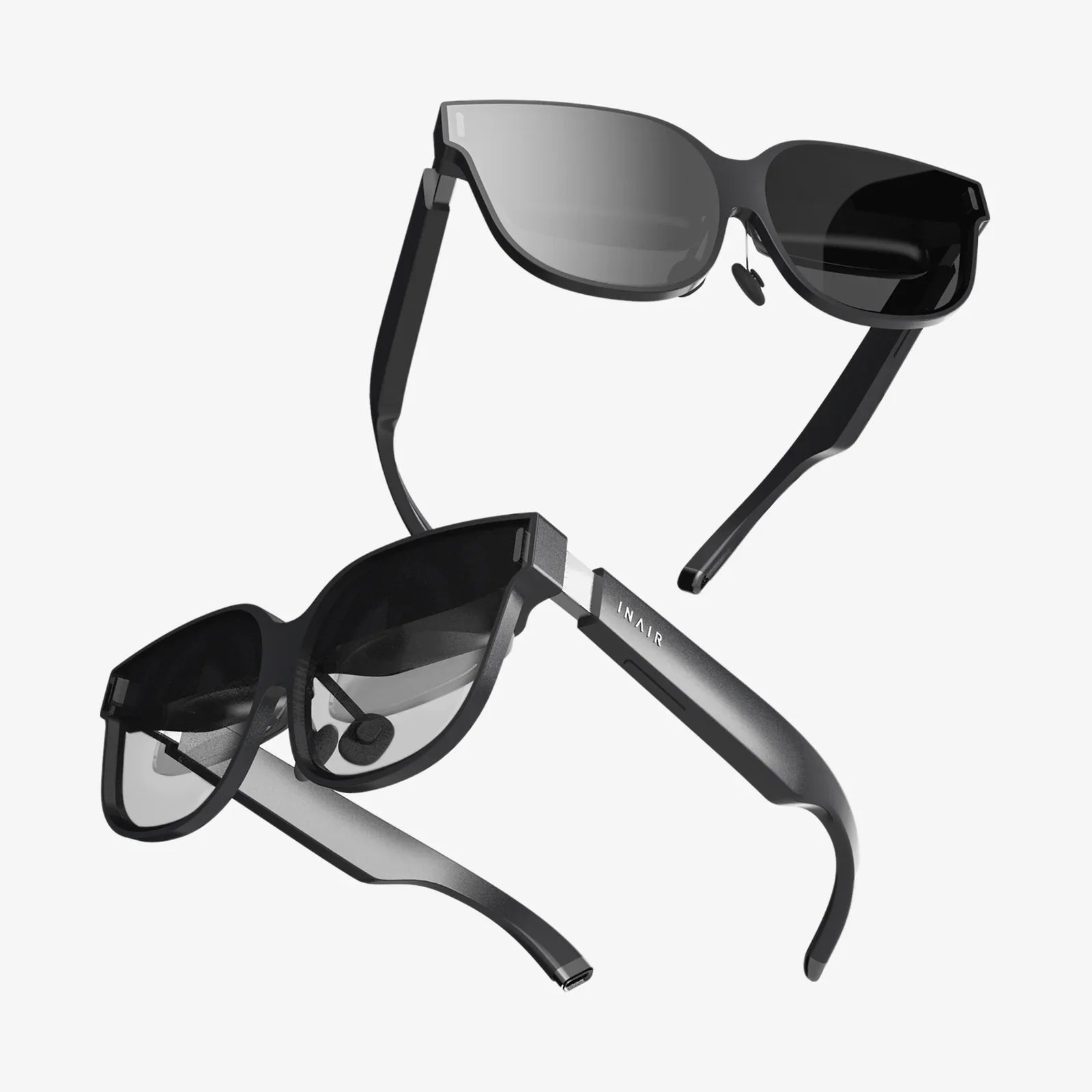
Imagine holding a portal in your hands. Not a metaphorical gateway to a website or an app, but a literal window into another dimension, a new reality limited only by the imagination of its creators. This is the profound promise and captivating power of the VR viewer, a device that has evolved from a science fiction fantasy into an increasingly accessible piece of technology poised to redefine our relationship with the digital and physical worlds. The journey of virtual reality, from a clunky, niche concept to a sleek, immersive experience, is one of relentless innovation and expanding horizons, offering a glimpse into a future where the lines between what is real and what is simulated become beautifully, thrillingly blurred.
The Evolution of the Hardware: From Cardboard to Computing Powerhouses
The story of the modern VR viewer is a tale of rapid democratization and technological refinement. Early iterations were often cumbersome, expensive, and tethered to powerful external computers, placing them firmly in the domain of dedicated enthusiasts and professionals. These systems, while impressive, had significant barriers to entry. The true revolution began with a much simpler concept: the use of a smartphone as the core display and processing unit.
This approach led to the creation of affordable, accessible viewers made from materials like cardboard and plastic. Users could simply slot their smartphone into a headset, launch a compatible application, and be instantly transported. This model drastically lowered the cost of entry, introducing millions to the basic principles of virtual reality—stereoscopic 3D vision, head tracking, and a sense of immersion. While these mobile-based viewers lacked the processing power and precise tracking of their high-end counterparts, they served as a crucial catalyst for widespread public awareness and developer experimentation.
Concurrently, the high-end market was advancing at a breakneck pace. The current generation of dedicated VR viewers represents a staggering leap forward. They are now untethered, wireless all-in-one systems boasting incredibly fast processors, high-resolution displays with refined lenses that reduce the "screen-door effect," and advanced inside-out tracking. This means cameras and sensors on the headset itself map the physical environment, eliminating the need for external base stations. Features like eye-tracking and facial expression capture are now being integrated, allowing for more natural and expressive avatars and more efficient rendering techniques that focus processing power only where the user is looking.
Beyond Gaming: The Expansive Ecosystem of Virtual Experiences
While immersive gaming remains a primary driver of consumer adoption, the application of VR viewers extends far beyond entertainment. The true potential of this technology lies in its ability to serve as an empathy machine, an educational tool, and a professional platform.
- Education and Training: Medical students can practice complex surgical procedures on virtual patients without risk. History students can walk through ancient Rome. Mechanics can train on virtual engines, and astronauts can simulate spacewalks. VR viewers provide a safe, scalable, and incredibly effective environment for experiential learning, improving knowledge retention and skill acquisition.
- Social Connection and Collaboration: Virtual reality is evolving into a new social platform, often referred to as the "metaverse." Through personalized avatars, people can meet, socialize, attend concerts, watch movies, and collaborate in shared virtual spaces. This offers a sense of presence and shared experience that traditional video calls cannot replicate, potentially revolutionizing remote work and connecting people across vast geographical distances.
- Design and Architecture: Architects and interior designers use VR to create walkable 3D models of their designs, allowing clients to experience a building before a single brick is laid. This enables better feedback, identifies potential design flaws early, and provides an unparalleled tool for visualization.
- Therapy and Rehabilitation: Therapists are employing VR to treat conditions like PTSD, anxiety disorders, and phobias through controlled exposure therapy. In physical rehabilitation, engaging VR games can motivate patients to complete repetitive exercises, turning tedious recovery into an enjoyable activity.
Navigating the Virtual Frontier: Challenges and Considerations
Despite its immense promise, the widespread adoption of VR technology is not without its challenges. One of the most common user experiences is simulator sickness, a form of motion sickness caused by a disconnect between what the eyes see and what the inner ear feels. While advancements in display refresh rates, reduced latency, and better tracking have mitigated this for many, it remains a significant hurdle for some users and a key area for ongoing research.
Furthermore, the very immersion that makes VR so powerful raises important questions about privacy and data security. VR viewers with inside-out tracking are essentially mapping our homes and personal spaces. Eye-tracking data can reveal our unconscious attention and reactions. The ethical collection, storage, and use of this highly personal biometric data is a critical issue that the industry must address with transparency and robust security protocols.
There is also the broader societal question of the long-term psychological effects of spending significant time in virtual environments. While VR can enhance our real lives, it also has the potential to be used as a form of escapism. Balancing the benefits of virtual connection with the importance of physical-world interaction will be an ongoing conversation as the technology becomes more pervasive.
The Horizon of Possibility: What the Future Holds
The trajectory of VR viewer development points toward a future of even greater immersion and integration. The goal is to create headsets that are indistinguishable from ordinary eyeglasses—lightweight, comfortable, and socially acceptable to wear for extended periods. This will involve breakthroughs in display technology, such as varifocal lenses that dynamically adjust to where the user is looking, providing a more natural and comfortable visual experience.
Haptic feedback technology will evolve beyond simple controller vibrations to full-body suits and gloves that simulate the sense of touch, allowing users to feel the texture of a virtual object or the impact of a virtual force. The concept of "pass-through" video, where external cameras feed a real-time video of the physical world into the headset, is already blurring the lines with augmented reality (AR). The ultimate destination may be a single device capable of seamlessly transitioning between fully virtual, augmented, and real-world views, creating a spectrum of mixed reality (MR) experiences.
As artificial intelligence becomes more sophisticated, it will power more dynamic and responsive virtual worlds. AI-driven characters will be able to hold unique conversations and adapt to user behavior, creating narratives that are personally tailored and infinitely replayable. Virtual reality will become less of a pre-programmed experience and more of a collaborative, generative space.
The humble VR viewer is far more than a gaming peripheral; it is a foundational technology for the next era of human-computer interaction. It is a canvas for artists, a laboratory for scientists, a classroom for students, and a meeting hall for a globally connected society. It challenges our perceptions of reality and connection, offering not just an escape from our world, but a new tool with which to understand and enhance it. The journey into the virtual is just beginning, and the destination is limited only by our collective imagination.
We stand at the precipice of a new dimension, one where the only passport required is a simple headset and the courage to look through the lens. The worlds waiting on the other side are not just designed to be seen; they are built to be felt, explored, and ultimately, lived in, forever changing our definition of what is possible.
Share:
Modern Day Virtual Reality: Escaping the Physical to Redefine the Human Experience
Requirements for Virtual Reality: The Essential Pillars for Building Immersive Digital Worlds