


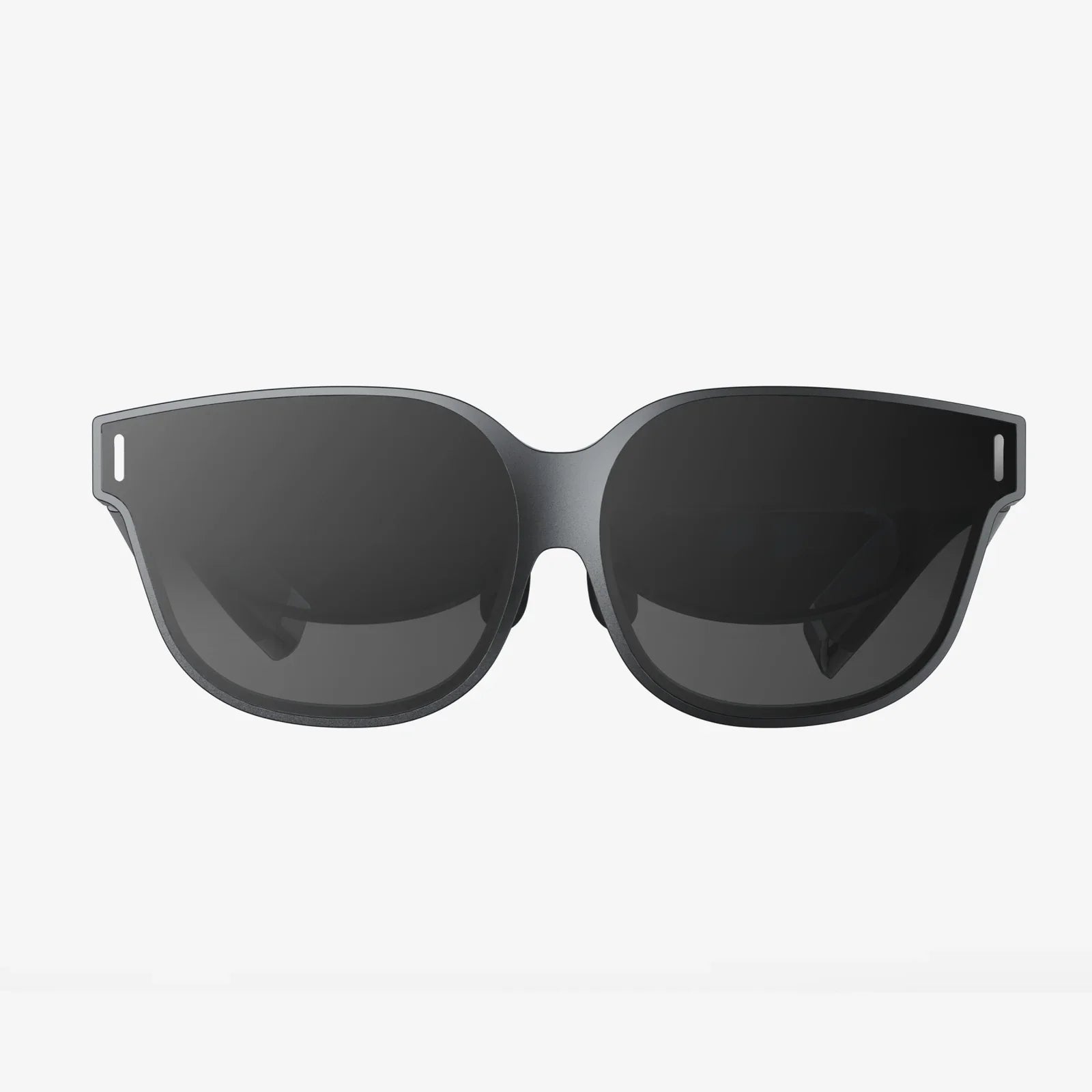
Imagine pointing your device at a ancient, crumbling ruin and watching it rebuild itself before your eyes, stone by stone, in perfect alignment with the real world. Envision a surgeon seeing a patient's vital signs and 3D anatomical models superimposed directly onto their body during a complex procedure. Think about a mechanic, miles away from an expert, receiving real-time, hands-free visual instructions to repair a sophisticated engine. This is not a glimpse into a distant future; this is the world being reshaped today by Augmented Reality. The line between the digital and the physical is blurring, creating a new, enhanced layer of existence that promises to revolutionize how we work, learn, play, and connect.
Demystifying the Concept: Beyond Science Fiction
So, was ist augmented reality? At its most fundamental level, Augmented Reality (AR) is a technology that superimposes a computer-generated overlay—be it images, sounds, text, or data—onto a user's view of the real world. Unlike Virtual Reality (VR), which creates a completely immersive, artificial digital environment that replaces reality, AR enhances the real world by adding digital elements to it. The goal is to create a system where the digital and physical coexist and interact in real time, providing a composite view that is richer and more informative than either could be alone.
The key differentiator is presence. In VR, you are transported elsewhere. In AR, the real world remains your central canvas, and digital information is contextually pinned to it. This creates a powerful sense of immersion without isolation. The hardware required to achieve this varies widely, from sophisticated smart glasses and headsets that project information directly onto your retina, to the ubiquitous smartphones and tablets that use their cameras as a window to an augmented view. This accessibility, particularly through mobile devices, has been a primary driver of AR's rapid adoption.
A Journey Through Time: The Evolution of AR
While AR feels like a modern innovation, its conceptual roots are surprisingly deep. The term "augmented reality" is believed to have been coined in 1990 by Boeing researcher Tom Caudell, who developed a head-mounted display system to guide workers through the complex wiring of aircraft. However, the foundational ideas emerged much earlier.
In 1968, computer scientist Ivan Sutherland, often called the "father of computer graphics," created the Sword of Damocles, a head-mounted display system so primitive and heavy it had to be suspended from the ceiling. It displayed simple wireframe graphics, but it established the core concept of a see-through, interactive digital display. The 1990s saw the first functional AR systems emerge in academic and military research labs, often focused on navigation and manufacturing aids. The true inflection point for public awareness arrived in the 2010s. The convergence of powerful mobile processors, high-resolution cameras, and sophisticated sensor suites (like gyroscopes and accelerometers) in smartphones created the perfect platform for AR. This was catapulted into the mainstream by a single phenomenon: the global gaming sensation that demonstrated the addictive, shared potential of overlaying digital creatures onto our parks and living rooms.
How It Works: The Technology Behind the Magic
The seamless magic of AR is powered by a complex orchestration of hardware and software. The process can be broken down into a few critical steps:
1. Capture and Sensing
The system first must perceive and understand the environment. This is achieved through cameras, which capture the live video feed, and a suite of sensors. These sensors include an IMU (Inertial Measurement Unit)—a combination of an accelerometer, gyroscope, and magnetometer—that tracks the device's precise movement, rotation, and orientation in space. More advanced systems use LiDAR scanners to create a detailed depth map of the surroundings by measuring how long it takes for laser light to reflect back to the sensor.
2. Processing and Scene Comprehension
The raw data from the sensors is fed into powerful algorithms. This is where the real computational heavy lifting occurs. The software performs two crucial tasks:
- Tracking: It continuously calculates the device's position and perspective relative to the world.
- Registration: It identifies flat surfaces (planes), edges, objects, and unique feature points in the environment. This allows the digital content to be placed not just on the screen, but on a specific point in the real world, making it appear stable and locked in place.
3. Rendering and Display
Once the environment is understood, the system renders the appropriate digital content—a 3D model, an informational panel, an animated character—and composites it onto the live camera feed in the correct perspective and lighting. This composite image is then displayed on the screen, whether it's a smartphone, a tablet, or a pair of transparent lenses in smart glasses.
The AR Toolbox: Marker-Based vs. Markerless vs. Projection-Based
Not all AR is created equal. Different methods are used to anchor digital content, each with its own strengths and applications.
Marker-Based AR (Recognition-Based)
This is one of the earliest and simplest forms of AR. It relies on a predefined visual marker, often a black-and-white QR code or a specific image. The device's camera scans for this marker, and once recognized, the software triggers the display of a digital asset that is perfectly aligned on top of it. This method is highly reliable and precise but requires the physical marker to be present and visible.
Markerless AR (Position-Based)
This is the most common and versatile form of modern AR. It uses the device's GPS, compass, and accelerometer to place digital content in a specific location in the real world, or it uses advanced computer vision to understand surfaces without a marker. This allows users to place a virtual piece of furniture in their room or see navigation arrows painted on the street. SLAM technology is often the engine behind this, allowing for persistent AR experiences where digital objects remain in place even if you leave the room and return.
Projection-Based AR
This method projects artificial light onto physical surfaces, creating interactive displays. It can be used to project a virtual keyboard onto a desk or create dynamic, touch-sensitive controls on a blank wall. It differs from other forms as it alters the physical environment itself rather than a digital display.
Transforming Industries: The Practical Applications of AR
The potential of AR extends far beyond entertainment. It is a powerful tool solving real-world problems across the economic spectrum.
Revolutionizing Retail and E-Commerce
AR is dismantling the final barrier to online shopping: the inability to try before you buy. Apps now allow customers to see how a new sofa would look in their living room, accurately scaled and colored, or to virtually try on glasses, makeup, or even clothes. This "see it in your space" functionality drastically reduces purchase uncertainty and return rates, enhancing consumer confidence and driving sales.
Empowering Industry and Manufacturing
In factories and warehouses, AR is a game-changer for efficiency and accuracy. Technicians wearing smart glasses can see digital work instructions overlaid directly on the machinery they are repairing, guiding them through complex procedures hands-free. Warehouse workers can have the most efficient picking routes and item information displayed in their line of sight, speeding up fulfillment and reducing errors. Complex assembly tasks are simplified with digital guides, improving quality control and reducing training time.
Advancing Healthcare and Medicine
In medicine, AR is saving lives and improving outcomes. Medical students can explore detailed, interactive 3D models of the human body, peeling back layers of anatomy. Surgeons can use AR to visualize a patient's internal anatomy—such as the precise location of a tumor or the path of a critical blood vessel—superimposed on the patient during surgery, improving precision and minimizing risk. It also aids in vein detection for injections and provides innovative tools for physical therapy and patient education.
Redefining Education and Training
AR turns learning from a passive to an active experience. Textbooks come alive with 3D models of historical artifacts, planets, or biological processes. Students can conduct virtual chemistry experiments or explore ancient civilizations reconstructed in their classroom. This immersive, interactive form of learning boosts engagement, improves knowledge retention, and makes complex abstract concepts tangible.
Enhancing Navigation and Tourism
Imagine walking through a foreign city and having historical facts, restaurant reviews, and translation overlays appear when you point your phone at a building or a menu. AR navigation can project turn-by-turn directions onto the real road ahead through your windshield or phone, making it more intuitive than following a 2D map. Museums are using AR to bring exhibits to life, allowing statues to tell their own stories or displaying extinct animals in the hallways.
The Flip Side: Challenges and Ethical Considerations
As with any transformative technology, AR's rise is not without significant challenges and ethical dilemmas that society must confront.
Privacy in a Perceived World
AR devices, especially always-on smart glasses, are essentially mobile perception systems. They continuously capture video and data about their surroundings. This raises profound privacy concerns: Who owns the data collected about a public space or the people within it? How do we prevent persistent, unauthorized surveillance? The potential for facial recognition and data harvesting in AR is a major concern that requires robust legal and ethical frameworks to prevent a dystopian future of constant monitoring.
The Digital Divide and Accessibility
High-quality AR experiences currently require expensive hardware and fast, reliable data connections. This risks creating a new digital divide, where only those who can afford the technology can access its benefits, potentially widening socioeconomic gaps in education, employment, and access to information.
Physical and Psychological Safety
Walking through the real world with a digital overlay can be distracting and dangerous, leading to accidents. There is also the risk of reality blurring, where users struggle to distinguish between digital augmentations and physical reality, or become overly dependent on digital information. The long-term psychological effects of persistently modifying one's perception of reality are still unknown.
Digital Vandalism and Spam
As digital content can be pinned to physical locations, the potential for AR spam and vandalism is real. Imagine a world where every historic monument is defaced with virtual graffiti or where public spaces are cluttered with obstructive advertisements. Establishing digital etiquette and control mechanisms for the AR layer will be crucial.
The Future is Augmented: What Lies Ahead?
The current state of AR is merely the prologue. The next decade will see the technology evolve from a device we look at to a seamless layer we look through. The ultimate goal is the development of comfortable, socially acceptable, and powerful smart glasses that rival the functionality of smartphones. These devices will be connected to a vast, intelligent network often referred to as the AR Cloud—a persistent, digital copy of the real world that allows for shared and persistent AR experiences.
Advances in AI will make AR interfaces more intuitive, allowing for gesture and gaze control, and eventually, brain-computer interfaces. In the more distant future, AR could evolve into direct retinal projection or even more integrated neural links, making the digital layer indistinguishable from reality. This will fundamentally change human-computer interaction, moving us from a paradigm of tools we use to an environment we inhabit.
The journey to answer was ist augmented reality reveals a technology that is far more than a parlor trick; it is a new lens for humanity. It is a bridge between our analog past and our digital future, a tool for amplifying human intelligence and capability. The challenges are formidable, but the opportunity is staggering: to build a world where information is not sought, but seamlessly presented; where learning is experiential; where physical distance is no barrier to collaboration; and where our reality is limited only by our imagination. The door to this enhanced world is now open, and we are all stepping through.
Share:
XR Glasses for Work: The Ultimate Guide to the Next-Gen Productivity Platform
Augmented Reality Marketplace: The Next Frontier in Digital Commerce and Experience