


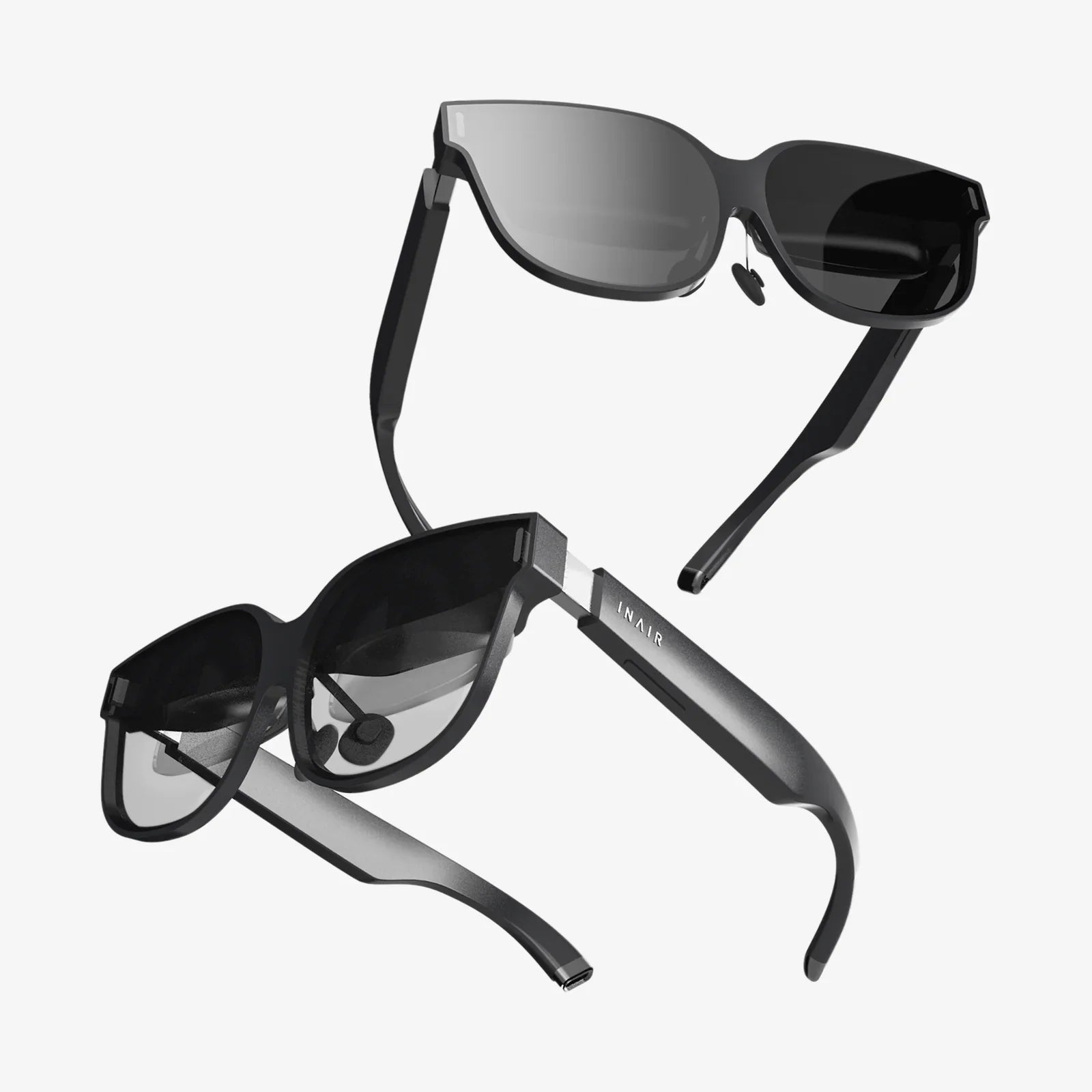
Imagine a workspace that isn't confined to the four corners of a monitor, where your digital tools and colleagues materialize around you in three dimensions, and complex data becomes a tangible landscape you can walk through. This isn't a scene from a science fiction film; it's the rapidly approaching reality of the modern workplace, powered by a revolutionary piece of technology: XR glasses for work. The era of static, two-dimensional computing is drawing to a close, making way for a new age of spatial productivity that promises to fundamentally redefine how we connect, create, and collaborate.
The Evolution of the Workspace: From Physical Desks to Infinite Canvases
To truly appreciate the seismic shift that XR glasses represent, we must first look back at the evolution of our work environments. For decades, the pinnacle of office technology was the personal computer—a powerful, yet inherently limiting, device that tethered us to a single screen and a physical location. The advent of laptops and mobile devices introduced a degree of mobility, but the paradigm remained the same: we were still peering into a flat window of digital information.
This two-dimensional interface creates a constant cognitive load. We must mentally map flat spreadsheets to complex concepts, juggle dozens of browser tabs and application windows, and strain to feel a genuine connection with pixelated faces on a video call. It's a system of compromises. XR glasses for work shatter this paradigm by introducing a third dimension—space. They transition us from looking at a computer to being inside it. Your workspace is no longer a piece of hardware on your desk; it becomes a persistent, personalized, and portable environment that can be summoned anywhere, transforming a coffee shop, an airport lounge, or your home office into a command center.
Beyond the Hype: Core Functionalities Redefining Professional Tasks
The true value of any technology lies not in its novelty, but in its practical application. XR glasses for work are moving beyond early-adopter curiosities to offer tangible, powerful functionalities that solve real business problems.
Spatial Computing and Infinite Virtual Displays
The most immediate and transformative feature is the ability to create multiple, large virtual screens that are fixed in your physical space. Instead of crowding a 15-inch laptop screen with overlapping windows, a professional can have a sprawling, organized workstation with a dedicated screen for email, another for a coding environment, a third for analytics dashboards, and a browser window for research—all arranged ergonomically around them. This isn't just about having more screen real estate; it's about organizing information spatially to match your cognitive workflow, drastically reducing context-switching and enhancing focus.
Revolutionizing Remote Collaboration
Video conferencing, while essential, is a poor facsimile of being in the same room. It's difficult to read body language, there's no sense of shared presence, and collaborating on a physical object is impossible. XR glasses create a shared virtual space where remote team members can interact as if they were physically together. Participants, represented by photorealistic avatars or even full-depth video captures, can gather around a 3D model of a new product design, point to specific components, and make adjustments in real-time. An architect in one country can walk a client through a full-scale, immersive rendering of a building before a single brick is laid. This level of collaborative fidelity bridges the gap between remote and co-located work, fostering a deeper sense of teamwork and understanding.
Enhanced Digital Twin Interaction and Training
Industries like manufacturing, engineering, and healthcare are leveraging XR glasses to interact with digital twins—virtual replicas of physical assets, processes, or systems. A technician wearing XR glasses on a factory floor can see a holographic overlay of machine diagnostics, repair instructions, or animated guides superimposed directly onto the equipment they are servicing. This hands-free access to contextual information improves accuracy, speeds up complex procedures, and enhances safety. Similarly, training programs can simulate high-risk or expensive scenarios in a completely safe virtual environment, allowing trainees to practice skills and muscle memory without consequence.
Data Visualization and Design in 3D
For data scientists, financial analysts, and designers, XR offers a profound new way to comprehend complexity. Instead of a flat chart, a dataset can be transformed into an interactive 3D landscape that can be walked around and explored from every angle, revealing patterns and correlations that would be invisible on a spreadsheet. Product designers can sculpt and examine 3D models at life-size scale, assessing ergonomics and aesthetics in a way that a screen never allows. This immersive interaction with information leads to faster, more intuitive insights and more innovative outcomes.
Overcoming the Barriers: Addressing Challenges Head-On
Despite the immense potential, the widespread adoption of XR glasses for work is not without its significant challenges. Acknowledging and solving these hurdles is critical for the technology to move into the mainstream.
Hardware Limitations: The Quest for Comfort and Power
Early headsets were often criticized for being bulky, heavy, and causing discomfort during extended wear—a non-starter for an 8-hour workday. The industry is aggressively tackling this through advancements in optics (like pancake lenses), lighter materials, and more ergonomic designs. The goal is a device that feels as comfortable as a pair of premium eyewear. Furthermore, processing power is a constant battle. Rendering complex, high-resolution 3D environments requires immense computational resources. While some devices are tethered to powerful external computers, the trend is toward standalone all-in-one devices with onboard processing that leverages specialized chipsets for efficient spatial computing.
The Software Ecosystem: Building the Killer Apps
Hardware is nothing without software. The ecosystem of enterprise-grade XR applications is still maturing. The key to adoption lies in the development of seamless, intuitive, and powerful software that integrates with existing workflows (like Microsoft Teams, Slack, and the Adobe suite) rather than forcing users into entirely new and isolated platforms. Developers are creating specialized tools for vertical markets, but the holy grail remains the "killer app"—a piece of software so compelling that it drives widespread hardware adoption across multiple industries.
Privacy, Security, and the Future of the Office
XR glasses, by their very nature, are equipped with an array of sensors, including cameras, microphones, and depth sensors, constantly scanning the user's environment. This raises legitimate and serious questions about data privacy and security. What is being recorded? Where is that data stored? Who has access to it? Enterprises will require robust, transparent data policies and potentially on-device processing to ensure sensitive information never leaves the device. Furthermore, the social implications of a workforce wearing glasses that can record at any moment will necessitate new workplace etiquette and policies.
A Glimpse into the Future: The Road Ahead for XR at Work
The current generation of XR glasses is merely the foundation. The future trajectory points toward even more seamless and powerful integrations. We are moving toward devices with higher-resolution displays that are indistinguishable from reality, wider fields of view for truly immersive experiences, and more sophisticated eye-tracking and hand-tracking that will enable intuitive, controller-free interaction. Artificial intelligence will act as a built-in spatial assistant, proactively surfacing relevant information, translating conversations in real-time, and automating mundane tasks based on context.
Ultimately, the technology will fade into the background. We won't think about "using XR glasses"; we will simply think about doing our work. The interface will become an invisible layer enhancing our reality, not a device we put on. This will catalyze a shift from remote work to what we might call "universal work"—the ability to perform any knowledge task with maximum effectiveness from any location on Earth, with a sense of presence and access to resources that rivals or exceeds a physical office.
The silent hum of a computer fan and the glow of a monitor have defined professional life for a generation, but their reign is ending. XR glasses for work are not just another gadget; they are the key to a fundamental transformation, unlocking a dimension of productivity and human connection we've only just begun to imagine. The question is no longer if your workflow will evolve into this spatial realm, but how soon you will be ready to step through the looking glass and leave the limitations of the flat screen behind forever.
Share:
Are AI Glasses Real? The Future on Your Face Is Closer Than You Think
Was Ist Augmented Reality? The Digital Layer Transforming Our World