


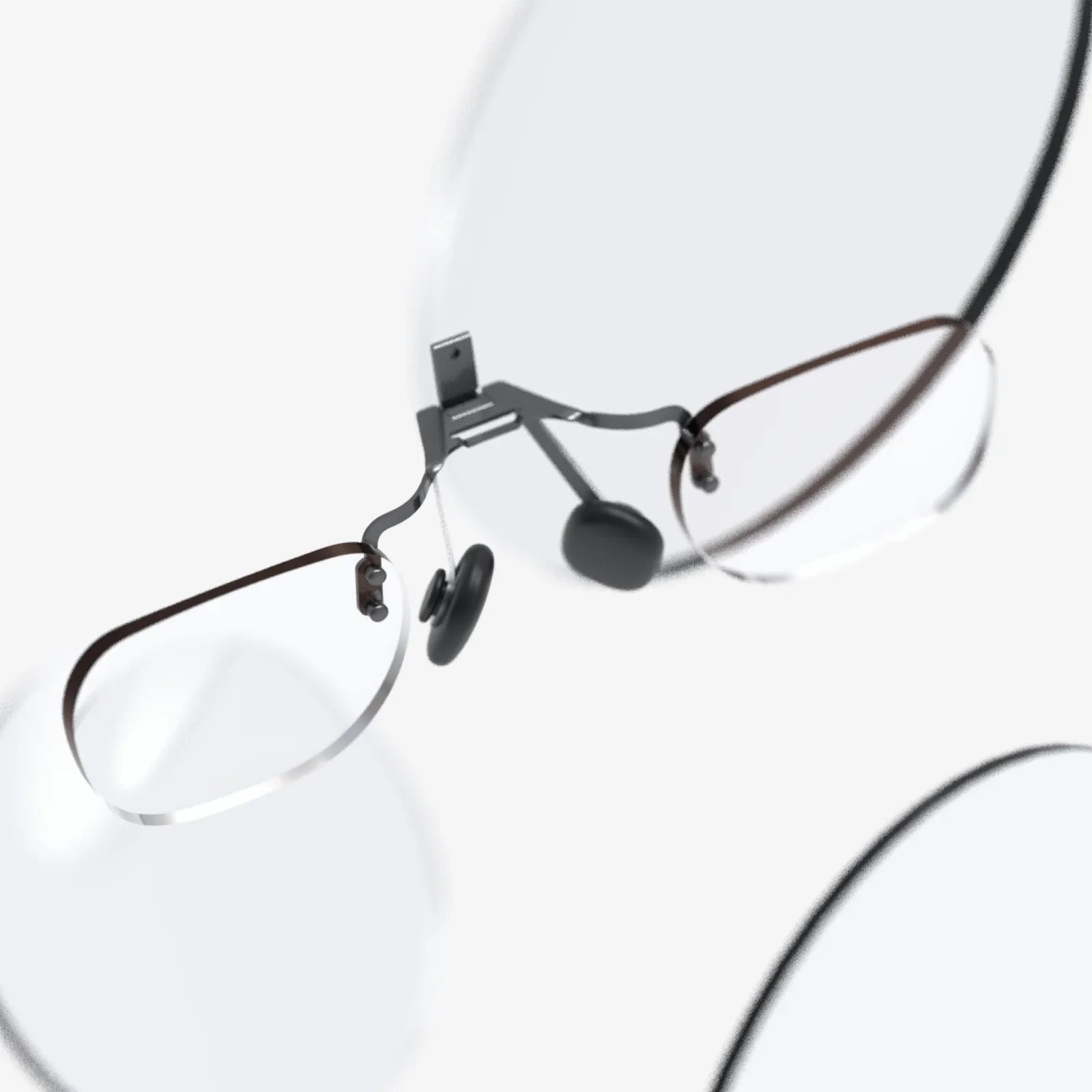
Imagine a world where information flows seamlessly into your field of vision, where the digital and physical realms are not just connected but fused. You glance at a foreign street sign, and its translation appears beneath it. You meet someone at a conference, and their name and professional background subtly materialize next to their face. You look at a complex piece of machinery, and an interactive schematic highlights its components. This isn't a scene from a science fiction movie; it's the burgeoning reality promised by artificial intelligence glasses. The question on everyone's mind is no longer a matter of if, but a pressing inquiry into the present: are AI glasses real, and what does that reality actually look like today?
Beyond the Hype: Defining the True "AI Glass"
Before we can answer the question of their reality, we must first define what we mean by "AI glasses." The term is often used loosely, sometimes applied to any wearable headset with a camera or a display. However, a true AI glass is distinguished by a core set of functionalities that go beyond simple augmented reality (AR) overlays.
At its heart, an AI glass is a wearable computer for your face. It integrates several key technologies:
- Advanced Sensors: This includes high-resolution cameras, microphones, depth sensors, and inertial measurement units (IMUs) that constantly gather data about the user's environment.
- Always-On Connectivity: Seamless 5G or Wi-Fi connectivity is crucial for offloading complex processing to the cloud and accessing real-time data.
- Intuitive Interface: Control is handled through voice commands, touch-sensitive stems, gesture recognition, or even eye-tracking, eliminating the need for a physical keyboard or mouse.
- Transparent Display: A micro-display projects information onto lenses or waveguides, allowing digital content to coexist with the real world without obstructing the user's view.
- On-Device and Cloud AI: This is the true brain. Sophisticated AI models process the sensor data in real-time. This involves complex tasks like computer vision for object recognition, natural language processing for voice interactions, and machine learning to personalize the experience and predict user intent.
It is this last component—the pervasive, intelligent, and contextual processing of information—that elevates a device from being a simple AR viewer to a genuine AI companion. The AI doesn't just show you data; it understands what you're looking at, hears what you're saying, and delivers the precise information you need at the exact moment you need it.
The Current Landscape: Prototypes, Pioneers, and Consumer Offerings
So, are these devices actually available? The answer is a nuanced yes, existing on a spectrum from developer-focused prototypes to early consumer products.
On one end of the spectrum, we have experimental and enterprise-grade devices. These are often bulkier, more expensive, and designed for specific industrial applications. They are undeniably "real" and are already being used by field service technicians to access repair manuals hands-free, by warehouse workers to optimize picking routes, and by surgeons to view patient data during operations without looking away from the operating table. These glasses leverage AI for object recognition and data overlay, proving the concept's utility in high-stakes, high-value environments.
On the other end, we are seeing a trickle of consumer-facing products. These devices are more focused on style and everyday usability. Their current AI capabilities are often more constrained, focusing on a few key features:
- Real-Time Translation: Perhaps the most mature and impressive application. Users can have a natural conversation with someone speaking another language, hearing a translated version in their ear while seeing subtitles for what the other person is saying.
- Visual Search and Identification: Point your gaze at a landmark, and get a pop-up with historical facts. Look at a menu, and see highlighted popular dishes or allergen information. This is powered by AI models trained on massive datasets of images.
- Contextual Assistance: The glasses can remind you of a person's name when you see them, based on your calendar and contact list. They can provide navigation cues with arrows overlaid onto the street in front of you.
- Content Capture and Creation: Using voice commands, users can take photos and record videos from a first-person perspective, with AI helping to frame shots and optimize settings.
While these consumer devices are a significant step forward, they are still nascent. Battery life remains a challenge, the field of view for the digital display is often limited, and the form factor, while improving, has not yet achieved the universal appeal of standard eyewear. They are real, but they are a version 1.0 reality.
The Technological Hurdles: What's Holding Back the Revolution?
The vision of a sleek, powerful, and all-day AI glass is not yet fully realized due to several significant technological and material science challenges. Overcoming these hurdles is the primary focus of engineers and researchers worldwide.
Battery Life and Power Consumption: The combination of always-on sensors, high-resolution displays, and continuous AI processing is incredibly power-intensive. Packing a battery capable of lasting a full day into the slim arms of a pair of glasses is a monumental task. Solutions being explored include more efficient chipsets designed specifically for low-power AI tasks, novel battery chemistries, and even the potential for energy harvesting from light or movement.
Display Technology: The goal is a bright, high-resolution, full-color display that can be overlaid on the real world with a wide field of view, all while being housed in a transparent lens. Current technologies like diffractive waveguides and microLED arrays are impressive but face challenges with efficiency, brightness, and manufacturing cost. The holy grail is a display that is virtually indistinguishable from the real world, both in terms of visual quality and its seamless integration into the lens.
Thermal Management: All this processing generates heat. Dissipating that heat from a device sitting on a user's face is a critical and non-trivial engineering problem. No one wants a warm, uncomfortable device on their nose, making advanced passive cooling solutions a key area of development.
AI Model Efficiency: Running large language models and complex computer vision algorithms requires immense computational power. The solution is a hybrid approach, splitting tasks between the device itself (on-device AI) and powerful cloud servers. Striking the right balance is crucial for responsiveness, privacy, and functionality, especially in areas with poor connectivity. Developing smaller, faster, and more efficient models that can run entirely on a device's limited hardware is a primary research objective.
The Invisible Elephant: Privacy, Security, and the Social Contract
The technological challenges, while daunting, are ultimately solvable through engineering. The far more complex and profound questions surrounding AI glasses are societal and ethical. The ability to record, analyze, and identify anything and anyone in your field of vision presents a privacy paradox of unprecedented scale.
These devices, by their very nature, are always sensing. This raises critical questions:
- Consent and Notification: If someone is wearing AI glasses that can identify me, do I have a right to know? How is that communicated? The concept of consent in public spaces is being radically redefined.
- Data Ownership and Usage: The data collected by these glasses—video, audio, location, and biometric information—is incredibly sensitive. Who owns this data? How is it stored, processed, and used? Could it be used for targeted advertising, sold to data brokers, or accessed by government agencies?
- The End of Anonymous Public Life? The potential for constant, automated facial recognition threatens to eliminate the anonymity we have traditionally enjoyed in crowds. This has chilling implications for free speech, protest, and simply existing in public without being tracked.
- Security Vulnerabilities: A device that sees and hears everything you do is a prime target for hackers. A breach could expose a user's entire life, from their daily routines to their private conversations.
Addressing these concerns requires more than just technical fixes like physical camera shutters or LED recording indicators. It demands a robust public discourse, thoughtful regulation, and a new social contract that defines the boundaries of this new technology. Manufacturers must embrace privacy-by-design principles, ensuring that users have clear and granular control over their data. Without solving these human problems, the technological reality of AI glasses will remain fraught with controversy.
Glimpsing the Future: From Assistive Tool to Cognitive Extension
Looking beyond the current limitations and controversies, the potential long-term applications of AI glasses are nothing short of revolutionary. They have the potential to evolve from a helpful tool into a true cognitive extension, augmenting human perception and capability.
In healthcare, imagine glasses that allow a medic in a remote village to receive real-time guidance from a specialist across the globe, with AI highlighting anatomy during an examination. For individuals with visual impairments, AI glasses could describe scenes, read text aloud, and identify obstacles, granting a new level of independence. In education, students could explore historical events with immersive recreations overlaid onto their classroom or conduct virtual chemistry experiments with step-by-step guidance.
The line between the digital and physical will continue to blur. Instead of pulling out a phone to interact with an app, the world itself becomes the interface. A poster for a concert could have a virtual "buy tickets" button floating next to it. Your empty living room wall could become the canvas for a vast digital artwork. The concept of "search" will transform from a typed query into a simple glance and a whispered question.
Ultimately, the AI will become proactive, not just reactive. It will learn your habits, anticipate your needs, and surface information before you even know you need it. It could warn you of a potential hazard on your path, suggest a healthier alternative when you look at a snack, or prompt you to leave for an appointment early based on real-time traffic data it has already analyzed. This shift from assistance to partnership represents the ultimate realization of the technology.
The reality of AI glasses is a complex tapestry of breathtaking technological achievement, tangible present-day applications, and formidable challenges yet to be overcome. They are no longer a fantasy; they are a developing product category with the power to fundamentally reshape our relationship with technology, information, and each other. The genie is out of the bottle, and it's wearing glasses. The journey to perfect this reality is just beginning, and its destination will be shaped not just by engineers, but by all of us, as we decide what kind of future we want to see through these new lenses.
Share:
Best AI Prescription Glasses: The Ultimate Guide to Smarter Vision
XR Glasses for Work: The Ultimate Guide to the Next-Gen Productivity Platform