


The buzz isn't just about a new gadget on your wrist; it's about a fundamental rewiring of human-computer interaction. The latest headlines in wearable AI device news today signal a departure from the era of passive data collection and usher in the age of ambient, contextual, and genuinely intelligent companions. This isn't science fiction; it's the unfolding reality where your accessories don't just track your life—they understand it, anticipate your needs, and act as a seamless extension of your cognitive and physical self. The convergence of sophisticated large language models, miniaturized sensors, and powerful edge computing is creating a new product category poised to redefine everything from healthcare to personal productivity. If you think you've seen the limits of wearable technology, the developments happening right now are about to shatter that perception entirely.
The Evolution: From Quantified Self to Contextual Self
The journey of wearables has been a steady march toward greater intimacy with the user. The first generation was defined by the quantified self
movement—devices that counted steps, measured heart rate, and tracked sleep cycles. They provided raw data, leaving the interpretation largely to the user. The second generation introduced basic notifications and alerts, tethering us closer to our smartphones.
But the news today centers on the third generation: Wearable AI. This new paradigm is not about data; it's about insight. It's not about notifications; it's about nuanced assistance. The key differentiator is the shift from reactive to proactive functionality. Instead of you asking a device a question, the device, powered by sophisticated on-device AI models, understands your context—your location, your biometric state, your calendar, and even your conversational tone—and offers relevant information before you even know you need it. This move from the quantified self to the contextual self
represents the most significant leap in personal technology in a decade.
Breaking News: Key Developments Shaping the Market
Several critical trends are emerging from the labs and onto the wrists, ears, and glasses of early adopters. This wearable AI device news today highlights the technologies moving from prototype to production.
1. The Rise of On-Device AI and Large Action Models (LAMs)
Previously, true AI processing required a constant, robust connection to the cloud, leading to latency, privacy concerns, and battery drain. The biggest news is the integration of specialized neural processing units (NPUs) directly into wearable chipsets. This allows complex AI models to run entirely on the device itself. This means instant responses, enhanced privacy as your data doesn't need to leave your wrist, and functionality even in areas with poor connectivity.
Beyond just understanding language (LLMs), the next frontier is models that can execute tasks—Large Action Models (LAMs). Imagine your device hearing you agree to a meeting and, without a single prompt, cross-referencing your calendar, finding an optimal time, and drafting a calendar invitation for you to approve. This ability to not just comprehend but act is a game-changer.
2. Advanced Health Diagnostics and Predictive Care
This is perhaps the most life-altering aspect of current wearable AI news. We are moving far beyond basic heart-rate monitoring. Cutting-edge devices are now incorporating:
- Continuous, Medical-Grade Biomarker Monitoring: AI algorithms are being trained to detect early signs of atrial fibrillation, sleep apnea, and blood glucose trends through non-invasive optical sensors.
- Stress and Mental Health Awareness: By analyzing heart rate variability, skin temperature, and even vocal stress patterns during speech, wearables can now prompt users to take a mindful minute or practice breathing exercises, acting as a constant guardian for mental well-being.
-
Personalized Health Coaches: The AI synthesizes data from sleep, activity, and nutrition (if logged) to offer hyper-personalized advice. Instead of generic
get more sleep
messages, it might say,Based on your elevated resting heart rate and low sleep depth last night, a light walk today would be more beneficial than a high-intensity workout.
3. Multimodal and Context-Aware Interaction
The old model of lift-to-talk
or push-a-button
is vanishing. New devices use a fusion of sensors to create a multimodal interface. They use:
- Voice: Always-listening, but only activated by a precise wake word processed on-device.
- Gesture Control: A subtle flick of the wrist or pinch of the fingers can answer a call, scroll through a menu, or control music.
- Gaze Tracking: For smart glasses, this allows for control simply by looking at an interface element.
- Contextual Awareness: The AI understands if you are in a meeting, driving, or working out, and adjusts its interactions accordingly. It won't read out a text message loudly if it detects you are in a quiet library.
4. The Form Factor Revolution: Beyond the Wrist
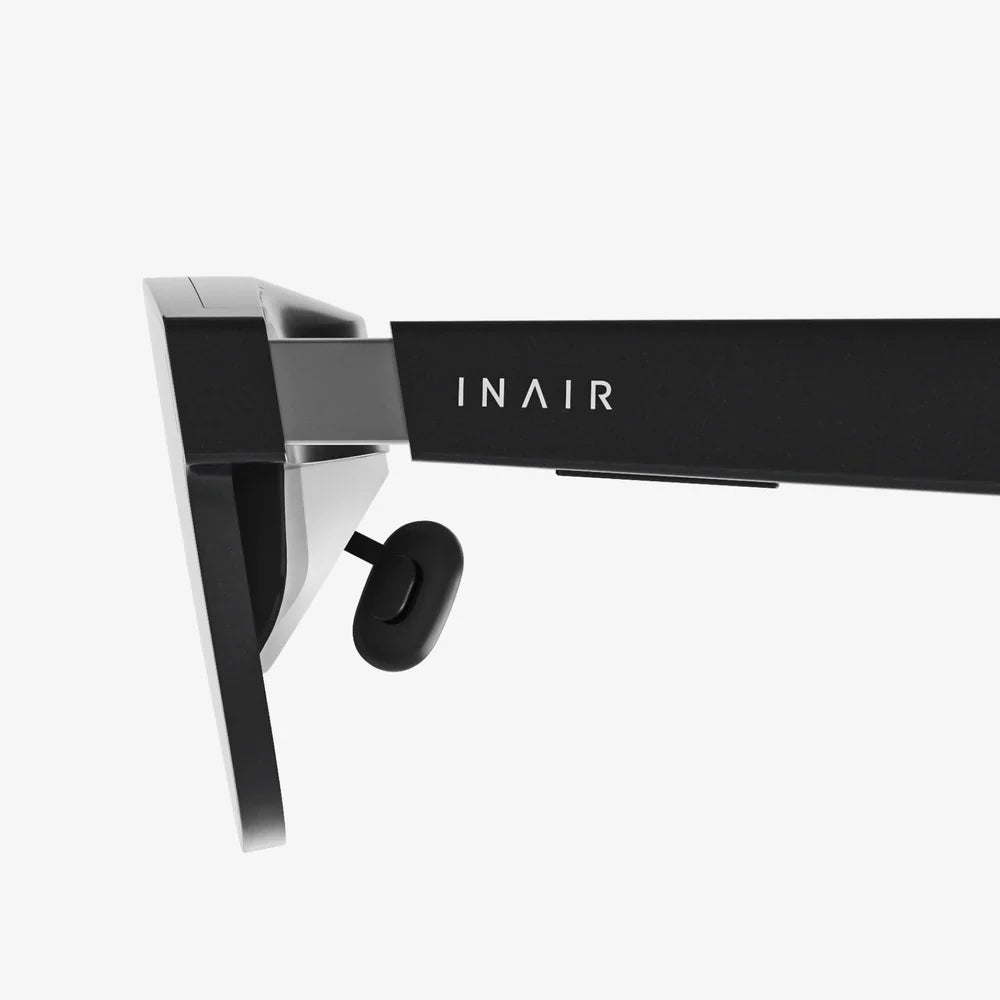
While smartwatches remain the dominant form, the wearable AI device news today is exploding with innovation in design. Smart rings are gaining traction for their minimalism and focus on pure health tracking during sleep. Smart glasses are becoming more viable as display technology improves and AI-powered augmented reality can overlay contextual information onto the real world. Even hearables (advanced earbuds) are evolving into powerful AI hubs, translating conversations in real time and enhancing hearing based on your environment. The future is a diverse ecosystem of devices, each chosen for a specific purpose and context.
The Ethical Implications: The Privacy Paradox
With great power comes great responsibility, and the intimate nature of wearable AI amplifies this a thousandfold. The very data that makes these devices so useful—a continuous stream of your biometrics, location, conversations, and behavior—creates a significant privacy paradox.
- Data Ownership and Consent: Who owns this profoundly personal data? How is it being used? Is it being aggregated and sold to third parties for advertising or insurance purposes? Transparency from manufacturers is not just requested; it is demanded.
- Algorithmic Bias: AI models are trained on datasets. If these datasets lack diversity, the health diagnoses or recommendations provided by the wearable could be inaccurate or even harmful for underrepresented groups.
-
Psychological Dependence and Anxiety: Constant health monitoring can lead to
cyberchondria,
where users become overly anxious about minor fluctuations in their data. The line between helpful awareness and hypochondria is thin. - Security: A device that knows everything about you is the ultimate target for hackers. A breach would be catastrophic, far beyond the leaking of a password. Ensuring military-grade encryption and robust security protocols is non-negotiable.
Navigating this landscape requires a concerted effort from policymakers to establish clear regulations, from developers to practice ethical AI by design, and from users to educate themselves on data permissions and usage.
The Future Horizon: What's Next After Today's News?
The pace of innovation is accelerating. The developments we see as cutting-edge today are merely the foundation for the next wave. In the near future, we can expect:
- Seamless Brain-Computer Interfaces (BCIs): While still early, non-invasive BCIs are advancing rapidly. The ultimate wearable may one day be able to interpret neural signals, allowing for control of devices through thought alone, offering revolutionary solutions for individuals with disabilities.
- True Augmented Reality Layering: Smart glasses will project high-fidelity, contextually relevant holograms onto the real world, with AI acting as the curator of this digital overlay, transforming how we work, learn, and socialize.
- Predictive Environmental Adaptation: Your wearable will communicate with smart home systems, adjusting lighting and temperature based on your stress levels and circadian rhythm, or even pre-ordering your coffee as it detects you leaving your morning workout.
- Decentralized Health Networks: With user permission, anonymized data from millions of wearables could create an unprecedented real-time global health monitoring network, providing early warnings for disease outbreaks and advancing medical research at a breathtaking pace.
The trajectory is clear: wearable AI will become increasingly integrated, invisible, and indispensable. It will shift from being a tool we interact with to an intelligent layer that is simply… there, enhancing our capabilities and smoothing the friction of daily life.
Imagine a world where your first warning of an illness isn't a sore throat, but a subtle notification from your ring suggesting extra vitamin C based on a shift in your baseline metrics. Envision a meeting where your glasses provide real-time transcription and background on the people you're speaking with, or a walk through a foreign city where the history of the buildings around you is whispered into your ear. This is the promise embedded in the latest wearable AI device news today—not just another piece of tech, but a quiet revolution in how we experience the world and understand ourselves, poised to turn the mundane into the extraordinary with every passing moment.
Share:
AR in Events: How Virtual Reality and Augmented Reality Are Revolutionizing Experiences
Technical Issues in Virtual Meeting: A Comprehensive Guide to Diagnosis and Resolution