


Remember when the idea of digital information seamlessly layered over your physical reality was the stuff of science fiction? That future is not just knocking at the door; it has stepped into the room, taken off its coat, and is making itself comfortable. The latest wave of news surrounding wearable display glasses is nothing short of revolutionary, signaling a pivotal moment where this technology transitions from a promising prototype to a potent, practical tool poised to reshape industries, redefine personal computing, and reimagine human connection. The conversation has dramatically shifted from "if" to "when," and more importantly, "how" this technology will become an integral thread in the fabric of our daily lives.
The Evolution from Novelty to Necessity
The journey of wearable displays is a tale of fits and starts, of grand promises and sobering realities. Early iterations were often clunky, expensive, and limited by the technological constraints of their time. They were fascinating curiosities, but far from indispensable. Today, that narrative is being rewritten at a breathtaking pace. The core differentiator in the current generation of devices is a fundamental shift in philosophy. Developers are no longer asking users to escape into a fully virtual world; instead, they are building bridges between the digital and the physical. This paradigm, often called spatial computing or augmented reality (AR), is the heart of the modern wearable display revolution.
This evolution is powered by a convergence of several critical technological advancements. Breakthroughs in micro-optics and waveguide technology have enabled displays to become brighter, sharper, and far more energy-efficient, all while being packaged into form factors that increasingly resemble conventional eyewear. Simultaneously, massive leaps in miniaturized computing power, often leveraging advanced smartphone-grade chipsets, provide the necessary horsepower for complex tasks like real-time object recognition, spatial mapping, and gesture tracking without tethering to a bulky external computer.
Breaking the Mold: Form Factor and Fashion
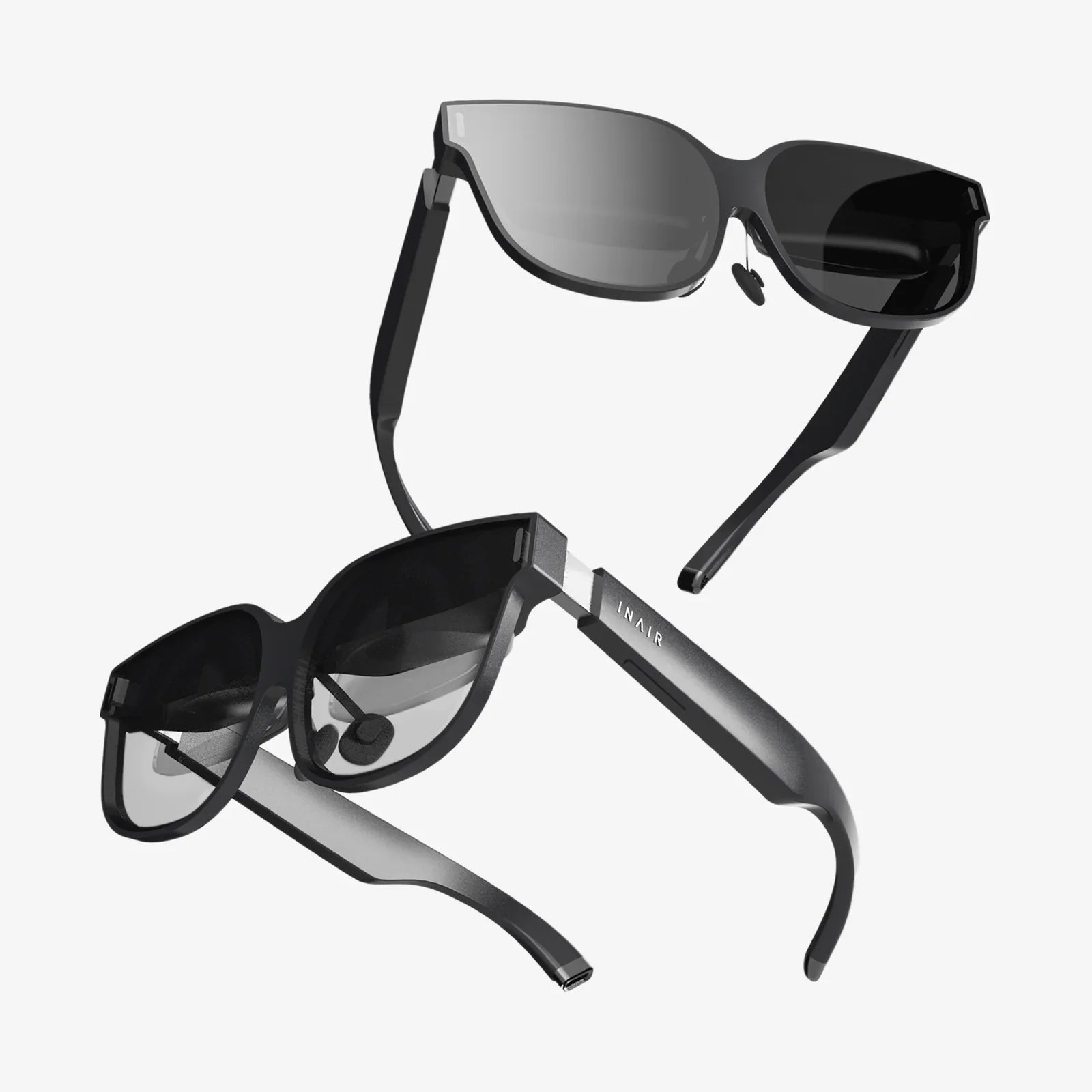
One of the most significant barriers to widespread adoption has historically been aesthetics. Technology is personal, and what we wear on our faces is a profound statement of identity. The most powerful computer is useless if people are unwilling to be seen wearing it. Recent announcements and product reveals highlight a monumental effort to overcome this hurdle. The focus is squarely on creating devices that are lightweight, comfortable, and, crucially, stylish.
We are seeing a move away from the bulky, geeky visors of the past toward designs that could plausibly be mistaken for a pair of high-end sunglasses or contemporary eyeglasses. This involves sophisticated engineering to shrink components, distribute weight evenly, and offer a variety of frame styles and lens options, including prescription inserts. The message is clear: this technology is for everyone, not just developers and early tech adopters. The goal is to make the technology fade into the background, allowing the experience to take center stage.
The Enterprise Arena: Where Productivity Gets a Supercharge
While consumer applications often grab headlines, the most immediate and transformative impact of today's wearable display glasses is occurring within the enterprise sector. Companies across the globe are deploying this technology to solve real-world problems, boost efficiency, enhance safety, and reduce costs in ways previously unimaginable.
- Field Service and Maintenance: A technician repairing a complex piece of machinery can see schematics, instruction manuals, and animated guides overlaid directly on the equipment in front of them. They can stream their point-of-view to a remote expert thousands of miles away who can then annotate the technician's real-world view with arrows and notes, guiding them through the repair step-by-step. This drastically reduces errors, slashes training time, and resolves issues faster.
- Healthcare and Medicine: Surgeons can visualize patient vitals, MRI scans, and 3D anatomical models without ever looking away from the operating table. Medical students can learn from immersive, interactive holograms of the human body. The potential for improving surgical precision, medical training, and patient outcomes is immense.
- Logistics and Warehousing: Workers fulfilling orders in massive distribution centers can have optimal pick paths, item locations, and inventory data displayed in their line of sight, guiding them instantly to the correct items and verifying picks with barcode scans, all while keeping their hands free. This leads to dramatic improvements in order accuracy and fulfillment speed.
- Design and Manufacturing: Engineers and designers can collaborate on life-size 3D holograms of new products, making adjustments in real-time before a single physical prototype is built. This accelerates the design cycle and reduces waste.
These are not futuristic concepts; they are operational realities in many Fortune 500 companies today, and the list of use cases is expanding rapidly.
The Consumer Horizon: Redefining Connection and Creativity
The enterprise story is compelling, but the long-term vision has always included the consumer. The recent news cycle is buzzing with demonstrations of how these glasses could transform our personal lives. Imagine watching a movie that appears as a vast, crystal-clear screen floating on your living room wall, or playing a video game where characters and environments spill out into your physical space. Beyond entertainment, the implications for communication are profound.
Video calls could evolve from a grid of faces on a flat screen into a feeling of genuine presence, with holographic representations of loved ones sitting across from you on the couch, sharing experiences as if they were physically there. Navigation could become intuitive, with directional arrows and street names painted onto the real world, eliminating the need to constantly glance down at a phone. These glasses could act as a universal translator, displaying subtitles in real-time for a conversation with someone speaking another language.
For creators, the tools are becoming limitless. Digital artists could sculpt in 3D space with their hands. Musicians could manipulate virtual mixing boards and instruments. The device becomes a portal to a layer of creative potential superimposed on our reality.
Navigating the Inevitable Challenges
This exciting future is not without its significant hurdles. The path to ubiquity is paved with complex challenges that developers and society must address head-on.
- Battery Life: High-resolution displays and powerful processors are energy-intensive. Achieving all-day battery life in a sleek form factor remains a holy grail. Innovations in low-power components, efficient software, and perhaps even novel charging solutions are critical.
- The Social Contract: The prospect of people recording video and taking pictures discreetly through their glasses raises serious questions about privacy and social etiquette. Clear social norms and potentially new technological indicators (like a visible recording light) will need to be established to ensure people feel safe and respected in public spaces.
- Digital Wellbeing: As with any immersive technology, there is a risk of further blurring the lines between the digital and physical worlds. Establishing healthy usage patterns and ensuring these devices enhance rather than detract from real-world human interaction will be paramount.
- Accessibility and the Digital Divide: Ensuring this powerful technology is accessible and beneficial to a wide range of people, including those with disabilities, is a crucial challenge that must be baked into the design process from the beginning.
The Competitive Landscape Heats Up
The flurry of news and announcements is a direct result of an increasingly competitive and vibrant ecosystem. While specific brands are avoided here, it's clear that the market is attracting a diverse array of players, from established tech giants to nimble startups. This competition is the engine of innovation, driving rapid improvements in hardware, software, and content. We are seeing developments in proprietary display technologies, custom silicon designed specifically for spatial computing, and the creation of entirely new operating systems built from the ground up for an augmented world. This isn't a race with a single winner; it's the emergence of a whole new platform, much like the smartphone revolution, which will host a multitude of successful companies and applications.
A Glimpse into the Next Decade
Looking ahead, the trajectory points toward even more seamless integration. Future iterations may move beyond glasses altogether, towards even more discreet form factors like smart contact lenses. The displays will become indistinguishable from reality, with perfect focus and brightness in all lighting conditions. The user interface will evolve beyond hand gestures and voice commands to include more intuitive methods like neural input, where subtle intentions can control the device. The digital layer we interact with will become persistent and shared, meaning digital objects and information can be left in specific locations for others to discover, creating a world rich with digital history and collaborative potential.
The news today is a snapshot of a technology in its adolescence—bursting with potential, learning its place in the world, and growing more capable by the day. The foundational pieces are falling into place: the hardware is becoming wearable, the software is becoming intelligent, and the applications are becoming indispensable. We are standing at the precipice of a new way of seeing, working, and connecting. The age of staring down at a small rectangle in our hands is giving way to a future where we look up and out, with our world enhanced, annotated, and alive with possibility. The next time you hear a headline about wearable display glasses, know that you're not just hearing about a new gadget; you're getting a front-row seat to the birth of the next great computing platform.
Share:
Smart Glasses Functionality: Beyond Novelty to Necessity in a Connected World
Smart Glasses Functionality: Beyond Novelty to Necessity in a Connected World