


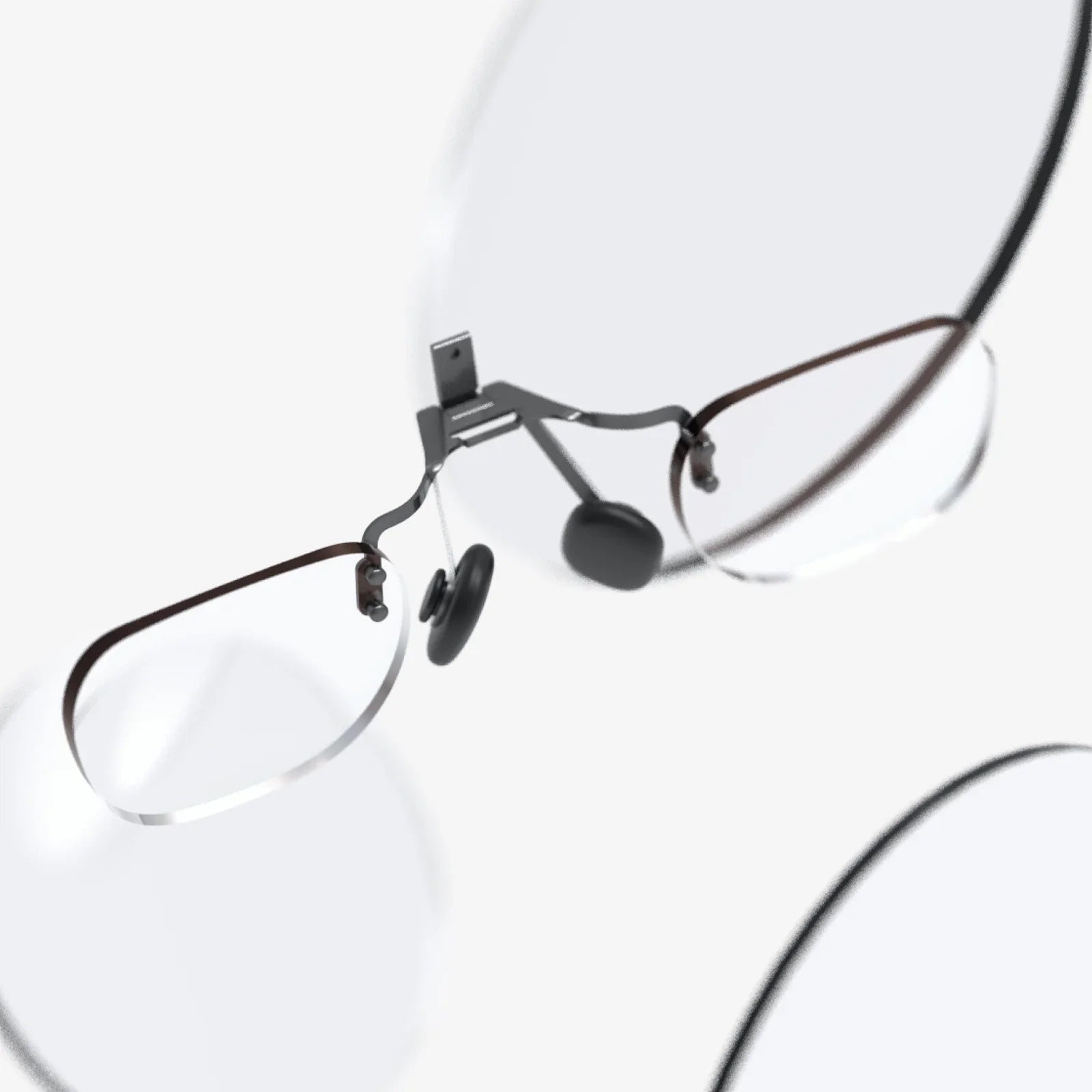
Imagine a world where a glance can translate a foreign street sign, where your glasses diagnose a health condition before you feel a single symptom, and where your entire digital world is projected seamlessly onto reality. This is not a distant science fiction fantasy; it is the imminent future being built today through the rapid advancement of wearable eye technology. This revolution, perched literally on the bridge of our noses, is poised to become the most intimate and transformative human-computer interface we have ever known, fundamentally altering how we perceive, interact with, and understand the world around us.
Beyond Vision Correction: A New Paradigm of Perception
For centuries, eyewear served a singular, vital purpose: to correct imperfect vision. The innovation was in the lenses—making them lighter, thinner, or more coated. Today, the frame itself has become the platform. Wearable eye technology represents a quantum leap, embedding sophisticated sensors, micro-projectors, cameras, and processors into a form factor that is increasingly indistinguishable from traditional eyewear. This shift moves the technology from a passive tool to an active, intelligent partner in our daily lives.
The core of this technology lies in its ability to bridge the physical and digital worlds. It does this through a combination of key components:
- Advanced Micro-Displays: Using technologies like LCoS (Liquid Crystal on Silicon) or micro-LEDs, these tiny projectors beam information directly into the user's field of view, creating overlays of text, imagery, and data that appear to exist in the real world.
- Computer Vision Cameras: Small, high-resolution cameras track the user's environment, enabling features like object recognition, spatial mapping, and gesture control. They see what the user sees, providing contextual data.
- Sensor Fusion: A suite of sensors, including accelerometers, gyroscopes, magnetometers, and increasingly, specialized health sensors like pupillometers and spectrometers, work in concert to understand the user's position, movement, and physiological state with remarkable accuracy.
- Onboard Processing & Connectivity: Powerful, miniaturized processors analyze sensor data in real-time, while wireless technologies like 5G and Bluetooth ensure a constant, seamless connection to the cloud and other devices.
The Augmented Human: Transforming Daily Life and Work
The most immediate and compelling application of this technology is in augmentation. Imagine an engineer performing a complex repair on industrial machinery. Instead of fumbling with a physical manual or a tablet, digital schematics and step-by-step instructions are overlaid directly onto the components they are working on, guided by an AI assistant. A surgeon could see a patient's vital signs and 3D anatomical models superimposed onto their body during an operation, enhancing precision and safety.
For the average consumer, the applications are equally profound. Navigation becomes intuitive, with arrows painted onto the street guiding you to your destination. Language barriers dissolve as subtitles appear in real-time during conversations or text is instantly translated. Shopping is reimagined; you can look at a product on a shelf and immediately see reviews, price comparisons, and sustainability scores. This constant, contextual stream of information creates a layer of intelligence over our reality, making us more informed, efficient, and connected.
A Window to Wellness: Proactive Health and Biomarker Monitoring
Perhaps the most revolutionary aspect of wearable eye technology lies in its potential to democratize healthcare. The eye is not just a window to the soul; it is a non-invasive window to our overall health. The vasculature and neural tissue at the back of the eye are unique in that they allow direct observation of the body's circulatory and nervous systems.
Future iterations of smart eyewear could continuously and passively monitor a staggering array of biomarkers:
- Cardiovascular Health: By analyzing subtle changes in retinal blood flow, algorithms can detect early signs of conditions like hypertension, atherosclerosis, and even predict the risk of stroke.
- Neurological Conditions: Changes in pupillary response, eye movement, and retinal structure can serve as early indicators for neurological diseases such as Alzheimer's, Parkinson's, and multiple sclerosis.
- Metabolic Disorders: Research is underway to use spectroscopic sensors to measure the glucose levels in the tear film, offering a pain-free alternative to finger-prick tests for diabetics.
- Sleep and Fatigue: By tracking blink rate, pupillary unrest, and gaze patterns, devices can accurately detect drowsiness and cognitive fatigue, issuing alerts to drivers or shift workers before they become a danger to themselves or others.
This shift from reactive to proactive and predictive healthcare could save countless lives and reduce the immense burden on global healthcare systems. Your annual physical could become a continuous, real-time stream of health data, with AI flagging anomalies long before they become critical.
The Invisible Interface: Redefining Human-Computer Interaction
Wearable eye technology promises to make our screens obsolete. The smartphone, for all its power, is a intermediary—a device we must stop to look down and engage with, pulling us out of the moment. Eyewear, by contrast, offers an always-available, hands-free, and glanceable interface.
Interaction paradigms are evolving beyond touchscreens. Eye-tracking allows for control through gaze alone—selecting an item on a menu by looking at it, or scrolling a page by looking toward its edge. Voice commands become more natural when the device is always at the ready. Subtle, subvocalization recognition, which detects neuromuscular signals when you form words without speaking them aloud, could offer a completely private way to interact. Gesture recognition, using the onboard cameras to interpret hand movements, provides another layer of intuitive control. This fusion of input methods creates a seamless, almost telepathic connection between user intention and digital action.
The Privacy Paradox: Navigating the Ethical Minefield
This incredible power does not come without profound risks. The very intimacy that makes wearable eye technology so powerful also makes it a potential privacy nightmare. A device that sees what you see, hears what you hear, and knows where you are at all times generates a dataset of unparalleled sensitivity. It is a literal first-person recorder of your life.
The ethical questions are daunting. Who owns this data? How is it stored, secured, and used? Could it be subpoenaed in legal proceedings? Could advertisers use it to build hyper-detailed psychological profiles based on what captures your attention? The potential for constant surveillance, either by corporations or governments, is a legitimate and serious concern. The concept of "attention theft"—where our gaze is monetized and manipulated—could reach a terrifying new level.
Addressing these challenges requires a robust framework built on:
- Radical Transparency: Users must have crystal-clear understanding of what data is being collected and how it is used.
- Decentralized Data Storage: Keeping the most sensitive data on the device itself or in a personal, encrypted vault, rather than on corporate servers.
- Granular User Control: Providing easy-to-use tools that allow users to shut off sensors (like the camera or microphone) with a physical switch and delete their data permanently.
- Strong Regulation: Governments must move quickly to establish rules that protect citizens from misuse, drawing clear red lines around biometric data collection and use.
Without these safeguards, the very technology designed to enhance our reality could become a tool for its oppression.
The Road Ahead: From Niche to Normalcy
The path to mainstream adoption is paved with both technical and social hurdles. Current challenges include improving battery life to last a full day, reducing the weight and size to achieve true social acceptability, and refining the user interface to be utterly intuitive. The visual experience must be high-resolution, bright enough for outdoor use, and comfortable for extended periods.
Social acceptance is another critical frontier. Will people feel comfortable conversing with someone wearing a camera on their face? Will these devices create a new digital divide, or worse, become a socially awkward barrier in interpersonal communication? The success of this technology hinges on it becoming invisible—both physically and socially. It must fade into the background, enhancing our lives without defining them.
Ultimately, the trajectory is clear. As the technology matures, it will become more capable, affordable, and stylish. We will move from single-purpose devices to multifunctional platforms that combine communication, navigation, health monitoring, and entertainment into a single, elegant form factor. The smartphone will not disappear overnight, but its central role in our digital lives will inevitably be challenged by a more natural, more human-centric alternative.
The next great platform for computing won't be held in your hand; it will be worn on your face, integrating digital intelligence so seamlessly into our perception that the line between the user and the tool will begin to blur, forever changing what it means to see, to know, and to be human.
Share:
Smart Device Standard: The Invisible Framework Shaping Our Connected Future
When Was AR Invented: The Untold History of Augmented Reality