


You’ve probably seen it: a digital dinosaur stomping through your living room via a smartphone screen, or interactive navigation arrows superimposed onto the road ahead through your car’s windshield. Augmented Reality (AR) has exploded into the mainstream, promising to fundamentally reshape how we work, play, and interact with the world around us. But this seemingly futuristic technology isn’t a sudden invention of the 21st century. Its story is a rich, complex tapestry woven over decades, filled with visionary thinkers, clunky prototypes, and incremental breakthroughs that collectively answered the profound question: what if we could blend the digital and the physical? To truly understand the genesis of this transformative force, we must journey back to a time before personal computers, before the internet, and even before the first moon landing, to the very first flicker of the augmented idea.
The Dawn of an Idea: Before the Digital Age
While the term "Augmented Reality" wouldn't be coined for many years, the foundational concept—enhancing human perception with machine-provided information—has much deeper roots. One could argue that the earliest forms of AR were the head-up displays (HUDs) developed for fighter pilots in the 1950s. These systems projected crucial flight data, like altitude and targeting information, onto the cockpit canopy or a special combiner glass, allowing pilots to keep their "heads up" and focused on the sky rather than looking down at their instruments. This was a critical innovation for situational awareness, effectively augmenting the pilot's view of the real world with vital, contextually relevant data. It was a pragmatic solution to a life-or-death problem, and it established the core principle that would define AR: a direct or indirect view of a physical, real-world environment that is "augmented" by computer-generated perceptual information.
The Birth of the Vision: Ivan Sutherland and The Sword of Damocles
If one must pin down a single, seminal moment for the invention of AR as we conceptualize it today, the year is 1968. This is when computer scientist Ivan Sutherland, with the help of his student Bob Sproull, created what is widely considered the first head-mounted display (HMD) system, a device so monumental it earned the ominous nickname "The Sword of Damocles."
Sutherland’s system was not "augmented reality" in the modern, video-based sense. It was what we now call an optical see-through AR system. The user wore a head-mounted display that was partially transparent. Behind it, a pair of CRT displays projected simple, wireframe computer graphics—floating cubes, 3D lines, and basic shapes. These digital images were reflected off half-silvered mirrors and into the user's eyes, perfectly overlaying and blending with the real world the user could see through the glass. A massive mechanical arm, suspended from the ceiling, tracked the user's head movements to adjust the perspective of the graphics in real-time. It was crude, terrifyingly cumbersome, and the graphical content was exceedingly primitive. But it was undeniably, breathtakingly revolutionary.
In his seminal 1965 paper, "The Ultimate Display," Sutherland had laid the philosophical groundwork, envisioning a display room where "the computer can control the existence of matter." The Sword of Damocles was the first practical step toward that vision. It proved that a human could indeed inhabit a world where digital information coexisted with physical reality. For this reason, 1968 is most frequently cited as the true answer to "when was AR invented?"—the year the concept was first successfully demonstrated.
The Long Winter: Conceptual Refinement and Military Application
The 1970s and 1980s were a period of quiet, yet crucial, development. The technology demonstrated by Sutherland was too expensive, too heavy, and too computationally intensive for widespread use. However, the potential, particularly for specialized industrial and military applications, was too great to ignore.
It was during this era that the very term "Augmented Reality" was born. Credit is most often given to former Boeing researcher Thomas P. Caudell. In the early 1990s, Caudell and his colleague David Mizell were working on an experimental system to assist Boeing factory workers with the complex task of assembling aircraft wiring harnesses. They devised a head-mounted display that would project the layout and instructions for the wiring directly onto the assembly boards, eliminating the need for massive, cumbersome physical diagrams and templates. In his 1990 report, Caudell coined the term "Augmented Reality" to describe this new class of technology that enhanced, rather than replaced, the user's reality. This distinguished it from Virtual Reality (VR), which aimed to create a fully immersive digital environment. The name stuck, providing a definitive identity for the field.
Parallel to this, the U.S. Air Force's Armstrong Laboratory was making staggering advances with its Virtual Fixtures platform. In 1992, systems engineer Louis Rosenberg developed a revolutionary AR system that allowed users to perform physical tasks in the real world guided by virtual overlays. Using an exoskeletal robotic arm and a see-through HMD, the system could, for example, make a real object feel heavier or lighter or guide a user's hand to perform precise mechanical operations. This was one of the first fully functional AR systems that demonstrated not just visual augmentation, but haptic (touch) augmentation as well, showcasing the profound potential for AR in training and teleoperation.
The Dawning of Modern AR: Software, Hardware, and the Leap to Portability
The theoretical and hardware foundations were now in place, but AR needed two more key ingredients to escape the lab: robust software and accessible hardware. The late 1990s and early 2000s saw these pieces begin to fall into place.
In 1999, a pivotal moment arrived with the work of Hirokazu Kato (加藤 博一) in Japan, who released the ARToolKit library. This open-source software library was a game-changer. It provided developers with a free, robust tool for creating AR experiences by using simple square markers for tracking. A camera would identify the unique black-and-white marker, and the software would calculate its position and orientation relative to the camera, allowing a 3D model to be perfectly anchored on top of it on the screen. ARToolKit democratized AR development, moving it from multi-million-dollar military labs to university dorm rooms and startup offices. For the first time, creators could experiment with AR without a massive budget.
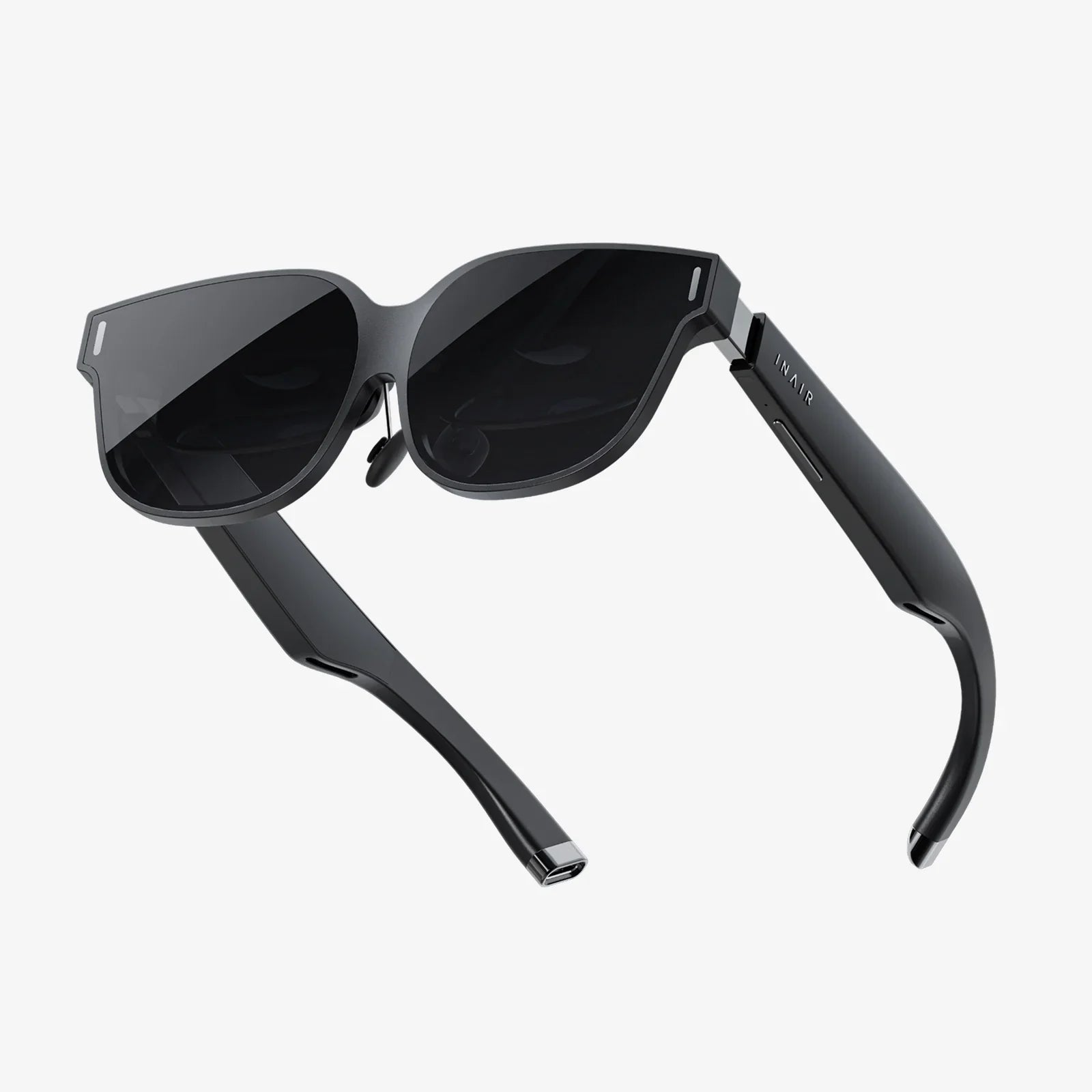
The next decade saw a focus on making AR wearable and practical. A landmark moment came in 2013 when Google unveiled Google Glass, an ambitious attempt to create a consumer-grade, optical see-through AR glasses platform. While it faced significant public skepticism over privacy and its limited functionality, Glass was a crucial experiment. It proved that the hardware could be miniaturized to a glasses-like form factor and brought the concept of always-on AR into the public consciousness, for better or worse. More successfully, Microsoft began development on the HoloLens, announced in 2015, which presented a far more powerful and capable enterprise-focused mixed reality headset.
The Smartphone Revolution: AR for the Masses
The true catalyst for AR's mass adoption wasn't a headset at all; it was the device already in billions of pockets: the smartphone. The convergence of high-resolution cameras, powerful processors, sophisticated motion sensors (gyroscopes, accelerometers), and high-speed data connectivity created the perfect, ubiquitous AR platform.
This era began in earnest around 2016-2017 with the explosive popularity of Niantic's Pokémon GO. The game used a smartphone's GPS to place virtual creatures in real-world locations and its camera to display them through the screen. It was a cultural phenomenon that introduced hundreds of millions of people to a simple, yet magical, form of location-based AR. Simultaneously, tech giants began embedding advanced AR capabilities directly into their mobile operating systems. Apple's ARKit (2017) and Google's ARCore (2018) provided developers with sophisticated frameworks that used SLAM (Simultaneous Localization and Mapping) technology. This allowed phones to understand and map their environment without physical markers, enabling virtual objects to interact with the real world—occluding behind real-life tables, resting on the floor, or reacting to ambient light. This marked the transition from simple marker-based AR to truly contextual and environmental AR.
The Present and The Invisible Future
Today, AR is no longer a question of "if" but "how." The initial invention has matured into a diverse ecosystem. We have:
- WebAR: Experiences that run directly in a mobile web browser, requiring no app download, lowering the barrier to entry even further.
- Industrial AR: Smart glasses empowering field technicians with remote expert guidance, warehouse workers with hands-free picking instructions, and surgeons with real-time patient data.
- Consumer AR: From trying on makeup and furniture in your home via your phone to interactive educational experiences in museums.
The hardware continues to evolve at a rapid pace. The quest for the perfect pair of lightweight, socially acceptable, high-field-of-view, all-day AR glasses is the industry's holy grail, with significant investments from nearly every major tech company. Advancements in waveguide optics, microLED displays, and AI-driven contextual understanding are bringing this goal closer to reality every year.
So, when was AR invented? The answer is not a single date but a timeline of vision. It was invented in 1968 with Sutherland's head-mounted display, named in the early 1990s by Caudell, democratized in 1999 with ARToolKit, popularized by the smartphone revolution circa 2016, and is being reinvented every day as it becomes more powerful, more seamless, and more integrated into the fabric of our daily lives. The invention was the spark; the evolution is the ongoing fire, and it's only just beginning to change how we see everything.
This journey from a suspended contraption in a Harvard lab to the computer in your pocket reveals a truth more fascinating than a simple date: transformative technologies are rarely born in a single eureka moment. They are nurtured over decades by countless visionaries who see a glimmer of possibility in the clunkiest of prototypes. The next time you use your phone to visualize a new sofa in your living room or follow arrows on your windshield, remember you are interacting with the culmination of over half a century of innovation. The boundary between our world and the digital one is dissolving, and the pioneers of the past have already handed us the tools to reshape reality itself—the next chapter of augmentation is waiting to be written.
Share:
Wearable Eye Technology: The Unseen Revolution Reshaping Human Experience
Smart Device Standard: The Invisible Framework Shaping Our Connected Future