


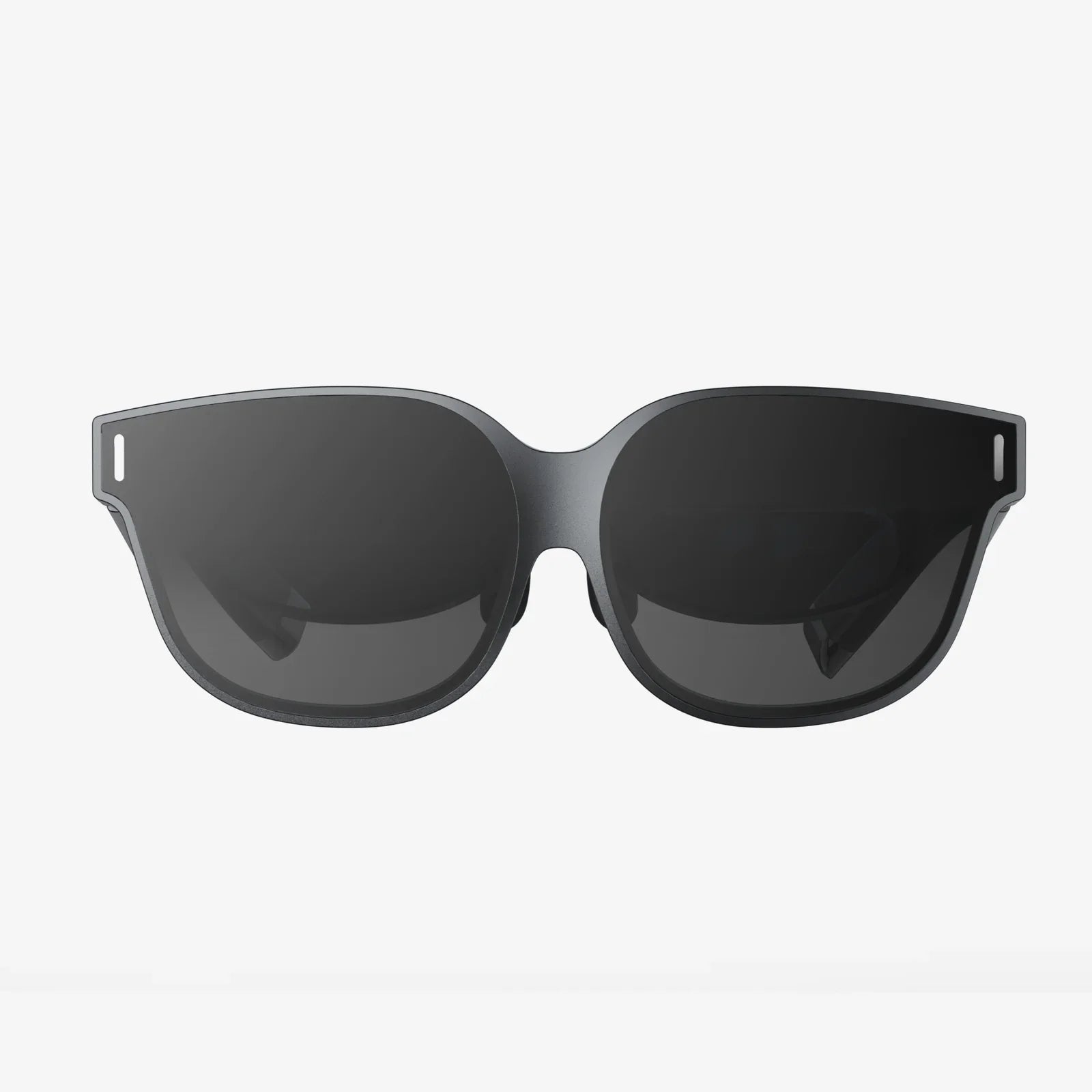
- by wangfred
Wearable HUD: The Invisible Revolution Reshaping Our Digital and Physical Worlds
- by wangfred
Imagine a world where information doesn’t live on a screen in your pocket or on your desk, but floats effortlessly in your field of vision, accessible with a glance and interactive with a word or a gesture. The digital layer of our existence—notifications, maps, messages, data—ceases to be a separate entity we must consciously engage with and instead becomes an integrated, ambient part of our reality. This is the profound promise of the Wearable Heads-Up Display (HUD), a technology not merely content with being the next gadget, but one that aims to become an invisible extension of our own cognition and perception. We stand on the precipice of a revolution that will dissolve the barriers between the digital and the physical, and it all begins with a simple, transparent lens.
The concept of a Heads-Up Display is not new; its origins are firmly rooted in the world of aviation. Initially developed for military fighter pilots in the mid-20th century, the HUD was a revolutionary tool for enhancing situational awareness. By projecting critical flight data—like altitude, airspeed, and targeting reticles—onto a transparent screen in front of the cockpit canopy, pilots could access vital information without ever having to glance down at their instruments. This "eyes-out" capability provided a crucial advantage in high-stakes dogfights and complex maneuvers, where a fraction of a second could mean the difference between life and death.
This technology eventually trickled down to commercial aviation, becoming a staple in modern airliners to improve safety during takeoff and landing. The fundamental principle remained unchanged: overlay contextually relevant data onto the user’s natural field of view to reduce cognitive load and increase efficiency. For decades, this powerful tool was confined to the rarefied air of the cockpit, its complexity, cost, and size making consumer applications seem like pure science fiction. However, the relentless march of miniaturization in computing, displays, and sensors has finally broken down those barriers, bringing the power of a HUD from the hands of elite pilots to the faces of everyday consumers.
The seamless experience promised by a wearable HUD is made possible by a sophisticated symphony of technologies working in concert. Understanding these components is key to appreciating the engineering marvel they represent.
At the heart of any HUD is its display technology. Unlike traditional screens that emit light directly into your eyes, a HUD must project an image onto a transparent surface (a combiner or waveguide) that allows real-world light to pass through. Several technologies enable this:
A dumb HUD that merely projects a static image is of little use. Its intelligence comes from a suite of sensors that allow it to understand both the user and their environment.
The true potential of wearable HUDs extends far beyond getting Twitter notifications in your periphery. They are poised to become indispensable tools, revolutionizing workflows and creating new paradigms in numerous fields.
The most immediate and impactful adoption may occur in industrial and professional settings. For a technician repairing a complex piece of machinery, a wearable HUD can overlay animated repair instructions, highlight specific components, and provide a hands-free video call with a remote expert who can annotate their real-world view. A surgeon could see vital patient statistics, ultrasound imagery, or surgical plans directly in their visual field without breaking sterility or looking away from the operating table. An architect could walk through a construction site and see the digital building plans perfectly aligned with the physical structure, identifying potential issues before they become costly problems.
Navigation will evolve from following a blue line on a phone screen to being guided by floating digital arrows overlaid onto the road itself. Tourists exploring a new city will be able to glance at a historic building and see its name, construction date, and historical facts materialize beside it. Museum exhibits will come alive with contextual information and reconstructions. This technology promises to make our exploration of the world, both new and familiar, infinitely richer and more informative.
The social implications are staggering. Imagine a video call where the person you’re talking to appears as a hologram sitting across from you at the coffee shop table, their digital presence seamlessly integrated into your environment. Multiplayer augmented reality games will transform public parks into digital battlefields or puzzle worlds, with creatures and objects visible only to those wearing the device. This shared, persistent digital layer could become a new medium for art, storytelling, and human connection, blurring the lines between physical co-presence and digital interaction in ways previously unimaginable.
For all its promise, the path to ubiquitous wearable HUD adoption is fraught with significant technological, social, and ethical hurdles that must be navigated with care.
The ultimate goal is a device that is indistinguishable from a regular pair of eyeglasses—lightweight, comfortable, socially acceptable, and with all-day battery life. Current technology often requires trade-offs. Achieving a wide field of view, high brightness, and all-day computing in a small package is the defining challenge for engineers. Battery technology remains a limiting factor, and solutions like swappable batteries or ultra-low-power displays are critical areas of development.
A device that sees what you see and hears what you hear is a privacy advocate’s nightmare. The constant capture of first-person video and audio raises profound questions. Who has access to this data? How is it stored and used? The potential for ubiquitous surveillance, either by corporations or governments, is a legitimate and serious concern. Robust, transparent data policies, on-device processing, and clear user controls over data collection will be non-negotiable prerequisites for mainstream acceptance.
How do we interact with someone who is partially immersed in a digital layer? Is it rude to wear a HUD during a conversation? Will we develop new social cues—like a subtle indicator light or a specific gesture—to signal when we are accessing information versus being fully present? Societies will need to develop new etiquettes to govern the use of such pervasive technology in shared spaces to prevent further digital alienation.
Looking ahead, the wearable HUD is not an endpoint, but a gateway. It is the primary interface for the next computing platform: spatial computing. As the technology matures, we will see it converge with other advancements.
Eventually, the hardware itself may fade away. Research into direct retinal projection, while far off, suggests a future where contact lenses or even more minimal interfaces can create vivid digital imagery. The HUD will evolve from a device we wear to a capability we possess, seamlessly integrated with AI assistants that act as a cognitive co-pilot, anticipating our needs and providing information before we even know we need it.
The ultimate success of the wearable HUD won't be measured by its technical specifications on a box, but by its ability to become invisible. It will fade into the background of our lives, not as a distraction, but as an enhancement—a silent partner that amplifies our abilities, deepens our understanding of the world around us, and reconnects us with our environment by bridging the gap that the smartphone first opened. The future is not about looking down at a device; it’s about looking up and seeing a world infinitely enhanced by the data that shapes it. The revolution won't be televised; it will be projected directly onto your retina.