


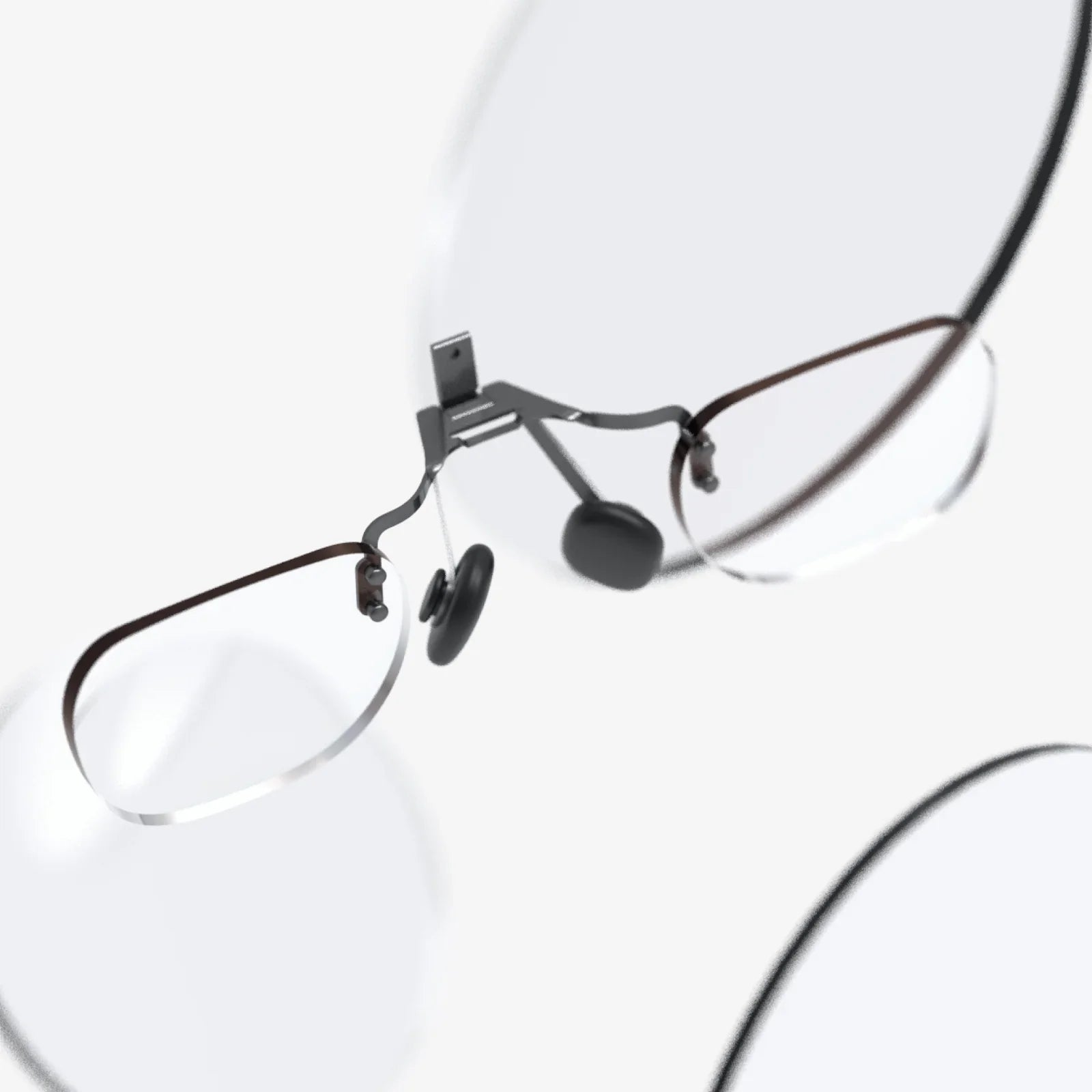
Imagine a world where your clothing diagnoses illness before symptoms appear, your glasses translate foreign languages in real-time, and your watch doesn't just track your heart rate but predicts stress and helps you manage it. This isn't a distant sci-fi fantasy; it's the rapidly converging reality of wearables, a technological revolution that is moving from our wrists and pockets directly onto and into our bodies, fundamentally altering the human experience. The true meaning of wearables extends far beyond the gadgetry; it represents a profound shift in how we understand ourselves, interact with data, and navigate our environment.
Deconstructing the Term: What Does "Wearable" Truly Mean?
At its most fundamental level, a wearable is any kind of electronic device designed to be worn on, attached to, or even implanted in the user's body. This simple definition, however, belies a complex ecosystem of technology, design, and human-computer interaction. The core meaning hinges on three critical attributes: wearability, connectivity, and intelligence.
Wearability implies a seamless integration with the user's form and lifestyle. It's not just about being portable, like a smartphone in a pocket. It's about being an unobtrusive, often always-on, extension of the self. This demands a focus on ergonomics, comfort, and aesthetics that traditional technology rarely requires.
Connectivity is the lifeline of a modern wearable. Through Bluetooth, Wi-Fi, or cellular links, these devices become nodes in a larger network, feeding data to smartphones, cloud platforms, and other devices. This transforms them from isolated data loggers into interactive portals to the digital world.
Finally, intelligence is what separates a modern wearable from a simple pedometer. Embedded sensors gather raw data—acceleration, light, sound, electrical signals from the heart—and onboard algorithms or cloud-based artificial intelligence process this data into actionable insights: steps taken, sleep stages analyzed, atrial fibrillation detected.
A Brief History: From Abacus Rings to AI Companions
The human desire to augment ourselves with technology is not new. We can trace the conceptual lineage of wearables back centuries. The 16th-century invention of the Nuremberg Egg, a portable watch worn as a necklace, was a landmark in personal technology. In the 1960s, mathematicians Edward Thorp and Claude Shannon built a wearable computer to predict roulette wheels. However, the modern era began in earnest in the late 20th and early 21st centuries.
The rise of miniaturized sensors, low-power microprocessors, and ubiquitous wireless connectivity created the perfect storm. The first wave was dominated by fitness trackers, simple devices focused on counting steps and calories. They democratized self-quantification, introducing millions to the concept of tracking personal data. The subsequent wave saw the rise of the smartwatch, which added notification mirrors and basic apps, becoming a companion to the smartphone.
Today, we are in the third wave: contextual and predictive wearables. Devices are no longer just reporting what you did; they are analyzing what you are doing and suggesting what you should do next. They are becoming proactive health guardians and ambient computing interfaces.
The Technological Pillars: Sensors, Data, and AI
The magic of wearables is powered by a sophisticated stack of technology. It starts with the sensor suite, the device's window to the user's physical world.
- Inertial Measurement Units (IMUs): These accelerometers and gyroscopes are the workhorses, detecting movement, orientation, and step count.
- Optical Photoplethysmography (PPG): This technology uses green LED lights flashed onto the skin to detect blood volume changes, enabling heart rate monitoring and, increasingly, blood oxygen saturation (SpO2) readings.
- Electrocardiogram (ECG): By requiring the user to touch a electrode on the device, it measures the heart's electrical activity, capable of identifying arrhythmias like atrial fibrillation.
- Global Positioning System (GPS): Provides precise location and speed data for mapping runs, cycles, and hikes without a phone.
- Microphones and Speakers: Enable voice assistants and call functionality.
- Emerging Sensors: Continuous glucose monitors (CGMs), electrodermal activity (EDA) sensors for stress, and temperature sensors are pushing the boundaries further.
This sensor data is a river of raw numbers. The real value is extracted through data science and artificial intelligence. Machine learning models are trained on vast datasets to recognize patterns: the difference between swimming and running, the signature of poor sleep quality, or the subtle electrical pattern of a dangerous heart rhythm. This is where a wearable transitions from a measurement tool to an intelligent advisor.
Beyond Fitness: The Expansive Universe of Wearable Form Factors
While wrist-worn devices dominate the market, the world of wearables is far more diverse and innovative.
Smart Clothing: Fabrics are being woven with conductive threads and embedded sensors, creating shirts that monitor posture, shoes that analyze running gait, and socks that track an infant's vital signs. This represents the ultimate in unobtrusive monitoring, integrating technology directly into what we already wear every day.
Hearables: Advanced wireless earbuds do more than play music. They incorporate accelerometers for head-gesture controls, translate languages in near-real-time, amplify sounds in noisy environments, and monitor core body temperature. They are becoming powerful auditory computers.
Smart Glasses and Augmented Reality (AR): This is perhaps the most transformative category. AR glasses overlay digital information onto the real world. For enterprise, this means hands-free instructions for a mechanic or real-time inventory data for a warehouse worker. For consumers, it could mean navigation arrows painted onto the street or historical information appearing when looking at a landmark.
Medical and Clinical-Grade Devices: This is a critical frontier. Wearables are evolving from consumer wellness gadgets into FDA-approved medical devices. Patches that monitor ECG for weeks at a time, continuous glucose monitors for diabetics, and smart inhalers for asthma patients are providing clinicians with unprecedented, continuous streams of real-world data, moving healthcare from reactive to proactive and preventive.
The Human Impact: How Wearables Are Reshaping Our Lives
The meaning of wearables is ultimately defined by their impact on human behavior, health, and society.
The Quantified Self Movement: Wearables have fueled a cultural shift towards self-knowledge through numbers. Millions now have access to data about their sleep, activity, and physiology that was once available only in specialized labs. This can empower individuals to make healthier choices, understand their bodies' responses to stress, and optimize their performance.
The Future of Healthcare: The potential here is staggering. Remote patient monitoring allows doctors to track recovering patients at home, reducing hospital readmissions. Large-scale, longitudinal health data gathered from wearables can accelerate medical research, helping to identify early biomarkers for diseases like Parkinson's or Lyme disease. They enable a shift from episodic care (visiting the doctor when you're sick) to continuous, personalized health management.
Enhanced Safety and Security: Fall detection for the elderly, emergency SOS features, and location sharing have made wearables vital safety tools. In industrial settings, wearables can monitor workers' vitals to prevent heat stress or fatigue-related accidents.
Seamless Human-Computer Interaction: Wearables are making technology more ambient and intuitive. Paying with a flick of the wrist, controlling smart home devices with voice commands, or receiving haptic navigation cues are all steps towards a future where technology recedes into the background, serving us without requiring our constant attention.
The Flip Side: Navigating the Challenges and Ethical Quandaries
This powerful technology does not come without significant challenges that define its responsible meaning.
Data Privacy and Security: Wearables collect the most intimate data possible: where you go, how you sleep, the rhythm of your heart. This data is incredibly valuable and must be protected with robust encryption and clear, user-centric privacy policies. The risk of data breaches, unauthorized surveillance, and the use of this data for insurance or employment discrimination is a serious concern.
Data Accuracy and Medical Validation: Not all data from consumer wearables is clinically accurate. Relying on a heart rate reading for medical decision-making can be dangerous if the device hasn't been rigorously validated. The industry faces a challenge in balancing consumer-friendly design with medical-grade accuracy and clear communication about a device's limitations.
The Anxiety of Constant Monitoring: The quantified self can sometimes become the anxious self. An obsession over sleep scores or a resting heart rate can lead to orthosomnia (the unhealthy pursuit of perfect sleep data) and heightened health anxiety. The constant feedback loop can be motivating for some but overwhelming for others.
The Digital Divide: As wearables become more integral to health management, a gap could emerge between those who can afford these technologies and those who cannot, potentially exacerbating existing health disparities.
Battery Life and E-Waste: The constant need to charge devices and the relatively short lifespan of consumer electronics contribute to the growing problem of electronic waste. Developing longer-lasting batteries and sustainable recycling programs is crucial.
The Next Frontier: Where Do We Go From Here?
The evolution of wearables is accelerating towards even deeper integration with our biology. The next decade will likely see the rise of:
- Advanced Biomonitoring: Non-invasive continuous blood pressure monitoring, hydration levels, and even early detection of infections through biomarkers in sweat.
- Brain-Computer Interfaces (BCIs): Devices that read neural signals to control external software or devices, offering new possibilities for people with paralysis and eventually new forms of communication for everyone.
- True Ambient Computing: A network of wearables and smart environments working in concert to anticipate your needs without explicit commands, creating a personalized and responsive digital aura.
- Embeddables and Bio-Integrative Devices: The line between "wearable" and "implantable" will blur, with devices designed to be placed under the skin for long-term monitoring or drug delivery, dissolving after their useful life is over.
The ultimate meaning of wearables is not found in the circuit boards and sensors, but in the enhanced human agency they promise. They are the bridge between our analog bodies and the digital universe, a tool for unprecedented self-understanding, and a catalyst for a more proactive, personalized, and empowered approach to life itself. They challenge us to ask not just "what can we track?" but "what does it mean to be human in a connected age?" and "how can we use this knowledge to build a healthier, safer, and more equitable future?" The device on your wrist is just the beginning.
Your next heartbeat, your next step, your next thought—each is a data point in the grand story of your life, and the next generation of wearables will be there not just to record it, but to understand it, enrich it, and protect it in ways we are only beginning to imagine. The era of passive observation is over; the age of active, intelligent augmentation has arrived, and it's waiting to be worn.
Share:
New Hologram Tech: The Dawn of a Truly Immersive Digital Reality
Newest Quest VR: A Deep Dive into the Next Generation of Immersive Technology