


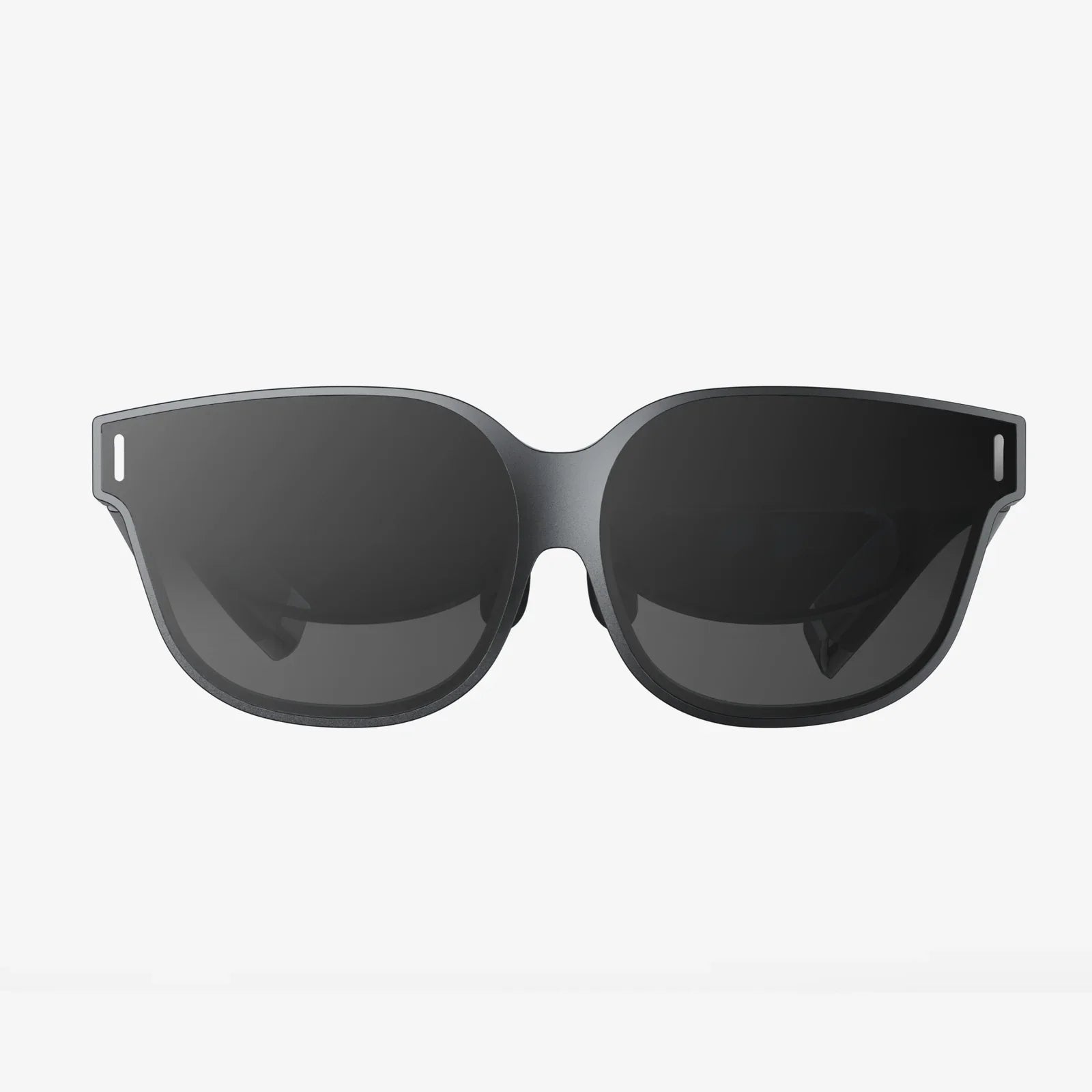
Imagine a world where digital information doesn’t live on a screen in your hand, but is seamlessly painted onto the canvas of your reality, enhancing everything you see, know, and do. This is the captivating promise of modern augmented reality glasses, a category of wearables that is rapidly ascending to the top of the tech conversation, moving from science fiction fantasy to tangible, transformative reality. These devices are poised to become the most personal and powerful computers we have ever known, offering a glimpse into a future where the line between the physical and digital worlds gracefully dissolves.
The Evolution of Seeing: From Basic Wearables to Visual Intelligence
The journey of wearable technology has been one of miniaturization and integration. It began with devices that we carried, then moved to those we wore on our wrists, tracking steps and displaying notifications. These were the first steps toward a more integrated digital self. However, the true pinnacle of wearable technology has always been the human field of vision. Our eyes are our primary conduit for information, processing vast amounts of data about our environment every second. It is only logical that the next great leap would be to augment this very sense.
Early attempts at smart eyewear were often clunky, socially awkward, and limited in functionality. They were prototypes in the wild, testing the waters of public perception and technological capability. Today, the landscape is dramatically different. The current generation of top-tier AR glasses represents a convergence of several critical technological advancements that have finally reached a maturity point, making sophisticated augmented reality not just possible, but practical and powerful.
The Architectural Marvels: Deconstructing Modern AR Glasses
What separates the leading AR wearables from their predecessors is a sophisticated fusion of hardware and software, each component working in concert to create a convincing and useful augmented experience.
The Optics: Windows to a New World
At the heart of any AR glasses is its optical system. This is the magic that projects digital images into the user's eyes, making them appear as part of the real world. The top contenders in the market employ advanced solutions like waveguides, micro-LED displays, and holographic optical elements. These technologies allow for bright, high-resolution graphics to be overlaid onto the real world without obstructing the user's natural vision. The challenge of creating a wide field of view, high contrast, and a comfortable eye box—all within the slim form factor of regular eyeglasses—has been one of the greatest hurdles, and the solutions being implemented today are nothing short of engineering marvels.
Spatial Mapping and Computer Vision: The Digital Nervous System
For digital content to interact believably with the physical environment, the glasses must understand that environment in real-time. This is achieved through a suite of sensors, including depth-sensing LiDAR scanners, high-resolution cameras, and inertial measurement units (IMUs). These sensors continuously scan the room, creating a precise 3D mesh, understanding surfaces, edges, and objects. This spatial awareness allows a virtual dragon to perch convincingly on your real-world coffee table or enables digital sticky notes to remain fixed on your physical refrigerator door.
Processing Power and Connectivity: The Brain Behind the Lenses
The computational demand for processing high-fidelity graphics and complex sensor data in real-time is immense. The best AR glasses balance on-device processing for low-latency responses (like hand-tracking) with off-device cloud computing for more intensive tasks. This hybrid approach, often facilitated by a high-speed wireless connection to a companion device or cloud server, ensures a smooth and responsive experience without overloading the glasses with heat-generating components that would make them uncomfortable to wear.
Beyond Novelty: The Transformative Applications
The true measure of any technology is its utility. The top AR glasses are moving beyond cool demos to solve real-world problems across diverse sectors.
Revolutionizing Enterprise and Manufacturing
Perhaps the most immediate and impactful adoption is happening in industrial settings. Technicians can have repair manuals and schematic diagrams hover over the machinery they are fixing, with animated instructions guiding their every move. Warehouse workers can see optimal picking routes and item information displayed directly in their line of sight, dramatically increasing efficiency and reducing errors. Architects and engineers can walk through full-scale 3D models of their designs, making adjustments in real-time. This hands-free, information-rich paradigm is unlocking new levels of productivity and safety.
Redefining Social Connection and Remote Collaboration
AR glasses have the potential to shatter the limitations of traditional video calls. Instead of looking at a grid of faces on a flat screen, imagine a remote colleague appearing as a photorealistic hologram in your living room, able to gesture toward and manipulate 3D models that you both can see. This creates a profound sense of presence and shared space, making remote collaboration more natural and effective than ever before. It’s a significant step toward the vision of a 'metaverse' that is grounded in and enhances our physical reality, rather than replacing it.
Unlocking New Dimensions in Navigation and Exploration
Navigation will evolve from following a blue dot on a map to having glowing directional arrows and street names painted onto the sidewalk in front of you. Tourists will be able to look at a historic building and see it restored to its former glory, with informational overlays detailing its history. At a conference, you could glance at a attendee and see their name and professional background discreetly displayed, making networking seamless. The world itself becomes an interactive, information-rich interface.
The Hurdles on the Horizon: Challenges to Mainstream Adoption
Despite the incredible progress, the path to the AR glasses becoming as ubiquitous as smartphones is fraught with significant challenges that the industry must overcome.
The Form Factor Conundrum
The ultimate goal is a pair of glasses that are indistinguishable from regular fashion eyewear—lightweight, comfortable, and stylish enough to be worn all day. While current designs are leaps ahead of earlier prototypes, achieving all-day battery life, powerful computing, and advanced optics in a truly minimal form factor remains the holy grail. Compromises in battery life, field of view, or computing power are often still necessary.
The Privacy Paradox
Devices equipped with always-on cameras and microphones understandably raise serious privacy concerns. The potential for unauthorized recording or data collection is a societal fear that must be addressed head-on. The leading companies in this space are investing heavily in privacy-first features, such as physical camera shutters, clear LED indicators that show when recording is active, and on-device processing that anonymizes data immediately. Building and, crucially, earning trust will be essential for public acceptance.
Crafting the Killer App
While enterprise has found its killer app in remote assistance and guided workflows, the consumer market is still searching for that must-have application. Is it immersive gaming? Revolutionary social media? Seamless contextual computing? The platform that successfully identifies and delivers that transformative consumer use case will likely emerge as the market leader.
The Future is Through Your Lenses
We are standing at the precipice of a new computing revolution. The transition from centralized desktops to personal laptops to always-connected smartphones each fundamentally changed how we live and work. AR glasses represent the next logical step in this progression: ambient computing. Instead of looking down at a device, information and assistance will be contextually available within our environment, available at a glance or a voice command.
In the coming years, we can expect these wearables to become increasingly sophisticated. Advancements in battery technology, perhaps through solar-charging lenses or more efficient cells, will extend usage. AI integration will become more profound, acting as a true personal assistant that sees what you see and anticipates your needs. The development of more responsive and intuitive input methods, from advanced voice control to subtle gesture recognition and even neural interfaces, will make the interaction feel like magic.
The journey toward perfect AR glasses is a marathon, not a sprint. But the current pace of innovation suggests that the future we once dreamed of is closer than it appears. The top AR glasses of today are not just a new product category; they are the early prototypes for a new layer of human experience, a platform upon which we will build realities we are only beginning to imagine. The world is about to get a major upgrade, and it will be delivered through a pair of lenses.
This isn't just about checking notifications or playing games; it's about fundamentally expanding human capability. The ability to instantly recall information about anything you look at, to communicate with anyone in the world as if they were standing beside you, to learn and create in three dimensions—this is the profound potential waiting just beyond the horizon. The race to perfect this technology is on, and the winner will not just top the wearables market; they will help write the next chapter of human history, one augmented glance at a time.
Share:
Virtual Workspaces for Personal Use: The Ultimate Guide to Your Digital Sanctuary
Current Artificial Intelligence Technology: Reshaping Reality, One Algorithm at a Time