


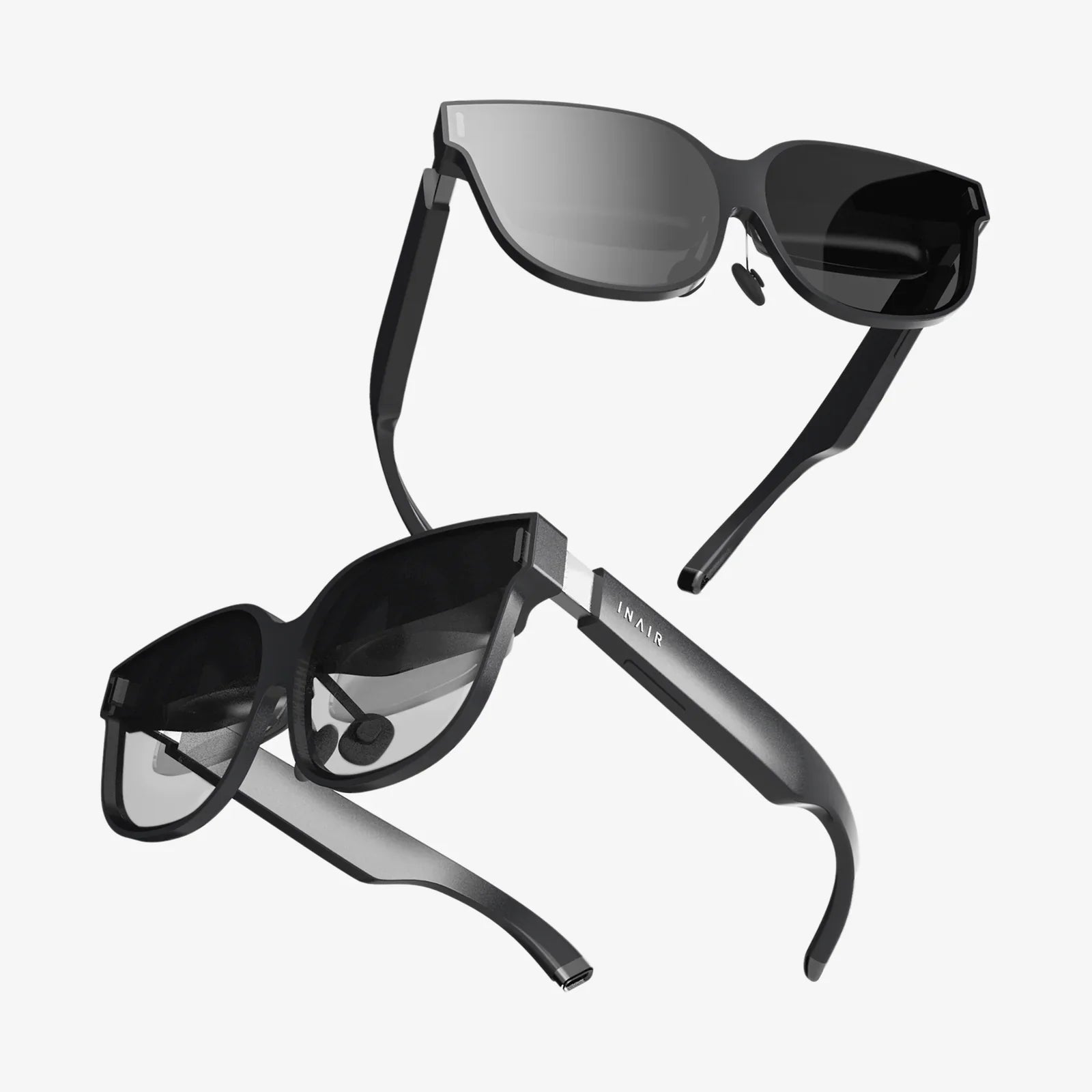
Imagine a world where digital information isn't confined to a screen but is seamlessly woven into the fabric of your everyday life. You look at a city street and see historical facts floating beside ancient buildings, instructions materialize over your broken car engine as you repair it, and a mythical creature peeks out from behind your sofa. This is not a distant science fiction fantasy; it is the emerging reality powered by a revolutionary technology that is blurring the lines between the physical and the digital. This is the promise of augmented reality, and understanding it is the first step into a new dimension of human-computer interaction.
Defining the Digital Overlay: More Than Just a Filter
At its most fundamental level, augmented reality (AR) is an interactive experience that enhances the real world by superimposing computer-generated perceptual information onto it. Unlike Virtual Reality (VR), which creates a completely artificial environment for the user to immerse themselves in, AR takes your existing reality and adds to it. The key differentiator is that AR allows you to remain present in your physical space while digital content is layered on top of it. This digital overlay can take myriad forms: 3D models, text, images, video, and even haptic feedback. The goal is not to replace reality but to supplement it, providing information, context, and experiences that would otherwise be invisible.
The Technological Symphony: How AR Works Its Magic
Creating a convincing and interactive augmented experience is a complex technological feat that requires a harmonious collaboration of hardware and software.
Sensors and Cameras: The Eyes of AR
The process begins with perception. Cameras act as the primary eyes, continuously capturing the user's real-world environment. This visual data is then processed in real-time. However, cameras alone are not enough. A suite of advanced sensors is crucial for AR to understand its position in space. These typically include:
- Accelerometers and Gyroscopes: These measure the velocity, orientation, and rotational rate of the device, answering the question, "How is the device moving?"
- Magnetometers: Essentially a digital compass, they detect the Earth's magnetic field to determine the device's orientation relative to north.
- Light Detection and Ranging (LiDAR): More advanced systems use LiDAR scanners, which fire out millions of pulses of invisible laser light to measure the exact distance to surrounding objects. This creates a precise depth map of the environment, allowing digital objects to accurately occlude and be occluded by real-world geometry.
- Global Positioning System (GPS): For outdoor, large-scale AR, GPS provides coarse location data to place context-aware information in the right part of the world.
Processing: The Brain Behind the Operation
The raw data from these sensors is fed into a processing unit, which performs a critical task called simultaneous localization and mapping (SLAM). SLAM algorithms allow the device to both map the unknown environment and track its own location within that map at the same time. It identifies unique feature points in the room, tracks them across frames, and uses this information to understand the device's precise position and trajectory in 3D space. This is what allows a digital dragon to sit convincingly on your coffee table, staying locked in place even as you walk around it.
Projection and Display: Painting the World with Light
Once the environment is understood and the digital content is positioned, it must be displayed to the user. This is achieved through several methods:
- Smartphone and Tablet Screens: The most accessible form of AR, where the device's camera captures the world and the screen displays the augmented view.
- Smart Glasses and Headsets: These wearable devices use miniature projectors and waveguides or semi-transparent mirrors to beam light directly into the user's eyes, creating the illusion that digital objects exist in the real world. This offers a hands-free, more immersive experience.
- Heads-Up Displays (HUDs): Long used in fighter jet cockpits and now in some automotive windshields, HUDs project critical information like speed and navigation directions into the driver's line of sight.
A World of Applications: AR Beyond Novelty
The true power of AR is revealed not in isolated tech demos but in its practical, transformative applications across nearly every sector.
Revolutionizing Retail and E-Commerce
AR is solving one of the internet's oldest shopping problems: the inability to try before you buy. Furniture retailers now allow customers to place true-to-scale 3D models of sofas, tables, and lamps directly in their living rooms to see how they fit and match their decor. Fashion brands offer virtual try-on for glasses, makeup, and even clothes, drastically reducing return rates and increasing consumer confidence. This "see-it-in-your-space" functionality is turning homes into showrooms and democratizing the design process.
Transforming Education and Training
AR has the potential to turn any classroom into an interactive learning hub. Instead of staring at a static diagram of the human heart in a textbook, students can use a device to make a beating, interactive 3D heart appear on their desk, allowing them to explore its chambers and valves from every angle. History lessons can come alive with historical figures reenacting events on the school grounds. For complex industrial and medical training, AR provides safe, repeatable, and cost-effective simulations. A trainee surgeon can practice a procedure on a virtual patient, and a mechanic can see step-by-step repair instructions overlaid directly onto the engine they are working on.
Enhancing Industrial and Manufacturing Workflows
In factories and on construction sites, AR is a powerful tool for efficiency and accuracy. Warehouse workers equipped with smart glasses can see digital picklists and navigation paths overlaid on the aisles, guiding them instantly to the correct items. Architects and engineers can project full-scale building plans onto a construction site to verify measurements and identify potential clashes before a single brick is laid. This "see-what-I-see" capability also enables remote expert assistance, where an off-site expert can see a technician's view and annotate the real world with arrows and notes to guide them through a complex repair.
Reimagining Healthcare
The healthcare industry is leveraging AR for both practitioners and patients. Surgeons can use AR overlays to visualize critical information like a patient's vitals or the precise location of a tumor during an operation without looking away from the surgical field. It can also aid in difficult medical procedures like venipuncture, by projecting a map of a patient's veins onto their skin. For patients, AR apps can provide interactive 3D models to help explain a diagnosis or condition, making complex medical information more understandable and less intimidating.
Creating New Forms of Entertainment and Social Connection
The gaming world was introduced to AR's mass-market potential through games that turned parks into hunting grounds for digital creatures and living rooms into dance floors for virtual idols. Beyond gaming, AR is creating new social experiences through filters and effects that allow users to express themselves in playful ways. Live events and concerts are incorporating AR, enabling attendees to point their devices at the stage to see stunning visual effects that are invisible to the naked eye, creating a shared experience that blends the live and the virtual.
The Flip Side of the Coin: Challenges and Ethical Considerations
As with any powerful technology, the widespread adoption of AR brings forth a host of challenges that society must grapple with.
Privacy in a Super-Sensed World
AR devices, by their very nature, are data collection powerhouses. They have always-on cameras and microphones, constantly scanning and interpreting the world around the user. This raises profound privacy questions. Who has access to this continuous stream of data? How is it stored and used? The potential for surreptitious surveillance is significant, not just by corporations for advertising, but by governments and malicious actors. The concept of "visual eavesdropping"—where an AR device could automatically recognize and display personal information about a stranger in a crowd—presents a clear threat to personal anonymity in public spaces.
The Digital Divide and Accessibility
High-quality AR experiences currently require powerful processors and advanced sensors, which are often found in expensive devices. This creates a risk of a new "AR divide," where only those who can afford the latest technology can access the productivity, educational, and social benefits it offers. Furthermore, designing intuitive and accessible AR interfaces for people with disabilities is a critical challenge that must be addressed from the outset to ensure the technology is inclusive.
Physical Safety and Psychological Effects
Walking around with a portion of your field of view occupied by digital content poses obvious physical risks, from tripping over obstacles to the dangers of distracted driving. There are also concerns about the long-term psychological effects. If we become accustomed to a world where we can filter out unpleasant realities or constantly customize our perception, will it diminish our ability to cope with the un-augmented world? The line between enhancement and escapism is a thin one.
The Future is Augmented: What Lies Ahead?
The trajectory of AR points towards a future where the technology becomes smaller, more powerful, and more integrated into our daily lives. The ultimate goal is a pair of lightweight, socially acceptable glasses that can replace all other screens. The development of more sophisticated AI will be crucial, enabling AR systems to understand context and intent at a deeper level, moving from simple overlays to truly intelligent assistants that anticipate our needs. The convergence of AR with other technologies like 5G (for lightning-fast data streaming) and the Internet of Things (connecting digital overlays to smart objects) will unlock even more powerful and context-aware applications.
The journey into this augmented world has already begun, and it extends far beyond playful filters and games. It is a foundational shift in how we compute, learn, work, and connect with each other and our environment. It promises to make us more knowledgeable, more efficient, and more creative. But navigating this new frontier requires careful thought, robust ethical frameworks, and a collective commitment to building an augmented future that enhances humanity without diminishing our reality. The device in your pocket or the glasses on your face are not just viewing portals; they are the paintbrushes with which we will all begin to color the world with a new layer of meaning.
Share:
Augmented Reality in Commerce: The Future of Shopping is Here
What Are Smart Sunglasses: The Ultimate Guide to High-Tech Eyewear