


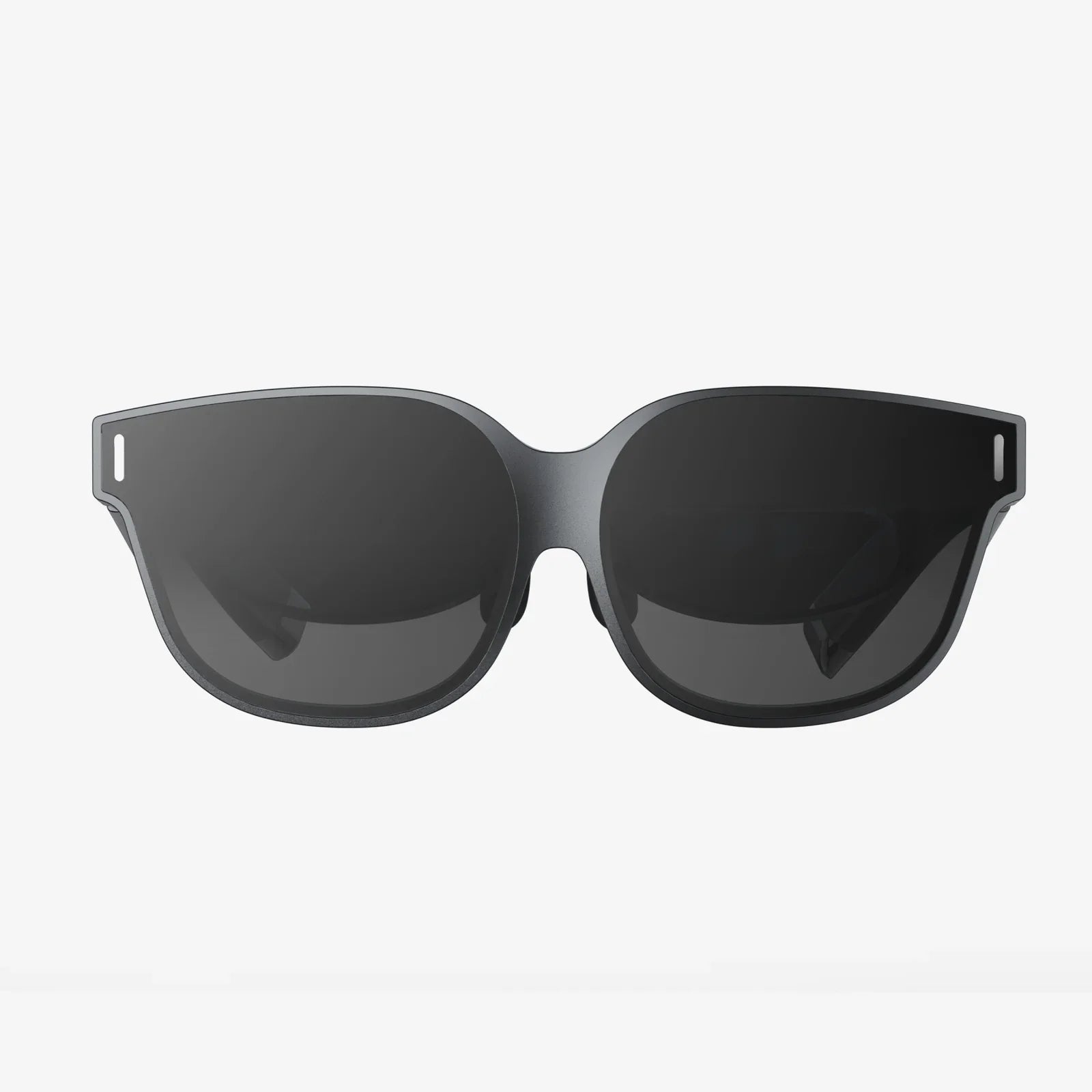
Imagine slipping on a pair of sleek, futuristic glasses and instantly being transported from your living room to the surface of Mars, the depths of the ocean, or a surgical operating theater. This is the fundamental promise and primary function of virtual reality goggles—to act as a portal, completely replacing your natural environment with a simulated one. They are not merely screens you look at; they are engines for experience, meticulously designed to trick your brain into accepting a digital world as reality. The question of what these devices do opens a door to understanding one of the most transformative technologies of the 21st century, reshaping everything from how we play games to how we train surgeons and architects.
The Core Function: Crafting a Convincing Illusion
At their most basic level, VR goggles are head-mounted displays (HMDs). But to label them as just displays is a profound understatement. Their primary mission is to achieve a state of immersion, the sensation of being physically present in a non-physical world. This is accomplished through a sophisticated symphony of hardware and software working in perfect harmony.
The most obvious component is the visual system. Inside the headset, one or two high-resolution screens are placed mere centimeters from your eyes. Specialized lenses are positioned between your eyes and these screens, warping the flat image into a stereoscopic, three-dimensional field of view. This creates the crucial effect of depth perception. Unlike a cinema screen where everything exists on a single plane, a VR world has near and far, allowing you to intuitively judge distances. The field of view is also critical; higher-end devices offer a wider field of view, reducing the "binocular" or "scuba mask" effect and making the virtual world feel more expansive and natural.
However, vision is only one sense. For true immersion, the illusion must be maintained when the user moves. This is where tracking technology comes into play. Using a combination of internal sensors (like gyroscopes, accelerometers, and magnetometers) and often external cameras or base stations, the goggles constantly monitor the position and orientation of your head—a process called head-tracked rendering. When you turn your head to the left, the world rendered inside the goggles shifts to the right in perfect, low-latency synchronization. This responsiveness is non-negotiable; even a slight delay between your physical movement and the visual feedback can break immersion and cause discomfort or nausea, often referred to as VR sickness. This relentless, real-time updating of the perspective is what sells the brain on the reality of the experience.
Beyond Sight: Engaging the Ears and Hands
A convincing virtual world is more than just something to look at. Spatial audio is a cornerstone of the VR experience. Built-in or attached headphones deliver 3D audio cues that change dynamically based on your head position. If a virtual bird is chirping to your right and you turn your head to face it, the sound will shift to appear as if it's directly in front of you. This auditory layer adds immense depth and realism, allowing you to locate objects and events in the digital space without even seeing them, just as you would in the real world.
Furthermore, what good is being inside a world if you can't interact with it? This is the role of motion controllers. These handheld devices are tracked alongside your head, allowing your virtual hands to appear inside the simulation. Through a combination of buttons, triggers, thumbsticks, and haptic feedback (small vibrations that simulate touch), these controllers become your hands, tools, and weapons. You can reach out, grab a virtual object, feel a rumble as you pull a trigger, or gesture to another user. More advanced systems even incorporate hand-tracking, using cameras on the goggles themselves to see your real hands and digits, eliminating the need for controllers altogether for certain interactions and deepening the sense of natural embodiment.
A Spectrum of Experiences: From Passive to Fully Interactive
The capabilities of VR goggles enable a vast spectrum of experiences, broadly categorized by their level of interactivity.
360-Degree Video and Cinematic VR
This is a more passive form of VR. Users are placed at the center of a pre-recorded, live-action or computer-generated video and can look around in any direction as if they are there. It's used for immersive journalism, allowing people to experience events from the center of the action, virtual tourism to visit far-flung locations, and narrative storytelling where the viewer chooses where to direct their attention.
Interactive Gaming and Social Experiences
This is the most well-known application. VR goggles transform gaming from a button-pressing exercise on a screen into a physically embodied adventure. You duck behind cover, swing a virtual sword, solve spatial puzzles by manipulating objects with your hands, and feel a genuine sense of presence within the game world. Social VR platforms take this further, allowing users to inhabit shared virtual spaces as customizable avatars. They can attend concerts, meetings, or simply hang out with friends, communicating through voice and gesture, making distance feel irrelevant.
Enterprise and Professional Simulation
Beyond entertainment, VR goggles are powerful professional tools. They are used for:
- Training and Simulation: Pilots train in virtual cockpits, surgeons practice complex procedures on virtual patients without risk, and mechanics learn to repair machinery in a safe, virtual environment. This allows for perfect repetition, assessment, and training for high-stakes scenarios.
- Design and Prototyping: Architects and engineers use VR to walk clients through unbuilt buildings at a 1:1 scale. Automotive designers can sit inside a virtual model of a car to assess ergonomics and aesthetics long before a physical prototype is made, saving immense time and resources.
- Therapy and Rehabilitation: Therapists use controlled VR environments to treat phobias (like fear of heights or flying) through gradual exposure. It's also used for physical rehabilitation, where engaging games encourage patients to perform repetitive motions to regain motor skills.
- Data Visualization: Scientists and data analysts can step inside complex data sets, from molecular structures to vast networks of information, exploring them spatially to gain insights that are difficult to achieve on a flat monitor.
Considerations and The Future of Presence
Despite their power, VR goggles are not without limitations. Cost, the need for significant processing power (often from a connected computer or console), and the physical space required for room-scale experiences can be barriers. As mentioned, VR sickness remains a challenge for some users, though advancements in display technology (higher refresh rates) and better software are continually mitigating this issue. There are also ongoing discussions about long-term social and psychological effects, privacy in virtual spaces, and the need for ethical design.
Looking forward, the technology is rapidly evolving. The next generation of VR goggles is moving towards:
- Varifocal Displays: Systems that track your eyes and adjust the focus of the lenses to simulate how we naturally focus on near and far objects, solving the current issue where all virtual objects are on a single focal plane.
- Enhanced Haptics: Moving beyond simple controller rumbles to full-body haptic suits and gloves that can simulate touch, pressure, and temperature.
- Brain-Computer Interfaces (BCIs): Experimental research is exploring ways to interpret neural signals, potentially allowing for control and interaction through thought alone.
- Photorealistic Graphics: As rendering power increases, virtual worlds will become indistinguishable from reality, further blurring the line between the physical and the digital.
So, what do virtual reality goggles do? They are far more than a gaming peripheral or a novelty. They are a paradigm-shifting interface between humans and computers. They function as a vehicle for empathy, allowing us to see the world through another's eyes; a master key for training, unlocking muscle memory and knowledge without real-world consequence; a canvas for creation, letting architects and artists build and inhabit their visions; and ultimately, a mirror for our own reality, challenging our perceptions of presence, connection, and what is truly real. The headset itself is just the beginning—it's the experiences they unlock and the human potential they empower that truly defines their purpose. The door to countless new realities is now open, waiting for you to take the step through.
Share:
Virtual Reality Price Range: A Comprehensive Guide to Finding Your Perfect Headset
How to Make Virtual Reality Goggles: A Comprehensive DIY Guide