


Imagine pointing your device at the night sky and watching the names and constellations of stars paint across the cosmos, or looking through a maintenance manual where animated instructions hover directly over the engine part you need to fix. This is the magic of Augmented Reality (AR), a technology not of distant science fiction, but of our immediate present, quietly weaving a digital layer into the very fabric of our everyday lives. It’s a paradigm shift in how we interact with information, and understanding its mechanics and potential is key to navigating the future.
Demystifying the Acronym: More Than Just a Definition
At its simplest, Augmented Reality (AR) is an interactive experience that enhances the real world by superimposing computer-generated perceptual information onto it. Unlike Virtual Reality (VR), which creates a completely artificial digital environment, AR uses the existing environment and simply adds new information or virtual objects on top of it. The core idea is augmentation, not replacement. It’s about enriching your reality, not escaping from it.
This augmentation can engage multiple senses, but it is primarily a visual technology. The overlaid information can be anything from simple text labels and flat images to complex, animated 3D models. The critical factor is that this digital content is contextually aware and anchored to the physical world in real-time, responding to changes in the user's environment and perspective.
A Journey Through Time: The Evolution of Augmented Reality
While it feels like a modern innovation, the conceptual seeds of AR were planted decades ago. In 1968, computer scientist Ivan Sutherland, with the help of his student Bob Sproull, created what is widely considered the first head-mounted display system, nicknamed “The Sword of Damocles.” It was a primitive and terrifyingly cumbersome apparatus that displayed simple wireframe graphics, but it laid the foundational principle.
The term "Augmented Reality" itself was coined much later, in 1990, by researchers Thomas P. Caudell and David Mizell at Boeing. They were working on a system to help factory workers assemble electrical cables in aircraft by projecting digital diagrams onto the physical boards, a brilliant early example of AR's practical utility.
The technology remained largely within military and industrial research labs until the 21st century. The catalyst for its mainstream explosion was, unsurprisingly, the smartphone. The convergence of powerful processors, high-resolution cameras, accurate sensors (like GPS, accelerometers, and gyroscopes), and ubiquitous internet connectivity turned every phone into a potential AR portal. The viral sensation of a certain location-based mobile game in 2016 demonstrated AR's potential for mass entertainment, introducing millions to the concept virtually overnight.
The Engine Room: How Augmented Reality Actually Works
The seamless magic of AR is powered by a sophisticated technological ballet happening in milliseconds. The process can be broken down into a few key steps:
1. Sensing and Perception
The system first must understand the world it's looking at. Using cameras and sensors, it captures the user's environment. Advanced algorithms then analyze this data to perform critical tasks like simultaneous localization and mapping (SLAM). SLAM allows the device to both map the environment (identifying floors, walls, and surfaces) and pinpoint its own location within that map simultaneously. This creates a spatial understanding, a digital twin of the space, which is essential for placing virtual objects convincingly.
2. Processing and Alignment
Once the environment is understood, the software decides what digital content to display and, crucially, where to place it. This involves complex calculations to ensure the virtual object's position, scale, orientation, and lighting are consistent with the physical world. It must occlude correctly (e.g., a virtual dinosaur should walk behind a real tree, not in front of it), and its shadows should match the direction of the real light source.
3. Rendering and Display
The final step is generating the composite image that blends the digital and the physical. This rendered view is then presented to the user through a display. This can be:
- Screen-Based AR: The most common form, using smartphones, tablets, or laptops. You see the blended world on the screen as the camera captures it.
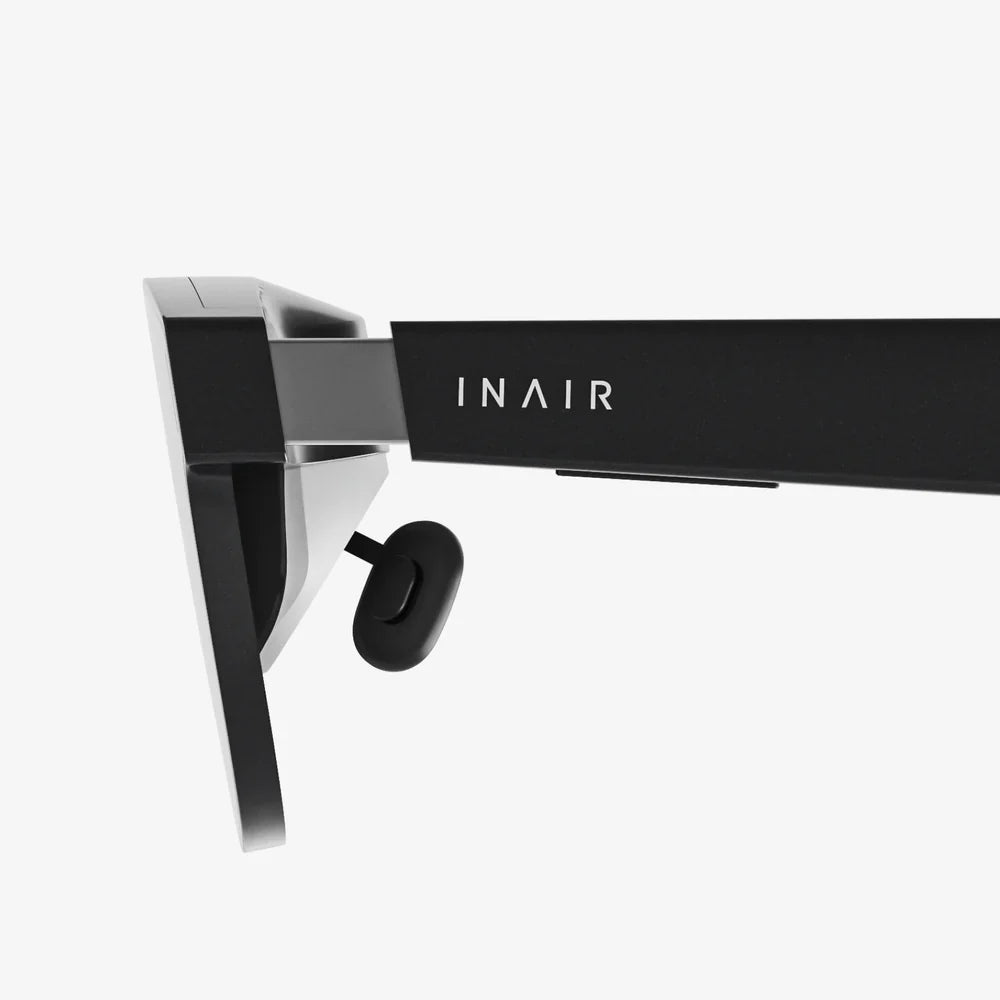
- Smart Glasses and Headsets: Wearable devices like optical see-through glasses that project images directly onto the lenses, allowing you to see digital content overlaid on the real world without holding a screen. These range from consumer-focused smart glasses to enterprise-grade headsets used in manufacturing and logistics.
- Projection-Based AR: Projecting light onto physical surfaces to create interactive displays, such as turning any tabletop into a touch-sensitive interface.
Beyond the Gimmick: The Transformative Applications of AR
While fun filters and games capture headlines, AR's most profound impact is happening in enterprise, education, and healthcare, solving real-world problems with startling efficiency.
Revolutionizing Retail and E-Commerce
AR is dismantling the biggest hurdle of online shopping: the inability to try before you buy. Customers can now use their phones to see how a new sofa would look in their living room, accurately scaled to their space. They can "try on" glasses, makeup, or even clothes virtually. This not only enhances consumer confidence and reduces return rates but also creates a more engaging and personalized shopping experience.
Enhancing Industrial Manufacturing and Maintenance
In factories and workshops, AR is a powerhouse for efficiency and accuracy. Technicians wearing AR headsets can see digital work instructions and animated guides overlaid directly on the machinery they are repairing, reducing errors and training time. Warehouse workers can have the most efficient picking routes and item information displayed in their field of view, dramatically speeding up logistics. Architects and engineers can visualize full-scale building models on empty construction sites, identifying potential design clashes before a single brick is laid.
Advancing Medical Training and Patient Care
In medicine, AR is literally providing a new perspective. Medical students can practice procedures on detailed, interactive 3D holograms of the human body, gaining invaluable experience without risk. Surgeons can use AR projections to visualize a patient's anatomy, such as the precise location of tumors or blood vessels, directly onto the patient during an operation, increasing precision and safety. It can also assist in complex vein detection for injections.
Reimagining Education and Learning
AR turns abstract concepts into tangible, interactive experiences. A history textbook page about ancient Rome can come alive with a 3D model of the Colosseum springing from it. Biology students can dissect a virtual frog. Astronomy classes can take a tour of the solar system from their classroom. This immersive, hands-on learning boosts engagement, improves knowledge retention, and caters to diverse learning styles.
Gazing into the Crystal Ball: The Future of Augmented Reality
The current state of AR is impressive, but it is merely the foundation for a far more integrated future. The next evolution is the move away from handheld screens towards more elegant, always-available wearable technology. The much-anticipated development of consumer-grade AR glasses that are socially acceptable, comfortable, and powerful enough for all-day use is considered the next major computing platform shift.
This future will be powered by advancements in several key areas:
- Spatial Computing: The environment itself becomes the interface. We will interact with digital content through gestures, voice, and gaze, manipulating holograms as naturally as physical objects.
- The AR Cloud: A persistent, shared digital copy of the world that allows AR experiences to be anchored to specific locations and persist over time, accessible to multiple users. Imagine leaving a virtual note for a friend on a restaurant table that only they can see when they arrive.
- AI Integration: Artificial Intelligence will make AR smarter and more contextual. Your AR device could recognize faces and display their name and last meeting notes, translate street signs in real-time, or identify plants and animals during a hike, all powered by on-device AI.
However, this exciting future is not without its challenges and ethical considerations. Widespread, always-on AR raises significant questions about data privacy (with devices constantly scanning environments), digital addiction, the creation of a new digital divide, and the potential for real-world spam and intrusive advertising. Establishing robust ethical frameworks and regulations will be just as important as the technological development itself.
The question is no longer just "what does AR mean" in a technical sense, but what it will mean for humanity. It promises a world where information is no longer confined to screens but is seamlessly integrated into our perception, enhancing our abilities, enriching our understanding, and redefining our connection to both the digital and physical realms. The layer is being added; the only limit is how we choose to use it.
Share:
What Are Trending Digital Products: The Hottest Tech Innovations Shaping Our Future
Next VR Goggles: The Future of Immersive Experience is Closer Than You Think