


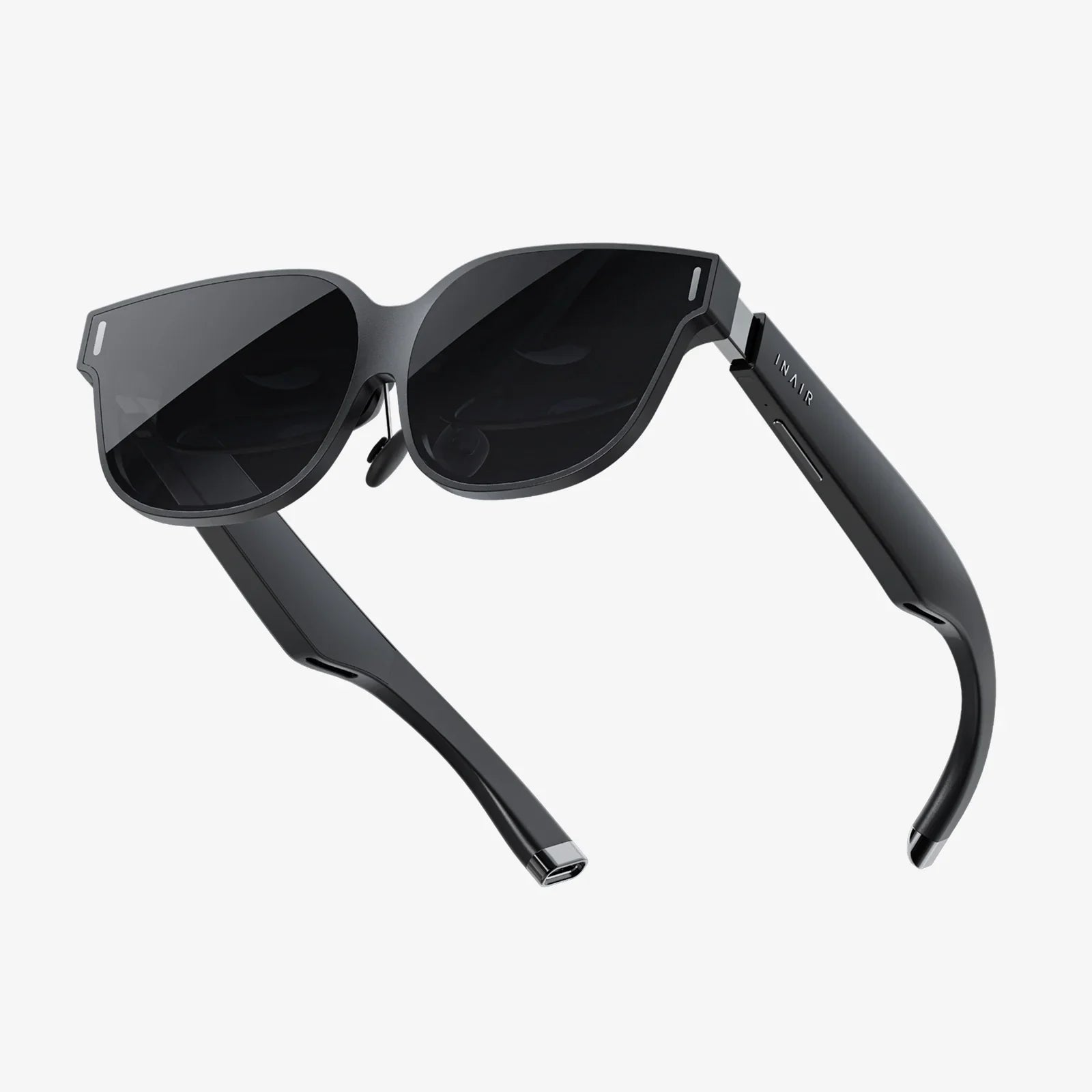
Imagine strapping a portal to another universe to your face. A device so sophisticated it can trick your brain into believing the impossible, transporting you to the peak of Mount Everest, the cockpit of a starfighter, or a canvas where you paint with light. This is the promise of virtual reality, a promise fulfilled not by magic, but by one of the most complex consumer electronics ever created: the VR headset. The journey from a concept to a comfortable, convincing, and compelling headset is a breathtaking ballet of physics, computer science, and human physiology. So, what does it take to make a VR headset? The answer is a symphony of components, each playing a critical role in the orchestra of immersion.
The Gateway to Other Realms: The Optical Stack
At the very heart of the VR experience are the optics. Their job is monumental: to take a tiny, high-resolution image from a screen positioned just inches from your eyes and transform it into a vast, clear, and comfortable panorama that fills your field of view. This is far more complex than simply placing a magnifying glass in front of a display.
The Displays: Painting with Pixels
The journey begins with the displays. These are not your average smartphone screens. They must be incredibly dense, packing millions of pixels into a space often smaller than a postage stamp to avoid the “screen door effect,” where users can discern the gaps between pixels, shattering immersion. High refresh rates are non-negotiable; typically 90Hz or higher is required to ensure smooth motion and minimize the latency that can lead to simulation sickness. The choice of technology is a constant trade-off between factors like response time, color accuracy, persistence, and power consumption. Furthermore, many modern systems utilize a technique called low-persistence display, which strobes the backlight to eliminate motion blur, a critical factor for maintaining visual clarity during rapid head movements.
The Lenses: The Architects of Light
If the displays are the painters, the lenses are the architects. Simple magnifying glasses would create massive distortions and chromatic aberrations (color fringing). Instead, VR headsets use custom-designed compound lenses, often based on Fresnel principles. These lenses are engineered with precise grooves to bend light correctly across the entire surface of the display, creating that wide field of view while keeping the overall form factor relatively slim. However, these lenses introduce their own challenges, such as “god rays”—unwanted visual artifacts caused by light scattering from the concentric grooves, particularly in high-contrast scenes. The quest for the perfect lens is ongoing, with advancements like pancake lenses and aspherical elements offering paths to thinner, lighter, and optically superior designs.
IPD and Focus: A Personal Portal
Human anatomy is not one-size-fits-all, and VR optics must account for this. A critical feature is Interpupillary Distance (IPD) adjustment. This mechanism, either physical or software-based, allows the lenses to be moved horizontally to align perfectly with the unique spacing of the user’s eyes. Proper IPD alignment is crucial for achieving stereoscopic depth, maximizing visual comfort, and preventing eye strain. Unlike the real world, most current VR headsets have a fixed focal plane, meaning the virtual world is rendered to appear at a specific distance. This creates a conflict known as the Vergence-Accommodation Conflict (VAC), where your eyes converge (cross) to look at a near object but must still focus at the fixed distance of the lens. This mismatch is a primary contributor to visual fatigue and is a key area of research, with experimental technologies like varifocal and light field displays seeking to solve it.
The Brain: Processing and Tracking
A beautiful image is useless if it’s laggy or disconnected from your movements. The processing systems are the central nervous system of the headset, responsible for creating the world and ensuring it reacts to you instantly and accurately.
Positional Tracking: Pinpointing the Self
Early VR offered rotational tracking (knowing if you looked left or right) but true immersion demands full 6 Degrees of Freedom (6DoF)—tracking your position as you lean, duck, walk, and crouch. This is achieved through a fusion of sensors. Inward-facing cameras track infrared dots on the controller, while outward-facing cameras perform Inside-Out Tracking. These cameras scan the physical environment, identifying unique features in the room to triangulate the headset’s position in real-time with millimeter accuracy. Inertial Measurement Units (IMUs)—containing gyroscopes, accelerometers, and magnetometers—provide ultra-high-frequency data on movement and rotation, filling in the gaps between camera updates to ensure buttery-smooth motion.
The Compute Power: Rendering Reality Twice
Rendering a VR experience is one of the most demanding tasks for a processing unit. It must generate two distinct, high-resolution images—one for each eye—at a frame rate that never dips below 90 frames per second. Any dropped frame or stutter is immediately perceptible and can break presence. This requires immense graphical horsepower, whether it’s supplied by an external, high-end dedicated processing unit connected via a cable or by a compact, thermally constrained mobile system-on-a-chip (SoC) inside a standalone headset. This trade-off between power and portability defines entire categories of devices. Furthermore, advanced techniques like foveated rendering—which uses eye-tracking to render only the center of your vision in full detail while subtly reducing quality in your peripheral vision—are being developed to ease this immense computational burden.
The Body: Form, Fit, and Feedback
A technically perfect headset is a failure if it’s unbearable to wear. The industrial design and ergonomics are what transform a lab prototype into a consumer product.
Ergonomics and Comfort: The Unseen Engineering
Weight distribution is paramount. A front-heavy device will constantly pull downward, causing neck strain and discomfort. Engineers counter this with clever strap designs—like rigid halo-style straps or flexible cloth ones with a top strap—and often by placing the battery pack in the rear as a counterweight. Materials must be breathable to manage heat buildup from both the user's skin and the internal electronics. Facial interfaces, the part that touches your face, are typically made of soft, replaceable foam or silicone to create a light seal against light leakage while remaining comfortable for extended sessions. Every gram shaved off the design, every millimeter of better balance, contributes directly to longer and more enjoyable user sessions.
Audio: The Half of Immersion
Visuals are only half the experience. Spatial audio is critical for selling the illusion that you are *in* a place. Rather than traditional stereo, VR audio systems simulate how sound waves interact with the shape of your head and ears (Head-Related Transfer Functions or HRTFs). This allows a sound to be convincingly placed anywhere in 3D space—above, behind, or far to your left. This can be achieved through dedicated headphones or built-in directional speakers that don't cover the ears, preserving awareness of your real-world surroundings when desired.
Interaction: The Hands in the Virtual World
Immersion is broken if your method of interaction feels unnatural. VR controllers are sophisticated devices in their own right. They contain their own IMUs for tracking broad movements and are covered in LEDs or sensors that are tracked by the headset's cameras for precise positional data. They feature haptic feedback motors that provide nuanced vibrations, from the gentle buzz of a virtual mosquito landing on your hand to the sharp kick of a virtual weapon. Advanced prototypes even experiment with finger-tracking, either through sensors on the controller or via cameras on the headset itself, allowing for natural gestures like pointing, grabbing, and waving, further eroding the barrier between the real and the virtual.
The Invisible Challenges: Latency, Software, and Heat
Beyond the physical hardware lie a host of other critical factors that make or break the experience.
The Latency Dragon
Latency—the delay between your movement and the display updating—is the archenemy of VR. High latency is the primary cause of simulation sickness, as it creates a disconnect between what your body feels and what your eyes see. The entire system, from the sensors and processors to the displays, must be optimized to slash this delay to an absolute minimum, aiming for under 20 milliseconds. This requires incredibly efficient software pipelines, high-speed data pathways, and displays with lightning-fast pixel response times.
Thermal Management: Keeping Your Cool
All this processing power crammed into a small enclosure on your face generates significant heat. Effective thermal management is essential to prevent discomfort and, more importantly, to prevent the processors from throttling their performance to avoid overheating. A throttling processor means dropped frames and a ruined experience. Engineers employ clever heat dissipation methods, including heat sinks, heat pipes, and strategically placed vents with quiet fans, all while ensuring no hot air is blown directly onto the user's face.
The Software Ecosystem
The hardware is a vessel; the software is the soul. A robust software development kit (SDK) is needed to empower creators to build experiences that leverage all this advanced hardware. This includes the operating system, the runtime environment that handles communication between the hardware and software, and the digital storefronts that distribute content. The software is also responsible for critical safety features like the passthrough camera view and the Guardian or Chaperone system—those virtual walls that appear to keep you from punching your real-world wall or tripping over your coffee table.
The magic of virtual reality isn't found in a single component but in the seamless, high-performance integration of them all. It's a relentless pursuit of balancing raw power with featherweight comfort, of pushing optical boundaries while managing computational demands, and of solving profound physiological challenges like the vergence-accommodation conflict. It demands expertise from a dozen different engineering disciplines, all focused on a single goal: fooling the most powerful processor in the world—the human brain—into accepting a digital dream as reality. Every new headset that arrives on the market is a testament to this incredible engineering effort, a compact marvel containing universes of possibility, waiting for you to take the plunge and see what lies beyond.
Share:
Use Android as VR Headset: Your Ultimate Guide to Immersive Mobile Virtual Reality
Can't See Anything in VR Headset? A Complete Troubleshooting and Immersion Guide