


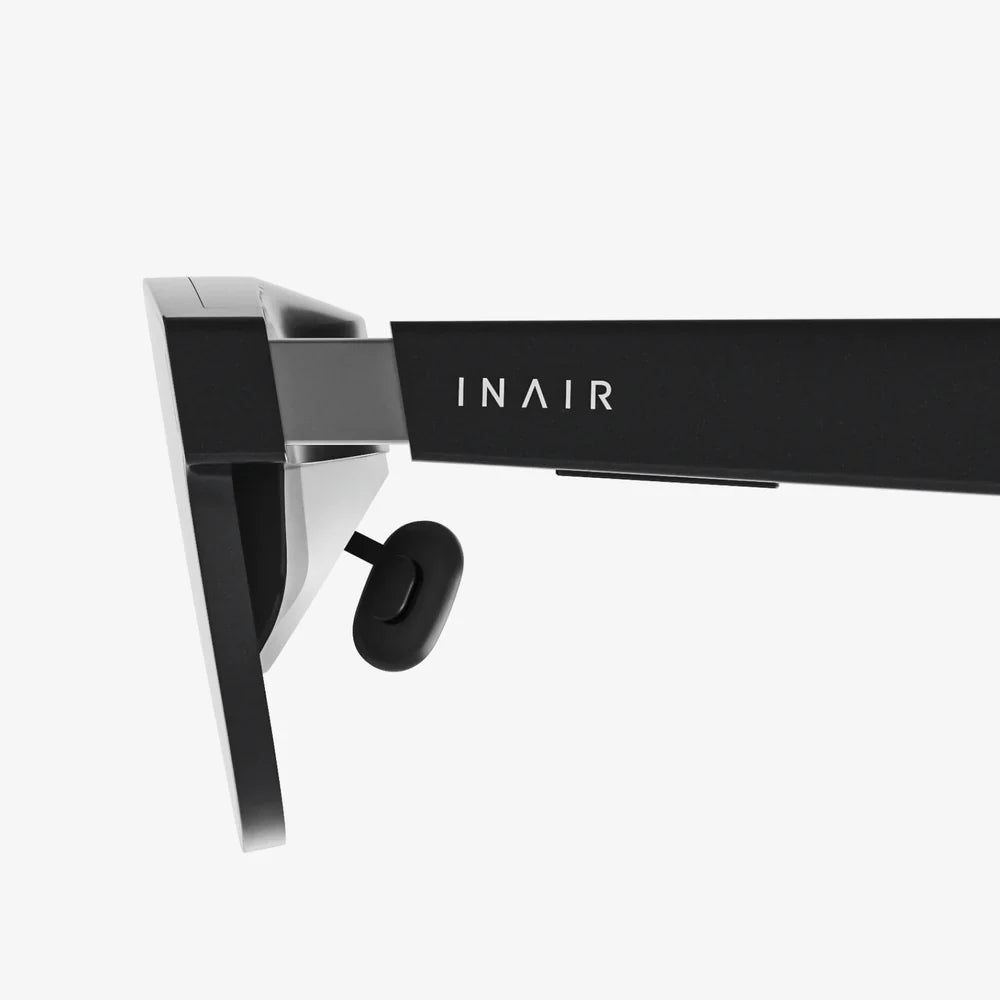
Imagine a world where distance is an obsolete concept, where learning is an immersive adventure, and where the boundaries between the digital and the physical dissolve into nothingness. This is not the plot of a science fiction novel; it is the tangible, accelerating future being built today in laboratories, studios, and startups around the globe. The question on everyone's mind is a profound one: what does the future hold for virtual reality? The answer extends far beyond sharper screens and lighter headsets. We are standing on the precipice of a paradigm shift, where VR is set to evolve from a novel entertainment medium into a fundamental, ubiquitous layer of human experience, redefining everything from healthcare and education to social interaction and our very sense of self.
The Unseen Engine: Haptics, Biometrics, and Embodied Presence
The immediate future of VR will be dominated by a move beyond the visual and auditory. The current generation of technology engages two senses, but true presence—the undeniable feeling of "being there"—requires a full-body experience. This is where haptic feedback technology will become revolutionary. We are moving towards sophisticated full-body suits and gloves equipped with a network of actuators, not just for simple vibration, but for simulating texture, pressure, temperature, and even resistance. Imagine feeling the rough bark of a tree in a virtual forest, the gentle push of water as you swim, or the handshake of a colleague on another continent with perfect tactile fidelity.
This sensory expansion will be deeply integrated with biometric feedback. Headsets and wearables will monitor our physiological responses in real-time—heart rate, pupil dilation, brainwave activity, and galvanic skin response. This data will not be collected for mere analytics; it will be fed back into the virtual environment to create deeply responsive and adaptive experiences. A horror game could subtly intensify its soundtrack as your heart rate increases. A therapeutic VR application for anxiety could detect rising stress levels and automatically guide the user through a calming, visual breathing exercise. This bio-responsive loop will make VR experiences uniquely personal and powerfully effective, blurring the line between the user's internal state and the external digital world.
The Confluence of Realities: The Rise of the Metaverse and Spatial Computing
The most significant evolution for VR will be its escape from isolation. The concept of the "Metaverse"—a persistent, shared, and interconnected universe of virtual spaces—represents the next iteration of the internet. VR will be the ultimate portal into this embodied internet. This won't be about visiting a single game or app; it will be about traversing a digital continuum where your identity, assets, and interactions are continuous. You might attend a business meeting in a hyper-realistic virtual boardroom, then instantly teleport to a live concert with friends from across the globe, all without removing your headset.
Crucially, this future is not VR alone. It is the seamless convergence of Virtual Reality, Augmented Reality (AR), and the physical world, a concept known as spatial computing. Through advanced AR glasses or passthrough VR technology, digital objects will be anchored convincingly in our real-world environment. A virtual television will hang on your physical wall. A digital sculpture will sit on your real desk. This hybrid reality will become the primary interface for computing, replacing the flat, 2D screens of today. The future of work, for instance, could involve putting on a comfortable pair of glasses to summon multiple large, virtual displays around your physical laptop, creating an infinite desktop limited only by the space in your room.
Transformation by Sector: Beyond Entertainment
While gaming pioneered VR, its future impact will be felt most profoundly in sectors that shape our core well-being and society.
Healthcare and Therapy
VR is poised to revolutionize medicine. It is already being used for exposure therapy to treat phobias and PTSD, allowing patients to confront triggers in a safe, controlled environment. Surgeons use VR simulations for complex procedure planning and practice, reducing risk and improving outcomes. The future will see remote surgery assisted by VR interfaces, where a top surgeon could guide a procedure anywhere in the world. For physical rehabilitation, VR turns repetitive exercises into engaging games, dramatically improving patient motivation and recovery data. Furthermore, VR will become a powerful tool for cognitive health, offering experiences to slow the progression of diseases like Alzheimer's by stimulating neural pathways through rich, remembered environments.
Education and Training
The future of education is experiential. Instead of reading about ancient Rome, students will walk its streets, hear the forum's debates, and witness history unfold around them. Medical students will practice anatomy by walking through a giant, beating heart. Mechanics will learn to repair complex engines by taking them apart virtually first. This "learning by doing" in a risk-free, infinitely repeatable simulation will deepen understanding and retention in ways textbooks never could. Corporate training will be similarly transformed, from practicing public speaking in front of a virtual audience to mastering safety protocols in a realistic hazard simulation without any real-world danger.
Remote Work and Social Connection
The pandemic accelerated remote work, but video conferencing remains a poor substitute for the nuance of in-person collaboration. VR offers the next step: true telepresence. Future meetings will take place in virtual spaces where avatars, driven by eye-tracking and facial expression capture, convey body language and subtle social cues. Teams will collaborate on 3D models, data visualizations, and virtual whiteboards as if they were in the same room. This will not only boost productivity but also combat the isolation of remote work and foster a stronger sense of company culture, regardless of physical location. It will enable a true global talent market, unconstrained by geography.
The Inevitable Challenges: Ethical, Social, and Technological Hurdles
This exciting future is not without its significant challenges and sobering questions. The path forward is littered with ethical and societal hurdles that我们必须 address proactively.
The Privacy Paradox
VR headsets are arguably the most intimate data-collection devices ever conceived. They can track not only where you look but how your pupils react, the subtle movements of your body, and even your neural patterns. This biometric data is a treasure trove for companies but a profound privacy nightmare. Who owns this data? How is it used? Could it be used for manipulation or discrimination? Establishing robust ethical frameworks and regulations for data ownership and usage will be critical to building a trusted virtual future.
The Reality Gap and Societal Inequality
There is a risk that immersive virtual worlds could become a form of escapism so compelling that people withdraw from physical reality, neglecting real-world relationships and responsibilities. Furthermore, if access to high-quality VR experiences remains expensive, it could create a new "reality gap"—a societal chasm between those who can afford to augment their lives with rich virtual experiences and those who cannot, exacerbating existing digital and economic divides.
Identity and Agency in a Digital World
In a world where you can be anyone or anything, questions of identity become complex. While this offers incredible freedom for self-expression, it also opens doors to new forms of deception and fraud. The concept of a persistent digital identity that is secure, portable, and authentic will be paramount. Furthermore, as AI-driven characters become indistinguishable from human users, we will need to establish clear norms and systems for knowing who—or what—we are interacting with.
The Long-Term Horizon: Brain-Computer Interfaces and The Ultimate Simulation
Looking decades into the future, the ultimate destination for VR may be the complete bypassing of traditional sensory hardware. Companies are already making early strides in brain-computer interfaces (BCIs). The theoretical endgame is a direct neural link that can write information directly to the brain, simulating any reality with perfect fidelity without the need for a headset or haptic suit. This would be the final step in the journey, creating a virtual experience that is neurologically indistinguishable from physical reality.
While this remains firmly in the realm of long-term speculation, its implications are staggering. It raises profound philosophical questions about the nature of reality and consciousness. If a simulated experience is neurologically identical to a real one, does the distinction between "virtual" and "real" even matter? This technology, while potentially centuries away, represents the final frontier of human experience and is the logical, if distant, culmination of the path VR is currently on.
The headset you see today is merely a crude prototype, a glimpse into a coming revolution. The future of virtual reality is not a solitary destination but a sprawling, interconnected journey that will weave itself into the very fabric of our daily lives. It promises to heal our bodies, expand our minds, and connect our world in ways we are only beginning to imagine. Yet, this powerful tool demands our careful stewardship. The virtual frontiers ahead are vast and uncharted, filled with both breathtaking opportunity and profound responsibility. The world we build there will ultimately be a reflection of our values, our ethics, and our choices today. The door to these new realities is beginning to open; what we find on the other side is still, wonderfully, up to us.
Share:
Disadvantages of Virtual Reality in Business: The Hidden Costs of Immersive Tech
Smart Specs: The Future on Your Face and the Next Computing Paradigm