


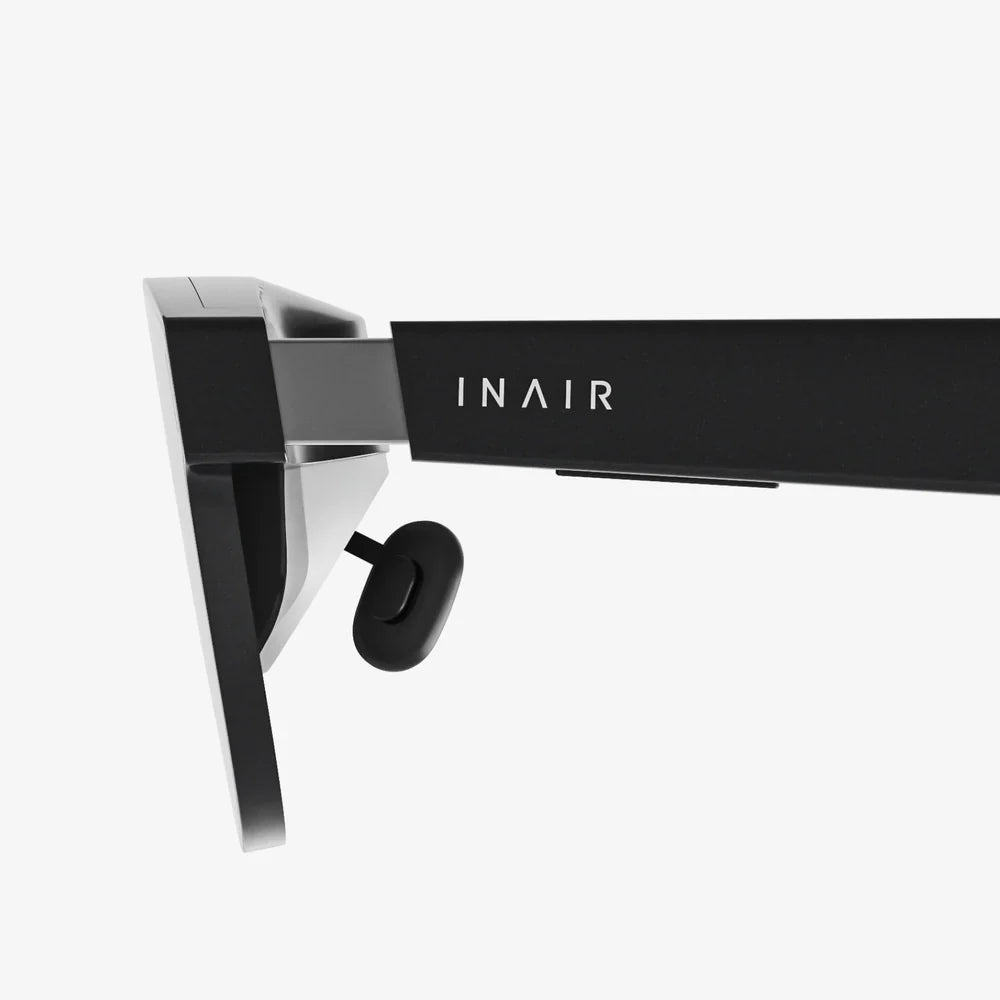
Imagine slipping on a device and instantly being transported to the peak of Mount Everest, the cockpit of a starfighter, or a front-row seat at a concert happening halfway across the globe. This is no longer the stuff of science fiction; it's the immediate, breathtaking promise of a 3D virtual reality headset. These remarkable pieces of technology are not just screens for your face; they are meticulously engineered portals, designed to hijack your senses and convince your brain that you are somewhere you are not. They represent one of the most significant leaps in human-computer interaction, offering a taste of the metaverse and fundamentally changing how we play, learn, work, and connect. But to truly appreciate this revolution, we must first answer the fundamental question: what, exactly, is a 3D virtual reality headset?
Beyond The Goggles: Deconstructing The Core Components
At its simplest, a 3D virtual reality headset is a head-mounted display (HMD) that creates an immersive, stereoscopic 3D simulation of an environment. However, calling it just a display is a profound understatement. It is a sophisticated system of integrated hardware and software working in perfect harmony. The magic lies in the combination of several key components.
The Display Panels: Your Digital Windows
The foundation of the experience is the visual fidelity. Inside the headset, mere centimeters from your eyes, are two high-resolution displays (one for each eye). These panels are responsible for generating the images you see. The quality of these displays is paramount—their resolution, color accuracy, and refresh rate directly impact the clarity and realism of the virtual world. A low-resolution display can create a "screen door effect," where you can see the faint lines between pixels, shattering the illusion of immersion. Modern headsets utilize advanced OLED or LCD technology to deliver rich, vibrant visuals that are critical for believability.
The Lenses: Shaping Perception
If the displays are the canvas, the lenses are the artists. Placed between your eyes and the displays, these specialized lenses are arguably the most crucial optical component. Their job is to take the images from the flat panels and warp them to fill your entire field of view (FOV). They create a wide, panoramic image that feels natural and expansive, rather than like looking through a narrow window. Furthermore, they focus the light from the screens to ensure the virtual world appears sharp and at a comfortable depth, regardless of where you look. The design and quality of these lenses are what make the virtual environment feel continuous and vast.
Tracking Systems: The Bridge Between Real and Virtual
For the illusion to hold, the virtual world must react to you in real-time. This is the job of the tracking system, the true heart of immersion. There are two primary types of tracking:
- Rotational Tracking (3DoF): This tracks the orientation of your head—whether you are looking up, down, or turning left and right. It's the most basic form of tracking.
- Positional Tracking (6DoF): This is the gold standard for modern VR. It tracks not only the rotation of your head but also its position in physical space. It knows if you lean forward to examine a virtual object, crouch down to take cover, or step sideways to peek around a corner. This is achieved through a combination of external sensors (like base stations) or inside-out tracking using cameras embedded on the headset itself to map the room and understand its movement within it.
Audio and Input: Completing the Sensory Loop
Immersion is a multi-sensory experience. Spatial audio, often delivered through built-in headphones or speakers, is essential. Unlike standard stereo sound, spatial audio mimics how sound behaves in the real world. A noise behind you will sound like it's coming from behind, and it will change subtly as you turn your head. This auditory cue is incredibly powerful for selling the reality of a virtual space.
Finally, input devices—most commonly handheld motion controllers—allow you to interact with the digital realm. These controllers are also tracked in 3D space, enabling you to reach out, grab, throw, push, and manipulate objects with your virtual hands. Haptic feedback, or precise vibrations, provides a tactile sensation, making the interaction feel tangible and real.
The Science of Presence: How It Tricks Your Brain
The ultimate goal of all this technology is to achieve a state known as "presence." Presence is the elusive, magical feeling of truly being in the virtual environment, a moment where your conscious mind suspends its disbelief and accepts the digital world as real. This psychological phenomenon is achieved through a perfect storm of technological factors.
The stereoscopic 3D view, created by presenting slightly different images to each eye, replicates human binocular vision, creating a convincing sense of depth and scale. The high refresh rate (90Hz and above) ensures motion is smooth and fluid, preventing the disorientation and nausea that can come from lag or stutter. Low latency—the minuscule delay between your movement and the corresponding update on the screen—is absolutely critical. Even a delay of 20 milliseconds can break the sense of presence and cause discomfort, as your brain detects a disconnect between your physical motion and visual feedback. When all these elements align—high resolution, wide field of view, flawless tracking, spatial audio, and instant response—the brain is successfully fooled, and the illusion is complete.
A World of Applications: Far Beyond Gaming
While gaming is the most well-known and popular application, providing unparalleled immersive adventures, the utility of VR headsets extends far beyond entertainment. They are powerful tools transforming numerous fields.
Education and Training
VR offers a safe, controlled, and incredibly effective environment for learning. Medical students can practice complex surgical procedures on virtual patients without risk. Astronauts can simulate spacewalks. Mechanics can learn to repair intricate engine models. History students can take a walk through ancient Rome. This experiential form of learning, learning by doing, dramatically improves knowledge retention and skill acquisition.
Healthcare and Therapy
The therapeutic potential of VR is vast. It is used for exposure therapy, helping patients with phobias (like fear of heights or flying) confront their fears in a gradual, manageable way. It aids in physical rehabilitation, turning repetitive exercises into engaging games. It also provides powerful tools for pain management, distracting patients during painful procedures by immersing them in calming, alternative realities.
Design and Architecture
Architects and designers use VR to step inside their creations long before the first brick is laid. They can experience the scale of a building, test sightlines, and identify potential design flaws in a way blueprints or 3D models on a monitor could never allow. Clients can take virtual tours of their future homes, making informed decisions about layouts and finishes.
Social Connection and Remote Work
VR is evolving into a new platform for social interaction and collaboration. Virtual meeting spaces allow colleagues from around the world to gather as lifelike avatars, interacting with 3D models and data in a shared space, making remote collaboration more natural and productive than a standard video call could ever be.
Choosing Your Portal: A Spectrum of Experiences
Not all VR headsets are created equal, and they generally fall into three categories based on their capabilities and requirements.
- Standalone Headsets: These are all-in-one wireless devices with their own processor, battery, and onboard computing power. They offer incredible freedom and ease of use, as they are not tethered to any other device. They provide a robust entry-point into VR, though their graphical power is often less than that of tethered systems.
- Tethered/PC-Connected Headsets: These headsets are connected via a high-speed cable to a powerful external computer. This setup provides the highest-fidelity visual experience, with incredibly detailed graphics, vast worlds, and complex simulations. They are the choice for enthusiasts and professionals who demand the absolute best performance.
- Smartphone-Based Headsets: An affordable but largely deprecated category, these holders used a smartphone slotted into a headset mount to act as both the display and processor. They offered a simple introduction to 360-degree videos and basic VR but lacked the tracking power and immersion of dedicated systems.
The Future is Immersive: What Lies Ahead
The evolution of VR technology is rapid and exciting. We are moving towards headsets that are lighter, more comfortable, and wireless, with resolutions so high the virtual world is indistinguishable from reality. Advancements in eye-tracking technology will allow for foveated rendering, where only the spot you are directly looking at is rendered in full detail, drastically reducing the computational power needed. Haptics are expanding beyond controllers to full-body suits and gloves, promising the ability to feel virtual objects. The lines between the digital and physical are blurring, paving the way for the much-hyped concept of the metaverse—a persistent network of shared virtual spaces.
Stepping through a 3D virtual reality headset is no longer a fantasy; it's an accessible, transformative experience that is reshaping our reality. It is a testament to human ingenuity, a tool that unlocks new dimensions of creativity, connection, and understanding. From the depths of the ocean to the surface of Mars, the only real limit is the imagination of the creators building these new worlds, waiting for you to put on a headset and explore.
Share:
Smart Working 2025: The Future of Work is Hybrid, Intelligent, and Human-Centric
Smart Working 2025: The Future of Work is Hybrid, Intelligent, and Human-Centric