


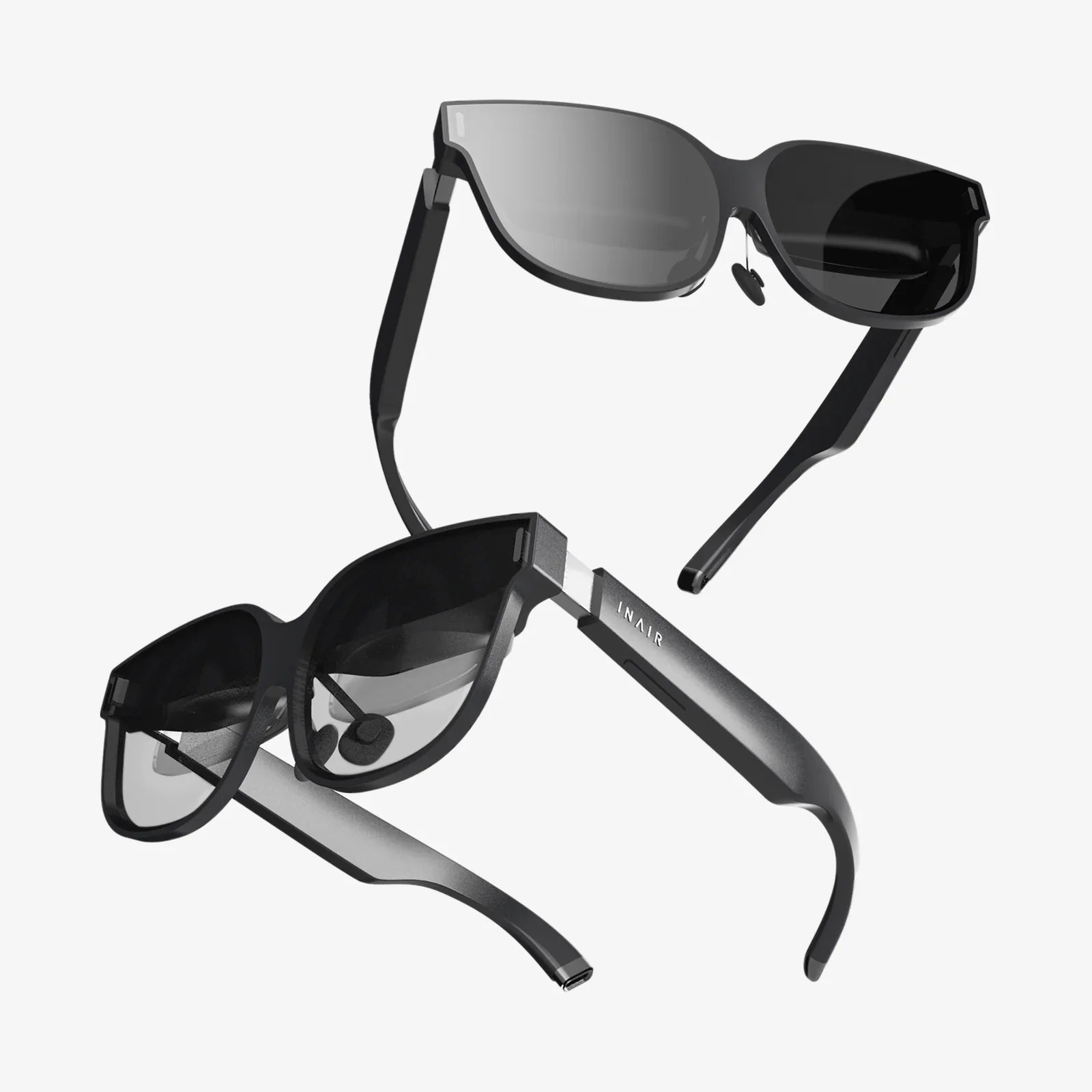
Imagine a world where digital information doesn’t just live on a screen but is seamlessly woven into the fabric of your everyday life, where instructional manuals come to life on the factory floor, historical figures stand beside you recounting their stories, and your living room transforms into a strategic war room for a game or a collaborative design studio for work. This is no longer the stuff of science fiction; it's the promise and rapidly evolving reality of spatial computing, powered by two of the most exciting technologies of our time: Augmented Reality (AR) and Mixed Reality (MR). While often used interchangeably, they represent distinct points on a spectrum of experiences that blend the real and the virtual. Understanding what they are, how they differ, and where they are headed is key to grasping the next great leap in human-computer interaction.
Demystifying the Spectrum: From Reality to Virtuality
To understand AR and MR, it's helpful to view them not as separate islands but as points on a continuum known as the Virtuality Spectrum. This concept, pioneered by researchers Paul Milgram and Fumio Kishino in 1994, illustrates the gradual transition from the completely real environment to a completely virtual one.
On one end, you have the Real Environment: the physical world as we perceive it with our unaided senses. On the opposite end lies the Virtual Environment, a fully digital, computer-generated world often experienced through a headset that blocks out the physical world entirely, a technology known as Virtual Reality (VR).
Between these two poles lies a vast space for blending the real and the virtual, which is where AR and MR reside. This middle ground is often collectively referred to as Extended Reality (XR), an umbrella term encompassing all immersive technologies, including AR, MR, and VR.
What Is Augmented Reality (AR)? The Digital Overlay
Augmented Reality is the technology that superimposes digital information—be it images, text, video, or 3D models—onto the user's view of the real world. The primary goal of AR is to enhance the real world by adding a layer of supplemental digital content. Crucially, this digital content does not interact with or understand the physical environment in a meaningful way; it exists as an overlay, often tied to a specific location, image, or surface.
How Does AR Work?
The magic of AR is powered by a combination of hardware and sophisticated software:
- Sensors and Cameras: These act as the eyes of the device, capturing the real-world environment. They gather data on surroundings, track physical movements, and identify flat surfaces or specific image targets (like a QR code or a special poster).
- Processing: A processor, similar to one in a smartphone, interprets the sensor data to understand the environment and determine where and how to place the digital content.
- Projection and Display: This is where the digital content is rendered for the user to see. This can be done through a screen (like a smartphone or tablet), smart glasses, or more advanced head-mounted displays.
- Software and Algorithms: This is the brain of the operation. Computer vision algorithms process the camera feed to perform tasks like simultaneous localization and mapping (SLAM), which allows the device to map the environment and understand its own position within it in real-time.
Common AR Experiences and Devices
Most people have experienced AR without even realizing it. The wildly popular game that had millions chasing digital creatures in parks is a prime example of location-based AR. Social media filters that add puppy ears or virtual makeup to your face are another ubiquitous form of markerless AR. In retail, apps allow you to see how a new piece of furniture would look in your actual living room before you buy it.
AR is most commonly accessed through:
- Smartphones and Tablets: The most accessible gateway to AR, using the device's camera and screen.
- Smart Glasses: Wearable glasses that project digital information onto transparent lenses, allowing for a hands-free experience. These are gaining significant traction in enterprise and industrial settings.
What Is Mixed Reality (MR)? When the Digital and Physical Worlds Collide
If Augmented Reality is about overlaying the digital onto the physical, Mixed Reality is about fusing them together. MR is the next evolution of AR, where digital objects are not just superimposed but integrated into and, most importantly, interact with the real world in real-time. In an MR experience, a virtual ball can bounce off your real-world table, a digital character can hide behind your physical sofa, and your real hands can manipulate a holographic engine model.
The key differentiator is anchoring and interaction. MR requires a deep understanding of the geometry of the physical environment. It involves spatial mapping and persistent digital objects that maintain their position and state even when you look away and then back again.
The Core Technologies Powering MR
MR builds upon AR's foundation but demands more advanced capabilities:
- Advanced Spatial Mapping: MR systems create a detailed, depth-aware 3D map of the environment, understanding not just flat surfaces but the complex geometry of every object in a room.
- Precise Environmental Understanding: The system can recognize objects (e.g., a chair, a wall, a monitor) and understand concepts like occlusion (digital objects being hidden by physical ones) and physics (light, shadow, collision).
- Highly Accurate Tracking: This includes not just the user's position (inside-out tracking) but also precise hand-tracking and eye-tracking, allowing for natural and intuitive interaction with holograms.
The Hardware of Mixed Reality
Experiencing true MR currently requires more sophisticated hardware, typically in the form of:
- Holographic Headsets: These are often opaque headsets that use advanced cameras to pass through a high-resolution video feed of the real world, blending it with digital content. They offer a stunning level of immersion and interaction.
- Immersive AR Glasses: The next generation of smart glasses is evolving to include the sensors and processing power necessary for true MR experiences, moving beyond simple displays.
AR vs. MR: A Clear-Cut Comparison
While they exist on the same spectrum, the distinction between AR and MR is critical. Think of it this way: AR adds a layer of information on top of your world, while MR adds interactive digital objects into your world.
| Feature | Augmented Reality (AR) | Mixed Reality (MR) |
|---|---|---|
| Interaction with Environment | Digital content does not interact with the physical world. It is a passive overlay. | Digital content interacts with and is anchored to the physical world (e.g., occluded by real objects). |
| Environmental Understanding | Understands basic surfaces and markers. | Creates a detailed 3D map of the environment, recognizing objects and spatial relationships. |
| Persistence | Content is usually temporary and tied to a session or marker. | >Digital objects can be persistent, remaining in place across sessions.|
| Primary Device Examples | Smartphones, Tablets, Basic Smart Glasses | Holographic Headsets, Advanced Smart Glasses |
| User Experience | Enhanced Viewing | Immersive Interaction |
The Transformative Applications: Changing Industries and Lives
The potential of AR and MR extends far beyond games and filters. They are poised to revolutionize nearly every sector.
Enterprise and Manufacturing
This is where AR and MR are making the most immediate and impactful strides. Workers on assembly lines can use smart glasses to see step-by-step instructions overlaid directly on the machinery they are repairing, reducing errors and training time. Designers and engineers can collaborate on life-size 3D holographic prototypes, making changes in real-time from different locations around the globe. Technicians can receive remote expert guidance, where a specialist can see what they see and annotate their field of view with arrows and notes.
Healthcare and Medicine
Medical students can practice complex surgical procedures on detailed holographic anatomy, reducing risk. Surgeons can use AR overlays during operations to display critical patient data like heart rate or the precise location of a tumor without looking away from the operating table. MR can also be used for advanced physical therapy and patient education, helping individuals visualize their conditions and treatments.
Education and Training
Imagine history lessons where students can walk through ancient Rome, or biology classes where they can dissect a holographic frog. AR and MR create immersive, engaging learning experiences that boost retention and understanding. From technical skill training for welders or electricians to soft skill development for public speakers, the applications for experiential learning are limitless.
Retail and Design
Try before you buy is taken to a new level. Customers can use their phones to see how a new couch fits and looks in their living room, or use an MR headset to virtually try on clothes or experiment with different paint colors and furniture layouts in their entire house. This reduces purchase hesitation and returns, creating a more confident consumer.
Remote Collaboration and Communication
MR has the potential to be the ultimate tool for remote work. Instead of a flat video call, teams can meet in a shared virtual space around a holographic whiteboard or 3D model, feeling as if they are truly in the same room, interacting with the same objects. This concept, often called "telepresence," could fundamentally change the nature of distributed teams.
The Future is Blended: Where Are We Headed?
The trajectory of AR and MR is pointing towards a future of ubiquitous computing, often prophesied as the successor to the smartphone era. The ultimate goal is a pair of lightweight, socially acceptable glasses that can seamlessly blend our digital and physical realities, providing contextually relevant information and interactions exactly when and where we need them.
We are moving towards the concept of the spatial web, where the internet is not a separate destination on a screen but a layer of intelligence and information mapped onto our world. Digital content will have a permanent place in our physical spaces, accessible only through our XR devices.
However, this future is not without its challenges. Significant hurdles remain in developing smaller, more powerful, and more energy-efficient hardware. Creating compelling and useful content at scale is another major task. And perhaps most importantly, we must thoughtfully address profound questions around privacy, data security, and the ethical implications of a world where digital content is persistently mapped onto our physical lives. How do we prevent digital spam in public spaces? Who owns the digital space around us?
Despite these challenges, the momentum is undeniable. The convergence of 5G connectivity, edge computing, and artificial intelligence with AR and MR technologies is accelerating development at a breakneck pace. What was once a fantastical concept is rapidly becoming an integral part of our technological toolkit.
The line between what is real and what is digital is beginning to blur, and with it comes a new paradigm for how we work, learn, play, and connect. The journey into our blended reality has just begun, and it promises to be one of the most transformative technological adventures of the 21st century. The next time you look at your empty living room, just imagine what could be there, waiting to be seen.
Share:
AR Glasses Monitor Replacement: The Dawn of a Portable, Infinite Desktop
VR Headset Under $150: Your Ultimate Guide to Affordable Virtual Reality