


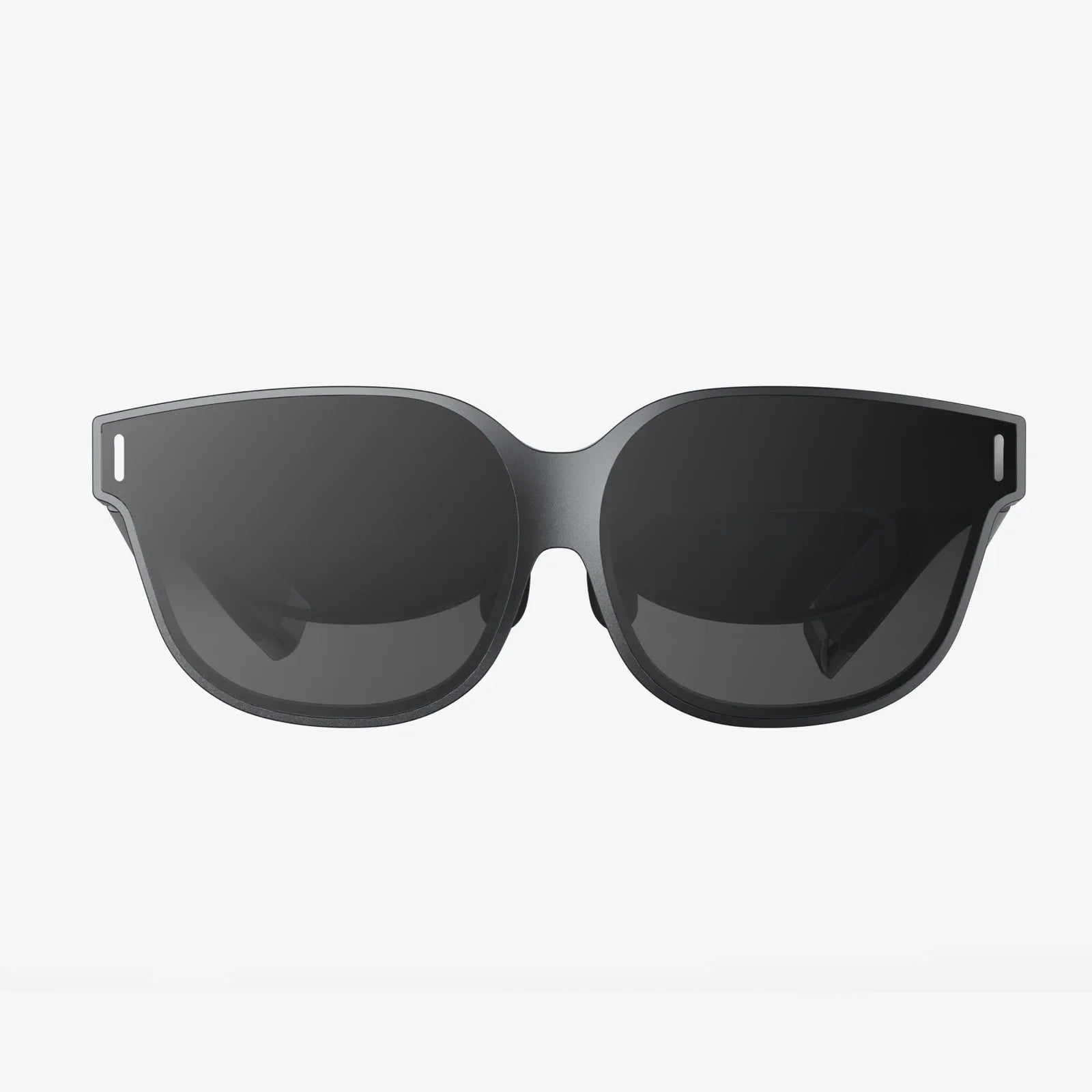
Imagine a world where the digital and the physical are no longer separate realms, where information overlays your vision, and you can step into entirely new universes from your living room. This is no longer the stuff of science fiction; it's the burgeoning reality shaped by a trio of transformative technologies. The terms AR, VR, and MR are buzzing through the tech world, promising to revolutionize everything from how we work and learn to how we play and connect. But beyond the hype and the acronyms lies a fascinating spectrum of experiences, each with its own unique capabilities and potential to alter our perception of reality itself. Understanding the distinctions and the synergies between them is the first step toward grasping the next great leap in human-computer interaction.
Defining the Digital Spectrum: From Reality to Virtuality
To comprehend AR, VR, and MR, it's helpful to visualize them not as separate, isolated technologies, but as points on a continuum. This spectrum, often called the Virtuality Continuum, was first proposed in the 1990s by researchers Paul Milgram and Fumio Kishino. It spans from the completely real environment we inhabit to a completely virtual one, with Mixed Reality encompassing everything in between.
On one end, you have the unadulterated reality—the physical world with all its tangibility. On the opposite end, you have a fully digital, virtual environment, disconnected from the physical space around the user. The magic, and the confusion, happens in the vast middle ground. This is where digital objects and information begin to interact with and respond to the real world in increasingly sophisticated ways.
Virtual Reality (VR): The Total Escape
Let's start at the far end of the spectrum. Virtual Reality (VR) is the technology that most completely immerses the user in a digital world. The core principle of VR is isolation and immersion. By wearing a head-mounted display (HMD) that blocks out the physical world, the user's vision and hearing are fully enclosed by the virtual environment.
How It Works
A VR system typically consists of three key components:
- The Headset (HMD): This is the primary hardware, featuring high-resolution displays for each eye, lenses to focus and shape the image, and built-in headphones or spatial audio technology.
- Tracking Systems: These systems monitor the user's head and, often, hand movements. This can be done using internal sensors like gyroscopes and accelerometers (inside-out tracking) or external sensors placed in the room (outside-in tracking). This tracking is crucial; as you turn your head, the virtual world must respond in perfect synchrony to maintain the illusion and prevent discomfort.
- Input Devices: These are the controllers, gloves, or even full-body tracking suits that allow the user to interact with the virtual world. They translate your real-world actions—grabbing, throwing, pointing—into digital commands.
The combination of these elements creates a powerful sensation known as presence—the convincing feeling of being physically located in the virtual space.
Primary Applications
- Gaming and Entertainment: This is the most well-known application. VR gaming offers unparalleled immersion, placing you directly inside the game world.
- Training and Simulation: From training surgeons for complex procedures without risk to a patient, to preparing pilots for emergency scenarios, VR provides a safe, controlled, and repeatable environment for high-stakes training.
- Architectural Visualization and Design: Architects and clients can walk through a building design long before the foundation is poured, allowing for better spatial understanding and design decisions.
- Therapy and Rehabilitation: VR is used for exposure therapy to treat phobias, for physical rehabilitation to make exercises more engaging, and for pain distraction during medical procedures.
The primary characteristic of VR is its nature as a closed-loop experience. It is a destination. You put on the headset to go somewhere else.
Augmented Reality (AR): The Enhanced World
If VR is about replacement, Augmented Reality (AR) is about augmentation. AR overlays digital information—images, text, 3D models, animations—onto the user's view of the real world. The goal is not to transport you elsewhere but to enhance your current environment with contextual data and digital artifacts.
How It Works
AR can be experienced through several types of devices, ranging from simple to complex:
- Smartphone and Tablet AR: This is the most accessible form of AR. Using the device's camera, screen, and sensors, apps can superimpose digital content onto a live video feed of the world. You see the blend through your device's screen.
- Smart Glasses and Transparent HMDs: These are wearable glasses that project digital imagery onto transparent lenses. This allows the user to see the digital content superimposed directly onto their real-world view without holding up a phone. This is considered the future of AR, offering a more seamless and hands-free experience.
The technology relies heavily on computer vision, object recognition, and simultaneous localization and mapping (SLAM) algorithms. These algorithms understand the physical geometry of the environment, allowing digital objects to be placed on a table, attached to a wall, or even occluded by real-world objects, creating a convincing blend.
Primary Applications
- Retail and E-commerce: Visualizing how a new sofa would look in your living room or trying on glasses or makeup virtually before purchasing.
- Industrial Maintenance and Repair: Technicians can see schematics and instructions overlaid on the machinery they are fixing, improving accuracy and efficiency.
- Navigation: AR can project turn-by-turn directions onto the real road ahead, a far more intuitive solution than looking at a 2D map.
- Education: Bringing textbooks to life by allowing students to interact with 3D models of the human heart or historical artifacts.
- Marketing and Advertising: Creating interactive posters and physical objects that trigger unique digital experiences when viewed through a device.
The defining trait of AR is that the digital content does not interact with the real world in a physically aware way. A dinosaur model might appear on your table, but if you put a coffee cup in front of it, the digital dinosaur wouldn't know to hide behind it. This is the key differentiator from its more advanced cousin.
Mixed Reality (MR): The Seamless Blend
Mixed Reality (MR) is the next evolution, often considered the most sophisticated point on the spectrum. It merges the real and virtual worlds to produce new environments and visualizations where physical and digital objects co-exist and interact in real-time. If AR overlays the digital onto the real, MR anchors it there, making it persistent and interactive.
How It Works
MR requires advanced hardware that VR and simpler AR do not. This includes:
- Advanced Sensors: Cameras, depth sensors, and LiDAR scanners to constantly map and understand the physical environment in 3D.
- Precise Environmental Understanding: The system doesn't just see flat surfaces; it understands the geometry, textures, and lighting of the room, creating a digital twin of the space.
- Powerful Processing: This environmental data must be processed instantly to allow for real-time interaction between real and virtual objects.
This deep understanding allows digital objects to behave like real ones. They can be occluded by physical objects, can bounce off real walls, and can cast shadows that are consistent with the room's lighting. You could place a virtual robot on your real desk, walk around it to see it from all angles, and watch as it realistically avoids the physical lamp you place in its path.
Primary Applications
- Remote Collaboration: The most powerful use case. Colleagues from across the globe can appear as lifelike holograms in your room, and you can collaboratively manipulate a 3D model of a product design as if it were physically present.
- Advanced Design and Prototyping: Engineers and designers can work on full-scale, interactive 3D models of cars or buildings, making changes and testing functionality in real-time without costly physical prototypes.
- Next-Generation Data Visualization: Medical professionals could explore a 3D holographic scan of a patient's anatomy, walking around it and peeling back layers, transforming diagnosis and surgical planning.
- Immersive Learning: Medical students could practice procedures on a responsive holographic patient, and mechanics could learn to repair an engine by following interactive holographic instructions overlaid on the physical engine.
MR is the pinnacle of immersion that respects the real world. It doesn't seek to escape it or merely annotate it, but to merge with it to create a new, hybrid reality where the boundaries are indistinguishable.
Key Differences Summarized
| Feature | Virtual Reality (VR) | Augmented Reality (AR) | Mixed Reality (MR) |
|---|---|---|---|
| Immersion Level | Fully immersive, blocks out real world | Partially immersive, overlays on real world | Seamlessly immersive, blends real and virtual |
| User Environment | Completely virtual, computer-generated | Real-world environment with digital overlays | Hybrid environment where both co-exist and interact |
| Interaction with Reality | None; user is isolated | Digital content is placed in the real world but does not interact with it | Digital content is anchored to and interacts with the real world |
| Primary Device | VR Headset (Opaque) | Smartphones, Tablets, AR Glasses (Transparent) | MR Headset (Transparent with advanced sensors) |
| Core Experience | Transportation to another place | Annotation of the current place | Transformation of the current place |
The Future is a Blended One
The lines between these technologies are already beginning to blur. The latest high-end VR headsets are incorporating full-color passthrough cameras, effectively allowing them to function as AR and MR devices by letting the real world seep into the virtual one. Conversely, advanced AR glasses are gaining the processing power and sensor suites necessary to deliver true MR experiences. The ultimate destination appears to be a single, versatile device—often referred to as XR (Extended Reality) eyewear—that can fluidly transition across the entire virtuality continuum based on the user's needs. This device will be as ubiquitous as the smartphone, serving as our primary portal to both digital information and experiences, seamlessly integrated into our physical lives.
Challenges and Considerations
Despite the exciting potential, the path forward is not without obstacles. For widespread adoption, several hurdles must be cleared. Hardware needs to become lighter, more comfortable, more powerful, and significantly more affordable. The visual quality, often referred to as the visual fidelity of these experiences, must reach near-perfection to be truly convincing and comfortable for prolonged use. Furthermore, the creation of compelling content and applications requires new tools and skillsets. Perhaps the most significant challenges are societal and ethical. Issues of data privacy, as these devices constantly scan and understand our most intimate spaces, are paramount. The potential for new forms of addiction, the psychological effects of long-term immersion, and the creation of a digital divide are serious concerns that must be addressed proactively by developers, policymakers, and society as a whole.
The journey into these immersive realities is just beginning. From the total escape of VR to the contextual enhancements of AR and the seamless fusion promised by MR, these technologies are not just changing screens; they are redefining our very perception of what is real. They hold the key to unlocking new dimensions of human creativity, collaboration, and understanding. The question is no longer if these blended worlds will become part of our daily lives, but how we will choose to shape them—and how they, in turn, will shape us. The next time you see someone gesturing in the air or staring intently through a pair of sleek glasses, look again; they might not be disconnected from reality, but engaging with a richer, more dynamic layer of it that you can't yet see.
Share:
Augmented Reality Gesture Recognition: The Invisible Interface of Tomorrow
AI Glasses What Do They Do: A Deep Dive Into The Future On Your Face